Building The Topical Keyword Map

Once we have a working list of topics and keywords, the next job is to organise them into something the team can actually use.
The topical keyword map is that document.
What the map is
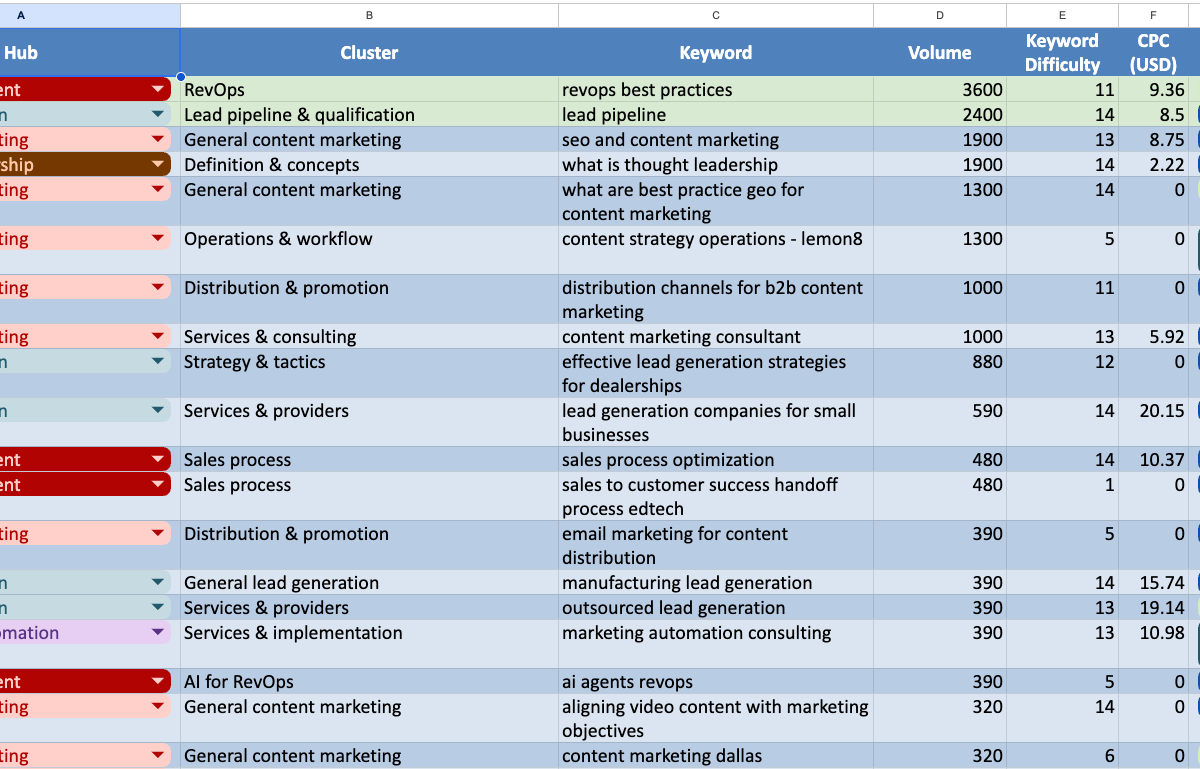
The map is a working planning document.
It is not a final content calendar.
Its job is to show:
which topics sit under which strategic pillar
which ones belong in a cluster
which ones should stand alone
where the real priority sits
how each idea connects back to the business
How we structure it
We organise the map by pillar first.
That keeps the work tied to strategy rather than turning into a loose spreadsheet of keywords.
Within each pillar, we only cluster topics where there is real overlap.
If several keywords clearly point to the same core idea, they can sit together.
If the overlap is weak, we leave them separate.
That matters because not every useful topic needs a large cluster.
Many good topics work perfectly well as standalone pieces.
How we write the topics
We draft early topic titles manually.
AI can help expand options later, but it should not build the whole map from scratch.
Early topic titles should be:
clear
specific
rooted in the real pain or keyword
obviously relevant to the right buyer
We also add a short note beside each topic explaining why it exists.
This note should cover:
what pain it helps with
how it supports the wider strategy
how it connects to the product or offer
why it is worth creating
This part matters because the map is not just an SEO document.
It is a planning document with commercial logic behind it.
What the map needs to contain
At minimum, we keep six fields:
pillar
cluster
keyword
priority
topic
reasoning
That is enough to make the plan usable without making it bloated.
Our rule on the map
The map should stay brief, clear, and useful.
If it starts turning into a giant planning graveyard, it is doing too much.
What we end up with
By the end of this stage, we have a practical planning document that makes production easier.
It gives the team a clear bridge between strategy and execution.