The best demand generation agencies for community-led companies in 2026
Community-led companies grow in a different way. Their pipeline comes from an engaged audience: users who talk to each other, developers, event crowds, social followers, and people who refer a friend. The buying group still has to agree, and these buyers trust the community and their peers long before they trust a sales rep. The marketing that works feeds the community and turns its attention into pipeline, instead of buying another wave of cold ads. Plenty of agencies say they do community. Most just post on social or run ads and call it that. We reviewed agencies that genuinely fit an audience-led, advocacy-led, or event-led motion and kept the ones with real proof. Below we explain each in plain words.

How we chose this list
We used the same checks on every agency, including our own. Here is what earns a spot and how we ordered them.
Who makes the list
Every agency runs real demand generation and builds an audience of its own. We left out lead-list sellers, appointment-setters, and ads-only shops that cannot support a community-led motion.
How we rank them, in order
- Real fit for a community-led, audience-led, or event-led motion
- Whether they build an audience for themselves, and it works
- Review proof, counting how many reviews back the score
- Whether they show prices and name their team
- Fit to your stage, size, and situation
What we promise on every entry
Every claim can be traced to a source. Ratings always show how many reviews they come from. Prices are shown, or marked not shown. We do not give any agency a made-up score, and we hold our own entry to the same checks.
The shortlist at a glance
All 13 entries, ranked by the criteria above. Full detail in the cards below.
| # | Name | Pros | Cons | Best for | Pricing |
|---|---|---|---|---|---|
| 1 | Content RevOps |
|
| Community-led B2B teams, from early SaaS to professional services, that have an audience but no predictable pipeline, and want one connected system instead of scattered social and events. | $4.1-8.5k/mo |
| 2 | Refine Labs |
|
| Series B and later SaaS companies that want to create demand through content and community in public, and have the budget to run it as a senior-led program. | Not disclosed |
| 3 | Hackmamba |
|
| Developer-tool and technical SaaS companies whose growth depends on developers finding, adopting, and recommending the product. | Not disclosed |
| 4 | Hinge Marketing |
|
| Accounting, legal, consulting, and other professional services firms that grow through the reputation of their own experts and want to build authority at scale. | Not disclosed |
| 5 | Walker Sands |
|
| Mid-market and enterprise B2B companies that want brand, PR, demand, and RevOps under one roof instead of stitching point vendors together. | Not disclosed |
| 6 | Siege Media |
|
| Companies that want to build a durable, search-driven audience and earn links and mentions instead of paying for reach. | Not disclosed |
| 7 | BuyerForesight |
|
| Enterprise B2B technology marketers who need pipeline from multi-stakeholder buying groups and prefer peer conversations and events to MQL volume. | Not disclosed |
| 8 | CCGroup |
|
| B2B technology companies that want authority built through press, analysts, and sector communities rather than paid advertising. | Not disclosed |
| 9 | Brafton |
|
| Teams that need a high, steady volume of content from an agency that clearly produces at scale itself. | Not disclosed |
| 10 | Fresh Content Society |
|
| Companies whose community lives on social channels and want strategy, content, and channel management run as one team. | Not disclosed |
| 11 | Grow and Convert |
|
| B2B and SaaS companies that want conversion-focused content from a sharp, opinionated team with a following of its own. | Not disclosed |
| 12 | NinjaPromo |
|
| Startups and smaller teams that want an outsourced social and community team on a flexible monthly subscription. | From $3,200/mo (subscription) |
| 13 | Channel V Media |
|
| Growth and market-expansion companies that need earned authority and press before a community will trust them. | Not disclosed |
The list
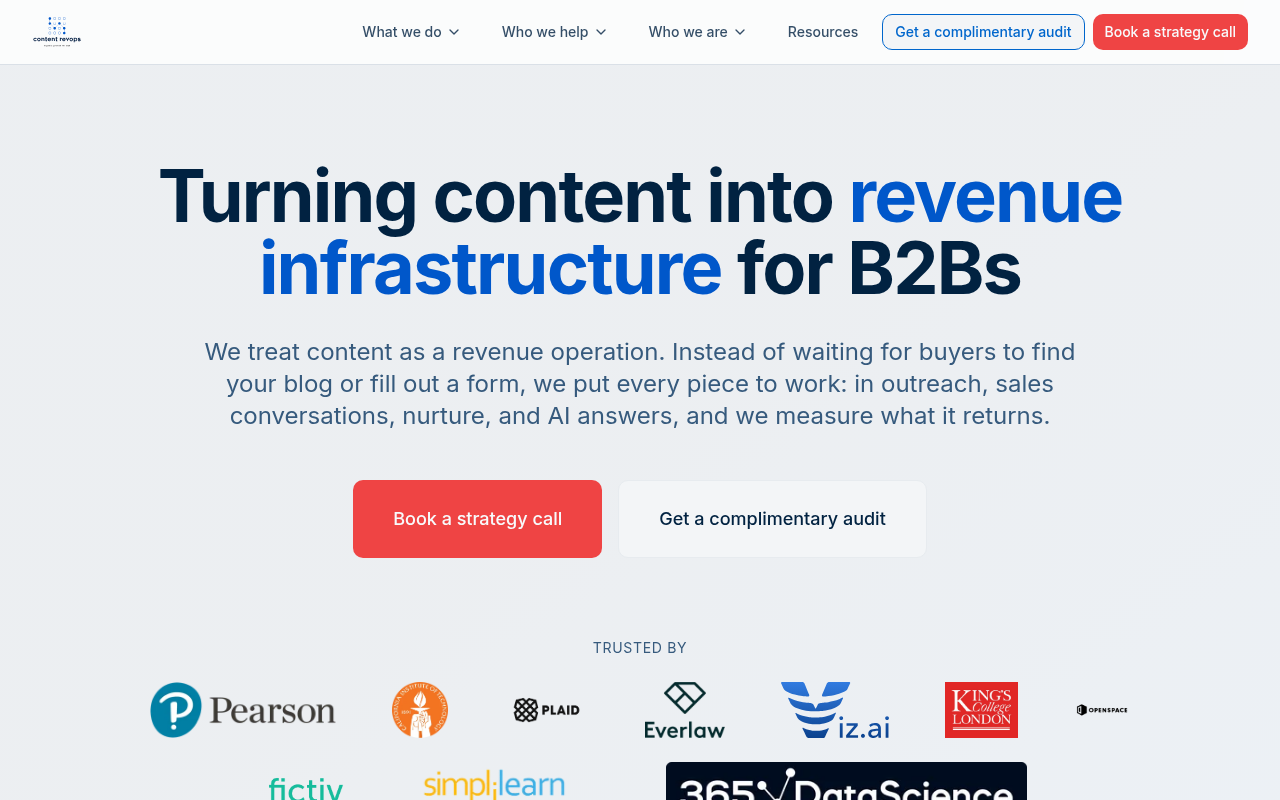
What they doContent RevOps is a content marketing and demand generation firm built for B2B companies that grow through an audience. We serve SaaS, developer tools, education, and professional services companies whose pipeline comes from users, events, advocates, and referrals, from lean teams to larger marketing orgs. The problem we fix is that community-led companies already own the hardest thing to buy, attention and goodwill, and almost none of it turns into pipeline. We give that content and that audience a job. We map the buying committee, then invite your community into the content itself, through interviews, expert quotes, webinars, and panels, so the first touch is a conversation, not a cold pitch. We build the decision-stage material most community-led teams skip, place it where your buyers and AI answers look, and wire the whole thing to your CRM so you can see what the community is actually worth. We also reactivate the audience you already have, old subscribers, past event attendees, and quiet followers, with content built to restart real conversations. And we report in revenue terms, pipeline influenced and cost per lead, not likes and impressions, so you can prove what the community returns. The method and the price are published, not hidden behind a call.
Best forCommunity-led B2B teams, from early SaaS to professional services, that have an audience but no predictable pipeline, and want one connected system instead of scattered social and events.
Pros
- Runs one connected system, from the first community touch to closed revenue, instead of social posts and events that never reach the CRM.
- Turns your community into content: interviews members, hosts them on webinars and panels, and uses that as the first touch, so outreach lands warm.
- Builds the decision-stage content a community-led company usually skips, and places it where buyers and AI answers look.
- Publishes its method and its prices, 4,100 to 8,500 US dollars a month. Most agencies on this list show neither. how we work ↗
- Has named case studies for audience-led growth, like rebuilding Ori Learning's inbound after a rebrand and running expert webinars for Aquanuity and Heliogen.
Cons
- Young and small, founded in 2024, so it fits building an audience-led engine better than running large paid-ad budgets.
- Newer to the market than the long-established firms on this list.
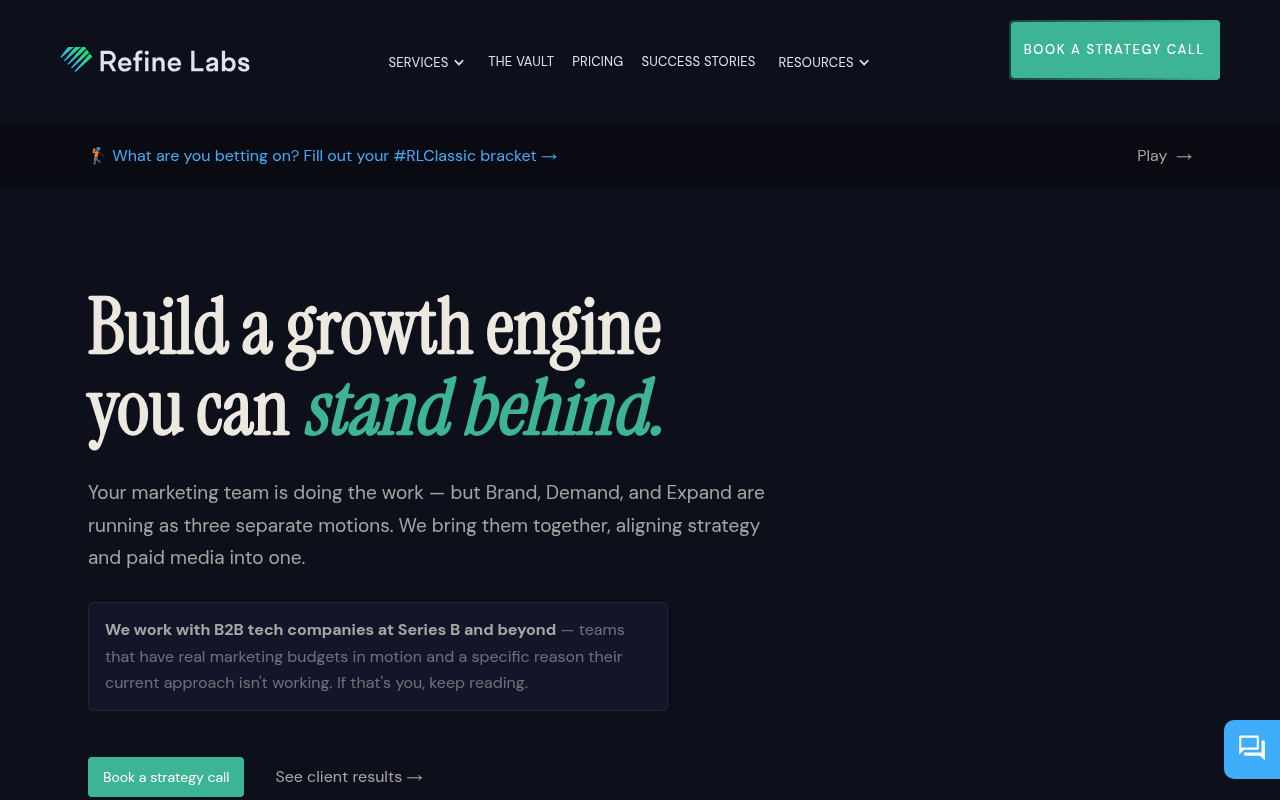
What they doRefine Labs is the agency that made demand creation a household phrase in B2B. The model is a strategy-led retainer that helps SaaS companies create demand in public, on social feeds, podcasts, and community, then measure it through self-reported pipeline instead of chasing gated form fills. It fits community-led companies because Refine Labs built its own large audience the same way, through a podcast, a live show, and a founder with a big following, and teaches clients to do it too. Since 2019 it has worked with close to 300 mid-market and enterprise SaaS companies, including Algolia, Cognism, BeyondTrust, Showpad, and Vena, using a documented Brand, Demand, Expand model. It is one of the few agencies that ranks at the top of search for the category it sells.
Best forSeries B and later SaaS companies that want to create demand through content and community in public, and have the budget to run it as a senior-led program.
Pros
- Pioneered the demand creation playbook that community-led SaaS companies now copy.
- Builds and publishes its own original research and runs a large audience of its own.
- Nearly 300 named SaaS clients since 2019 and a documented method.
Cons
- Built for Series B and later SaaS with larger budgets, so a steep fit for small or early teams.
- Does not publish prices on its own site.
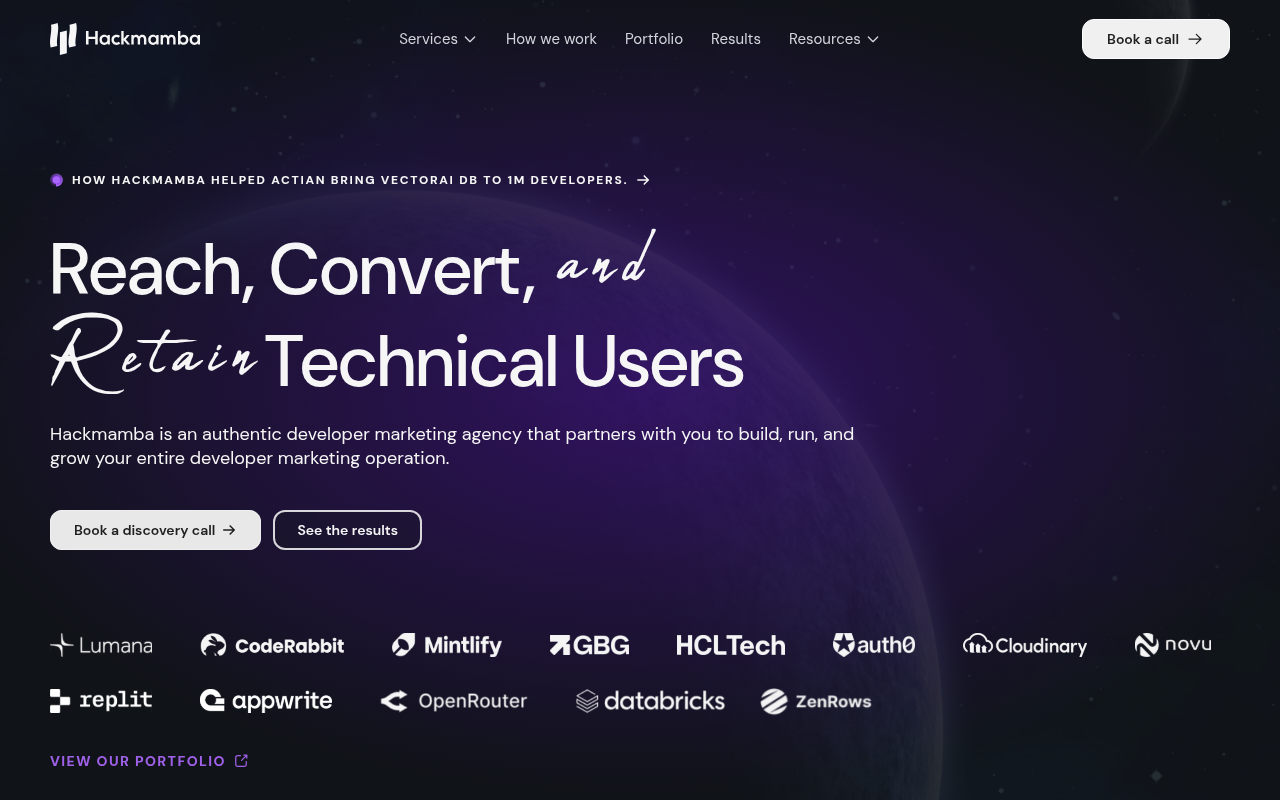
What they doHackmamba is a developer marketing agency, and developers are one of the hardest communities to win. The model is an outsourced content team that works where developers actually are: technical tutorials, product docs built in tools like Mintlify, and a developer-relations and community practice, all aimed at content that engineers find in search and that AI tools cite. That is a clean fit for a community-led devtool company, where growth comes from developers adopting the product and recommending it to peers. Founded in 2021, Hackmamba has published more than 1,700 pieces, runs its own podcast and newsletter, and works with more than 40 developer-tool companies through a method it calls Developer Adoption Architecture. It is a specialist, not a generalist.
Best forDeveloper-tool and technical SaaS companies whose growth depends on developers finding, adopting, and recommending the product.
Pros
- Genuine specialist in developer and technical audiences, with docs, tutorials, and developer-relations work.
- Large published body of its own content, plus a podcast and newsletter, so it practices what it sells.
- More than 40 named developer-tool clients.
Cons
- Focused on developer and technical SaaS, so a poor fit for non-technical community-led companies.
- Little public pricing or third-party review proof.
What they doHinge is a branding and marketing firm for professional services, and its whole approach is built on turning a firm's experts into a visible, followed community of authority. The model is research-led: Hinge runs an annual original study, the High Growth Study, and uses it to make a firm's own experts the draw, through its Visible Expert program. For a community-led professional services firm, where buyers pick people they already trust, that is exactly the right engine. Founded in 2002, Hinge runs six dedicated vertical hubs across accounting, AEC, consulting, GovCon, legal, and technology, names senior experts like Lee Frederiksen PhD, and ranks near the top of search for the terms it sells. Reported client outcomes include a 275 percent lead lift for LBMC and 7x pipeline for Data Clairvoyance.
Best forAccounting, legal, consulting, and other professional services firms that grow through the reputation of their own experts and want to build authority at scale.
Pros
- Research-led authority building through an annual original study and the Visible Expert program.
- Deep professional services focus with six dedicated vertical hubs and named senior experts.
- Ranks near the top of search for the professional services marketing terms it sells.
Cons
- Built for professional services, so a weak fit for product or developer-led companies.
- Does not publish prices on its site.
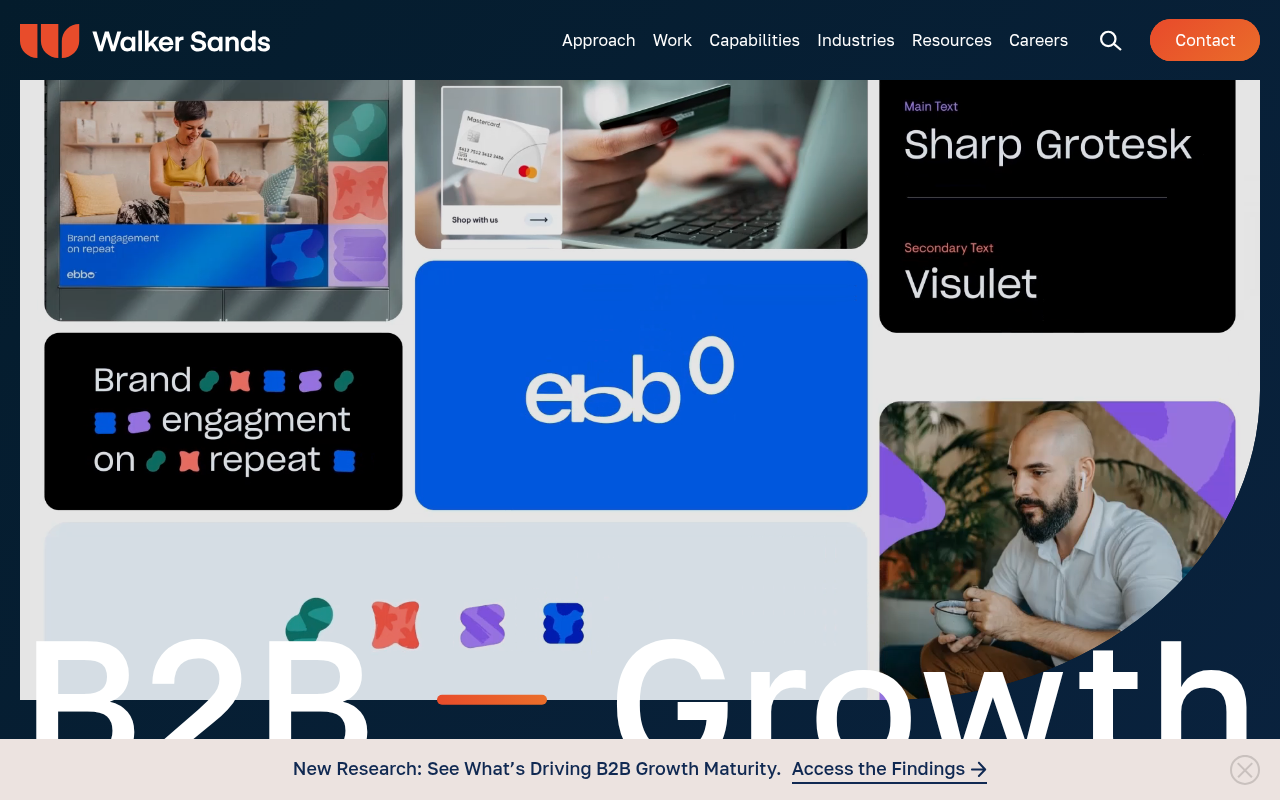
What they doWalker Sands is a large, full-service B2B agency that runs brand, PR, demand, and RevOps as one connected program. For a community-led company, the useful part is the earned-media and brand muscle: Walker Sands builds category awareness and press presence that an audience forms around, rather than only buying clicks. Founded in 2001 and now 201 to 500 people, it serves mid-market and enterprise B2B, with named clients including commercetools, Paylocity, Semrush, and John Deere, and it publishes its own research, like a B2B AI Search Visibility Benchmark. It is one of the few agencies here with verified review proof, 4.8 stars from 32 reviews on G2. In 2026 it acquired RevPartners to add CRM and RevOps engineering.
Best forMid-market and enterprise B2B companies that want brand, PR, demand, and RevOps under one roof instead of stitching point vendors together.
Pros
- Rated 4.8 from 32 reviews on G2, more verified review proof than most agencies here.
- Strong earned media and brand work that builds category awareness an audience forms around.
- Large integrated team covering brand, PR, demand, and RevOps, with named enterprise clients.
Cons
- A big, full-service agency, so smaller community-led teams may be a low priority and pay more.
- Does not publish prices on its site.
What they doSiege Media is a content marketing agency that grows an audience the slow, durable way, through content people search for and link to. The model pairs content production with digital PR, so pieces earn links and mentions and build a following over time rather than needing paid reach. That suits a community-led company that wants to be the source its audience keeps coming back to. Founded in 2012 and now 51 to 200 people, Siege practices what it sells: it ranks in the top ten for terms like content creation agency and content marketing service, published a book, and runs its own data programme. It leans generalist across clients in SaaS, fintech, ecommerce, and health rather than owning one vertical, and it is moving into answer-engine visibility as AI search grows.
Best forCompanies that want to build a durable, search-driven audience and earn links and mentions instead of paying for reach.
Pros
- Content plus digital PR that earns links and mentions and compounds an audience over time.
- Ranks in the top ten for the content terms it sells, so it practices what it sells.
- Published a book and runs its own data programme.
Cons
- Generalist across industries, with no dedicated vertical depth.
- Does not publish prices, and no third-party review score surfaced.
What they doBuyerForesight builds demand around small, carefully matched executive events and roundtables rather than ad campaigns. The model is conversation-led: it gathers senior technology buyers from a large first-party database into intimate, 100 percent ICP-matched discussions, so the first touch is a real conversation with peers. That is a community-and-events motion by design, and it fits companies with long, multi-stakeholder sales that need trust built before a demo. Founded in 2014 and operating globally, BuyerForesight names clients like AWS, NTT DATA, Adobe, IBM, and SingleStore, runs a reports hub and an interview series, and quotes a senior IBM marketer on its site. The trade-off is that it does not name its own senior team or publish prices.
Best forEnterprise B2B technology marketers who need pipeline from multi-stakeholder buying groups and prefer peer conversations and events to MQL volume.
Pros
- Builds demand through peer conversations and ICP-matched executive events, a true community-led motion.
- Works from a large first-party database of senior technology decision makers.
- Named enterprise clients including AWS, IBM, Adobe, and NTT DATA.
Cons
- Does not name its own senior team on the site.
- Does not publish prices, and no third-party review score surfaced.
What they doCCGroup is a B2B technology PR and analyst relations agency, and earned media is one of the oldest community-led channels there is. The model builds a company's standing with the audiences that shape a market: press, industry analysts, and sector communities. For a community-led company that wants authority rather than ad clicks, that is the right lever. Part of The Hoffman Agency since 2025, CCGroup runs sixteen dedicated sector hubs across fintech, cybersecurity, enterprise AI, blockchain, and more, publishes its own industry research, and names deep-linked client work with EE, Payhawk, and Signicat. It has won recent recognition, including a PRWeek Global Awards runner-up and a PRovoke top technology PR ranking. It does not carry a public review-platform score or published prices, which is normal for a PR firm.
Best forB2B technology companies that want authority built through press, analysts, and sector communities rather than paid advertising.
Pros
- Deep B2B tech PR and analyst relations across sixteen sector hubs, with its own industry research.
- Named client work with EE, Payhawk, and Signicat, plus recent industry awards.
- More than 35 years of specialist technology focus.
Cons
- A PR-first firm, so it is not a full demand or pipeline engine on its own.
- No public pricing or third-party review score.
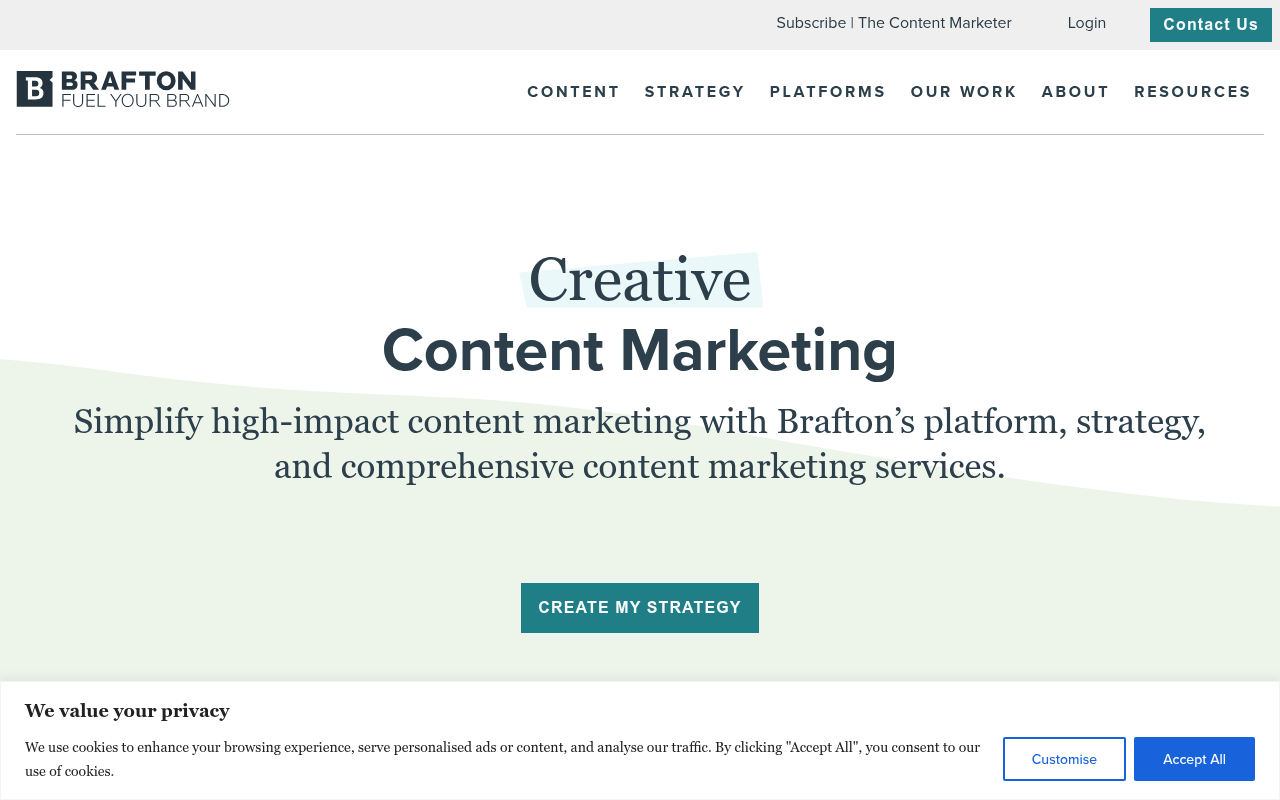
What they doBrafton is a large content marketing agency that produces at real publishing scale, with writers, designers, and video people working like an outsourced newsroom. For a community-led company that needs a steady stream of content to keep an audience engaged, that volume is the point. Founded in 2008 and now 201 to 500 people across US, UK, EU, and Australia offices, Brafton visibly practices what it sells: its own blog, newsletter, and podcast rank for around 23,000 keywords and draw roughly 99,000 visits a month, including the term content at position nine. The weakness is focus. Brafton is a broad content shop without a dedicated vertical or a sharp point of view, so it is better at producing a lot than at owning one niche community.
Best forTeams that need a high, steady volume of content from an agency that clearly produces at scale itself.
Pros
- Produces content at real publishing scale across writing, design, and video.
- Ranks for around 23,000 keywords itself, so the own-audience proof is strong.
- Global offices and a long track record since 2008.
Cons
- Generalist with no dedicated vertical or sharp point of view.
- Does not publish prices, and no third-party review score surfaced.
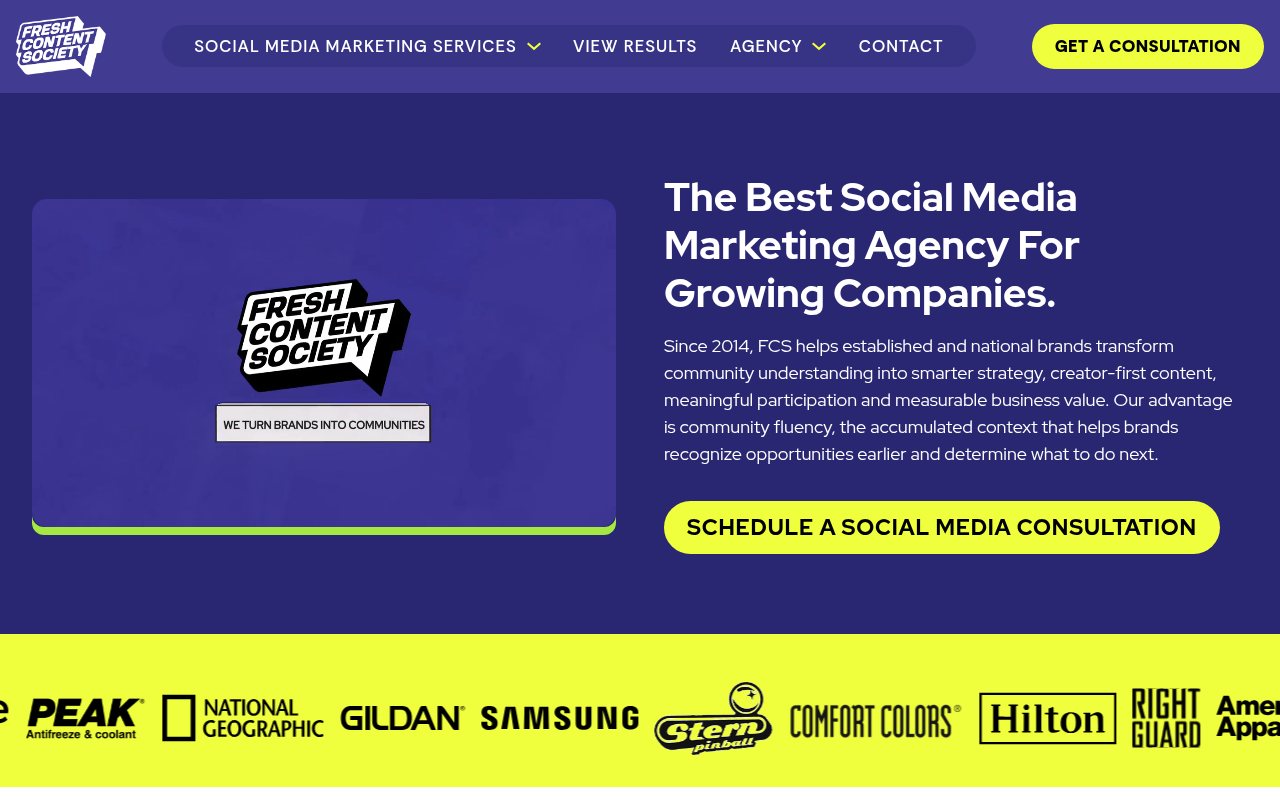
What they doFresh Content Society is a social media agency, and social is where many community-led companies actually gather their audience. The model covers strategy, content creation, channel management, and paid social, run as one team so an audience is built and kept active day to day. Founded in 2015, it ranks near the top for terms like social media management company and influencer agencies, which shows it can grow an audience for itself. Its client proof is strong and specific: a 12 percent-plus engagement rate for Graco, 95 million-plus organic video views for LINE-X, and a 5,000 percent follower increase for Dan-O's Seasoning. It has dedicated pages for automotive, manufacturing, industrial, and B2B work. The cautions are that it leans toward reach metrics and does not publish prices.
Best forCompanies whose community lives on social channels and want strategy, content, and channel management run as one team.
Pros
- Social-first team that builds and keeps an audience active across channels.
- Specific named results, including 95 million-plus organic video views for LINE-X.
- Ranks near the top for the social management terms it sells.
Cons
- Leans toward reach and engagement metrics more than pipeline.
- Does not publish prices, and no third-party review score surfaced.
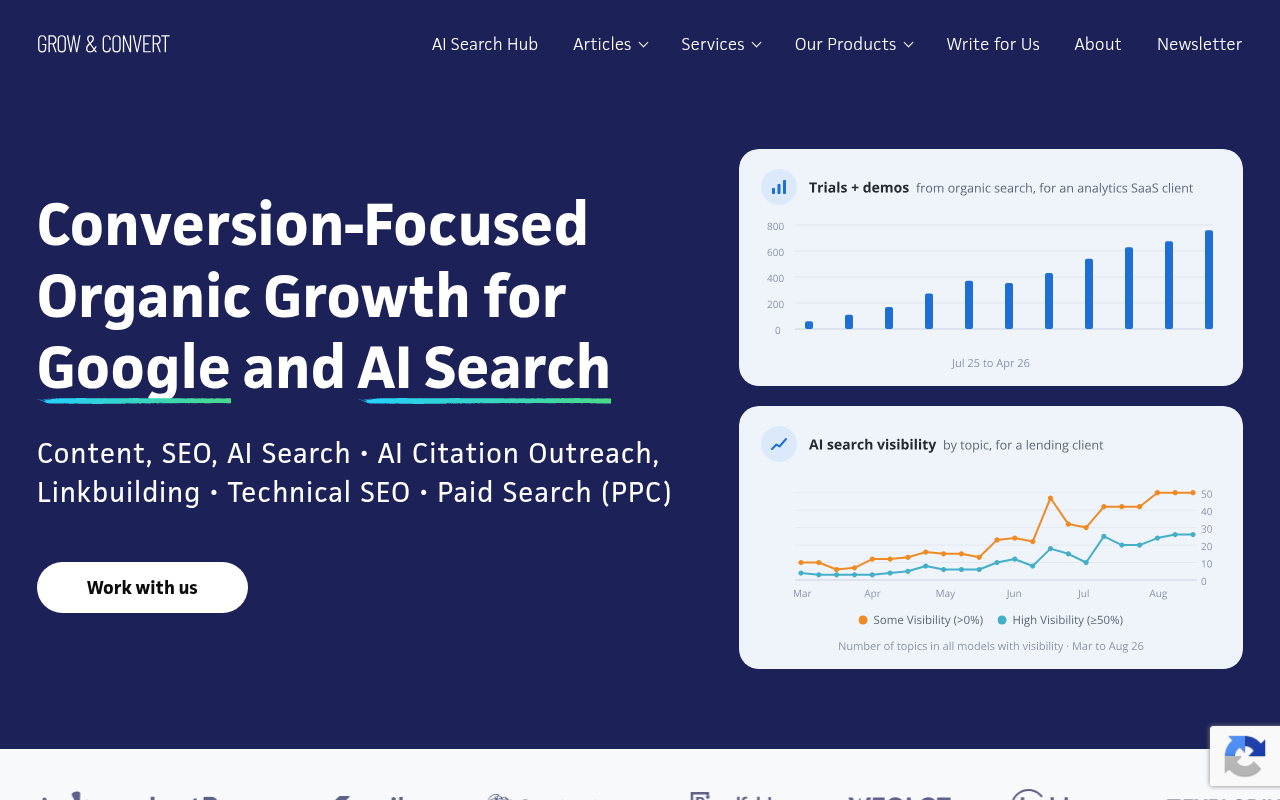
What they doGrow and Convert is a small content agency with a loud, well-followed point of view. It is known for Pain Point SEO, the idea of writing for buying-intent searches rather than chasing traffic, and it built an audience by teaching that method in public. For a community-led company, the appeal is a sharp, opinionated partner whose own content already draws a following. Founded in 2015, it ranks number one for content marketing agencies and in the top five for content marketing services, and publishes original research on AI citations. Client logos include Yelp, LastPass, Wrike, and ServiceTitan, which skew toward B2B SaaS. The main cautions are size and price: it is a 1 to 10 person team, so capacity is limited, and it does not publish rates.
Best forB2B and SaaS companies that want conversion-focused content from a sharp, opinionated team with a following of its own.
Pros
- Clear, well-known method in Pain Point SEO, taught in public to build its own audience.
- Ranks number one for content marketing agencies and publishes original AI-citation research.
- Named SaaS clients including Yelp, LastPass, and Wrike.
Cons
- Small 1 to 10 person team, so capacity is limited.
- Does not publish prices, and no third-party review score surfaced.
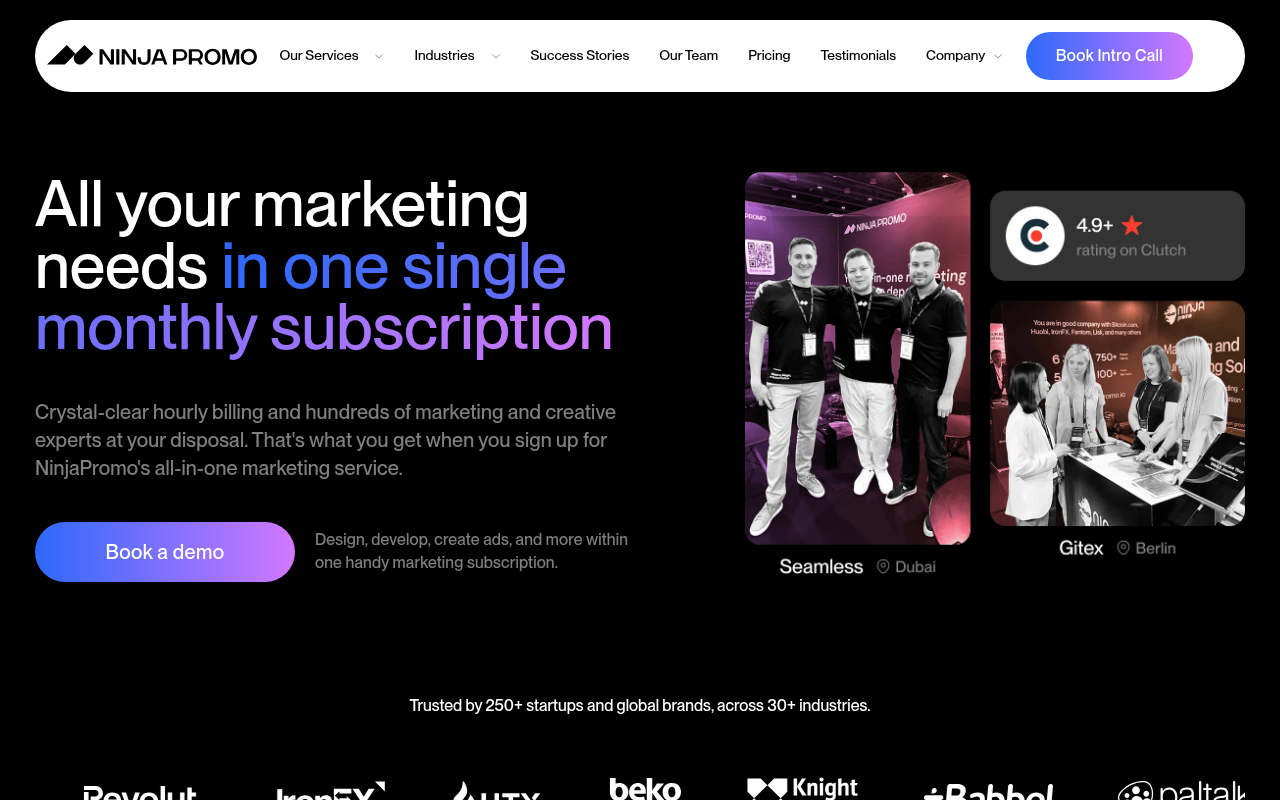
What they doNinjaPromo runs marketing as a monthly subscription, giving you a dedicated cross-functional team instead of a project or a rotating freelancer pool. Social and community work is its core, which fits a community-led company that needs steady channel management, social content, and community activity without hiring a full team. Founded in 2017 and now 51 to 200 people, it grew out of crypto and fintech, where community is the whole game, and it says it works with more than 250 startups and global brands. It is one of the few agencies here that publishes prices: subscription plans start at about 3,200 US dollars a month and scale up, and you can pause the subscription. The trade-off is breadth: it is an all-in-one team across many industries, not a specialist in one.
Best forStartups and smaller teams that want an outsourced social and community team on a flexible monthly subscription.
Pros
- Dedicated subscription team for steady social and community work, which you can pause.
- Publishes its pricing, from about 3,200 US dollars a month.
- Roots in crypto and fintech, where community-led growth is the whole game.
Cons
- All-in-one generalist across many industries, not a specialist in one.
- No third-party review score surfaced.
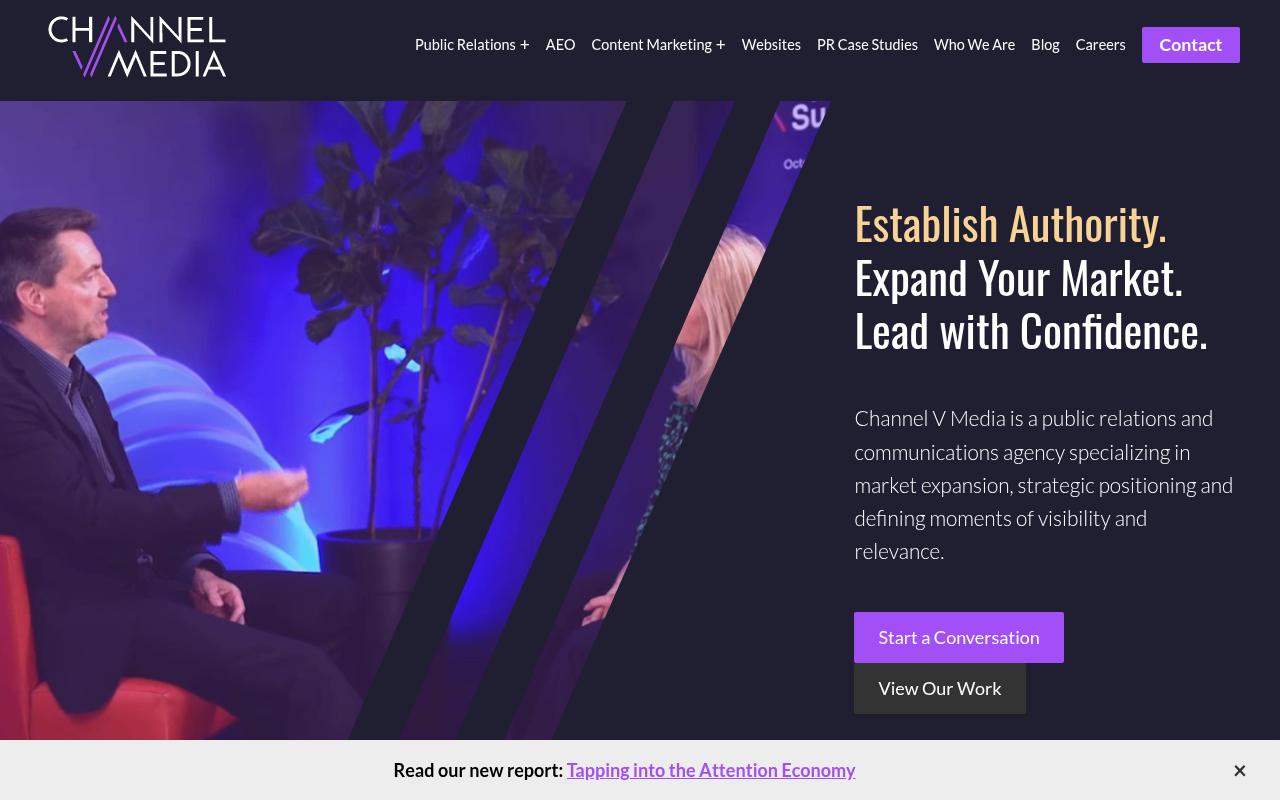
What they doChannel V Media is a New York PR and communications firm that focuses on earned authority: media coverage, executive thought leadership, and research reports that put a company in front of the audiences it wants to join. For a community-led company entering a new market, that earned authority is how a community first learns to trust you. Founded in 2008, it serves growth and market-expansion companies, and it clearly builds its own audience, ranking for broad PR terms and drawing strong organic traffic. The honest limit is that it is a PR and content shop, not a full demand engine. Its work is mostly output, coverage and reports, rather than content wired directly to your pipeline, so you would pair it with a demand system to close the loop. It does not publish prices.
Best forGrowth and market-expansion companies that need earned authority and press before a community will trust them.
Pros
- Earned authority through media, executive thought leadership, and research reports.
- Builds its own audience, ranking for broad PR terms with strong organic traffic.
- Long track record in B2B communications since 2008.
Cons
- A PR and content shop, so its work is mostly output rather than content wired to pipeline.
- Does not publish prices, and no third-party review score surfaced.
Is your community turning into pipeline?
Get a free Content RevOps audit. We show where your audience and content leak revenue and what a connected system would change.
Frequently asked questions
What does a demand generation agency do for a community-led company?
It helps your audience and community turn into pipeline. That means content and events built for the people who already follow you, placed where they and AI answers look, then tied back to your CRM so you can see what the community is worth.
How much do these agencies charge?
Most do not publish prices. Where a floor is public it tends to sit between about 3,000 and 50,000 US dollars a month, depending on scope and team size. We mark pricing as not disclosed when an agency does not share it on its own site.
How did we choose and rank these agencies?
We reviewed agencies that fit an audience-led, advocacy-led, or event-led motion, then kept the ones with real proof. We ranked them on fit to a community-led motion, whether they build an audience for themselves, review evidence, transparency, and fit. The same checks apply to our own entry.