The best demand generation agencies for creating demand rather than capturing it in 2026
Most demand generation still works by capture. It waits for the roughly three in a hundred buyers who are already searching, then competes for them with ads and keywords. That pool is small, and the price of each buyer keeps climbing. Creating demand is the other path. It means reaching people before they look, giving them a reason to care, and being the name they remember when they are ready. Plenty of agencies say they create demand. Most just run more ads or post more often. We reviewed the ones that actually build net-new demand through research, expertise, events, and content that earns attention, and kept the ones with real proof. Below we explain each in plain words.

How we chose this list
We used the same checks on every agency, including our own. Here is what earns a spot and how we ordered them.
Who makes the list
Every agency runs real demand generation and creates demand of its own, through research, content, or events that earn attention. We left out lead-list sellers, appointment-setters, and ads-only shops.
How we rank them, in order
- Real demand creation, not just capturing the buyers already searching
- Whether they create demand for themselves, and it works
- Original research, points of view, and content that earns attention
- Review proof, counting how many reviews back the score
- Whether they show prices and name their team
What we promise on every entry
Every claim can be traced to a source. Ratings always show how many reviews they come from. Prices are shown, or marked not shown. We do not give any agency a made-up score, and we hold our own entry to the same checks.
The shortlist at a glance
All 13 entries, ranked by the criteria above. Full detail in the cards below.
| # | Name | Pros | Cons | Best for | Pricing |
|---|---|---|---|---|---|
| 1 | Content RevOps |
|
| B2B teams that have squeezed all they can from capturing existing demand and need to create net-new demand, then tie it to pipeline instead of guessing at brand. | $4.1-8.5k/mo |
| 2 | Discovered Labs |
|
| Series A and later B2B SaaS teams that want to be the brand AI tools recommend as buyers shift from search to answers. | Not disclosed |
| 3 | New Perspective |
|
| Industrial, manufacturing, cleantech, and tech companies that want one senior team to build inbound demand and prove it against pipeline. | $5k+ min project |
| 4 | Hotwire |
|
| Enterprise technology brands that create demand through reputation, press, analyst relations, and original research at global scale. | Not disclosed |
| 5 | AGENCY |
|
| Pharma, MedTech, and diagnostics teams that need to create clinician and patient demand when reps can no longer get in the room. | Not disclosed |
| 6 | Hackmamba |
|
| Developer-tool and technical SaaS companies that need to create demand among engineers through content, docs, and community. | Not disclosed |
| 7 | Filament |
|
| B2B technology vendors and channel programs in ANZ and APAC that want to create demand for themselves and their partners. | Not disclosed |
| 8 | Omni Lab |
|
| B2B SaaS teams that want to create demand with paid media across the 97 percent who are not searching yet, with pricing shown up front. | $4.8-6k/mo |
| 9 | BuyerForesight |
|
| Enterprise technology teams that want to create demand through real executive conversations and events, measured on buying-group pipeline. | Not disclosed |
| 10 | GrowthSpree |
|
| Seed to scaleup B2B SaaS teams that want paid demand plus original research on a flat, month-to-month fee. | Not disclosed |
| 11 | RevvGrowth |
|
| B2B SaaS teams that want content and search assets that build category awareness and inbound demand over time. | Not disclosed |
| 12 | MaximusLabs AI |
|
| Growth-stage B2B SaaS and AI companies that want research-led demand and citations across AI search tools. | Not disclosed |
| 13 | GrowthMode Marketing |
|
| HR tech companies in a crowded category that need brand-led demand built on real differentiation. | Not disclosed |
The list
What they doContent RevOps is a content marketing and demand generation firm built for companies that want to create demand, not just harvest the small slice already searching. Most agencies chase the roughly three in a hundred buyers who are ready today. We help you reach the rest, the people who will buy next quarter or next year and have never heard your name. We do it by turning what your company already knows into demand. We run original research, expert interviews, and points of view that give your market a reason to pay attention, then place that work where buyers actually look, in search, in social feeds, and in AI answers like ChatGPT. Here is the part most demand-creation shops skip. Created demand is worth little if you cannot see it. So we wire every asset to your CRM, track which content influenced which deal, and report on pipeline, not likes. Instead of five campaigns that never talk to each other, you get one connected system, from the first time a stranger meets your idea to the day the deal closes. We publish our method and our prices, and we hold this entry to the same checks as every other agency here.
Best forB2B teams that have squeezed all they can from capturing existing demand and need to create net-new demand, then tie it to pipeline instead of guessing at brand.
Pros
- Creates demand from what your company already knows, through original research, expert content, and points of view, then places it in search, social, and AI answers.
- Wires every asset to your CRM and reports on pipeline, not vanity metrics, so created demand is measured rather than guessed. how we work ↗
- Runs it as one connected system, from a stranger meeting your idea to a closed deal, instead of five campaigns that never talk to each other.
- Has named case studies where a flagship content asset created real demand, like a resource hub or research report that drove pipeline. case studies ↗
- Backs the approach with its own 2026 research across seven B2B industries and about 14,000 websites, which found most content creates awareness but no demand. our data ↗
- Publishes its method and its prices. Most agencies on this list hide both.
Cons
- Young and small, so it fits building a demand-creation engine better than running very large paid-ad budgets.
- Newer than the long-established agencies here, so less of a legacy brand name.
What they doDiscovered Labs is a specialist agency for search and AI answers, built by a former Stanford AI researcher and senior marketers. Most of this list creates demand in feeds and inboxes. Discovered Labs creates it in a newer place, the AI tools buyers now ask before they ever run a search. It works to make your brand the name ChatGPT, Gemini, and Google cite, and backs the pitch with its own original studies of 144,000 and 2 million AI citations that HubSpot and Semrush have referenced. Named clients include incident.io, Gladia, Instantly, Granola, and Sova. It only works with B2B SaaS, and it ranks organically for the exact terms it sells, which is rare proof the method works. The team is small and there is no public pricing.
Best forSeries A and later B2B SaaS teams that want to be the brand AI tools recommend as buyers shift from search to answers.
Pros
- Creates demand on a new surface, the AI answers buyers increasingly trust over a list of links.
- Publishes original research on AI citations that HubSpot and Semrush have referenced.
- Ranks organically for the exact category terms it sells, honest proof the method works.
Cons
- Works only with B2B SaaS, so it is a poor fit outside software.
- Does not publish pricing, and the team is small.
What they doNew Perspective is a full-service B2B growth agency that has run inbound and demand programs since 2003, staffed only with senior people, no juniors learning on your budget. It works mostly with industrial, manufacturing, cleantech, and SaaS companies, where buyers research on their own for months before they talk to sales, so content that teaches and builds trust is how demand gets made. It is a HubSpot Platinum Partner and reports client results like adding more than 113 million dollars to Carbon Clean's pipeline in 60 days and tripling Williamson's lead generation year over year. It holds a 4.9 rating from 10 Clutch reviews, and its published minimum project size is 5,000 dollars. Because it is full-service, it is less specialised than a demand-creation-only shop.
Best forIndustrial, manufacturing, cleantech, and tech companies that want one senior team to build inbound demand and prove it against pipeline.
Pros
- More than 20 years of B2B demand work, staffed only with senior people.
- Strong, verified proof, a 4.9 rating from 10 Clutch reviews and named client pipeline results.
- Publishes a real minimum project size, which most firms here do not.
Cons
- Full-service and broad, so less specialised than a demand-creation-only shop.
- Focused mainly on US industrial and tech markets.
What they doHotwire is a global technology PR and communications consultancy, founded in 2000, with more than 400 people across 15 offices. Public relations is one of the oldest ways to create demand. Instead of buying clicks, you earn attention through press, analyst relations, and ideas the market talks about. Hotwire does this for large technology brands including Palo Alto Networks, Salesforce, Adobe, SAP, and Akamai, and it publishes its own research, such as its Agentic Organizations and AI Beyond Efficiency reports, to seed the conversations it wants to lead. That scale is also the catch. Hotwire is built for enterprise budgets and complex global programs, so a small team with a tight budget will likely be a poor fit. It does not publish pricing.
Best forEnterprise technology brands that create demand through reputation, press, analyst relations, and original research at global scale.
Pros
- Creates demand the earned way, through press, analysts, and ideas rather than paid clicks.
- Works with major technology brands and publishes its own market research.
- Global scale, with specialists across 15 offices for complex programs.
Cons
- Built for enterprise budgets, so a poor fit for small teams.
- Does not publish pricing.

What they doAGENCY is a healthcare-only demand generation firm in Bristol, run by a former Zimmer commercialisation lead with 20 years and 47 product launches behind him. It exists for a specific problem. Medical reps can no longer get in front of clinicians, so demand has to be created another way, through education. AGENCY does that with a published book, a podcast, and middle-of-funnel content aimed at pharma, MedTech, biotech, and diagnostics buyers. Named clients include Zimmer Biomet, Contura, BCB Medical, Micrima, and Sermo, and the firm ranks second on Google for medical marketing agency, which shows the method works on itself. It reports results like 285 patient enquiries at a 29 pound cost each. It works only in healthcare, it is a small team, and it does not publish pricing.
Best forPharma, MedTech, and diagnostics teams that need to create clinician and patient demand when reps can no longer get in the room.
Pros
- Creates demand through education, a book, a podcast, and middle-of-funnel content, built for healthcare buyers.
- Led by a 20-year healthcare commercialisation expert with 47 launches.
- Ranks second on Google for its own category, proof the approach works.
Cons
- Works only in healthcare, so it is a poor fit outside pharma, MedTech, and diagnostics.
- Small team and no published pricing.
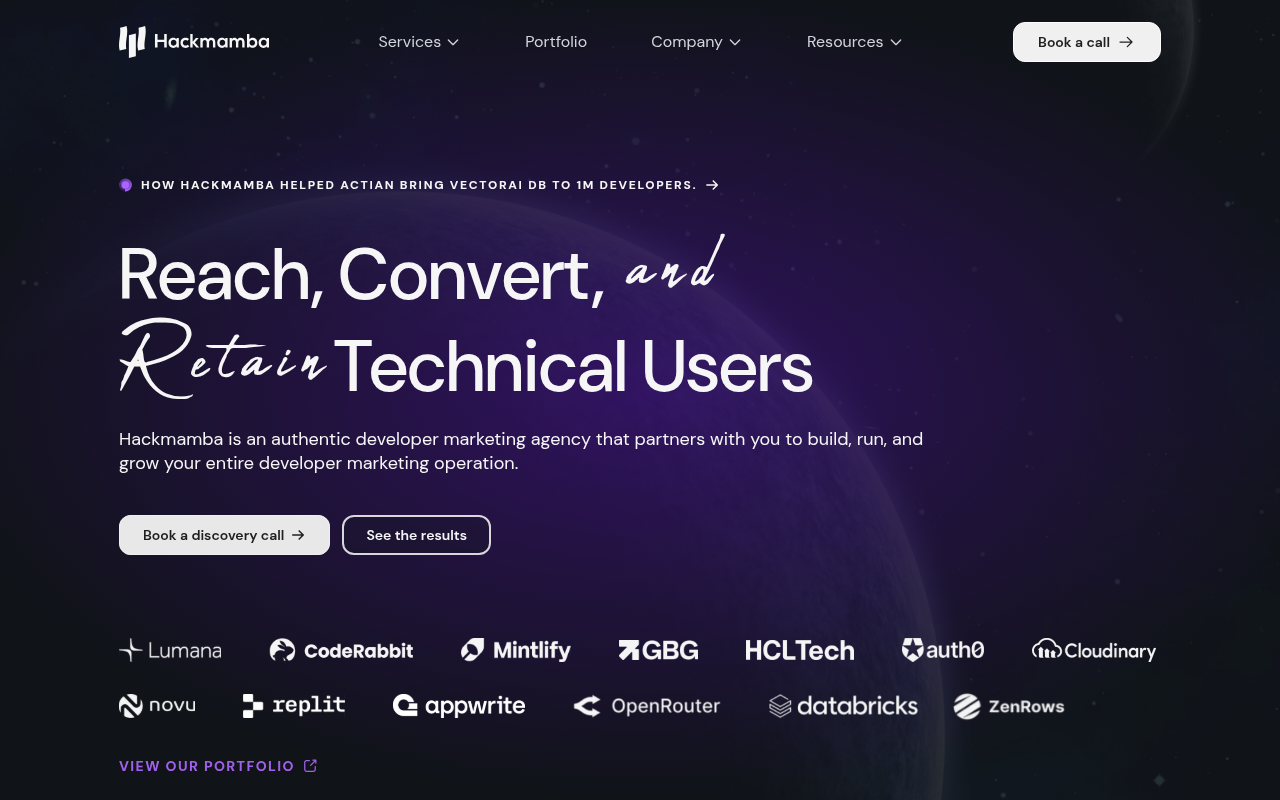
What they doHackmamba is a developer marketing agency for technical products, the kind where buyers are engineers who ignore ads and trust other engineers. You cannot capture developer demand with keywords alone, so Hackmamba creates it with deep technical content, documentation, community, and developer relations. It has published more than 1,700 pieces and runs its own podcast and newsletter, and it names devtool clients including Cloudinary, Auth0, Appwrite, Netlify, Sourcegraph, Replit, and Databricks, with a Cloudinary case study reporting 88 percent organic growth. It ranks for the informational terms its audience actually searches, from JavaScript loops to technical writing, which is honest proof it can build an audience. The focus is narrow, developer tools and technical SaaS, so it is a poor fit outside that world, and it does not publish a rating.
Best forDeveloper-tool and technical SaaS companies that need to create demand among engineers through content, docs, and community.
Pros
- Creates demand among developers, an audience that ignores ads, through technical content and community.
- More than 1,700 pieces published, plus a podcast and newsletter, and a named 88 percent organic-growth case study.
- Ranks for the technical terms its buyers search, proof it can build an audience.
Cons
- Narrow to developer tools and technical SaaS, a poor fit elsewhere.
- Does not publish a rating or pricing.
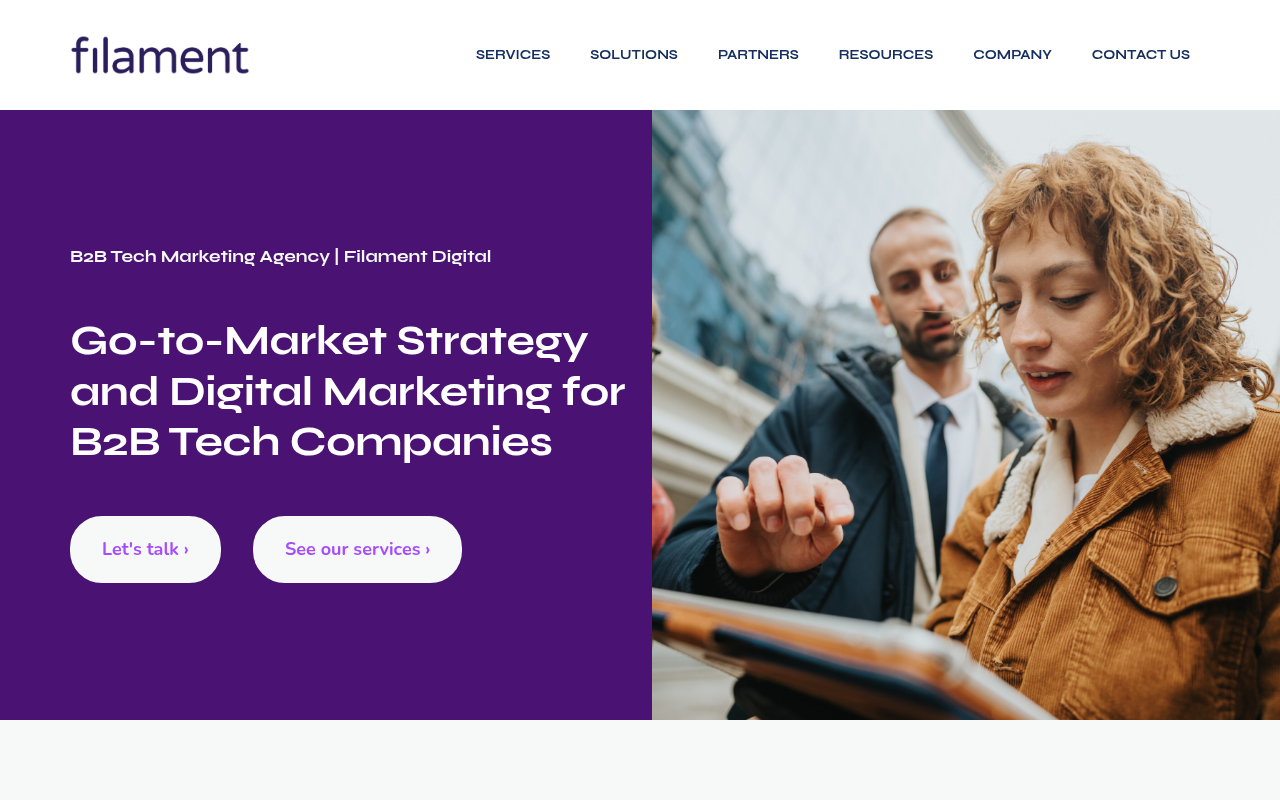
What they doFilament is a go-to-market agency for B2B technology companies and their channel programs, based in Sydney and focused on the ANZ and APAC markets. Its angle on creating demand is unusual and practical. It helps technology vendors unlock the marketing development funds they already have and turn them into real demand for their partners, not just co-branded banners. It publishes guides on channel and MSP marketing and names clients including AUCloud, GlobalSign, Veeam, Probax, and FujiFilm, and it was recognised for content marketing at the Semrush Search Awards. It ranks organically for terms its buyers search, such as what are channel partnerships, off editorial pages rather than its brand name. The team is small and the focus is regional, so it fits ANZ and APAC tech better than a US enterprise, and it does not publish pricing.
Best forB2B technology vendors and channel programs in ANZ and APAC that want to create demand for themselves and their partners.
Pros
- Turns vendor marketing development funds into real partner demand, not just co-branded ads.
- Named tech clients and a Semrush Search Award for content marketing.
- Ranks for buyer terms off editorial pages, proof of its own content engine.
Cons
- Small team focused on ANZ and APAC, a weaker fit for US enterprise programs.
- Does not publish pricing.
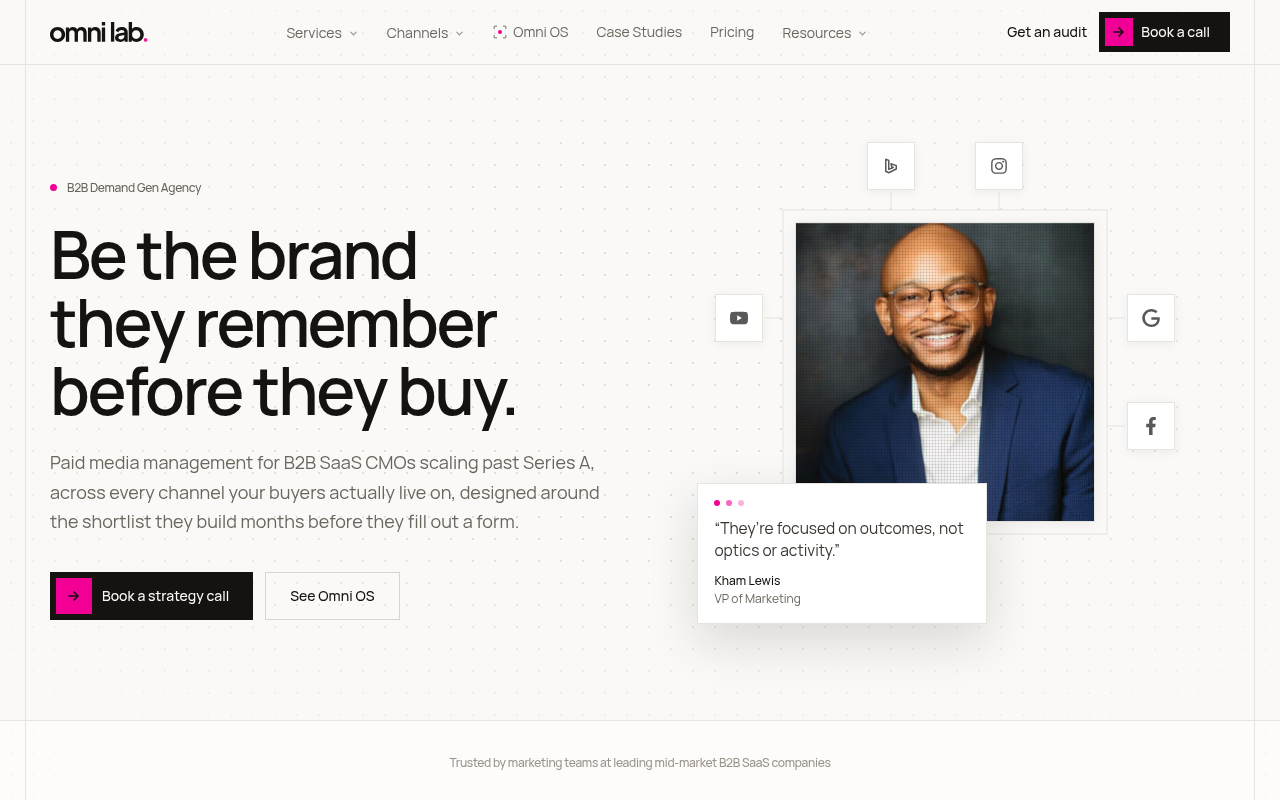
What they doOmni Lab is a paid media agency for B2B SaaS, and it is refreshingly clear that most of the market, about 97 percent, is not ready to buy today. Rather than fight over the few who are, it uses paid ads on LinkedIn, YouTube, Meta, and more to build awareness with the rest, so demand exists before anyone fills out a form. Co-founded by Jason Steele and Jonathan Bland, it names clients including Shipwell, Zenhub, Vellum, Submittable, and project44, and it is one of the few firms here that publishes real prices, from 4,800 dollars a month for strategy up to 6,000 with creative, tied to a 10,000 dollar ad budget. Two honest cautions. Its Clutch score of 3.5 comes from a single review, and it works through paid media, so results slow when spend stops.
Best forB2B SaaS teams that want to create demand with paid media across the 97 percent who are not searching yet, with pricing shown up front.
Pros
- Uses paid media to create demand with the 97 percent not searching yet, not just capture the few who are.
- One of the few firms here that publishes real retainer prices, from 4,800 to 6,000 dollars a month.
- Named B2B SaaS clients and two experienced demand-gen co-founders.
Cons
- Its 3.5 Clutch rating comes from a single review, so there is little public proof.
- Works through paid media, so demand slows when spend stops.
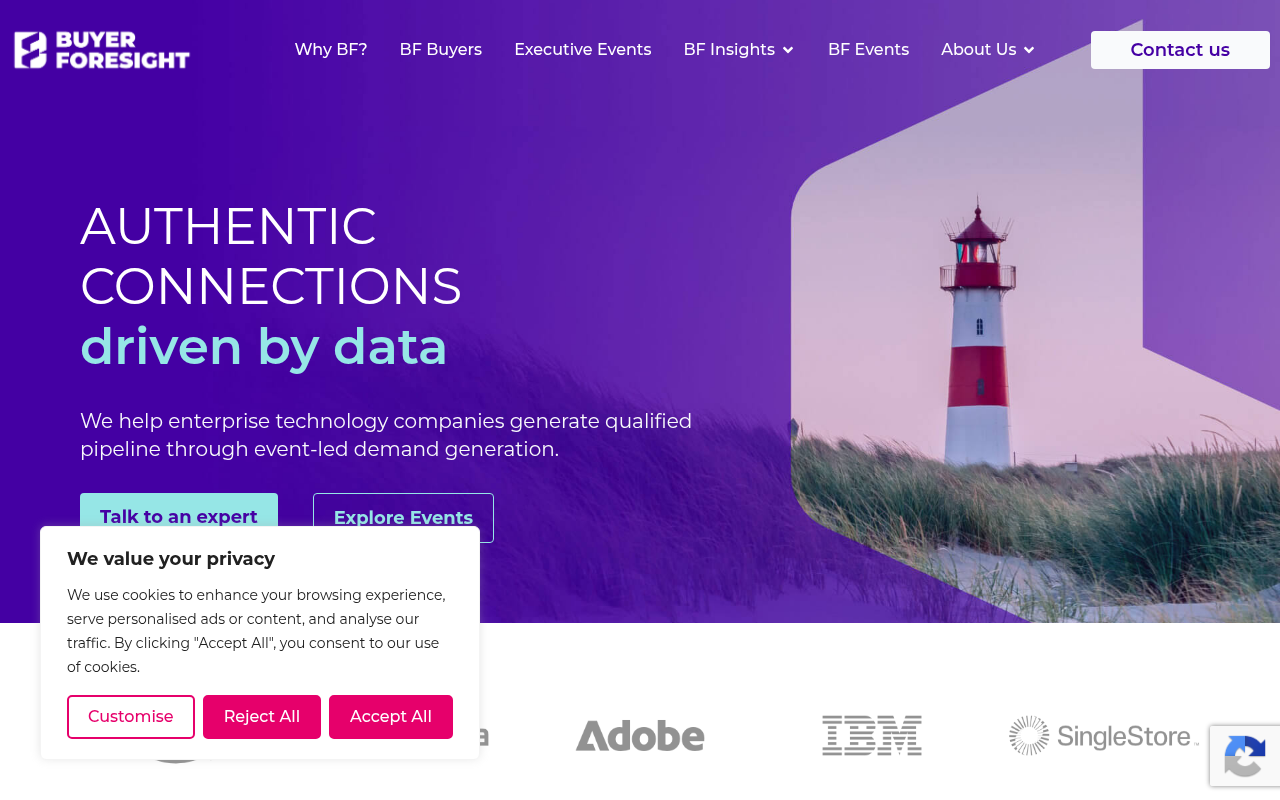
What they doBuyerForesight builds demand around conversations, not clicks. It runs small, 100 percent ICP-matched executive roundtables and events, then supports them with interviews and content, so buyers meet your team in a real discussion long before a sales pitch. It targets those invitations from a first-party database it says holds 18.5 million senior technology decision makers, and it names enterprise clients including AWS, NTT DATA, Adobe, IBM, and SingleStore, with an IBM marketing leader quoted on the site. This event-led model fits enterprise technology teams measured on pipeline from whole buying groups rather than single leads. The catch is that it is built for enterprise tech specifically, its own organic footprint is small, and it does not publish a rating or pricing, so you will need a direct conversation to scope cost.
Best forEnterprise technology teams that want to create demand through real executive conversations and events, measured on buying-group pipeline.
Pros
- Creates demand through real executive conversations and 100 percent ICP-matched events.
- Targets from a large first-party database of senior technology decision makers.
- Named enterprise clients including AWS, NTT DATA, Adobe, and IBM.
Cons
- Built for enterprise tech, with a small organic footprint of its own.
- Does not publish a rating or pricing.
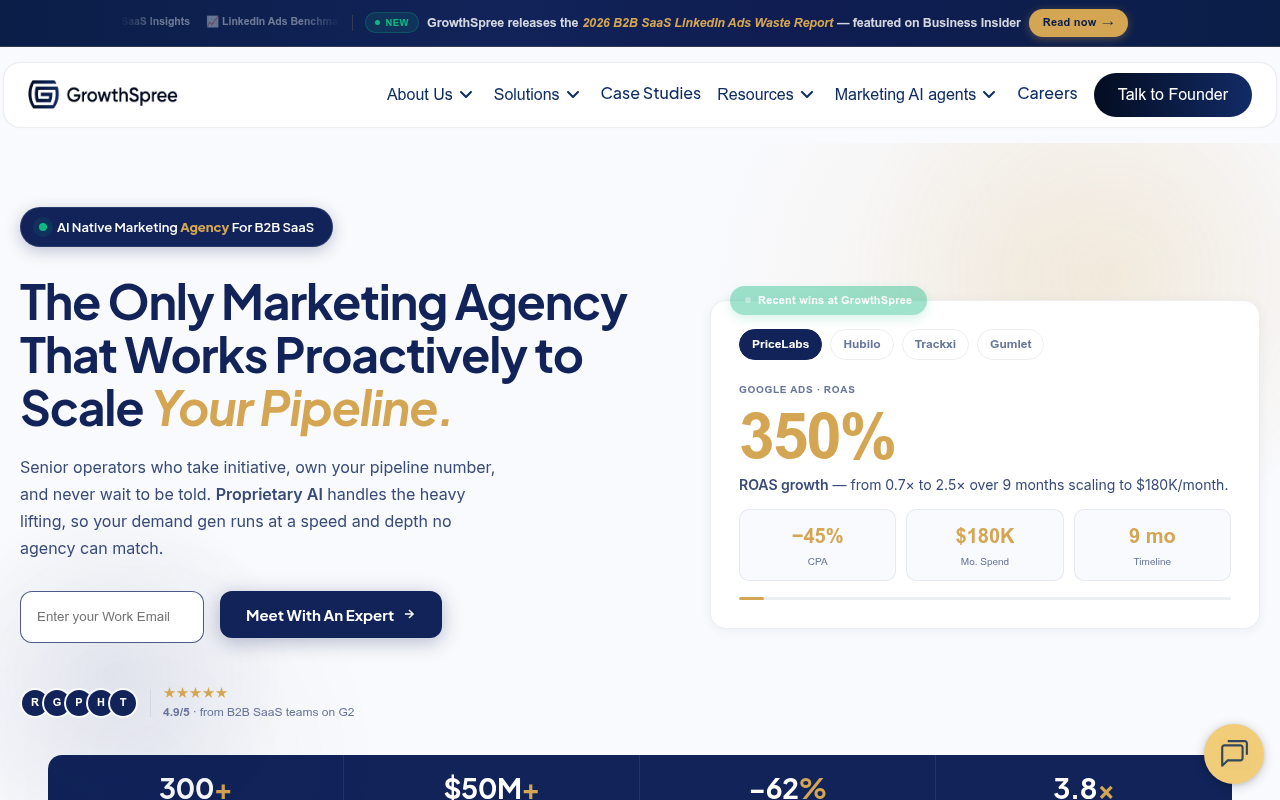
What they doGrowthSpree is a B2B SaaS demand generation agency that runs paid media and demand programs on a flat monthly fee, with senior operators plus a set of in-house AI tools. Its demand-creation signal is its original research. Its 2026 LinkedIn Ads Waste Report, built from 9.4 million dollars of audited spend, was picked up by Business Insider, the kind of data study that makes a market pay attention. Named clients include PriceLabs, Hubilo, Rocketlane, and Hasura, and it reports a G2 score of 4.9, though without a verified public count we do not show a rating here. One honest caution. It ranks for category terms like demand gen companies largely through its own best-agencies articles that place GrowthSpree first, which is effective but self-serving rather than earned coverage. Paid media is still its core.
Best forSeed to scaleup B2B SaaS teams that want paid demand plus original research on a flat, month-to-month fee.
Pros
- Publishes original research, including a LinkedIn Ads Waste Report picked up by Business Insider.
- Named B2B SaaS clients and a flat, month-to-month fee.
- Pairs senior operators with in-house AI tools aimed at pipeline, not lead volume.
Cons
- Ranks for category terms mainly through its own best-agencies articles that place itself first.
- Paid media is the core, and it does not show a verified public rating.
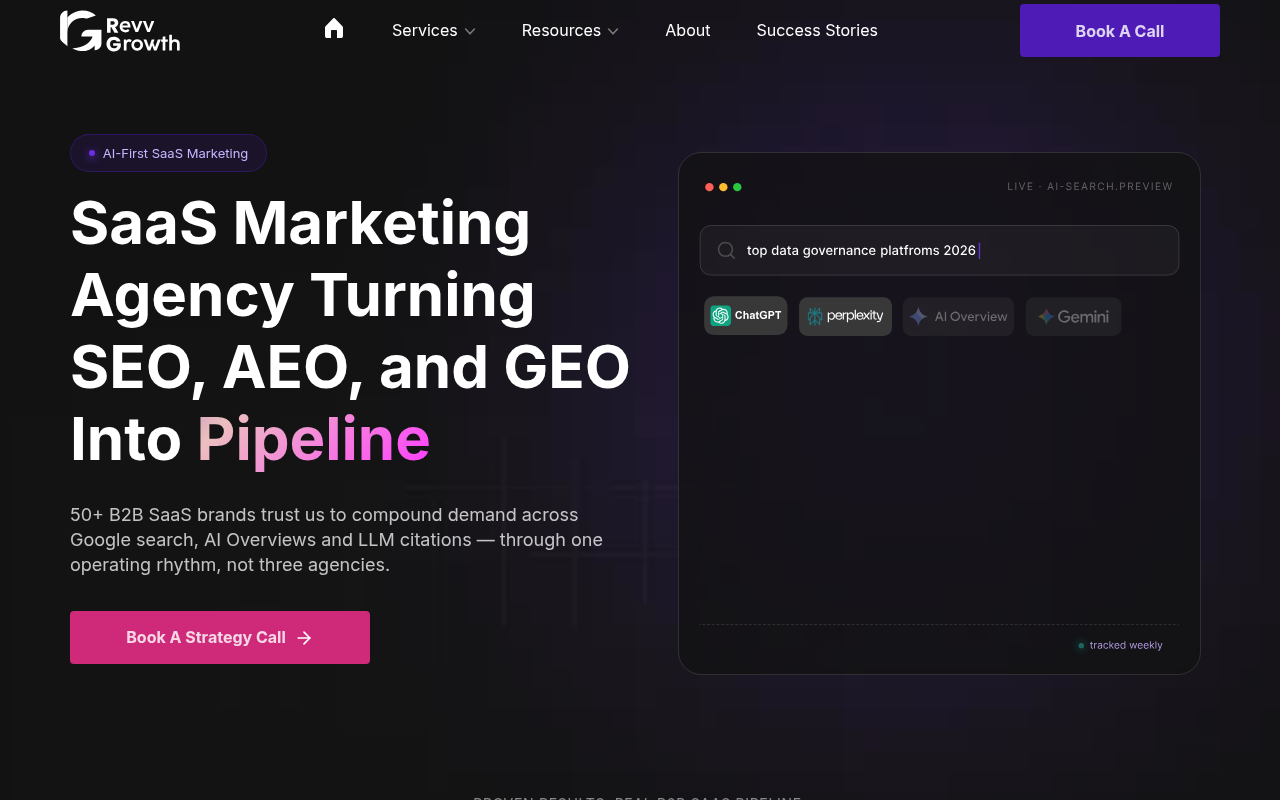
What they doRevvGrowth is a B2B SaaS marketing agency that builds content, SEO, and answer-engine visibility into an inbound engine. It sits a little closer to capturing demand than creating it, since search is its core, but it earns a place because it builds the content assets that make a category understand and remember you. Every service hub is SaaS-specific, and named case studies carry real numbers, from Everstage growing 20 to more than 400 ranked pages to Vymo reporting 21 million dollars in pipeline. Founder Karthick Raajha is named with 20 years in B2B marketing, and the firm ranks for the SaaS SEO and AEO terms it sells, which shows the method works on itself. It is young, founded in 2023, and it does not publish a public rating, so ask for recent references.
Best forB2B SaaS teams that want content and search assets that build category awareness and inbound demand over time.
Pros
- Builds SaaS-specific content and search assets that make a category understand and remember you.
- Named case studies with real numbers, including a reported 21 million dollar pipeline for Vymo.
- Ranks for the SaaS SEO and AEO terms it sells, proof the method works on itself.
Cons
- Leans toward capturing search demand more than creating net-new demand.
- Young, founded in 2023, and does not publish a public rating.
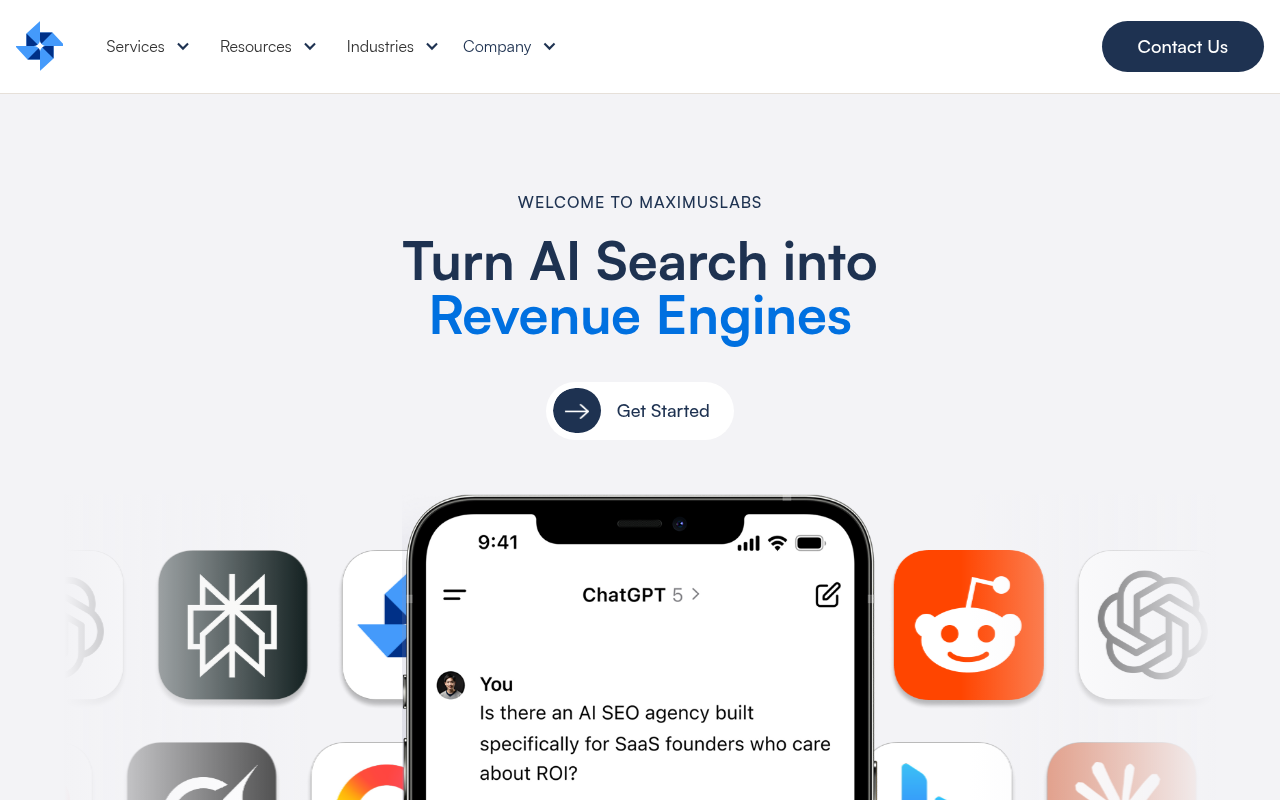
What they doMaximusLabs is a research-first agency for the AI-search era, helping growth-stage B2B SaaS and AI companies get found and cited across Google AI Mode, ChatGPT, Perplexity, and Gemini. Its demand-creation move is publishing. It has released more than six free, no-gate benchmark reports on how B2B buyers use AI search, the kind of original data that earns citations and attention on its own. It names clients including Oliv AI, UnderDefense, Explorium, and HRone, and points to a video case study for Oliv AI. Being cited by AI tools is a genuinely new way to create demand before a buyer ever reaches your site. The clear caution is age. The firm was founded in 2025, its own organic footprint is still small, and it does not publish a public rating, so treat it as an early but promising specialist.
Best forGrowth-stage B2B SaaS and AI companies that want research-led demand and citations across AI search tools.
Pros
- Publishes six or more free benchmark reports on AI search, original data that earns citations.
- Focused on getting brands cited by ChatGPT, Perplexity, and Google AI Mode, a new demand surface.
- Names growth-stage clients including Oliv AI, UnderDefense, and Explorium.
Cons
- Founded in 2025, with a small organic footprint of its own so far.
- Does not publish a public rating, so ask for recent references.
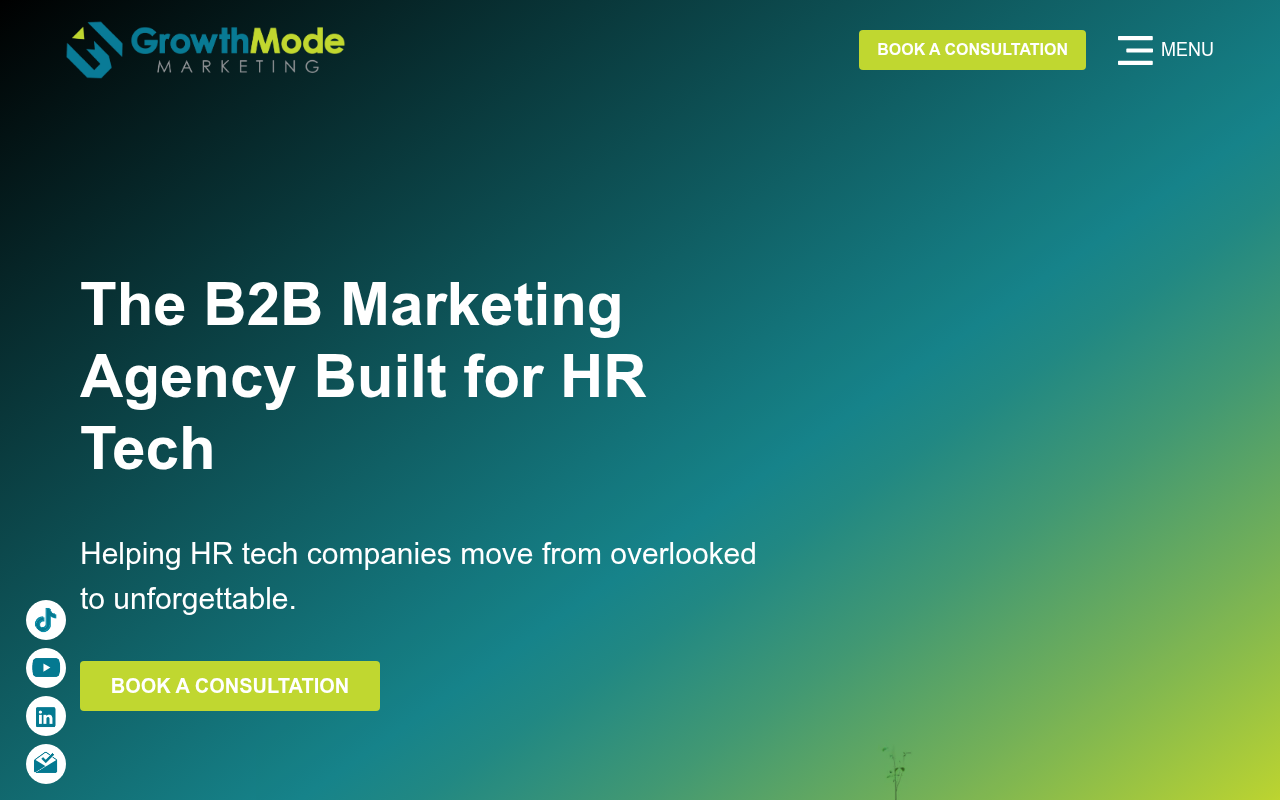
What they doGrowthMode Marketing works only with HR technology companies, one of the most crowded categories in B2B software. Its whole argument is a demand-creation argument. In a market that noisy, more campaign activity does not help. Buyers have to recognise, trust, and remember your brand before demand follows. Its Demand Gen 2.0 framework starts from differentiation and market presence rather than lead volume, and HR Tech Outlook named it a top HR tech marketing agency. It ranks on its own site for useful, non-branded terms like click-through-rate benchmarks and marketing agency pricing, which is genuine proof at a modest scale. Two honest gaps. The site names no clients or case studies, so you cannot check results, and despite positioning on clarity it does not actually publish a price. It is also a very small team.
Best forHR tech companies in a crowded category that need brand-led demand built on real differentiation.
Pros
- A clear demand-creation argument, differentiation and brand presence before lead volume.
- Specialist in HR tech, named a top agency by HR Tech Outlook.
- Ranks for useful non-branded terms on its own site, proof at a modest scale.
Cons
- The site names no clients or case studies, so results cannot be checked.
- Positions on clarity but does not publish a price, and the team is very small.
Is your content creating demand or just chasing it?
Get a free Content RevOps audit. We show where your content fails to create demand, and what a connected system would change, benchmarked against our 2026 research.
Frequently asked questions
What is the difference between creating demand and capturing it?
Capturing demand means winning the small group of buyers who are already searching, usually with ads, search terms, and review sites. Creating demand means reaching the far larger group who are not looking yet, giving them a reason to care through research, ideas, and useful content, so they arrive already interested. Most companies over-invest in capture and wonder why costs keep rising.
How much do demand generation agencies charge?
Most do not publish prices. Where a floor is public it tends to sit between about 1,000 and 25,000 US dollars a month, depending on scope, channels, and team size. We mark pricing as not disclosed when an agency does not share a real number on its own site.
How did we choose and rank these agencies?
We reviewed agencies that focus on creating demand rather than only capturing it, then kept the ones with real proof. We ranked them on genuine demand creation, whether they create demand for themselves, original research and content, review evidence, and transparency. The same checks apply to our own entry.