The best demand generation agencies for reducing paid ad dependence in 2026
Cutting paid ad spend feels risky when ads are the only thing bringing leads in. Pause a campaign and the pipeline goes quiet. Many teams are stuck here. The cost per lead climbs every quarter, the budget keeps growing, and the business still runs on rented attention it does not own. The way out is to build demand you own, through search, content, and earned authority, so leads keep arriving when the ads are off. Plenty of agencies say they do this. Most still lead with paid media. We reviewed more than 160 agencies that build durable organic and inbound demand, and kept the ones that prove the model on themselves. Here is each one in plain words.

How we chose this list
We used the same checks on every agency, including our own. Here is what earns a spot and how we ordered them.
Who makes the list
Every agency here runs real demand generation and builds a working content presence of its own. We left out lead-list sellers, appointment setters, and shops whose only real skill is buying ads.
How we rank them, in order
- Real strength in organic and owned channels, not just paid media
- Whether the agency earns its own inbound, so it practices what it sells
- Review proof, counting how many reviews back the score
- Whether they show prices and name their team
- Fit to your size, stage, and how you sell
What we promise on every entry
Every claim can be traced to a source. Ratings always show how many reviews they come from. Prices are shown, or marked not shown. We do not give any agency a made-up score, and we hold our own entry to the same checks.
The shortlist at a glance
All 15 entries, ranked by the criteria above. Full detail in the cards below.
| # | Name | Pros | Cons | Best for | Pricing |
|---|---|---|---|---|---|
| 1 | Content RevOps |
|
| B2B teams that lean too hard on paid ads and want leads to keep coming after the campaigns stop, through a single connected system rather than scattered spend. | $4.1k-8.5k/mo |
| 2 | Gripped |
|
| B2B SaaS and tech teams that want to move budget from paid channels into SEO and content, with clear pricing up front. | From £3,500/mo |
| 3 | New Perspective |
|
| Mid-market and enterprise teams in manufacturing, clean tech, or SaaS that want to create durable inbound demand. | Not disclosed |
| 4 | Ironpaper |
|
| Mid-market and enterprise teams that have traffic but few leads and want content that converts, not more ad clicks. | Not disclosed |
| 5 | Kuno Creative |
|
| Mid-market and enterprise teams that want an outsourced inbound and content department in medtech, manufacturing, or SaaS. | Not disclosed |
| 6 | Hinge |
|
| Professional services and finance firms that want to build cited authority instead of buying attention. | Not disclosed |
| 7 | Walker Sands |
|
| Mid-market and enterprise B2B firms that want earned media and content at scale instead of paid volume. | Not disclosed |
| 8 | Sagefrog Marketing Group |
|
| SMB and mid-market teams in life sciences, healthcare, or manufacturing that want inbound and brand from one team. | Not disclosed |
| 9 | 97th Floor |
|
| Mid-market and enterprise brands that want to rebalance budget from paid ads toward SEO and content. | Not disclosed |
| 10 | Obility |
|
| B2B SaaS, construction, and manufacturing teams that want a search agency strong in SEO to grow traffic they do not pay for. | Not disclosed |
| 11 | Blend |
|
| UK and EMEA B2B teams in SaaS, fintech, or life sciences that want to build organic search demand. | Not disclosed |
| 12 | Considered Content |
|
| Mid-market and enterprise teams with long sales cycles that want content built to create demand, not buy it. | Not disclosed |
| 13 | Elevation Marketing |
|
| Mid-market and enterprise firms in manufacturing or life sciences that want a long-term, full-service demand partner. | Not disclosed |
| 14 | Insivia |
|
| SMB and mid-market SaaS companies that want a strategy and content partner to build authority, not just ship work. | Not disclosed |
| 15 | Corporate Ink |
|
| SMB and mid-market tech companies that want earned media and authority instead of paid ad space. | Not disclosed |
The list
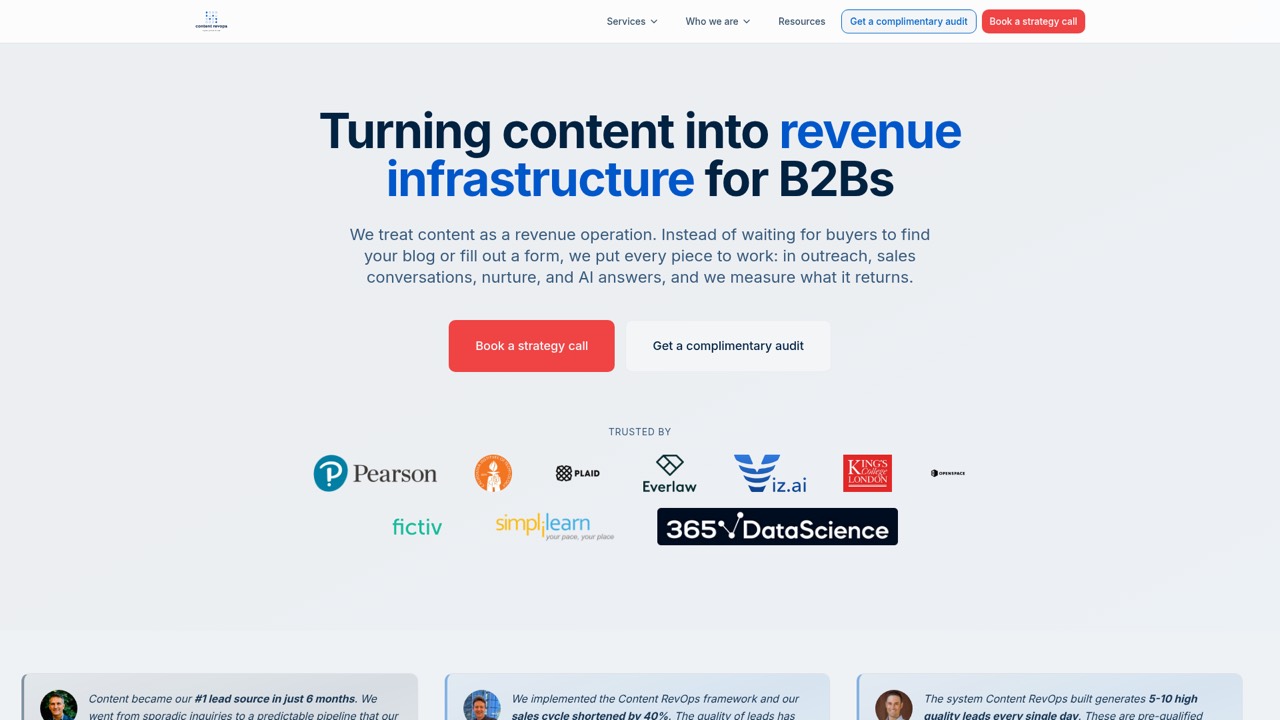
What they doContent RevOps is a content marketing and demand generation firm built for B2B teams that want to stop depending on paid ads. We serve founders, growth leaders, and lean marketing teams in SaaS, professional services, and manufacturing, from small businesses to mid-market. Here is the core idea. Most companies already own content, but it sits on a blog with no job. We give it one, as revenue infrastructure. Paid ads rent attention, so the day you stop paying, the leads stop. We build demand you own instead. We map your buying committee and the way you actually sell, then create the decision-stage material buyers search for before they ever click an ad. We place it in search results and in AI answers, so in-market buyers find you first, for free. We also turn your own experts and data into original research and webinars that earn attention rather than buy it, and we reactivate the dormant leads you already paid to acquire. Then we wire the whole system to your CRM, so you can watch pipeline shift from paid to owned and cut marketing spend year over year. Our method and our prices are published, so you can model the numbers before any call.
Best forB2B teams that lean too hard on paid ads and want leads to keep coming after the campaigns stop, through a single connected system rather than scattered spend.
Pros
- It goes straight at the problem. Instead of more ad spend, it builds demand that comes to you through search, AI answers, and earned authority, so leads keep arriving when the ads are off. how we work ↗
- Named case studies show the shift in real numbers, including one company that grew organic traffic while cutting cost per lead by about 70 percent, and another that reached near-zero-cost leads while rivals kept paying for ads. case studies ↗
- Publishes both its method and its prices, so you can model the drop in paid spend before any call. Most agencies on this list hide both. our approach ↗
- Treats content as a compounding asset that lowers marketing cost year over year, not a campaign that resets to zero when the budget stops.
- Wires the whole system to your CRM, so you can watch pipeline move from paid to owned instead of guessing.
Cons
- Young and small, founded in 2024, so it fits building a durable content-led engine better than running very large paid-ad budgets.
- Newer than the long-established agencies on this list, with a shorter public track record.
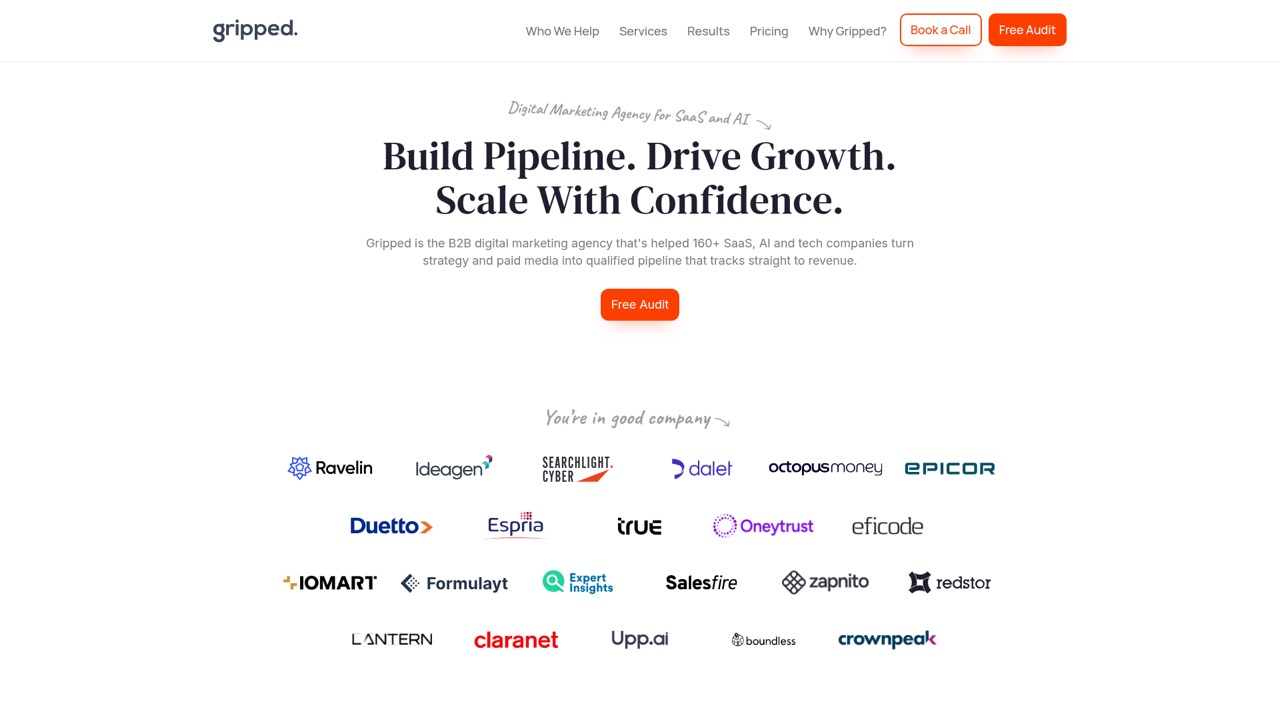
What they doGripped is a B2B marketing agency for SaaS and tech companies, founded in 2017 and based in London. It works on a monthly retainer and covers SEO, content, paid media, and web. For a team trying to lean off ads, its value is the SEO and content side, which builds search traffic that keeps working after a campaign ends. Gripped is one of the few agencies here that publishes its prices, with tiers starting at 3,500 pounds a month, so you can plan the shift in spend. Client logos on its site include Ravelin, Ideagen, and Epicor. One caution: paid media is a core service and is billed on top of the retainer, so a buyer who wants a purely organic partner should scope the work carefully before signing.
Best forB2B SaaS and tech teams that want to move budget from paid channels into SEO and content, with clear pricing up front.
Pros
- Publishes tiered pricing, rare in this field, so you can plan the budget shift.
- Strong SEO and content that build durable search traffic.
- Focused on B2B SaaS and tech, not a generalist.
- High review score, 4.9 across 32 Clutch reviews.
Cons
- Paid media is a core service and is billed separately, so it is not a purely organic shop.
- Retainer model suits an ongoing commitment, not a one-off project.
What they doNew Perspective is a demand generation and inbound agency in Worcester, Massachusetts, running since 2003. It focuses on creating demand rather than just capturing it, which is exactly what a company weaning off paid ads needs. The team goes deep in manufacturing, clean tech, and B2B SaaS, and builds websites, SEO, and content that pull buyers in over time. New Perspective publishes its own research and runs a steady content program, so it practices the organic model it sells. It is a long-standing HubSpot partner, which helps tie content to pipeline and attribution. On Clutch it holds a 4.9 across 10 reviews. The main limits are that it does not post prices, and it fits mid-market and enterprise better than very small teams.
Best forMid-market and enterprise teams in manufacturing, clean tech, or SaaS that want to create durable inbound demand.
Pros
- Creates demand rather than just capturing it, which reduces reliance on ads.
- Deep in manufacturing, clean tech, and SaaS.
- Publishes its own research and ranks for it.
- HubSpot partner, ties content to pipeline. Holds a 4.9 across 10 reviews.
Cons
- Does not publish pricing.
- Built for mid-market and enterprise, less so for very small teams.
What they doIronpaper is a demand generation and content agency in New York City, founded in 2002. Its model blends content, SEO, and sales enablement, aimed at companies that get traffic but few leads. That focus fits a buyer moving off paid ads, because the work is building content that converts search visitors instead of buying clicks. Ironpaper publishes a large volume of its own research and guides on B2B demand, which is how it earns its own inbound. It serves mid-market and enterprise firms in SaaS, manufacturing, and professional services, and names its senior team publicly. The trade-offs: it does not publish pricing, and its process is built for longer engagements, so it is less suited to a company that wants a quick, small test.
Best forMid-market and enterprise teams that have traffic but few leads and want content that converts, not more ad clicks.
Pros
- Focuses on turning existing traffic into leads, not buying more clicks.
- Publishes a large volume of its own research and guides.
- Names its senior team.
- Covers content through to sales enablement.
Cons
- Does not publish pricing.
- Built for longer engagements, not a small quick test.
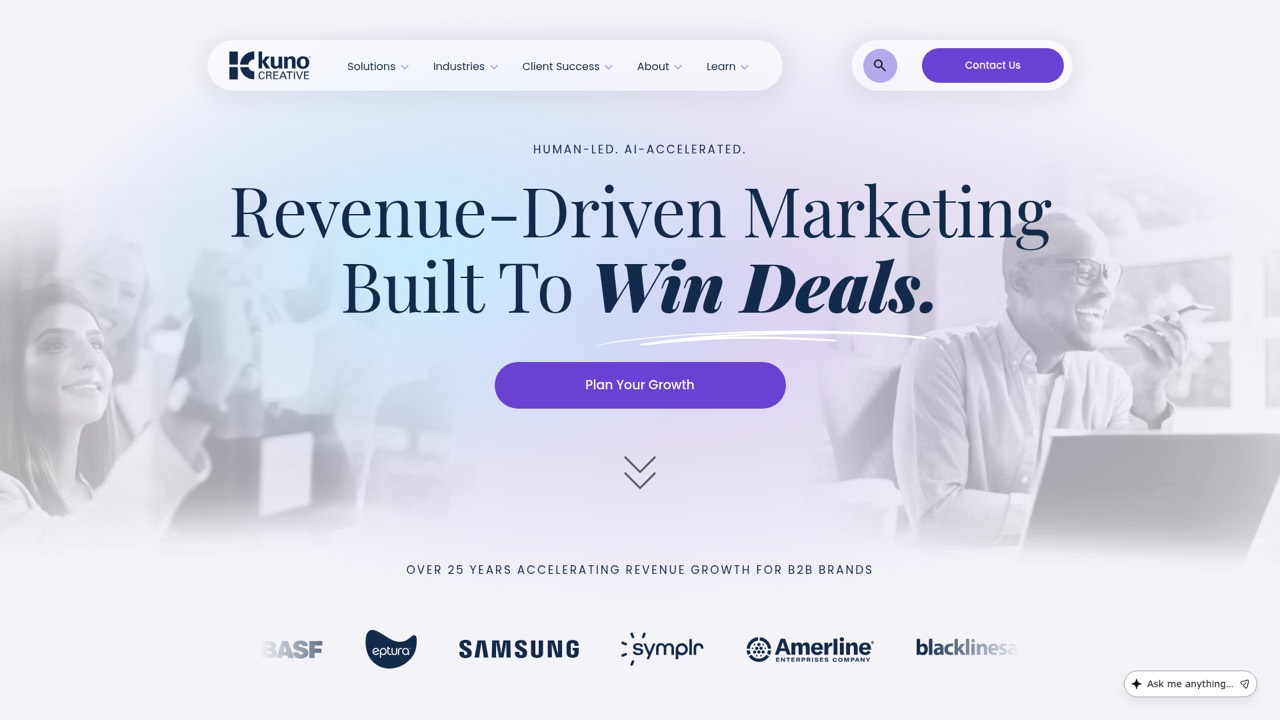
What they doKuno Creative is an inbound marketing and content agency based in Avon, Ohio. It is a long-standing HubSpot partner and built its name on inbound, the practice of earning traffic and leads through content rather than paying for them. That makes it a natural fit for a company trying to cut ad spend. Kuno goes deep in medical device, manufacturing, and B2B SaaS, and covers strategy, content, SEO, and marketing automation as an outsourced team. It names its senior staff and shows results-based case studies. The limits worth noting: it does not publish pricing, and as a broad inbound shop it is less specialised than a single-vertical firm, so ask for proof in your exact field before you commit.
Best forMid-market and enterprise teams that want an outsourced inbound and content department in medtech, manufacturing, or SaaS.
Pros
- Built on inbound, earning traffic instead of buying it.
- Deep in medical device, manufacturing, and SaaS.
- Acts as an outsourced content and automation team.
- Names senior staff and shows results-based case studies.
Cons
- Does not publish pricing.
- Broad inbound shop, less specialised than a single-vertical firm.
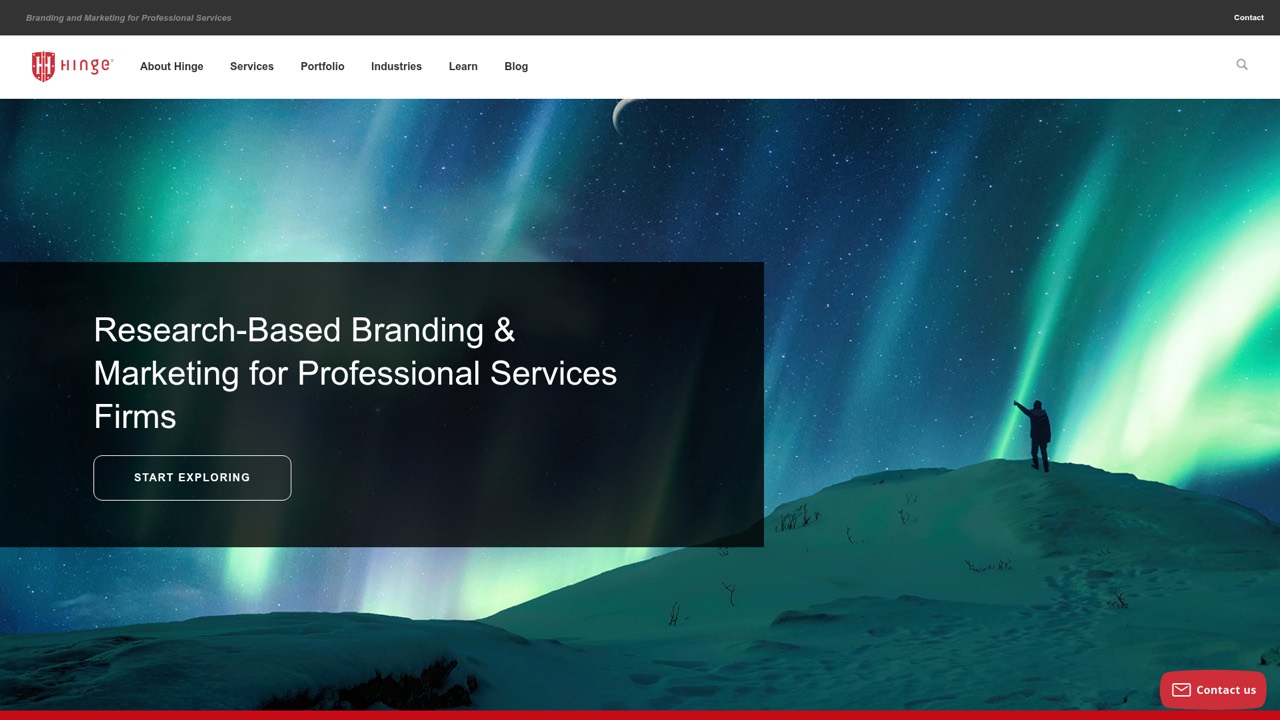
What they doHinge is a marketing firm for professional services companies, running since 2002. Its whole model is built on authority and research, summed up in its Visible Firm approach and its High Growth Study, an annual piece of original research the industry cites. For a firm trying to reduce paid ads, this is the clearest example of the alternative: you earn attention through expertise and data instead of buying it. Hinge has one of the strongest organic footprints on this list, so it clearly practices what it sells. It works with professional services, finance, legal, and construction firms. The catch: it does not publish pricing, and its research-led approach is a longer game, so it suits firms ready to invest in authority over months, not weeks.
Best forProfessional services and finance firms that want to build cited authority instead of buying attention.
Pros
- Authority and research model, the direct alternative to paid ads.
- Publishes cited original research every year.
- Strong own organic footprint.
- Deep in professional services, finance, and legal.
Cons
- Does not publish pricing.
- Research-led approach is a longer game, not a quick lead push.
What they doWalker Sands is a B2B agency in Chicago, founded in 2001, with a team of a few hundred. It pairs content and demand generation with public relations, which matters for reducing paid dependence because earned media and search coverage bring in buyers without ad spend. Walker Sands publishes its own B2B marketing research each year, so it earns attention the same way it sells. It works with SaaS, fintech, manufacturing, and professional services companies, mostly mid-market and enterprise, and has the scale to run large programs. The trade-offs: it does not publish pricing, and its size and enterprise focus can make it a heavier, pricier option than a lean company reducing spend may want.
Best forMid-market and enterprise B2B firms that want earned media and content at scale instead of paid volume.
Pros
- Combines PR and content to earn demand without ads.
- Publishes its own annual B2B research.
- Scale to run large, multi-channel programs.
- Broad B2B and tech experience.
Cons
- Does not publish pricing.
- Enterprise scale can be heavier and pricier than a lean team needs.
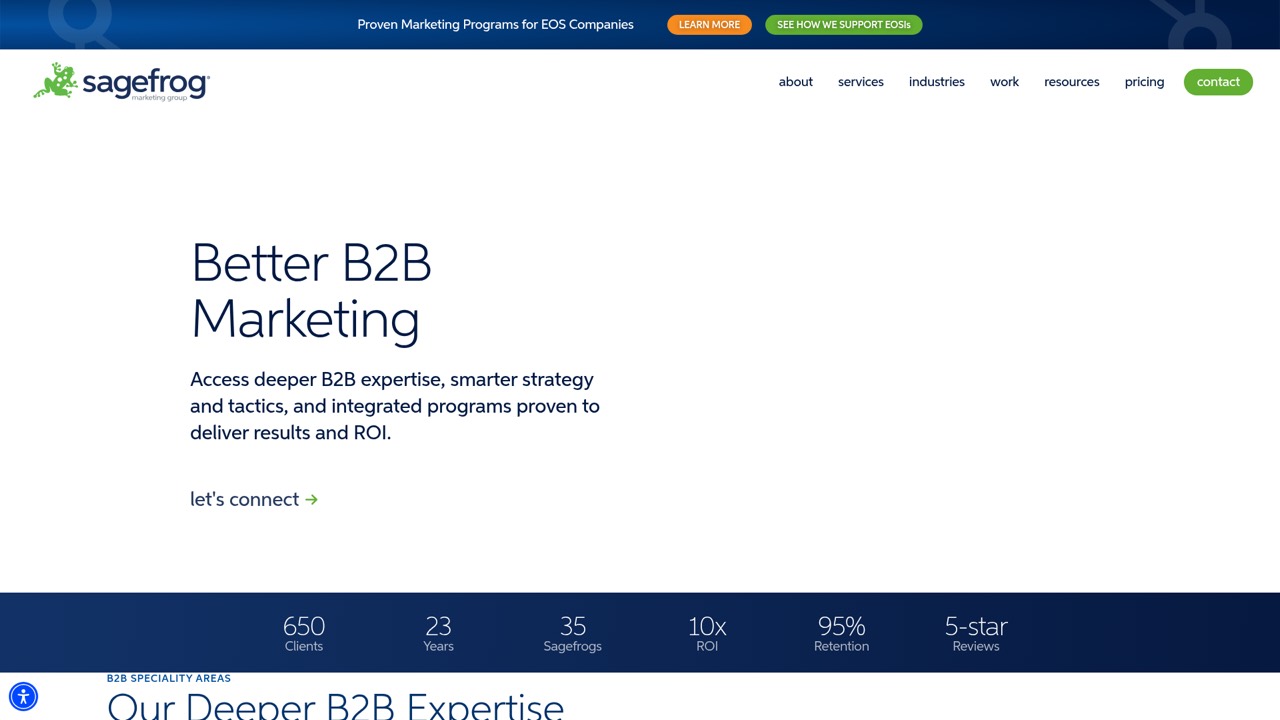
What they doSagefrog is a full-service B2B marketing agency in Doylestown, Pennsylvania, running since 2002. It handles brand, website, content, SEO, and demand together, and healthcare, life sciences, and manufacturing are core markets. For a company reducing paid ads, its strength is building inbound and brand at the same time, so demand comes from search and reputation rather than spend. Sagefrog is a HubSpot partner and holds a perfect 5.0 on Clutch, though from a smaller count of 10 reviews. It names its senior team and shows deep vertical case studies. The main limits: it does not publish pricing, and as a broad full-service agency it is less specialised than a niche shop, so confirm depth in your sector.
Best forSMB and mid-market teams in life sciences, healthcare, or manufacturing that want inbound and brand from one team.
Pros
- Builds inbound and brand together for owned demand.
- Perfect 5.0 Clutch score, though across 10 reviews.
- Deep in life sciences, healthcare, and manufacturing.
- Names its senior team and shows vertical case studies.
Cons
- Does not publish pricing.
- Broad full-service agency, less specialised than a niche shop.
What they do97th Floor is a digital marketing agency in Lehi, Utah, founded in 2005. It is known for SEO and creative content, the channels that build organic traffic and reduce the need to keep paying for clicks. The team also runs paid media, so it can help rebalance a budget from ads toward search and content rather than cut it overnight. 97th Floor works with mid-market and enterprise brands across professional services, finance, and SaaS, and holds a 4.8 on Clutch from 16 reviews. It publishes its own thinking and case studies. The trade-offs: it does not publish pricing, and it is a generalist across industries rather than a specialist, so it fits broad needs more than a narrow one.
Best forMid-market and enterprise brands that want to rebalance budget from paid ads toward SEO and content.
Pros
- Strong SEO and creative content that build organic traffic.
- Can rebalance a budget from paid to organic over time.
- 4.8 on Clutch across 16 reviews.
- Publishes its own work and case studies.
Cons
- Does not publish pricing.
- Generalist across industries rather than a specialist.
What they doObility is a B2B search marketing agency founded in 2011. It is strong in SEO and organic search for B2B companies, one of the most direct levers for reducing paid ad dependence: it grows the traffic you do not pay for per click. Paid search is also a core service, so it can shift weight from ads to organic over time rather than cut it at once, but a buyer who wants a purely organic partner should scope the work. It goes deep in B2B SaaS, construction, and manufacturing, and holds a 4.8 on Clutch from 27 reviews, one of the larger review counts on this list. It does not publish pricing, and it does not name much of its senior team publicly, so ask who will actually run your account.
Best forB2B SaaS, construction, and manufacturing teams that want a search agency strong in SEO to grow traffic they do not pay for.
Pros
- Strong in SEO and organic search, a direct way to cut cost per click.
- Can move budget from paid search to organic over time.
- 4.8 on Clutch across 27 reviews, a larger count.
- Deep in SaaS, construction, and manufacturing.
Cons
- Paid search is a core service, so scope the organic work if you want to lean off ads.
- Does not publish pricing, and little of the senior team is named publicly.
What they doBlend is a B2B marketing agency based in Reading, England, working across the UK and wider EMEA. It centers on SEO and content, the organic channels that reduce a company's reliance on paid ads by earning search traffic. Blend serves B2B SaaS, fintech, life sciences, and professional services firms, and shows results-based case studies for them. It has strong external reviews and runs a visible content program of its own, so it earns its own inbound. For a European B2B team wanting to build organic demand, it is a solid fit. The trade-offs: it does not publish pricing, and it is mid-sized, so a very large enterprise program may stretch its capacity. Confirm resourcing for bigger scopes.
Best forUK and EMEA B2B teams in SaaS, fintech, or life sciences that want to build organic search demand.
Pros
- SEO and content focus that build owned search demand.
- Strong external reviews.
- Serves SaaS, fintech, and life sciences.
- Good fit for UK and EMEA teams.
Cons
- Does not publish pricing.
- Mid-sized, so very large programs may stretch capacity.
What they doConsidered Content is a content-led B2B agency in the UK, founded in 2012. As the name says, content is the core, and its aim is creating demand and awareness that later converts, rather than buying clicks. That focus fits a company trying to reduce paid ads by building material buyers seek out on their own. It works with manufacturing, professional services, and B2B SaaS firms, mostly mid-market and enterprise, and names its senior team. It suits long sales cycles where trust is built through useful content over time. The limits: it is a small team, so it is better for focused programs than sprawling multi-channel ones, and it does not publish pricing, so budget has to be scoped on a call.
Best forMid-market and enterprise teams with long sales cycles that want content built to create demand, not buy it.
Pros
- Content-led, built to create demand rather than buy it.
- Suits long, trust-based sales cycles.
- Names its senior team.
- Experienced in manufacturing and professional services.
Cons
- Does not publish pricing.
- Small team, better for focused programs than sprawling multi-channel ones.
What they doElevation Marketing is a B2B agency based in Gilbert, Arizona, and one of the longest-running firms on this list, founded in 1999. It is full-service, covering brand, content, demand, and web, with a strong record of earning its own inbound. For a company cutting paid ads, its value is building demand through content and search across a long relationship, backed by documented methodology and notable client proof. Elevation works with manufacturing, life sciences, and B2B SaaS companies, mostly mid-market and up. The trade-offs: it does not publish pricing, and as a broad full-service shop it is less specialised than a niche content or SEO firm, so a buyer with a narrow organic goal should confirm the exact team and plan.
Best forMid-market and enterprise firms in manufacturing or life sciences that want a long-term, full-service demand partner.
Pros
- Long track record since 1999.
- Builds inbound and owned demand over time.
- Documented methodology and notable clients.
- Experience in manufacturing and life sciences.
Cons
- Does not publish pricing.
- Broad full-service shop, less specialised than a niche content or SEO firm.
What they doInsivia is a B2B SaaS agency and consultancy in Cleveland, Ohio, running since 2002. It pairs strategy with content and thought leadership, and publishes its own research and frameworks, so it earns attention the way it advises clients to. For a SaaS company trying to depend less on paid ads, that content-and-authority model is the point: it builds search visibility and credibility that keep producing leads. Insivia focuses on SaaS, fintech, and legal tech, and names its senior team. It works best with software companies that want a strategic partner, not just execution. The limits: it does not publish pricing, and its generalist depth across SaaS niches means you should check for proof in your specific category before committing.
Best forSMB and mid-market SaaS companies that want a strategy and content partner to build authority, not just ship work.
Pros
- Content and thought leadership model for SaaS.
- Publishes its own research and frameworks.
- Strategy plus execution, not just delivery.
- Names its senior team.
Cons
- Does not publish pricing.
- Generalist depth across SaaS niches, so check proof in your category.
What they doCorporate Ink is a B2B PR and content agency near Boston, one of the oldest firms here, founded in 1989. Its core is earned media and thought leadership, getting companies covered and quoted rather than buying ad space. That is a direct substitute for paid dependence: coverage, bylines, and content build credibility and search presence that ads cannot rent. Corporate Ink works with B2B SaaS and technology companies and names its senior team. It suits companies that want to build authority and press presence alongside content. The trade-offs: it is a PR-led shop, so a buyer wanting hands-on SEO and paid rebalancing should pair it with a search partner, and it does not publish pricing, so scope is set on a call.
Best forSMB and mid-market tech companies that want earned media and authority instead of paid ad space.
Pros
- Earned media and PR, a direct substitute for paid ads.
- Long track record since 1989.
- Builds authority and press presence.
- Names its senior team.
Cons
- Does not publish pricing.
- PR-led, so pair it with a search partner for hands-on SEO.
Can your content bring in leads without paid ads?
Get a free Content RevOps audit. We show where your content leaks revenue and what a system built to reduce paid dependence would change, benchmarked against our 2026 data.
Frequently asked questions
How does a demand generation agency reduce my reliance on paid ads?
It builds demand you own instead of renting. That means content, SEO, and earned authority placed in search and AI answers, so in-market buyers find you without a click charge. Over time the owned channel carries more of the pipeline and the ad budget can shrink rather than grow.
How much do these agencies charge?
Most do not publish prices. Where a floor is public it tends to run from about 3,500 pounds or 5,000 US dollars a month up to 25,000 dollars or more, depending on scope and team size. We mark pricing as not disclosed when an agency does not share it.
How did we choose and rank these agencies?
We reviewed more than 160 agencies that show strong inbound of their own, then kept the ones with real proof. We ranked them on strength in organic and owned channels, whether they earn their own inbound, review evidence, transparency, and fit. The same checks apply to our own entry.