The best demand generation agencies for seed-stage startups in 2026
At seed stage, marketing is usually the founder plus whatever time is left over. Budgets are small, the team is tiny, and every dollar has to show up as pipeline. Your buyers research on their own, and many ask AI tools who to trust before they reply to an email. You need a system that keeps working while you build the product, not a stack of one-off campaigns. Plenty of agencies say they work with startups. Most are built for Series B and later, with minimums a seed team cannot carry. We reviewed the agencies that genuinely fit early-stage founders and kept the ones with real proof. Below we explain each in plain words, with honest pricing, ratings, and trade-offs.

How we chose this list
We used the same checks on every agency, including our own. Here is what earns a spot and how we ordered them.
Who makes the list
Every agency here runs real demand generation or growth marketing and has a working content presence of its own. We left out lead-list sellers, pure appointment-setters, and shops with no early-stage track record.
How we rank them, in order
- Real fit for seed-stage budgets and team size, not just a startups label
- Whether they run marketing for themselves, and it works
- Review proof, counting how many reviews back the score
- Whether they show prices and name their team
- The model, from fractional help to done-for-you, matched to how much you can hand off
What we promise on every entry
Every claim can be traced to a source. Ratings always show how many reviews they come from. Prices are shown, or marked not shown. We do not give any agency a made-up score, and we hold our own entry to the same checks.
The shortlist at a glance
All 14 entries, ranked by the criteria above. Full detail in the cards below.
| # | Name | Pros | Cons | Best for | Pricing |
|---|---|---|---|---|---|
| 1 | Content RevOps |
|
| Seed-stage founders who sell considered, trust-led deals and want one connected system instead of scattered campaigns, built to run even when marketing is just them. | $2-4.2k/mo |
| 2 | Scaled Consulting |
|
| Early founders who want senior, been-there strategy and a growth plan before they commit to building a full marketing function. | From £2,000/mo |
| 3 | SevenAtoms |
|
| Early-stage teams that need qualified leads fairly quickly and want paid media tied to content and a CRM, not just ad clicks. | Not disclosed |
| 4 | Veza Digital |
|
| Early-stage teams that need a fast, credible website built to be found in search and AI answers, with demand generation on top. | Not disclosed |
| 5 | farsiight |
|
| Early teams that want proven paid media and creative to test channels fast, and value a long, public review record. | Not disclosed |
| 6 | Digital Wasabi |
|
| Early SaaS teams running paid media who need every campaign tied to the CRM so they can see what actually drives revenue. | Not disclosed |
| 7 | MaximusLabs AI |
|
| Early SaaS and AI startups that want to be found and cited in AI answers before competitors build for it. | Not disclosed |
| 8 | mvpGrow |
|
| Founders building go-to-market from scratch who want one team to stand up brand, site, demand, and RevOps together. | Not disclosed |
| 9 | Fractional CMO Partners |
|
| Seed founders who need a senior marketing owner and a plan, but cannot justify a full-time CMO yet. | From $2.5k/mo |
| 10 | AMP Public Relations |
|
| Early startups creating a category that need earned coverage and third-party credibility, tuned for AI search. | Not disclosed |
| 11 | STOICA |
|
| Early founders whose positioning and message are still unclear, and who want brand, website, and lead gen built around a fixed story. | Not disclosed |
| 12 | Growack |
|
| Early teams whose CRM and follow-up are messy and who want one senior operator to own both the system and the pipeline. | Not disclosed |
| 13 | Peddle |
|
| Early teams that need working RevOps and reporting for about the cost of one hire, rather than a single overloaded employee. | Not disclosed |
| 14 | Catalyst |
|
| Solo founders and lean teams who want to keep control of marketing and build the capability in-house, with guidance and tools rather than a full outsource. | Not disclosed |
The list
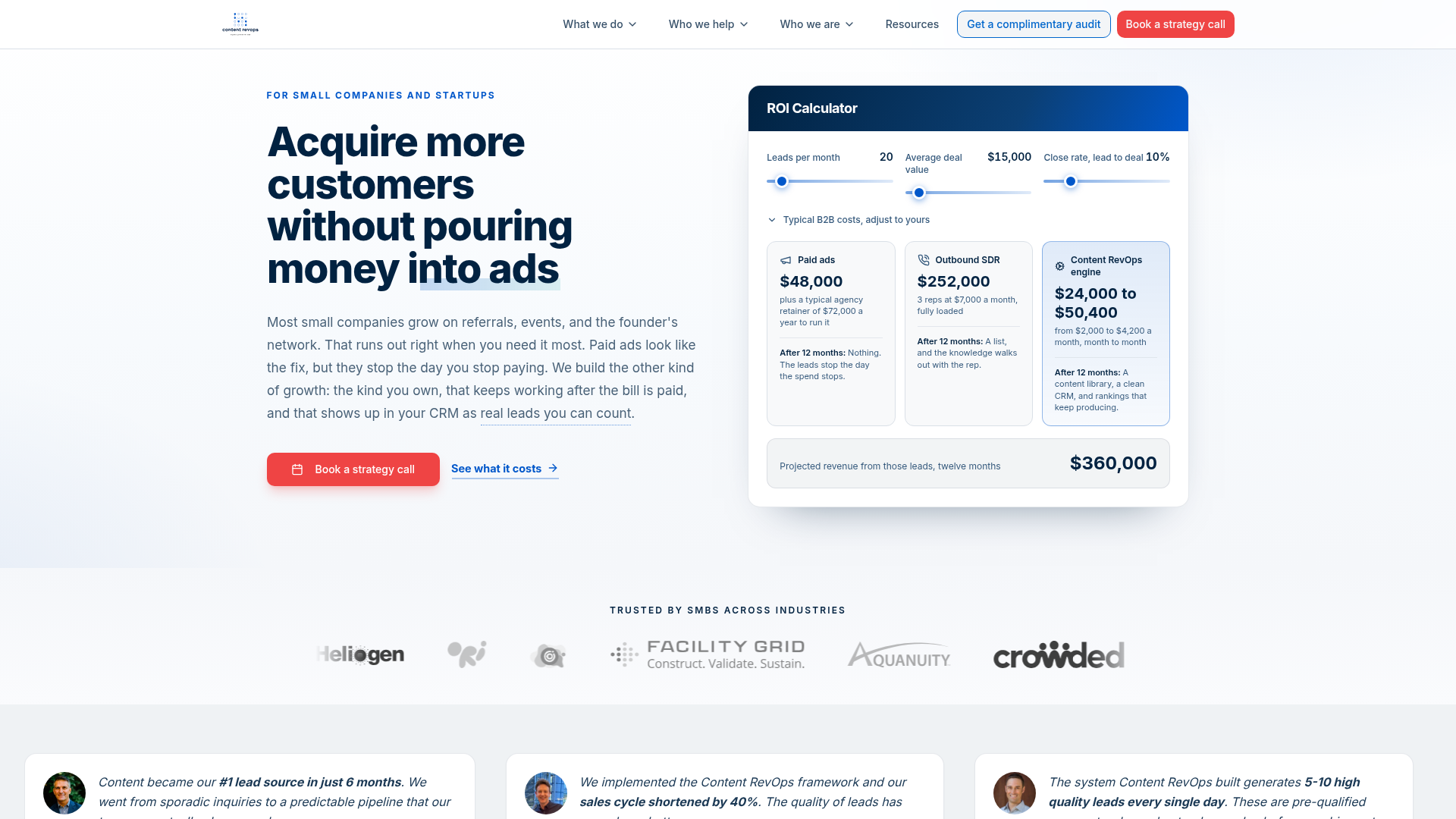
What they doContent RevOps is a content marketing and demand generation firm built for small companies and startups that sell on trust. At seed stage the whole marketing function is usually one person, often the founder, so we build the system founder-first, around your voice and the things only you know. The idea is simple. You already own knowledge and a few early wins, and that content has no job yet, so we give it one. We map your buyer and the people who have to agree, build the decision-stage material most startups never publish, like comparison pages, proof, and a clear next step, and place it where those buyers look, including AI answers like ChatGPT. Then we wire it to your CRM so every lead is caught, scored, and followed up, even when marketing is just you after hours. AI agents run the daily work, so a real system is affordable at ten people. You own every page and workflow, and one page a month shows what each piece produced in pipeline. Pricing and method are public, month to month, starting from about 2,000 US dollars a month at the startup rate.
Best forSeed-stage founders who sell considered, trust-led deals and want one connected system instead of scattered campaigns, built to run even when marketing is just them.
Pros
- Runs one connected system, from first search to closed revenue, instead of separate campaigns that do not talk to each other. how we work ↗
- Built for tiny teams: AI agents handle the daily work and everything is wired to your CRM, so the system runs even when marketing is just the founder.
- Publishes its prices and its method, and works month to month. Most agencies here hide both. who we work with ↗
- Has named case studies for early startups, like Radius, a team of two that cut cost per lead from about $150 to $45 and added $15k in new monthly recurring revenue from organic signups. case studies ↗
- Leans on organic search and AI answers, which our research shows almost no B2B company is built for yet. our data ↗
Cons
- Young and small, founded in 2024, so it fits building a content-led system better than running big paid-ad budgets.
- A small team, so it takes on a limited number of clients at a time.
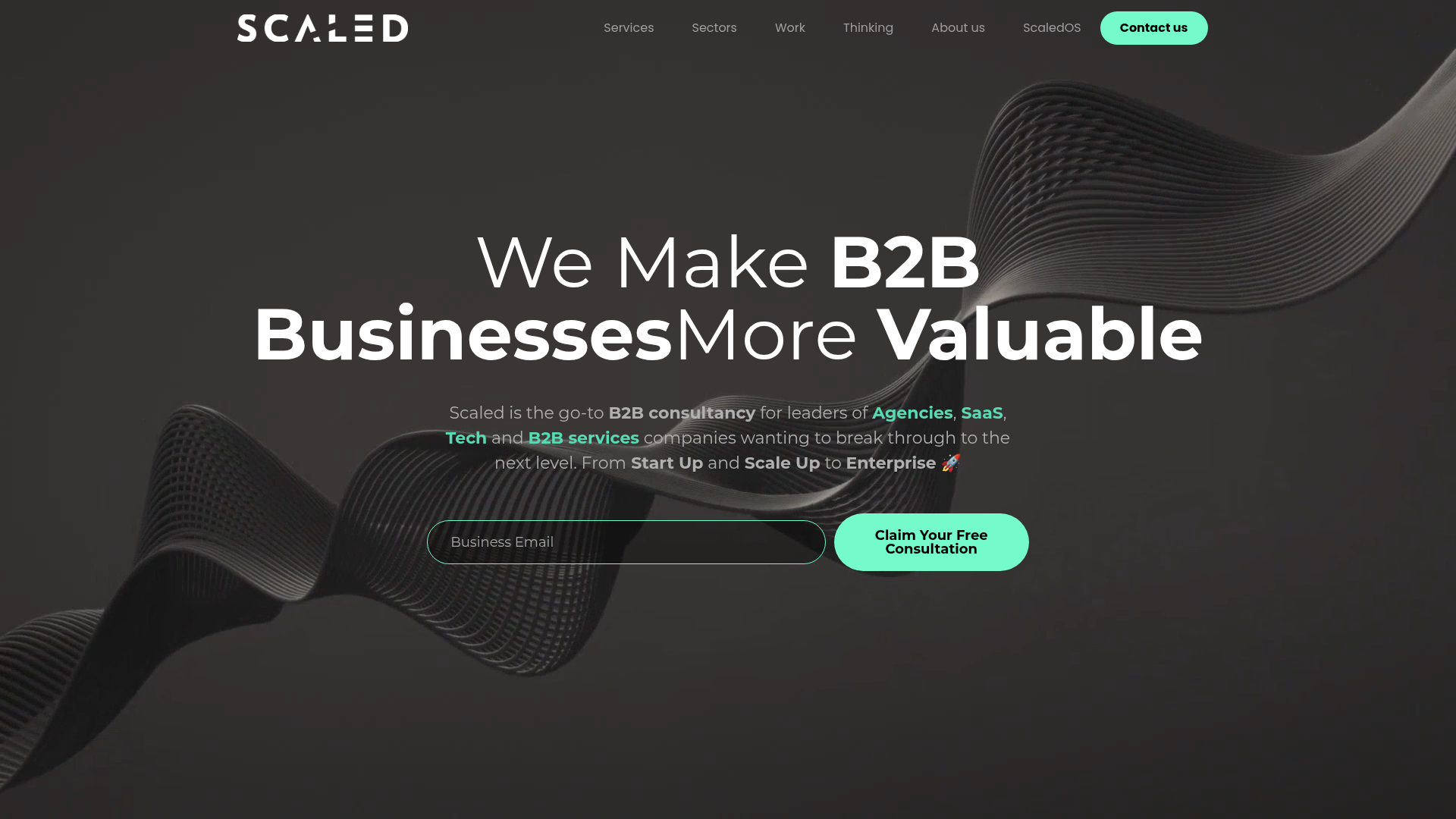
What they doScaled is a B2B growth consultancy run by people who have built and sold their own companies. Its managing partner, Simon Penson, leads a team where every partner has exited at least once, so the advice comes from having sat in the founder seat. Rather than a done-for-you agency, Scaled sells advisory, go-to-market, demand generation, and fractional help, plus non-executive and exit support for founders thinking years ahead. It runs its own platform, ScaledOS, which benchmarks your company against the value drivers that matter to buyers and tracks progress over time. For a seed founder it is a way to get senior direction and a plan before spending on execution.
Best forEarly founders who want senior, been-there strategy and a growth plan before they commit to building a full marketing function.
Pros
- Run by operators who have built and exited B2B companies themselves, so advice is grounded in experience.
- Publishes its pricing. Consulting starts at just 2,000 pounds a month, and it works with founders from startup through exit.
- Its own ScaledOS platform benchmarks your company value and tracks progress, unusual for a small consultancy.
Cons
- It is a consultancy, so you or your team still do most of the execution.
- UK-based and best known for agencies and SaaS, so fit outside those sectors varies.
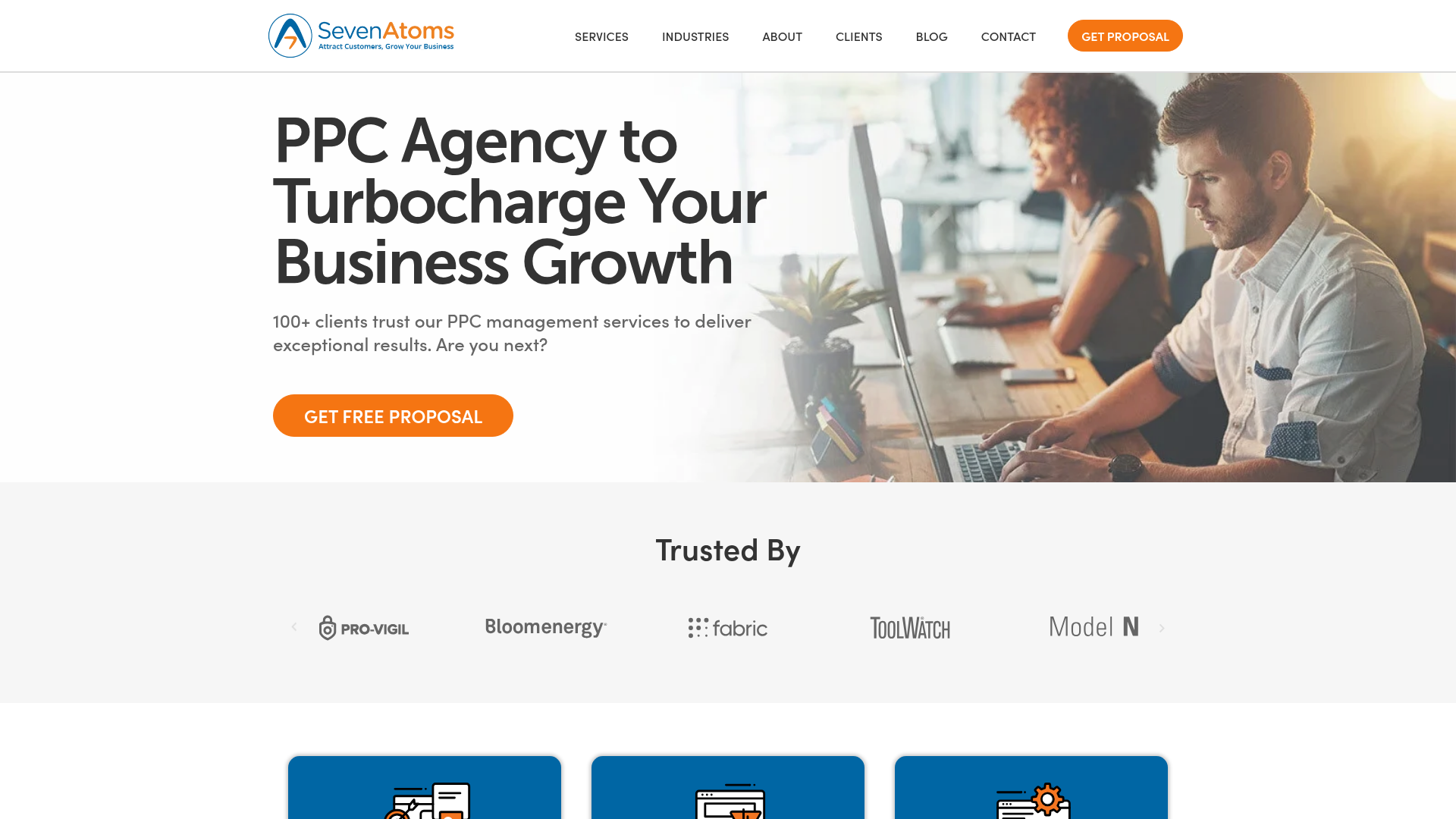
What they doSevenAtoms is a paid media and demand generation agency that has run inbound and PPC for B2B and SaaS companies since 2013. It is a small, senior team rather than a big agency, and it is a HubSpot partner, so paid campaigns connect to a CRM instead of stopping at clicks. What stands out for an early buyer is that SevenAtoms practices what it sells. It ranks on the first page of Google for its own category across a dozen industry hubs it publishes, rare proof that the same playbook can work for you. For a seed startup that needs leads soon, it pairs paid ads with content that keeps working after the spend stops.
Best forEarly-stage teams that need qualified leads fairly quickly and want paid media tied to content and a CRM, not just ad clicks.
Pros
- Ranks on page one for its own category across many industry hubs, real proof the approach works.
- Long track record since 2013 and a HubSpot partner, so campaigns connect to your pipeline.
- Small senior team, so you work with experienced people, not junior account staff.
Cons
- Does not publish pricing, so you have to ask for a quote.
- Paid media is a core strength, which can mean leads slow when you pause spend.
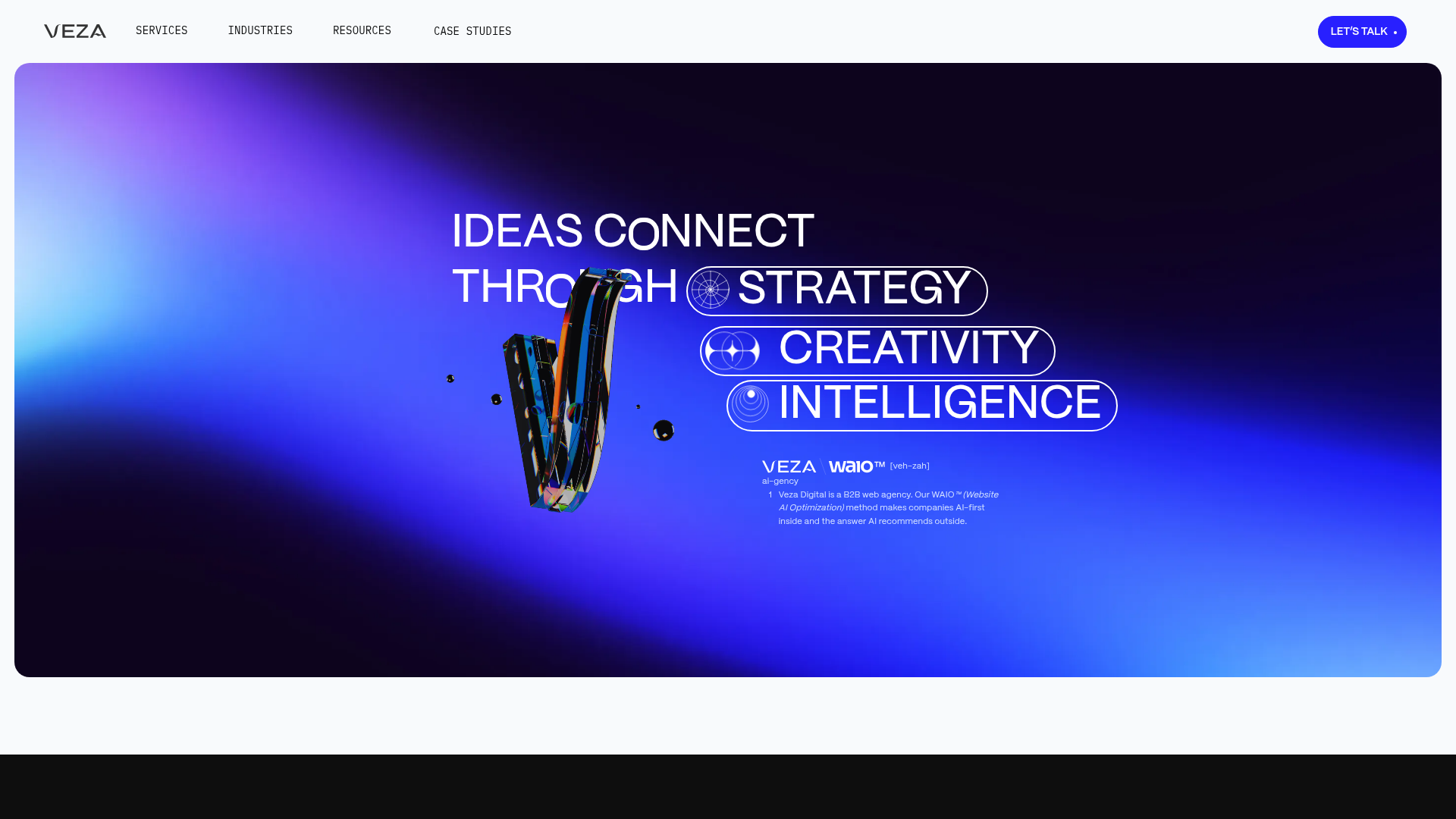
What they doVeza Digital is a B2B and SaaS agency that pairs website design and build on Webflow with SEO, answer-engine optimisation, and demand generation. For many seed startups the website is the whole first impression, so starting there and wiring it for search and AI answers is a sensible order of operations. Veza has worked with names like Chili Piper and Grata, and runs a method it calls WAIO for turning B2B sites into answers that large language models cite. It also publishes its own content and ranks for it, a good sign the team can do the same for you. Founded in 2019, it is a mid-sized team rather than a solo shop.
Best forEarly-stage teams that need a fast, credible website built to be found in search and AI answers, with demand generation on top.
Pros
- Combines website build with SEO and AI-search work, so the site is set up to convert from day one.
- Named clients like Chili Piper and Grata, and a documented method for AI-search visibility.
- Publishes and ranks for its own content, a good sign the playbook works.
Cons
- Does not publish pricing.
- Strongest on website and search, so you may need other partners for heavy paid or outbound.
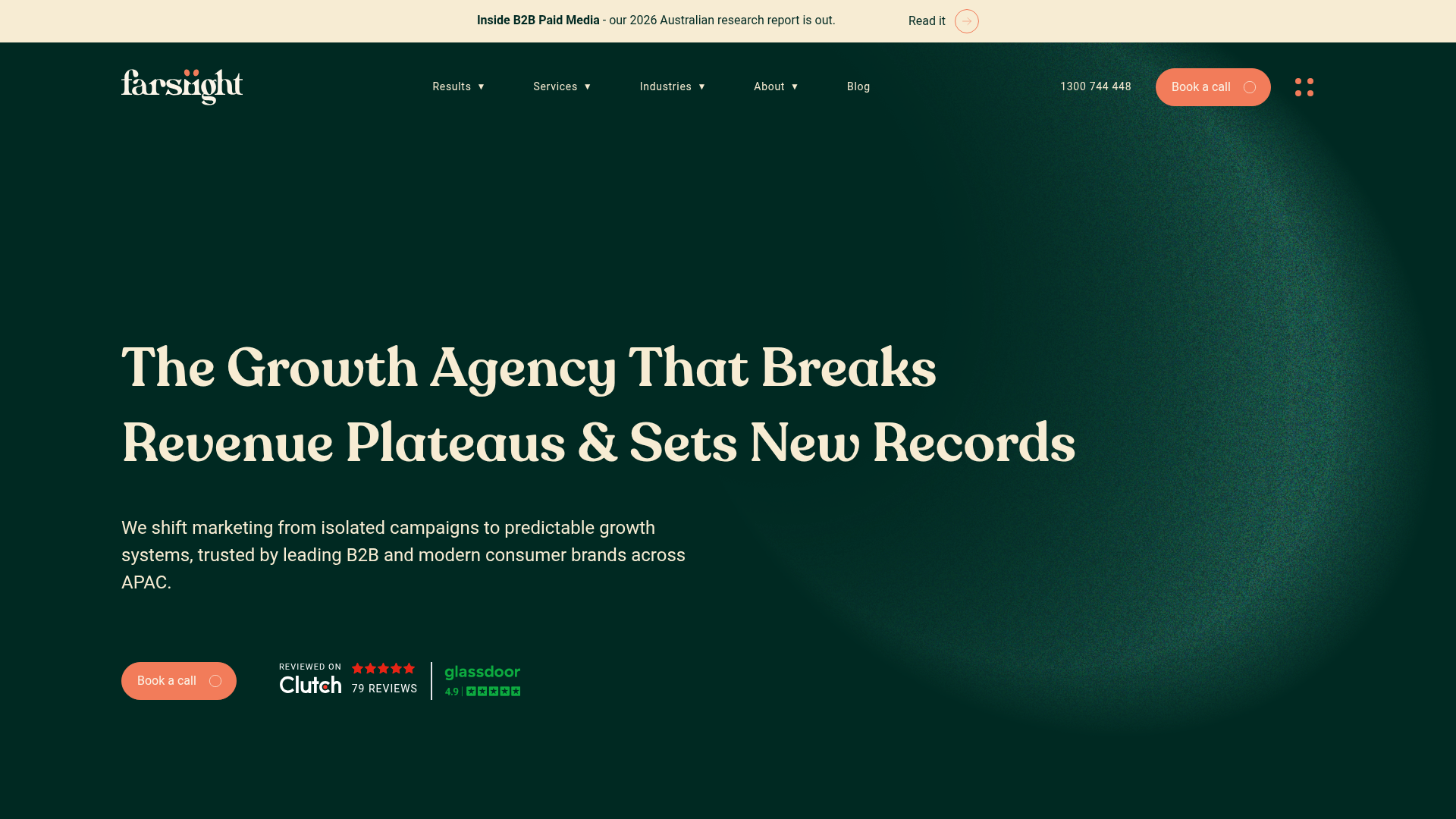
What they dofarsiight is a performance and growth agency out of Brisbane, Australia, working with B2B and modern consumer brands on paid search, paid social, and creative. It stands out on this list for proof: a 5.0 rating from 79 reviews on Clutch, the strongest review record of any agency here, ours included. It also backs its paid work with a real resources library that ranks for its own category terms, so the team is not only spending on ads it could not rank without. For an early founder who wants fast, testable paid channels with a track record you can check, farsiight is a credible option, especially if you can work across time zones.
Best forEarly teams that want proven paid media and creative to test channels fast, and value a long, public review record.
Pros
- A 5.0 rating from 79 reviews on Clutch, the strongest review record on this list, ours included.
- Backs paid media with its own content that ranks, so it does not only rely on ad spend.
- Award-winning performance team with a clear focus on paid search, social, and creative.
Cons
- Does not publish pricing.
- Based in Australia, so an early team elsewhere should plan for time-zone overlap.
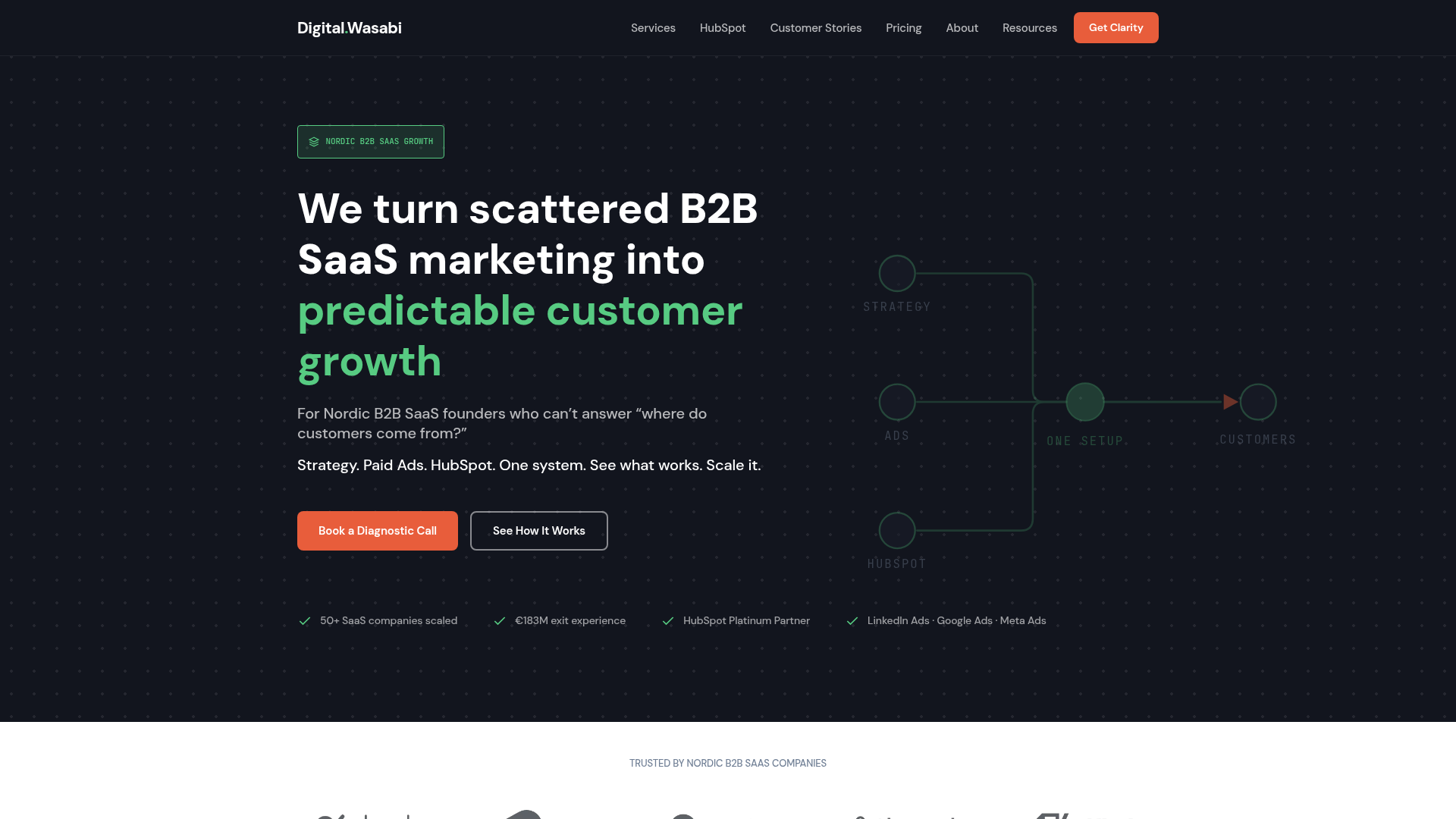
What they doDigital Wasabi is a Nordic B2B SaaS agency that connects strategy, paid ads, and HubSpot into one revenue-tracked system. Its pitch answers a real early-stage problem: you are spending on ads but cannot tell which ones actually bring customers. By wiring campaigns to HubSpot, it makes that traceable. It is a small, named team, a HubSpot Platinum partner, and says it has scaled more than 50 SaaS companies. For a seed startup that already has some budget and wants paid channels that report back to the CRM rather than to a dashboard of clicks, this focus on attribution is the draw. It publishes its own content and case studies to back the approach.
Best forEarly SaaS teams running paid media who need every campaign tied to the CRM so they can see what actually drives revenue.
Pros
- Wires paid ads to HubSpot so you can trace spend to revenue, not just clicks.
- HubSpot Platinum partner with a named senior team and published case studies.
- Says it has scaled more than 50 SaaS companies, a focused track record.
Cons
- Does not publish pricing.
- Centred on paid media and HubSpot, so heavy organic content may need another partner.
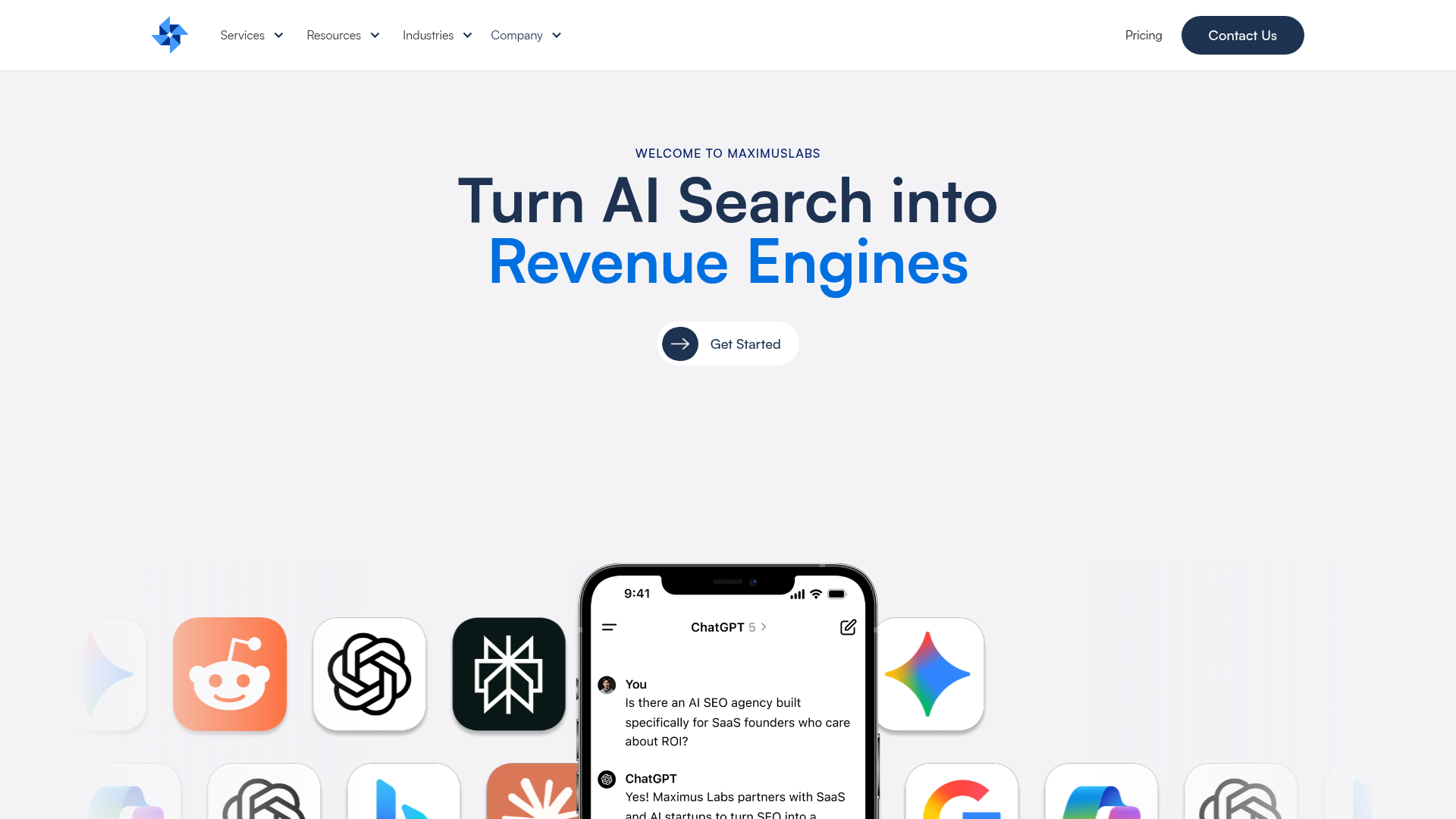
What they doMaximusLabs is a young agency focused on getting growth-stage SaaS and AI companies cited across AI search, from Google AI Mode and Gemini to ChatGPT and Perplexity, alongside regular SEO. This is exactly where our own research says almost no B2B company is set up to compete, so an early startup that gets there first can win visibility cheaply. The team is research-first, publishing original benchmark reports and writing decision-stage content built to be quoted by both search engines and language models. It is new, founded in 2025, but the focus is timely and its minimums are low enough for an early-stage budget. For founders creating a new category, being the answer AI gives is a real edge.
Best forEarly SaaS and AI startups that want to be found and cited in AI answers before competitors build for it.
Pros
- Focused on AI search and answer-engine visibility, an edge most competitors are not built for yet.
- Research-first, with original benchmark reports and decision-stage content made to be cited.
- Low enough minimums to fit an early-stage budget.
Cons
- Founded in 2025, so it has a short track record.
- Does not publish pricing.
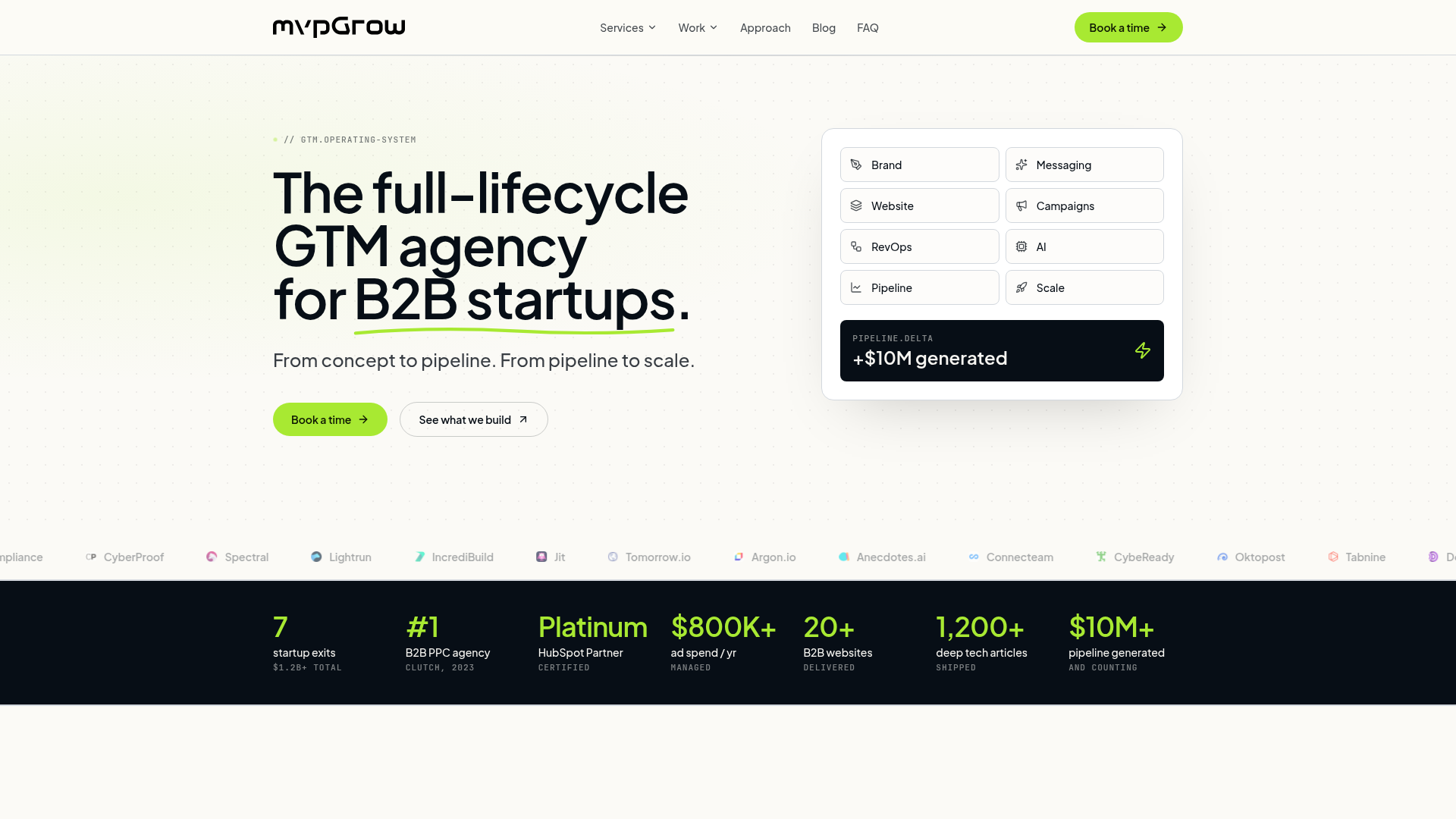
What they domvpGrow is a full-lifecycle go-to-market agency for B2B startups, and one of the few here with a track dedicated to building from zero for founders who have no marketing yet. It handles brand, messaging, website, demand generation, RevOps on HubSpot, content, and even AI workflows, run by one team instead of stitched across freelancers. It is a HubSpot Platinum partner, names clients like Lightrun, Connecteam, Oktopost, and Tabnine, and points to seven startup exits worth more than $1.2 billion among companies it has worked with. For a seed founder who needs the whole foundation stood up at once and measured against pipeline rather than vanity metrics, that end-to-end scope is the appeal.
Best forFounders building go-to-market from scratch who want one team to stand up brand, site, demand, and RevOps together.
Pros
- Has a dedicated build-from-zero track for founders with no marketing in place yet.
- One team across brand, website, demand gen, and RevOps, so fewer handoffs than juggling freelancers.
- HubSpot Platinum partner with named clients like Lightrun, Connecteam, and Oktopost.
Cons
- Does not publish pricing.
- Based in Israel, so plan for time-zone overlap if you are in North America or Europe.
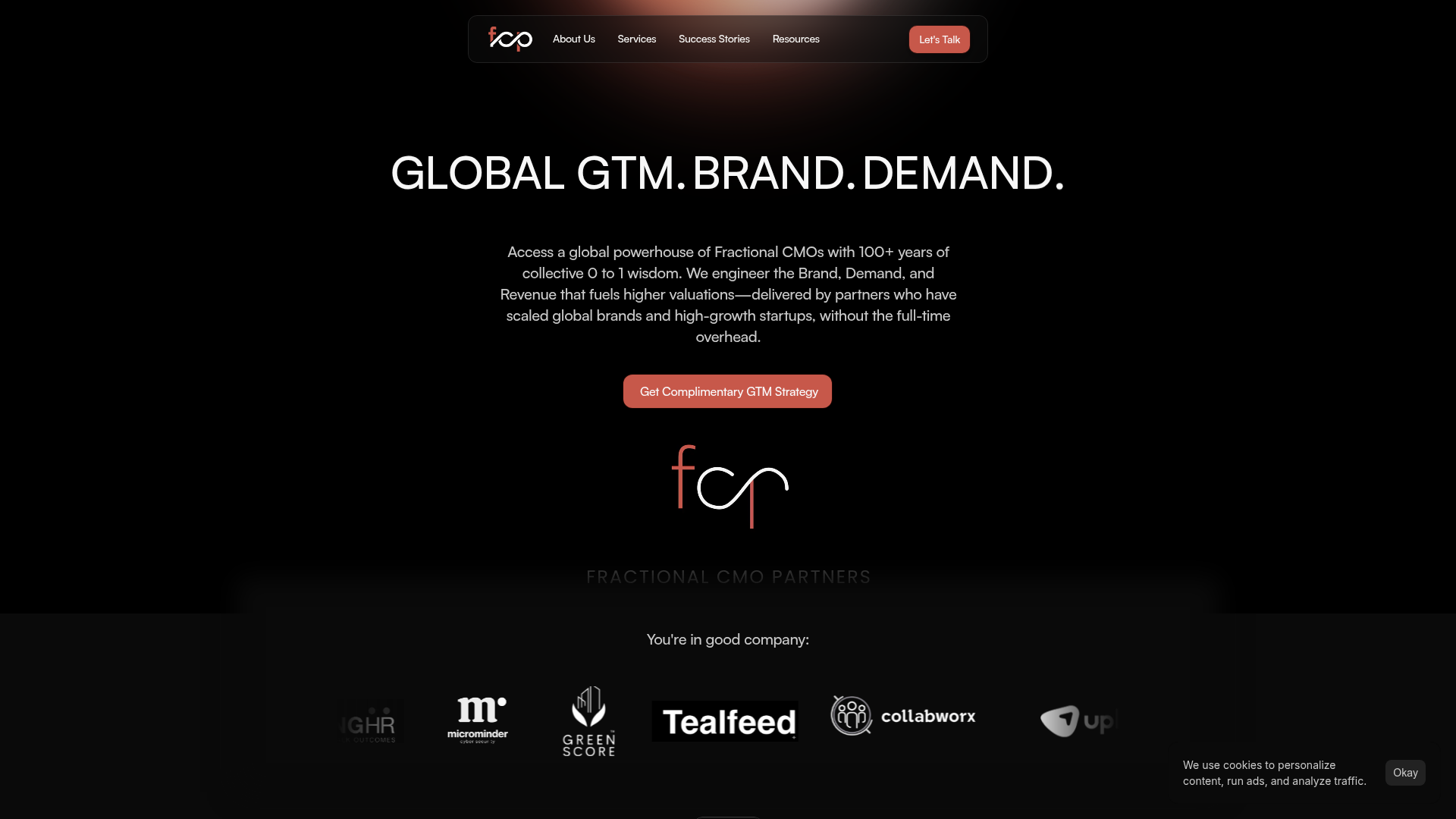
What they doFractional CMO Partners gives early startups a senior marketing leader without the full-time cost. It is built for 0-to-1 B2B tech, and its published entry plan puts a fractional CMO on your business for $2,500 a month, eight hours of senior time to build the marketing plan and go-to-market strategy while your team executes. A fuller plan adds fractional specialists across SEO, paid, email, and marketing operations, so you can scale the help as you grow. For a founder who knows marketing needs a real owner but cannot yet justify a full-time hire, this is a low-commitment way to get senior direction. The firm is based in India and works with founders globally.
Best forSeed founders who need a senior marketing owner and a plan, but cannot justify a full-time CMO yet.
Pros
- Publishes pricing. A fractional CMO starts at $2,500 a month for eight hours of senior time.
- Built for 0-to-1 B2B tech, so the help is matched to the earliest stage.
- You can start with strategy and add fractional specialists as you grow.
Cons
- The entry plan is advisory, so your team still runs the execution.
- A small firm with limited public case studies, so ask for references in your space.
What they doAMP is a San Francisco tech PR firm that has folded AI search into its work, so coverage and credibility feed into the answers buyers now get from tools like ChatGPT. The team is senior, with advisors who average more than fifteen years, and its founder wrote a book on generative engine optimisation, the practice of getting brands cited by AI. For an early startup creating a category, earned coverage and outside credibility often move buyers more than another blog post, and our own research finds AI engines lean on exactly that kind of third-party source. AMP publishes original research on AI-search visibility to back the pitch. It is a small firm, so expect a focused, senior-led engagement.
Best forEarly startups creating a category that need earned coverage and third-party credibility, tuned for AI search.
Pros
- Combines tech PR with AI-search work, aiming for the outside coverage AI answers tend to cite.
- Senior team, and a founder who wrote a book on getting cited by AI.
- Publishes its own research on AI-search visibility.
Cons
- Does not publish pricing.
- PR-led, so it works best alongside a team or partner handling on-site content and lead capture.
What they doSTOICA is a B2B tech agency that starts with positioning and brand, then builds the website and lead generation that carry the message. That order suits early startups whose real problem is often not too little traffic but a message no one understands yet. The team helps founders get clear on what they do and who it is for, aligns the internal team around it, and then runs the campaigns and website to put it to work. Founded in 2014 and based in Romania, it is a mid-sized team with named senior people and published client work, and it has started publishing early material on AI-search visibility. For a founder whose story is still fuzzy, fixing that first can make everything else convert better.
Best forEarly founders whose positioning and message are still unclear, and who want brand, website, and lead gen built around a fixed story.
Pros
- Starts with positioning and message, the thing many early startups actually get wrong first.
- Named senior team and published client work, with early practice in AI-search visibility.
- Ties brand and website to lead generation, so the story does commercial work.
Cons
- Does not publish pricing.
- Brand and positioning first, so if you only want fast paid leads this is not the tightest fit.
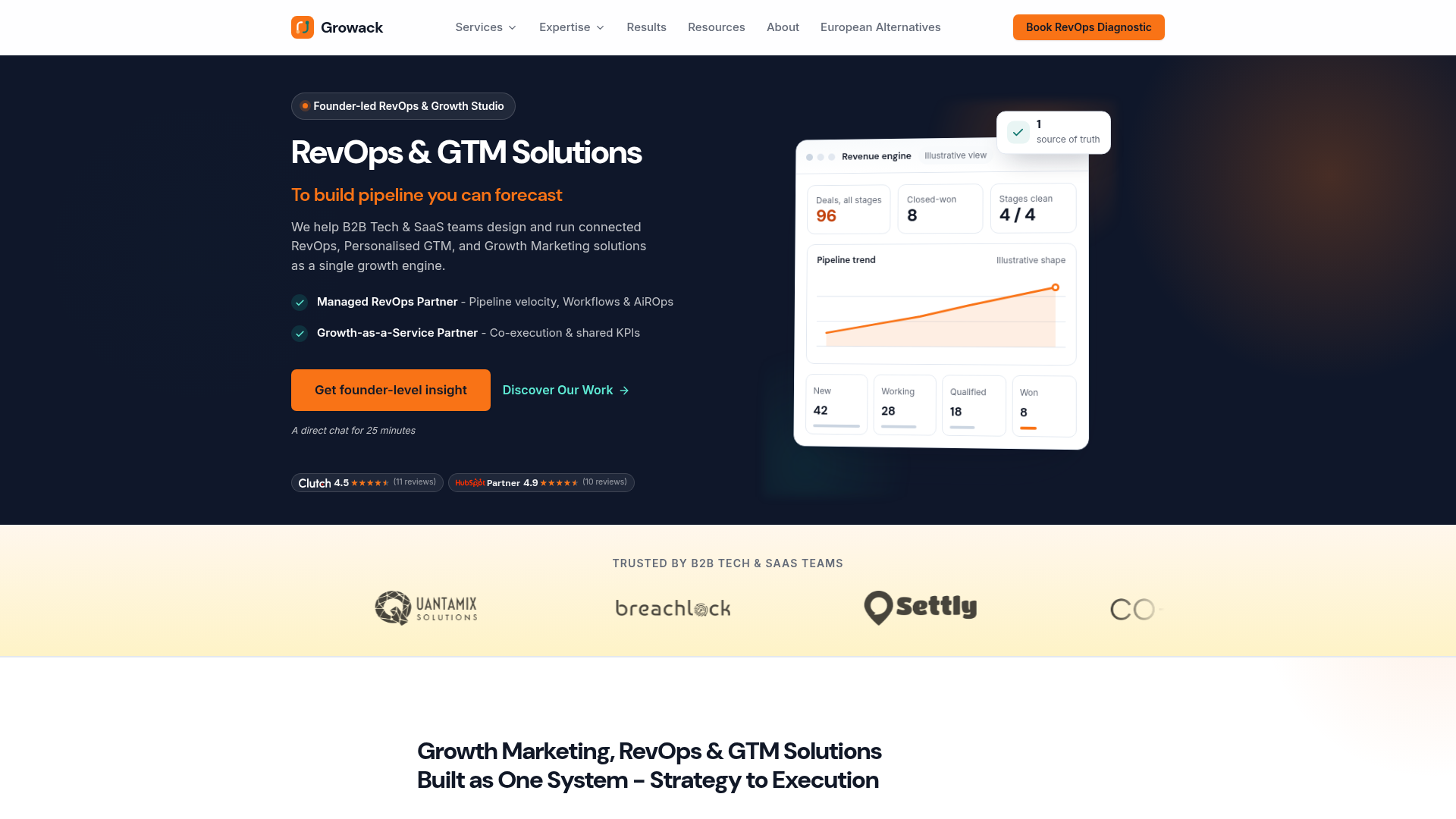
What they doGrowack is a founder-led RevOps and growth studio in Amsterdam where one operator owns both the system and the pipeline built on top of it. It works on HubSpot and Salesforce, connecting your CRM, automation, and growth marketing so the plumbing under demand actually works. For a seed startup, the appeal is that you deal with a senior person who set up the tools and can also drive the numbers, not a chain of account managers. It has strong external reviews and named client work, and it is built for teams whose data and follow-up are a mess and need one owner to fix both. Because it is essentially one operator, it fits a focused engagement rather than a large, multi-workstream build.
Best forEarly teams whose CRM and follow-up are messy and who want one senior operator to own both the system and the pipeline.
Pros
- Founder-led, so a senior operator owns both your CRM setup and the pipeline built on it.
- Works across HubSpot and Salesforce with strong external reviews and named clients.
- Good fit when attribution and follow-up are broken and need one clear owner.
Cons
- Does not publish pricing.
- Essentially a one-operator studio, so capacity is limited for large, parallel workstreams.
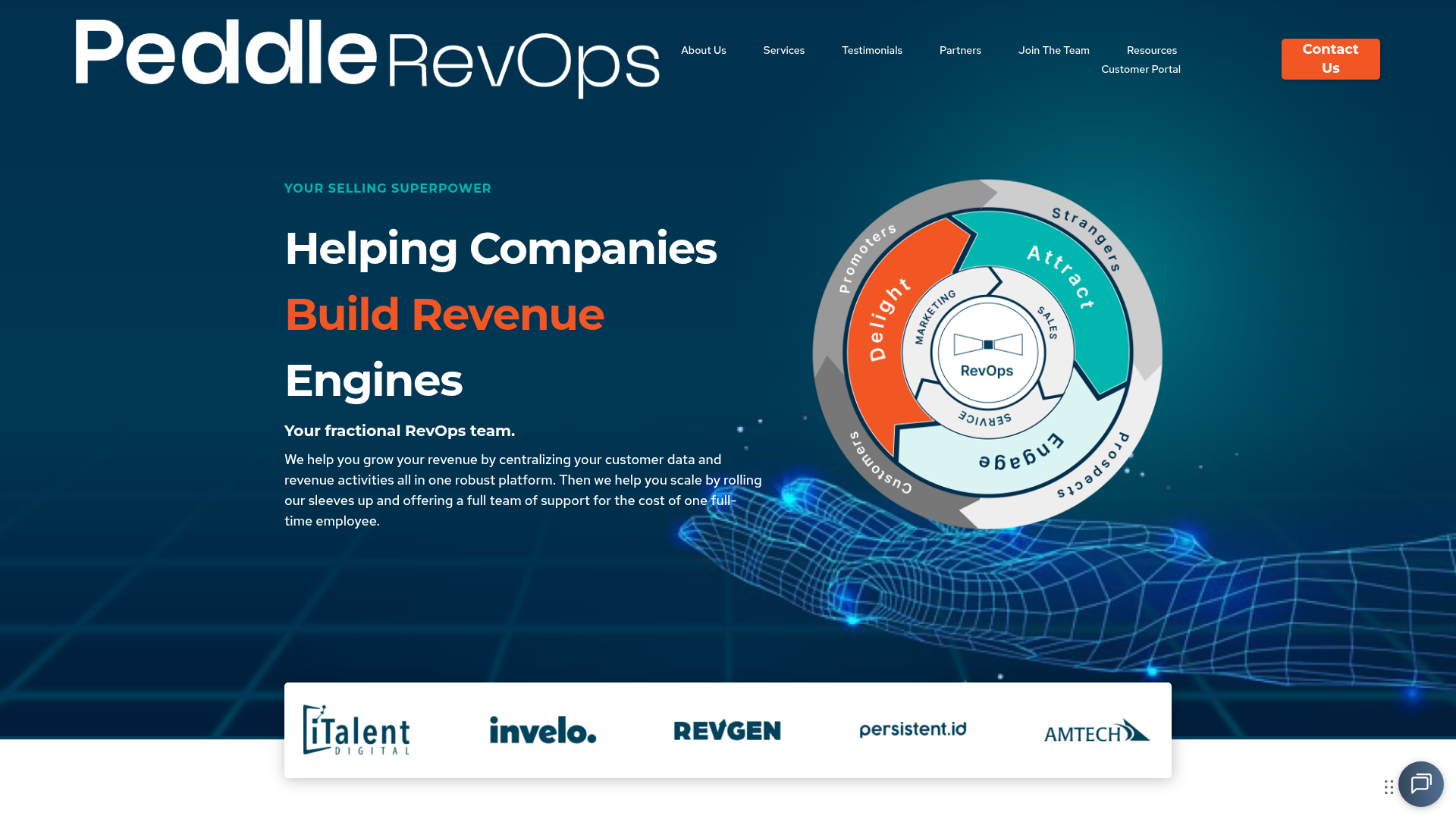
What they doPeddle is a fractional RevOps team built on HubSpot, where it is a Platinum partner, plus Databox for reporting. The pitch fits an early startup well: it runs your marketing, web, and marketing-operations work for roughly the cost of one full-time hire, so you get a small team instead of a single overloaded employee. Founded in 2022, it focuses on the unglamorous plumbing, clean CRM data, working automations, and cross-tool reporting, that decides whether demand generation turns into tracked pipeline. For a founder who keeps losing leads in a messy inbox or a half-set-up CRM, Peddle is a practical way to get the operations layer right without hiring for it. It works across B2B SaaS and professional services.
Best forEarly teams that need working RevOps and reporting for about the cost of one hire, rather than a single overloaded employee.
Pros
- Runs marketing and RevOps for roughly the cost of one full-time hire, so you get a team, not one person.
- HubSpot Platinum partner focused on clean data, automations, and cross-tool reporting.
- Good fit for replacing a patchy in-house setup or a scattered agency stack.
Cons
- Does not publish pricing.
- Operations-led, so you may still need a separate partner for heavy content or paid media.
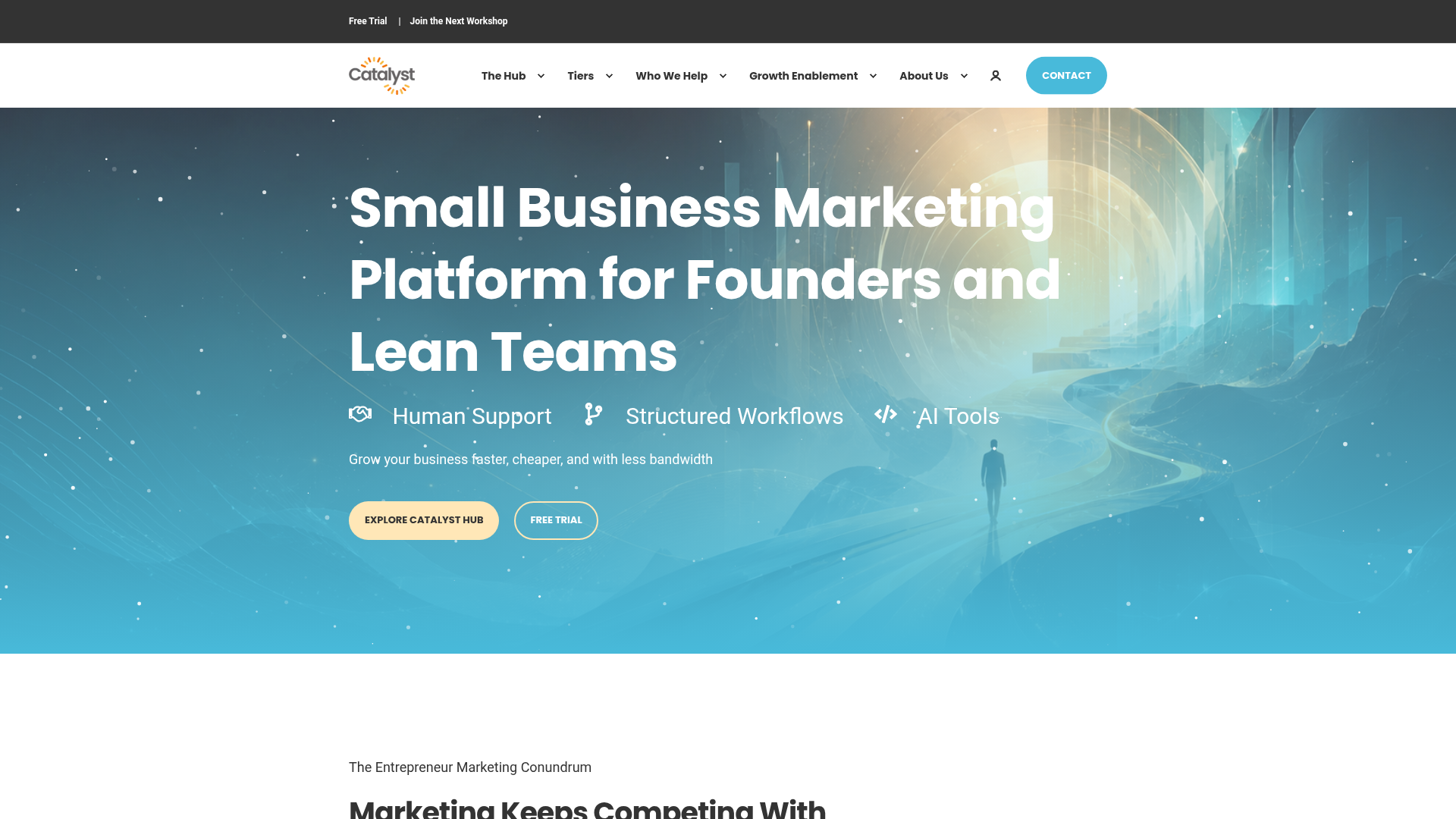
What they doCatalyst is less a done-for-you agency and more a marketing platform for founders and lean teams, combining human guidance, workflows and templates, and AI tools in one place. It is built for the specific bind of an early founder: you already run the business, and marketing keeps losing to everything else. Catalyst keeps you in control of strategy while giving you the frameworks, tools, and support to actually move the work forward, with tiers from self-directed to one-on-one help. It even folds in founder wellbeing, with a practitioner on the team, on the view that sustainable growth depends on the person leading it. For a founder who wants to keep ownership and build marketing capability in-house rather than outsource it, this is an unusual but genuinely early-stage fit.
Best forSolo founders and lean teams who want to keep control of marketing and build the capability in-house, with guidance and tools rather than a full outsource.
Pros
- Built specifically for founders and lean teams doing marketing themselves, with tiered support you can scale.
- Combines human guidance, templates, and AI tools in one connected platform.
- Keeps you in control of strategy while building marketing capability inside your business.
Cons
- It is a platform and guidance model, so you and your team still do the hands-on work.
- Newer and broad across small-business types, so it is less specialised than a B2B-only agency.
Is your startup's content bringing in pipeline?
Get a free Content RevOps audit. We show where your content leaks revenue and what a connected system would change, built for a founder-run team on a small budget.
Frequently asked questions
How much should a seed-stage startup spend on a demand generation agency?
It varies widely. Fractional and advisory help can start around 2,000 US dollars a month, while done-for-you systems run into five figures. Many agencies do not publish prices at all. We mark pricing as not disclosed when an agency does not share it, so you can see who is transparent before you book a call.
Should we hire an agency or our first marketing person?
They solve different problems. A first hire gives you ownership but one skill set, and the skills this era needs, like AI search, barely exist on the market yet. A common path for seed teams is to have an agency build the system, then hire one person to run it, so that person is effective from week one.
How did we choose and rank these agencies?
We reviewed more than 120 agencies that work with startups and early-stage founders, then kept the ones with real proof. We ranked them on fit for seed budgets and teams, whether they run marketing for themselves, review evidence, transparency, and model. The same checks apply to our own entry.