The best demand generation agencies for stabilising pipeline in 2026
If your pipeline swings from full to empty and back, you are not alone. Many B2B teams grow on referrals, a founder's network, or the odd burst of outbound, so good months and quiet months follow no pattern you can plan around. Leaders cannot forecast, hiring stalls, and every quarter starts from zero. A demand generation or content marketing agency can help by building a system that brings buyers in week after week, not a campaign that spikes once and fades. Plenty of agencies promise steady pipeline. We reviewed the field, including strong content marketing agencies, and kept the ones that build repeatable, measurable demand and can prove it. Below we explain each in plain words.

How we chose this list
We ran the same checks on every agency, including our own. Here is what earns a spot and how we ordered them.
Who makes the list
Every agency here runs real demand generation or content marketing and builds a working marketing presence of its own. We left out lead-list sellers, appointment-setters, and ads-only shops.
How we rank them, in order
- Can it build steady, repeatable pipeline, not a one-off spike
- Does it run marketing for itself, and does that work
- Review proof, counting how many reviews back the score
- Whether it shows prices and names its team
- Fit to your size, stage, and how you sell
What we promise on every entry
Every claim can be traced to a source. Ratings always show how many reviews they come from. Prices are shown, or marked not shown. We do not invent scores, and we hold our own entry to the same checks.
The shortlist at a glance
All 17 entries, ranked by the criteria above. Full detail in the cards below.
| # | Name | Pros | Cons | Best for | Pricing |
|---|---|---|---|---|---|
| 1 | Content RevOps |
|
| B2B teams whose pipeline swings with referrals or sporadic outbound, and who want one connected system that makes demand steady and trackable. | $4.1-8.5k/mo |
| 2 | Gripped |
|
| B2B SaaS and tech companies past Series A that want an outsourced team running paid, search, and ABM as one predictable program. | £5-15k/mo |
| 3 | Directive |
|
| Mid-market and enterprise SaaS teams that want many channels run to one revenue plan and can fund a larger budget. | Not disclosed |
| 4 | Refine Labs |
|
| Funded Series B and later SaaS teams that want a senior-led demand strategy focused on steady, high-intent pipeline. | From $35k assessment |
| 5 | New Perspective Marketing |
|
| Industrial, cleantech, and SaaS companies with long sales cycles that want senior-led programs tied to tracked pipeline. | Not disclosed |
| 6 | Grow and Convert |
|
| B2B SaaS and service teams that want buying-intent content tracked to leads, as a compounding source of steady pipeline. | Not disclosed |
| 7 | Ironpaper |
|
| Mid-market and enterprise B2B teams with long, committee-led deals that want marketing and sales run as one system. | Not disclosed |
| 8 | Obility |
|
| Tech and SaaS teams that want paid and search programs measured against pipeline and revenue, not just leads. | Not disclosed |
| 9 | Brafton |
|
| Mid-market and enterprise teams that need a reliable, high-volume content engine across channels to keep the funnel fed. | Not disclosed |
| 10 | Walker Sands |
|
| Growth-stage and enterprise B2B companies that want brand, PR, demand, and attribution handled under one roof. | Not disclosed |
| 11 | Sagefrog Marketing Group |
|
| Healthcare, life sciences, and industrial B2B companies that want brand and demand built together by one experienced team. | Not disclosed |
| 12 | Kuno Creative |
|
| Mid-market B2B companies that want to replace referral-based growth with a repeatable HubSpot-run inbound engine. | Not disclosed |
| 13 | Siege Media |
|
| Larger B2B brands that want compounding organic and AI-answer visibility to feed demand and cut paid dependence. | Not disclosed |
| 14 | 97th Floor |
|
| Mid-market and enterprise teams that want compounding search and AI visibility paired with paid media. | Not disclosed |
| 15 | memoryBlue |
|
| B2B tech teams that need a steady, managed outbound engine to even out a pipeline that swings with sporadic prospecting. | Not disclosed |
| 16 | Elevation Marketing |
|
| Larger, funded enterprise B2B teams that want senior strategy running brand and demand together. | Not disclosed |
| 17 | GrowthSpree |
|
| Smaller B2B SaaS teams that want a low-commitment, pipeline-focused paid and ABM program. | Not disclosed |
The list
What they doContent RevOps is a content marketing and demand generation firm built for B2B companies with trust-led, consultative sales. We work with SaaS, professional services, and technical manufacturers, from lean teams to mid-market, where growth has leaned too hard on referrals, a founder's network, or outbound that runs hot and cold. We treat content as revenue infrastructure. Most companies already own plenty of it and it has no real job, so we give it one. We start by finding why the pipeline swings, usually a reliance on one or two channels, then we map the whole buying committee and build the decision-stage material most agencies skip, the proof a careful buyer needs before a call. We place it where those buyers and AI answers actually look, reactivate the dormant leads already in your database, and automate repurposing and distribution so each piece keeps working. Then we wire the whole motion into your CRM, so every piece is tracked to pipeline, not clicks, and reported in revenue terms a board can read. The point is a system that brings qualified buyers in week after week, so you can forecast instead of guess. We run one connected motion, from first search to closed revenue, and we publish our method and our prices. If you want predictable pipeline rather than another campaign that spikes once and fades, that is the whole design.
Best forB2B teams whose pipeline swings with referrals or sporadic outbound, and who want one connected system that makes demand steady and trackable.
Pros
- Builds one connected system, from first search to closed revenue, so pipeline arrives on a schedule instead of in bursts.
- Wires every piece into your CRM, so you can see what drives pipeline and forecast what is coming.
- Named case studies show the same pattern of steadier, trackable pipeline, from reactivated stalled outbound to content that becomes a core pipeline channel. case studies ↗
- Leans on organic search and AI answers, which keep working after a campaign budget stops.
- Publishes its prices and its method. Most agencies on this list hide both.
Cons
- Young and small, so it fits building a content-led demand system better than running very large paid-ad budgets.
- Newer to the market than the long-established agencies on this list.
What they doGripped is a London retainer agency that acts as an outsourced marketing department for B2B SaaS, AI, and tech firms, usually past Series A. Its whole pitch is predictable pipeline: build pipeline, drive growth, scale confidently. It runs paid media, SEO, GEO, ABM, and web as one program on a rolling contract, so demand keeps coming rather than stopping with a single campaign. Named clients include Ideagen, Epicor, Ravelin, and Crownpeak. The team practises what it sells, ranking for competitive UK agency and SEO terms off its own content, which is a good sign it can do the same for you. One published result reports 1.3 million pounds in new pipeline created in a single quarter from paid search and social.
Best forB2B SaaS and tech companies past Series A that want an outsourced team running paid, search, and ABM as one predictable program.
Pros
- Prices are public, from 5,000 to 15,000 pounds a month, which few agencies here do.
- Runs paid, SEO, and ABM as one rolling program, so pipeline keeps coming.
- Ranks for its own category terms, so it clearly runs the play on itself.
- Strong review proof, 4.9 from 32 Clutch reviews.
Cons
- Media spend is billed on top of the fee, so the real cost is higher than the retainer alone.
- Works only with B2B SaaS and tech, usually past Series A, so it is a poor fit for earlier or non-tech firms.
What they doDirective is a large retainer agency for mid-market and enterprise SaaS. It frames its whole model around turning marketing from a cost centre into a predictable revenue driver, using a method it calls DiscoverabilityOS across content, paid media, SEO, RevOps, and creative. For a team with lumpy pipeline, the draw is breadth run to a plan: several channels managed together, so one bad month in one channel does not sink the quarter. Named clients include Uber Freight, Calendly, Gong, ZoomInfo, and SentinelOne. It has the deepest Clutch review base on this list, 4.8 from 56 reviews, and ranks heavily for its own glossary and marketing terms. One case study reports a 135 percent quarterly rise in demo bookings for Case Status.
Best forMid-market and enterprise SaaS teams that want many channels run to one revenue plan and can fund a larger budget.
Pros
- The deepest Clutch review base on this list, 4.8 from 56 reviews.
- Runs many channels to one plan, so pipeline does not hinge on a single tactic.
- Blue-chip SaaS clients and a documented revenue-driver method.
Cons
- Does not publish prices, and its most common project runs 10,000 dollars and up, so it suits bigger budgets.
- A broad, large agency rather than a pipeline-stability specialist.
What they doRefine Labs built its name on one idea: stop chasing spiky lead volume and build steady, high-intent demand instead, which is exactly the problem a swinging pipeline reflects. It is a demand-gen and strategy firm for Series B and later SaaS, led by senior marketers, and it is a strong thought leader through its podcast and original research. Engagements often start with a six-week Revenue Performance Assessment before a longer program. Named clients include Clari, Bonterra, Firstup, and dotCMS. Its portfolio data reports a 67 percent lower acquisition cost and cheaper qualified pipeline for Clari over nine months. The trade-offs are a high entry price and a thin outside review base, so lean on its published work and references rather than a long review history.
Best forFunded Series B and later SaaS teams that want a senior-led demand strategy focused on steady, high-intent pipeline.
Pros
- Built around steady, high-intent demand, the exact fix for a lumpy pipeline.
- Senior-led team with strong original research and a well-known podcast.
- Publishes an entry price, a six-week assessment from 35,000 dollars.
Cons
- High entry cost, so it suits funded Series B and later teams, not small budgets.
- Thin, dated outside reviews, only four on G2 and two from 2020, so there is little recent third-party proof.
What they doNew Perspective is a growth marketing agency that, in its own words, shows up in the revenue meeting. It is a HubSpot Platinum partner with a fully senior team, building pipeline programs, SEO, content, and websites for industrial, manufacturing, cleantech, and SaaS firms with long sales cycles. For a company whose pipeline depends on a few big deals, its focus on connecting traffic to tracked pipeline helps make the next quarter readable. Named clients include Carbon Clean, QiO Technologies, Agrify, CHASM, and DDPS. One case study reports more than 113 million dollars in pipeline value created for Carbon Clean in the first year, with 400 percent organic traffic growth. It is a smaller team, so it fits focused programs better than sprawling multi-market ones.
Best forIndustrial, cleantech, and SaaS companies with long sales cycles that want senior-led programs tied to tracked pipeline.
Pros
- Fully senior team, no junior hand-off, and a HubSpot Platinum partner.
- Ties traffic to tracked pipeline, which makes forecasting easier.
- Strong, specific case studies in manufacturing and cleantech.
Cons
- Does not publish prices.
- A smaller team, so better for one focused program than many markets at once.
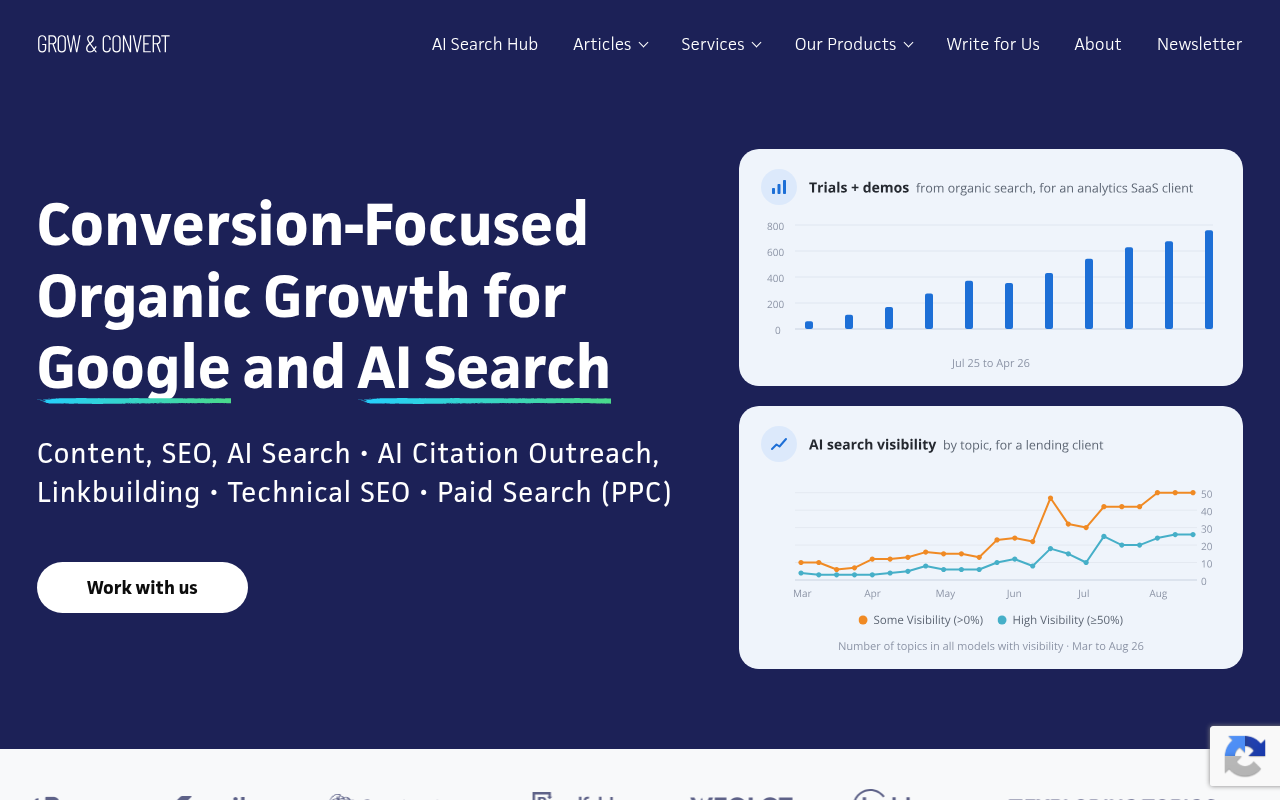
What they doGrow and Convert is a content-focused SEO and GEO agency, and the clearest content-to-pipeline fit on this list. It built a method it calls Pain Point SEO: instead of chasing traffic, it writes for the buying-intent searches your customers actually make, then tracks each page to signups and leads, not pageviews. That turns content into a steady source of qualified demand rather than a vanity metric, which is the whole point for a wobbly pipeline. It is a small, senior, remote team that keeps clients for years, and names Smartlook, Brandfolder, Wrike, ServiceTitan, and Patreon. One case study reports more than 600 new monthly signups from high-value users for Smartlook. Its Clutch profile lists content packages from about 10,000 dollars a month, so it is not built for small budgets.
Best forB2B SaaS and service teams that want buying-intent content tracked to leads, as a compounding source of steady pipeline.
Pros
- Writes for buying-intent searches and tracks each page to leads, not traffic.
- Keeps clients for years, so the content base compounds into steady inbound.
- Ranks well for its own category terms, clear proof it runs the method on itself.
- Clutch 4.8 from 10 reviews.
Cons
- Does not publish pricing on its site, and its Clutch packages start around 10,000 dollars a month, so it suits mid-size budgets.
- A small team focused on content and SEO, not a full-funnel or paid-heavy shop.
What they doIronpaper is a New York B2B growth agency built around long, complex sales cycles, the kind where pipeline is hard to predict because deals take months and many people decide. Its view is that pipeline wobbles when marketing and sales run as separate systems, so it joins demand generation, ABM, content, and HubSpot work into one motion with sales enablement attached. It publishes its own survey research, which is rare, and names clients such as Solartis, Steelcase, and Mobilewalla. One case study reports an 86 percent rise in qualified leads for Solartis over six months, though that engagement is a few years old. The main caution is proof: its third-party review base is very thin, with no Clutch reviews and only two on G2.
Best forMid-market and enterprise B2B teams with long, committee-led deals that want marketing and sales run as one system.
Pros
- Built for long, complex cycles where pipeline is hardest to predict.
- Joins marketing and sales into one system, with its own published research.
- Names real enterprise and tech clients.
Cons
- Very thin outside reviews, none on Clutch and two on G2, so little third-party proof.
- Its headline case studies are a few years old.
What they doObility is a B2B-only performance agency for tech and SaaS, covering paid search, paid social, SEO, GEO, Reddit, and revenue attribution. Its strength for a shaky pipeline is measurement: it ties spend to opportunities and revenue, not just leads, so you can see which channels actually fill the funnel and keep them running steadily. It ranks first for its own core terms like b2b seo services, which shows it runs the discipline on itself. Named clients include Snowflake, Fastly, Hitachi Vantara, and Autodesk. One Marketo case study reports large gains in pipeline-to-cost ratios across paid channels, using the agency's own metric definitions. Its lowest client sub-score on Clutch is cost, so it is seen as effective rather than cheap.
Best forTech and SaaS teams that want paid and search programs measured against pipeline and revenue, not just leads.
Pros
- Ties spend to pipeline and revenue, so you can keep the channels that actually work.
- Owns its own category search terms, a clear sign it practises what it sells.
- Solid review base, 4.8 from 28 Clutch reviews.
Cons
- Does not publish prices, and its lowest client score is on cost.
- Tech and SaaS only, so a poor fit for non-tech verticals.
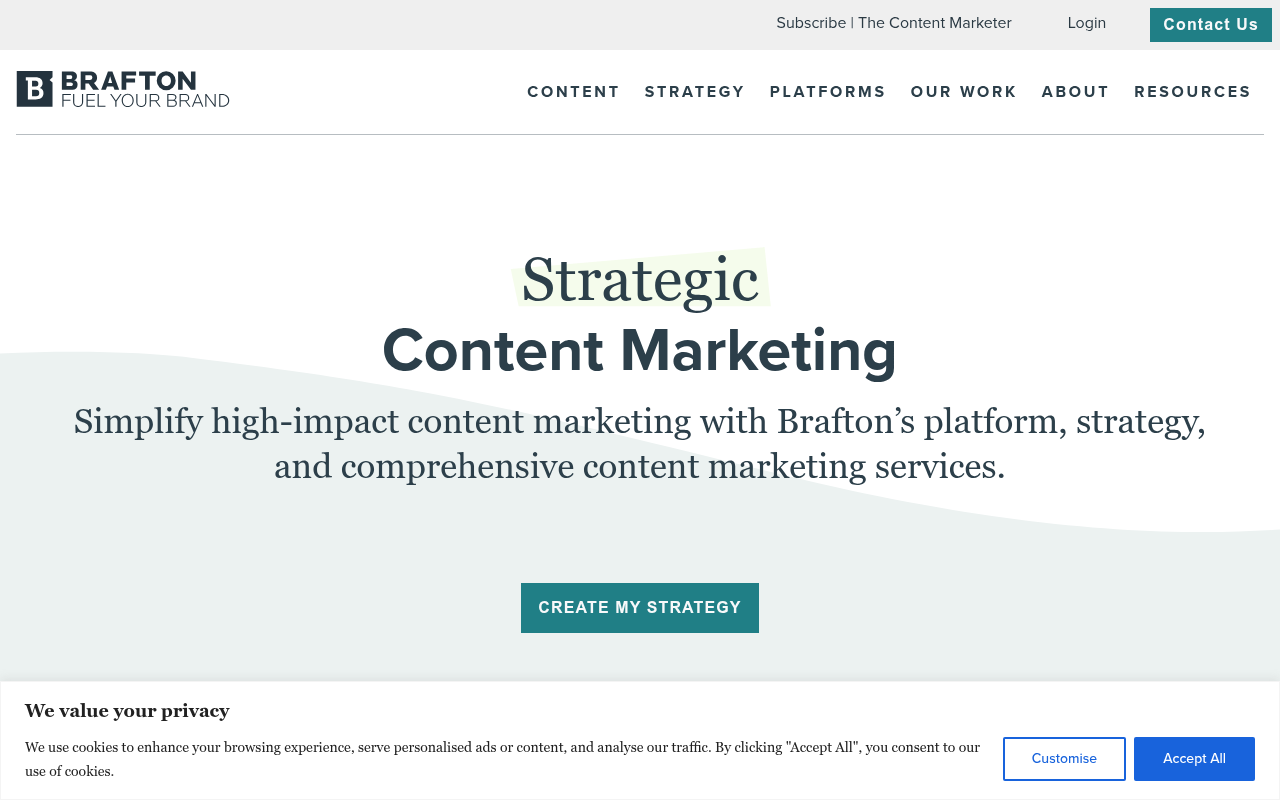
What they doBrafton is one of the largest content marketing agencies, running at real publishing scale since 2008. It is full-service, pairing content, SEO, email, social, and paid with its own content platform, and it prices by units of work rather than a flat retainer. For a company with uneven pipeline, the value is a reliable production engine that keeps the funnel fed, and run full-funnel it can reach pipeline, not just traffic. It names clients such as Preply, Stanford, AppDirect, CFGI, and MoEngage. One case study reports about 100 booked meetings with sales-qualified leads for CFGI since late 2019, from a program that spanned content, email, social, and paid. It holds a strong 4.9 from 47 Clutch reviews, with a low entry point.
Best forMid-market and enterprise teams that need a reliable, high-volume content engine across channels to keep the funnel fed.
Pros
- A large, reliable content engine that keeps the funnel fed at volume.
- Full-funnel case studies, like about 100 booked meetings for CFGI.
- Strong review base, 4.9 from 47 Clutch reviews, and a low entry point.
Cons
- Priced by units of work, so steady pipeline depends on buying enough scope.
- A broad generalist, so less focused than a pipeline or vertical specialist.
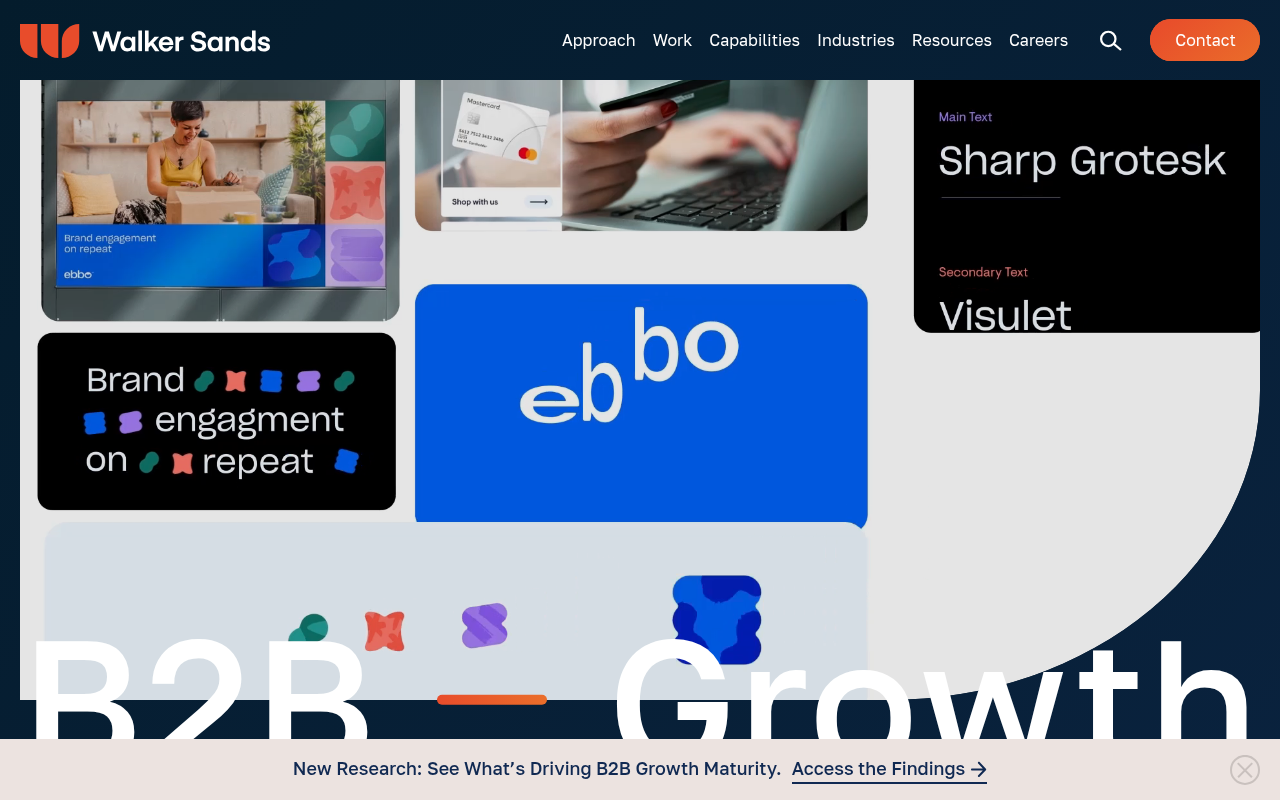
What they doWalker Sands is a large Chicago agency that runs brand, demand, PR, digital, and data together under what it calls outcome-based marketing. The appeal for an unsteady pipeline is scope: it can lift awareness and capture demand at once, so you are not waiting on a single channel to carry the quarter. It publishes original research and names clients such as commercetools, Semrush, Paylocity, and John Deere. In 2026 it acquired RevPartners and now lists RevOps and GTM engineering, so CRM and attribution work is available in-house, though that capability is new. One case study reports a 470 percent rise in AI-sourced traffic for Priority Commerce. It is a heavier, pricier agency than a focused demand shop, and it does not publish rates.
Best forGrowth-stage and enterprise B2B companies that want brand, PR, demand, and attribution handled under one roof.
Pros
- Runs brand, demand, PR, and data together, so awareness and capture move at once.
- Enterprise clients and published original research.
- Added RevOps and attribution in-house through its 2026 RevPartners deal.
Cons
- Does not publish prices, and it is a larger, heavier agency than a focused demand shop.
- Its RevOps capability is new, so it has no long track record there yet.
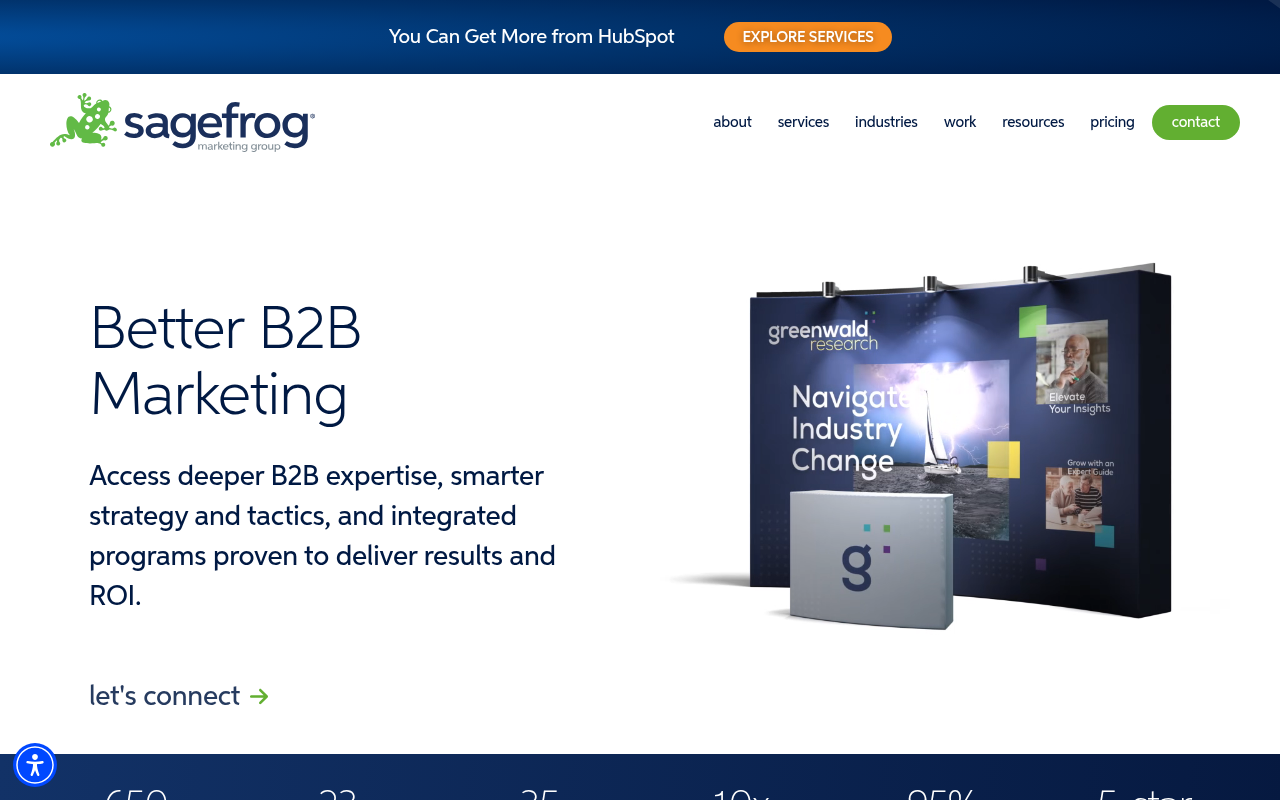
What they doSagefrog has run B2B marketing since 2002 and is strongest in healthcare, life sciences, industrial, and professional services. It is a full-service, HubSpot-partner agency that handles brand, website, content, SEO, and demand together, offered as ongoing programs or projects. For a company with uneven pipeline, the draw is a single experienced team that publishes consistently and builds the brand and demand side by side, so inbound grows steadily rather than in fits. Named clients include Nixon Medical, Signant Health, Koneksa, and IMA Clinical Research. One case study reports a 64 percent rise in qualified leads and 30 percent revenue growth for Nixon Medical, though that came from a full rebrand rather than demand work alone. It holds a clean 5.0 on Clutch, from a small base of 10 reviews.
Best forHealthcare, life sciences, and industrial B2B companies that want brand and demand built together by one experienced team.
Pros
- More than 20 years in B2B, with deep healthcare and industrial experience.
- Builds brand and demand together, with steady, consistent publishing.
- A clean 5.0 Clutch rating.
Cons
- Does not publish prices.
- A broad, brand-led full-service shop, so less of a pure demand or performance specialist.
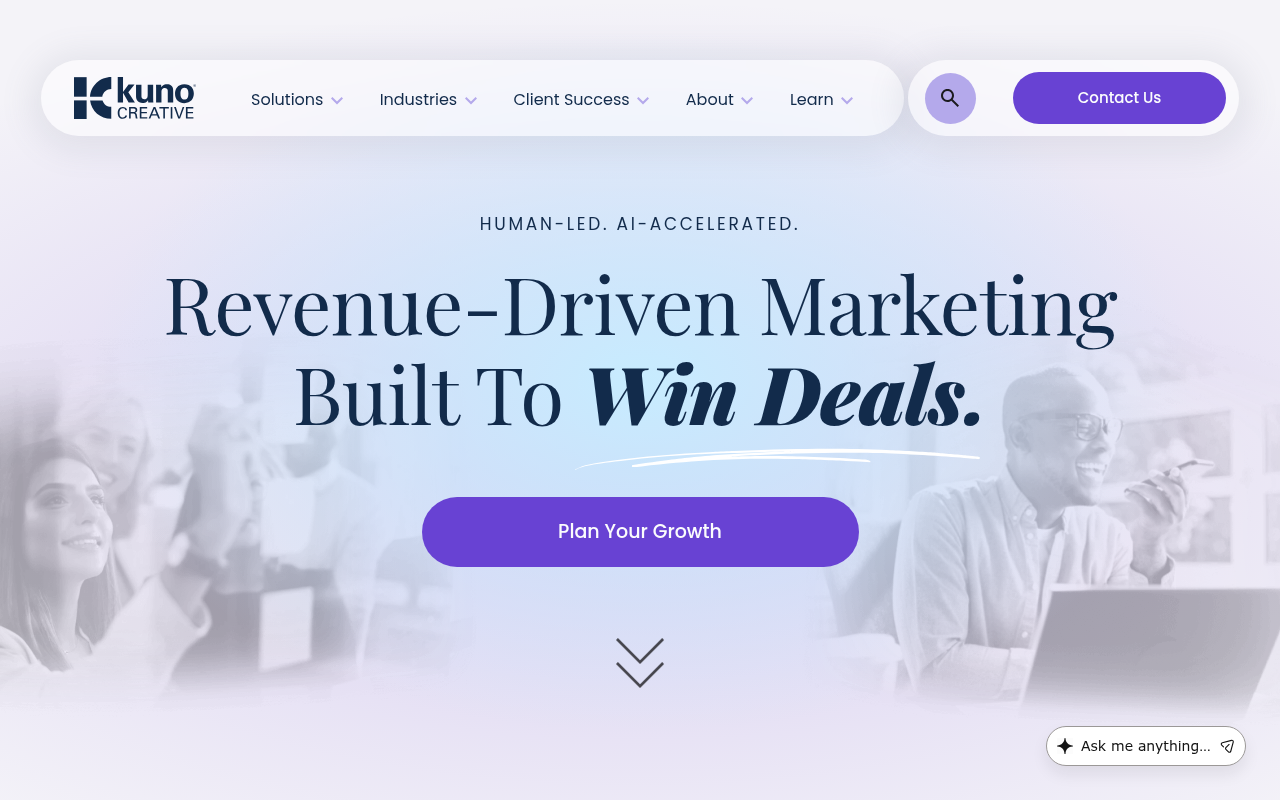
What they doKuno Creative is an employee-owned, HubSpot Diamond partner that has run inbound marketing for 25 years. It joins content, demand generation, sales enablement, and RevOps into one revenue system, which suits a company trying to replace referral luck with a repeatable inbound engine. It names clients such as Aramark, BASF, Samsung, and White Cup, and reports influencing 61 deals worth 1.6 million dollars for White Cup. The team ranks for real category terms off its own blog, a good sign it can build the same for you. The caution is review proof: Kuno promotes a large five-star review count on its site but names no platform, and its verified Clutch base is only two reviews, so weigh its case studies more than the headline number.
Best forMid-market B2B companies that want to replace referral-based growth with a repeatable HubSpot-run inbound engine.
Pros
- Joins content, demand, sales enablement, and RevOps into one inbound revenue system.
- Employee-owned, 25 years old, and a HubSpot Diamond partner.
- Names enterprise clients and a documented 1.6 million dollar deal result.
Cons
- Its headline review count names no platform, and its verified Clutch base is only two reviews.
- Does not publish prices.
What they doSiege Media is a content and SEO agency that has repositioned around GEO, which is visibility in AI answers, alongside content, affiliate, and digital PR. Its strength for a shaky pipeline is compounding reach: it builds organic traffic and authority that keep working for years and increasingly show up in AI results, which reduces reliance on paid. It works mostly with large brands and names clients such as Zapier, Instacart, Zendesk, and The Zebra. One Zapier case study reports a 7.2 million dollar increase in traffic value and 290 percent organic traffic growth over two years. The honest caveat for this list is that its published proof is traffic value, links, and AI visibility, not pipeline, so it fits teams that trust high-funnel reach to feed demand. It holds 4.9 from 48 Clutch reviews.
Best forLarger B2B brands that want compounding organic and AI-answer visibility to feed demand and cut paid dependence.
Pros
- Builds compounding organic and AI-answer visibility that keeps working for years.
- Strong review base, 4.9 from 48 Clutch reviews, with blue-chip brand clients.
- Grows earned reach, which reduces reliance on paid.
Cons
- Its published proof is traffic value and AI visibility, not pipeline or leads.
- Enterprise and large-brand skew, so a weaker fit for small teams needing fast pipeline.
What they do97th Floor is a digital marketing agency that leads with audience-first SEO, AI search, advertising, and content, backed by its own research tool called Palomar. For an uneven pipeline, its value is compounding organic and AI-search visibility that keeps working between campaigns, paired with paid to fill gaps. It names enterprise clients such as Oracle, Salesforce, AT&T, RingCentral, and Gigamon, and reports an 81 percent sales-accepted-lead rate for Hiya. It eats its own cooking, ranking for category and informational terms off its article hub, with 4.8 from 16 Clutch reviews. The main caution is focus: its client list mixes B2B and consumer brands, so it is a broad digital agency rather than a pure B2B demand specialist.
Best forMid-market and enterprise teams that want compounding search and AI visibility paired with paid media.
Pros
- Builds compounding SEO and AI-search visibility that works between campaigns.
- Enterprise clients and a documented sales-accepted-lead result.
- Solid review base, 4.8 from 16 Clutch reviews.
Cons
- Does not publish prices.
- Mixes B2B and consumer clients, so it is a broad agency rather than a B2B demand specialist.
What they domemoryBlue is different from the others here: it is an outsourced sales development firm, not a content or inbound agency. It supplies embedded SDR, ADR, and account-executive teams that book meetings by phone and email on a steady cadence. For a company whose pipeline swings because outbound is sporadic, a dedicated, managed SDR team is a direct way to make top-of-funnel activity consistent week to week. It names clients such as Autodesk, Vertex, PDI Technologies, and Graphiant, runs an audition-to-hire model, and reports that most of its booked meetings come from the phone. It carries the largest review base on this list, 4.6 from 343 G2 reviews, plus 4.7 from 23 on Clutch. The trade-off is that this is outbound muscle, not demand that compounds, so it works best alongside marketing rather than instead of it.
Best forB2B tech teams that need a steady, managed outbound engine to even out a pipeline that swings with sporadic prospecting.
Pros
- Supplies a managed SDR team, a direct way to make outbound pipeline steady.
- Large, established firm with real enterprise clients.
- The largest review base on this list, 4.6 from 343 G2 reviews.
Cons
- This is outbound effort, not demand that compounds, so costs do not fall over time.
- Best used alongside marketing, not as your only demand source.
What they doElevation Marketing is a full-service B2B agency that has worked with large enterprises since 1999, covering strategy, brand, creative, media, ABM, and demand generation. For a company with uneven pipeline, the appeal is senior strategy and the ability to run brand and demand together at scale, so demand is built on a steadier base of awareness. It names blue-chip clients such as Microsoft, Pfizer, Genentech, PointClickCare, and Equinix, and it ranks first for core terms like b2b marketing firms, which shows it markets itself well. It holds a clean 5.0 on Clutch, though from only four reviews. The clear trade-off is budget: its stated minimum is around 50,000 dollars, so it fits larger, funded teams rather than small ones.
Best forLarger, funded enterprise B2B teams that want senior strategy running brand and demand together.
Pros
- Senior strategy and enterprise experience going back to 1999.
- Runs brand and demand together, building demand on steadier awareness.
- Ranks first for its own category terms, a sign it markets itself well.
Cons
- High minimum, around 50,000 dollars, so it suits larger funded teams only.
- Full-service and brand-led, so less of a focused demand specialist, and its Clutch base is small.
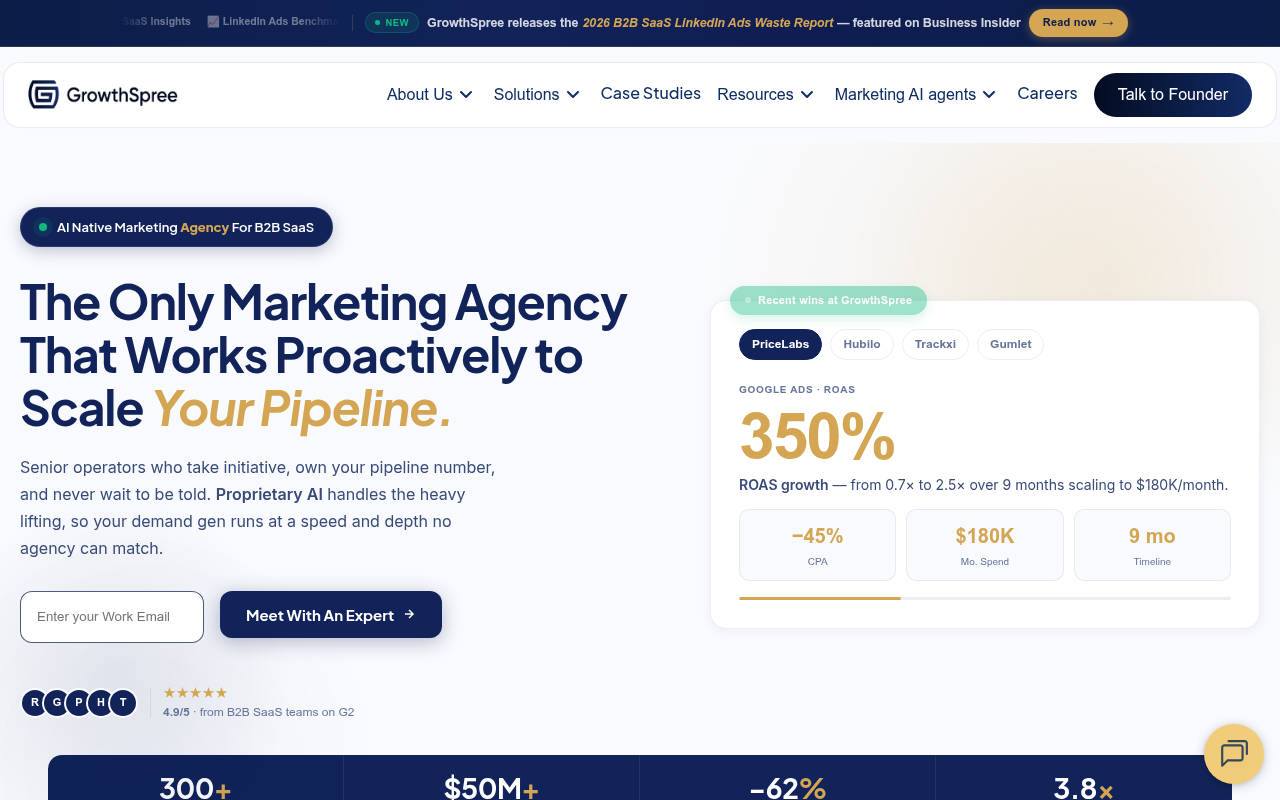
What they doGrowthSpree is an AI-native demand generation agency for B2B SaaS, built around Google Ads, LinkedIn Ads, ABM, and RevOps, with its own set of AI tools that optimise toward CRM-tracked pipeline rather than raw lead volume. That pipeline focus, plus a flat monthly fee on a month-to-month basis, makes it a lower-commitment way for a smaller SaaS team to steady its funnel. It names clients such as PriceLabs, Hubilo, Rocketlane, and Hasura, and reports lifting PriceLabs return on ad spend from 0.7 to 2.5 times over nine months while cutting cost per acquisition by 45 percent. It carries a strong, recent G2 rating, 4.9 from 49 reviews. The caution is that it is paid-media-led and SaaS-only, and it makes strong self-claims that are hard to verify independently.
Best forSmaller B2B SaaS teams that want a low-commitment, pipeline-focused paid and ABM program.
Pros
- Optimises toward CRM-tracked pipeline, not raw lead volume.
- Flat monthly fee, month to month, so it is low-commitment to try.
- Strong, recent G2 rating, 4.9 from 49 reviews.
Cons
- Paid-media-led and B2B SaaS only, so demand leans on spend rather than compounding content.
- Makes strong self-claims, like 300-plus clients, that are hard to verify independently.
Is your pipeline steady enough to forecast?
Get a free Content RevOps audit. We show where your content and demand leak revenue, and what a connected system would change so pipeline arrives on a schedule you can plan around.
Frequently asked questions
What does a demand generation agency do to stabilise pipeline?
It builds a repeatable system that brings qualified buyers in on a steady schedule, so your pipeline stops swinging between full and empty. That usually means content and search that compound over time, paid and outbound that run to a plan, and clear tracking so you can forecast what is coming.
How much do demand generation agencies charge?
Most do not publish prices. Where a floor is public it tends to sit between about 1,000 and 50,000 US dollars a month, depending on scope and team size. We mark pricing as not disclosed when an agency does not share it.
How did we choose and rank these agencies?
We reviewed more than 120 agencies, then kept the ones that build repeatable demand and can prove it. We ranked them on whether they create steady pipeline, run marketing for themselves, review evidence, transparency, and fit. The same checks apply to our own entry.