How We Make Your Expensive Channels Work Harder

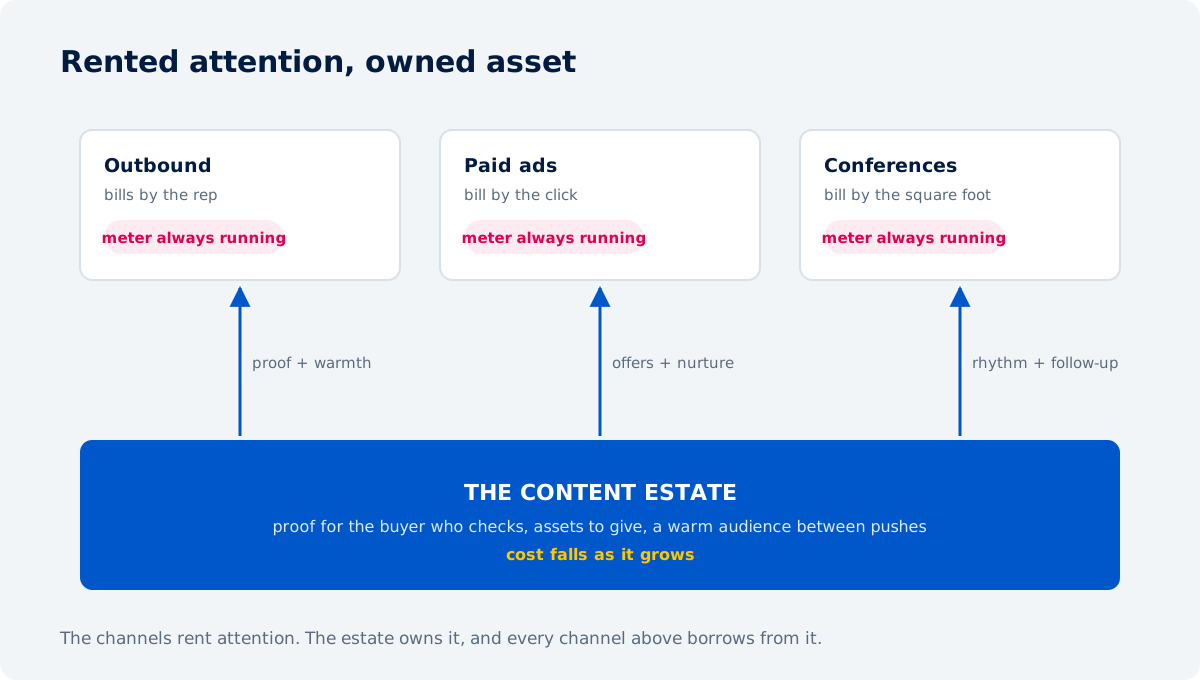
Most B2B growth channels run a meter. Outbound bills by the rep, ads bill by the click, and conferences bill by the square foot.
None of that is a reason to quit them. In our hiring analysis across seven B2B verticals, events, brand, and field marketing lead the channel mix; in construction, 69% of marketing job postings name events. For most of the companies we work with, the expensive channels are not a side bet. They are the go-to-market.
This page is about why those channels underperform their price, and what we do about it inside our demand generation engagements.
Where does the money leak?
The three channels look nothing alike, and they leak in the same way. Here is each one in detail.
Outbound from a ghost
Cold outreach keeps getting more expensive per conversation. Industry trackers put average cold email reply rates at roughly 3.4% in 2026, down from about 8.5% in 2019, and blended fleet-wide averages run under 1%. A fully loaded SDR costs $110K to $173K a year. Divide one number by the other and every reply is carrying thousands of dollars of cost.
Here is the reframe that changes the diagnosis: the sequence does not fail in the inbox. It fails during due diligence.
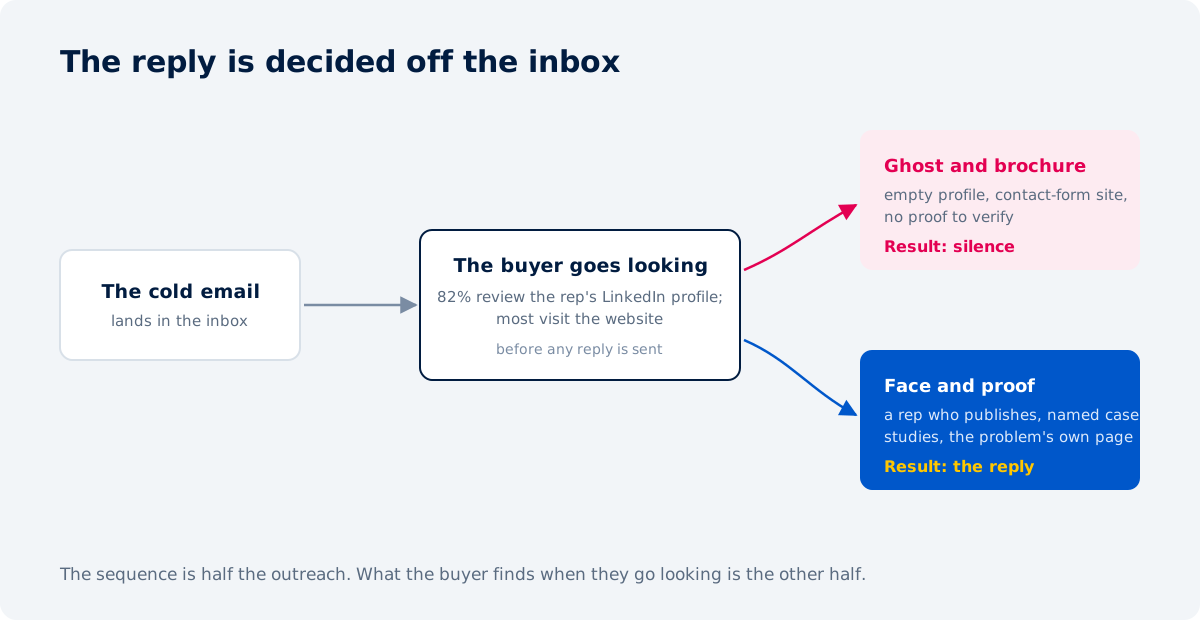
82% of buyers review a rep's LinkedIn profile before agreeing to a meeting, and most visit the vendor's website before replying at all. The buyer is doing exactly what you would do with an unexpected offer from a stranger: checking whether the person is real, whether the company has done this before, and whether replying is worth the risk of a pushy sales cycle.
What do they usually find? A profile that reads as a job history, and a site that reads as a brochure. We check this constantly in audits: sites whose only ask is a contact form, no case study a buyer could verify, and reps who exist online as a name and a headline.
And this particular failure stays invisible, because no system records it. When a buyer checks the rep, finds nothing convincing, and quietly decides not to reply, the sequencing tool logs a delivered email with no response, which looks identical to a bad subject line or a mistimed send. So the team iterates on copy, cadence, and lists, the variables their dashboard can see, while the variable actually deciding the outcome sits on a LinkedIn profile nobody manages and a website nobody has touched in a year. The channel underperforms for a reason that never shows up in the channel's own reporting.
Ads that only take
B2B paid media runs expensive per lead: blended paid CPL sits around $310, against roughly $52 to $164 for organic.
Three habits do most of the damage:
The homepage landing. About half of B2B PPC ads send traffic to the homepage instead of a page built for the ad. Dedicated pages convert 4 to 5x better, and homepage traffic pays a Quality Score penalty of 37 to 50% on every click, so the habit costs twice: fewer conversions from the clicks, and a higher price on each one.
The ask-only campaign. The only offer is a demo, aimed at an audience that is mostly still learning. One benchmark across 14 industries found content offers produce a cost per lead 2 to 4x lower than direct lead-gen asks, in every single industry.
The missing follow-through. Nothing captures the clickers who are not ready, so every campaign starts from zero, and the same buyer gets bought twice.
Underneath all three habits sits the same economic mistake. An ad interrupts someone who was not looking for you, which means the trust a purchase requires has not been built yet; asking for a sales conversation at that moment asks the buyer to skip the stage they are actually in. Only a small share of any audience is ready to buy right now, and a campaign whose only offer is a demo pays full auction price to reach everyone while giving the not-yet-ready majority no smaller yes to say.
That is what the 2 to 4x cost gap between content offers and demo asks measures. It is the price of the mismatch between what the ad wants and where the audience is.
The booth boom and bust
Exhibiting is one of the biggest line items in B2B marketing. All-in costs for a 10x10 booth at a national show run $8K to $25K, the cost per qualified meeting attributable to events runs $500 to $3,000, and the line items are inflating: material handling up 21% and electrical labor up 41% since 2022.
To be clear, events are not a bad channel. They carry the highest cost per lead in the B2B mix and also the highest lead-to-SQL conversion, and both numbers come from the same fact: a good show concentrates real buyers in one room for a week. You pay a premium to be there, and the people you meet are worth more than leads from any other source.
Which is exactly why the waste around the show is so expensive. A mystery-shopper study found 62% of exhibitors never followed up a warm lead carrying a live request for proposal, a buyer with budget in hand who had asked to be contacted. EXHIBITOR's own survey puts at least 40% of booth leads unfulfilled. The failure is rarely laziness; show leads land in a badge-scan export with no owner, no record of the conversation, and no agreed next step, and by the time anyone triages the list, the warmth that made those leads valuable is gone.
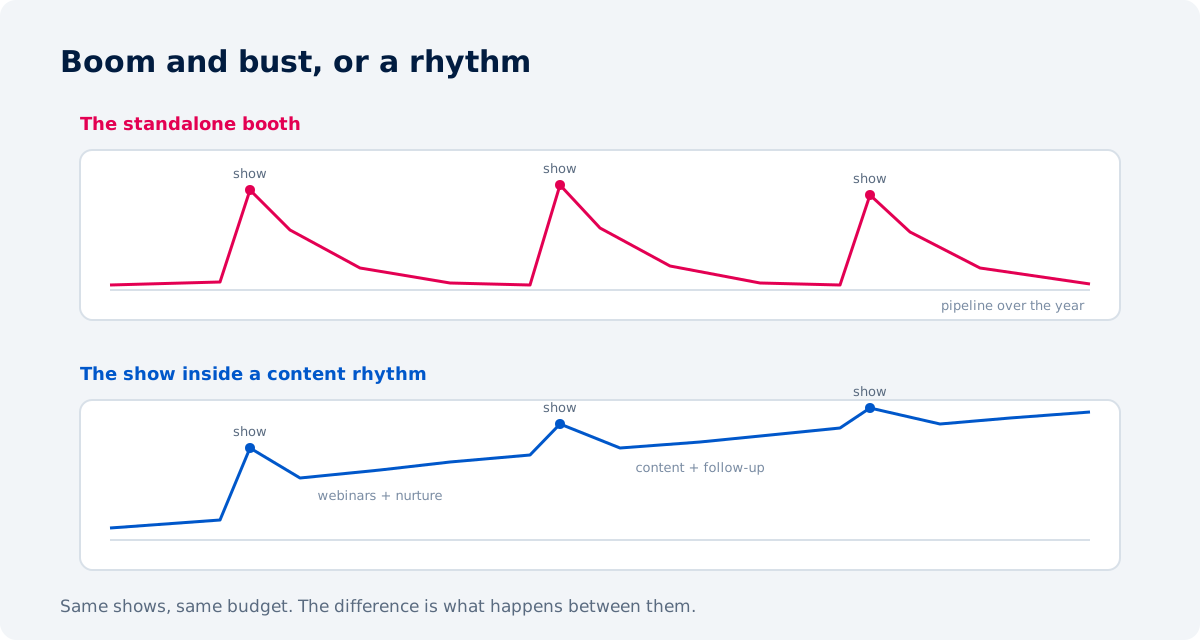
Then there is the shape of the pipeline over the year. The show produces a spike of meetings, the spike decays over the following weeks, and nothing generates demand again until the next event. Most teams read the spike as proof the channel works and the trough as normal, so the answer to every slow quarter becomes another booth. The spend compounds while the audience the company already paid to meet sits cold in a spreadsheet between shows.
One client came to us with conference leads costing $500 to $600 each and customer acquisition above $2,500. The shows themselves were producing real conversations; what did not exist was any system for keeping those conversations alive between events, so each show had to buy back attention the previous one had already earned.
How do we make outbound work harder?
We make the due-diligence check pass. The sequence is half the outreach; the other half is what the buyer finds when they go looking, and that half is buildable.
Give the reps a face
A rep's profile is part of the sales process, whether anyone manages it or not, because the buyer treats it as a preview of what working with this person would be like. We rebuild profiles as buyer resources: a headline about the problem the rep solves, posts carrying the company's stories and data, real recommendations from real customers.
LinkedIn's own analysis puts numbers on the effort: a complete profile lifts InMail acceptance by 87%, and a buyer who already follows the company page is 270% more likely to accept. Those are not marginal gains; they are larger than the difference between a good subject line and a bad one, applied to a surface most teams never touch.
This is the same two-feed engine we use for AI visibility: the company page carries the findings, the people carry the opinions and stories behind them. A rep who publishes stops being a ghost, and every future sequence they send inherits the credibility. Our page on how we help you show up in AI search covers the visibility half of that system.
Back the sequence with proof
The website is the second half of every cold email. Before a buyer replies, they are working through three questions: can these people solve my problem, have they done it for someone like me, and are they credible enough to risk a conversation with.
The estate answers those questions without a call: named case studies with numbers, a real about page with real people, and a page that speaks to the specific problem the email named. When the sequence claims expertise the site cannot show, the buyer resolves the contradiction in the site's favor, because the site is the evidence and the email is the claim.
Open by giving
Our outreach opens with something useful, often a short piece of analysis of the prospect's own situation. The gesture works for two reasons: it demonstrates the expertise the email would otherwise only claim, and it gives the buyer a reason to engage that costs them nothing.
The warmth math is well documented: demand-warmed outbound runs 5 to 8% replies against 2 to 4% cold, and cuts cost per qualified opportunity by 40 to 50%. Warm an audience with content first and the same SDR, sending the same volume, produces roughly twice the pipeline.
Our own results match the direction. For Lucid, pairing outbound with original research lifted reply rates from 3 to 4% up to 14 to 18%, and meetings rose 65% with no added headcount.
How do we make ads work harder?
We change what the click buys. The budget stays where it is; what changes is where the click lands, what the ad asks for, and what happens to the people who click but do not convert.
Land the click on an answer
An ad makes a promise, and the page either keeps it immediately or the visitor leaves. A homepage cannot keep a specific promise; it forces the visitor to restart their search inside your navigation, and most will not.
So every campaign gets a page built for it: the ad's promise answered above the fold, one primary ask, no navigation maze. The conversion gap justifies the work on its own, and the Quality Score discount lowers the price of every click on top.
Give before you ask
Most of the audience is not ready for a demo, and pushing one anyway is why ask-only campaigns pay 2 to 4x more per lead than content offers.
So the ad offers the thing the audience actually wants at their stage: the benchmark, the calculator, the honest guide. The demo ask still exists; it just comes later, aimed at the people whose behavior says they are ready.
Retargeting then changes character too. A reader who took the benchmark has told you what they care about, so the follow-up ad can continue that conversation instead of repeating the interruption to everyone who ever loaded the homepage.
Never buy the same buyer twice
Every click either becomes a contact with context or disappears, and the difference decides whether the ad budget compounds or resets. We capture with theme-matched assets, continue the education by email, and let scoring surface the ready ones, the same capture-score-route machinery from our page on getting more business from content.
Run this way, next quarter's campaign starts from a warm pool instead of zero, and dormant contacts get reactivated instead of re-purchased at auction prices.
For Radius, this is how paid search spend fell by half while leads went up: organic pages and captured nurture carried the load the ads had been renting, and cost per lead dropped from around $150 to around $45.
How do we make conferences work harder?
We wrap the show in a before, a during, and an after, so the booth stops being a standalone bet on one week of foot traffic.
Before the show
The meeting calendar fills before anyone flies. Outreach to the attendee list anchors on content, an invitation tied to the program's ideas rather than a pitch for a booth visit, because an attendee who has a reason to talk to you will book a slot, and one who does not will not be argued into it.
For Heliogen, speaker-style invitations anchored on the program's content drew 30 to 40% response rates in a motion where cold outreach had run under 1%.
At the show
Capture carries context, not just a badge scan: which problem the conversation touched, which material they took, what they asked. That context is what makes the follow-up feel like a continuation of a conversation instead of a cold restart, and it is exactly what the badge-scan export loses.
The booth also works harder when the audience arrives warm. One client's field team reported busier booths and on-the-spot demo requests once attendees had already met the content before the event; the booth stopped introducing the company and started closing the loop.
After the show
Follow-up happens in days, while it is warm; nearly half of attendees want to hear from you within a few days of the event, and the mystery-shopper data above shows how few exhibitors manage even that. Each follow-up is theme-matched to the recorded conversation, never a generic blast, because the conversation is the one advantage a show lead has over a cold one.
Then the between-show surface takes over: webinars, the content calendar, and the nurture path keep the audience engaged until the next event. The pipeline stops sawtoothing because the demand generation no longer stops when the booth comes down; the rhythm becomes event, content, webinar, event, and each show inherits a warmer audience than the last.
The client with $500 to $600 conference leads watched acquisition cost fall from above $2,500 to around $600, with the same shows on the calendar, as content took over the capture and nurture load around them.
What sits underneath all three?
The estate itself, and it is the only channel in the mix whose economics improve with scale.
Median organic cost per lead runs around $52, against $187 for paid search and $312 for events. The gap has a structural cause: auction and venue prices rise with competition, while a page written once keeps ranking, keeps getting cited, and keeps capturing, so its cost per lead falls every month it stays live.
Every expensive channel borrows from the estate. The rep's proof, the ad's offer, the booth's follow-up material, all of it is the same asset wearing different clothes, which means the channels stop competing for budget and start sharing an investment.
And there is usually value already sitting there. We keep auditing companies whose existing organic traffic would cost five or six figures a month to buy as ads, with no capture on any of it. That leak has its own page.
Honesty about the ramp: benchmarks put organic content at $50 to $200 per meeting at scale, with a 6 to 18 month ramp. That ramp is exactly why we run the estate underneath the paid channels rather than as a replacement for them; the channels carry the quarter while the estate builds the year.
What results should you expect?
Improvement arrives at two speeds, and it helps to know which fix belongs to which.
Channel fixes land in weeks
The spend is already flowing, so redirected clicks, rebuilt profiles, matched asks, and a working follow-up machine change the cost per opportunity quickly. Nothing new has to rank or get cited for these to pay; they convert attention the budget was already buying.
The estate compounds over months
Assets accumulate, the warm pool grows, rankings and citations build, and each quarter the expensive channels lean a little less on rented attention.
The honest sequencing matters: if someone promises the estate replaces your channels in a quarter, they are selling something. What we have watched, repeatedly, is the meter running slower every month while the pipeline holds or grows.
How do you find out what your channels really cost?
The channel-economics pass of our free content revenue audit maps it:
Cost per opportunity by channel, not cost per lead, with the SDR, ad, and event math done all-in.
The due-diligence check: what a buyer finds when they look up your site and your reps after an outreach touch.
The giving audit: what your ads and sequences offer, and what they only ask for.
A dollar band on the gap, with every assumption stated.
Request the free audit or book a discovery call and we will run the due-diligence check on your own company live.
Frequently asked questions
Should we stop doing outbound, ads, or conferences?
No. All three work; they are just expensive to run on rented attention alone.
The fix is putting durable material underneath them, proof for the buyer who checks you out, something given back for the click, and a warm audience between events, so the same spend produces more conversations.
What is content-warmed outbound?
Outreach aimed at people who have already met your thinking: readers, webinar attendees, followers of your experts, and visitors your content captured.
Benchmarks put warmed outbound at roughly double the reply rate of cold and 40 to 50% lower cost per qualified opportunity, and our client results match that direction.
Why do our ads get clicks but no pipeline?
Usually three habits: the click lands on a homepage instead of a page matched to the ad, the only ask is a demo when most clickers are still learning, and nothing captures the ones who are not ready, so every campaign starts from zero.
Fixing the destination and the ask moves results within weeks.
How do we stop the post-conference pipeline crash?
Treat the show as one beat in a rhythm instead of a standalone bet. Book meetings before the show with content-anchored outreach, capture context at the booth, follow up within days while it is warm, and keep the audience engaged between events with webinars and a steady calendar.
The spike becomes a baseline.
Which channel should we fix first?
The one already carrying your pipeline. Fixing the due-diligence surface (site plus rep profiles) helps every channel at once and usually costs the least, so we typically start there, then move to the channel with the worst cost per opportunity.