How We Help You Get More Business From Content

Plenty of B2B companies have solved the traffic problem and still have a business problem. People find the content, read it, and leave, and nothing about the visit ever reaches sales.
The reading happens. The business does not.
We work on this leak constantly, inside our inbound lead generation engagements and in the audits we run. This page explains how we think about it: what the leak looks like, why it happens, and the architecture we build to close it.
Most of the numbers below are our own. They come from the State of Content Marketing 2026, our study of B2B content across seven industries, from our analysis of why AI-referred traffic fails to convert, and from our measurement of the tools 478 high-growth B2B companies actually run.
The thesis in one line: the pages are rarely broken or hostile. They lack a reason and a route. That makes this an architecture problem, and architecture can be fixed without rewriting a word of the content.
What does the leak look like?
Four patterns cover almost everything we find.
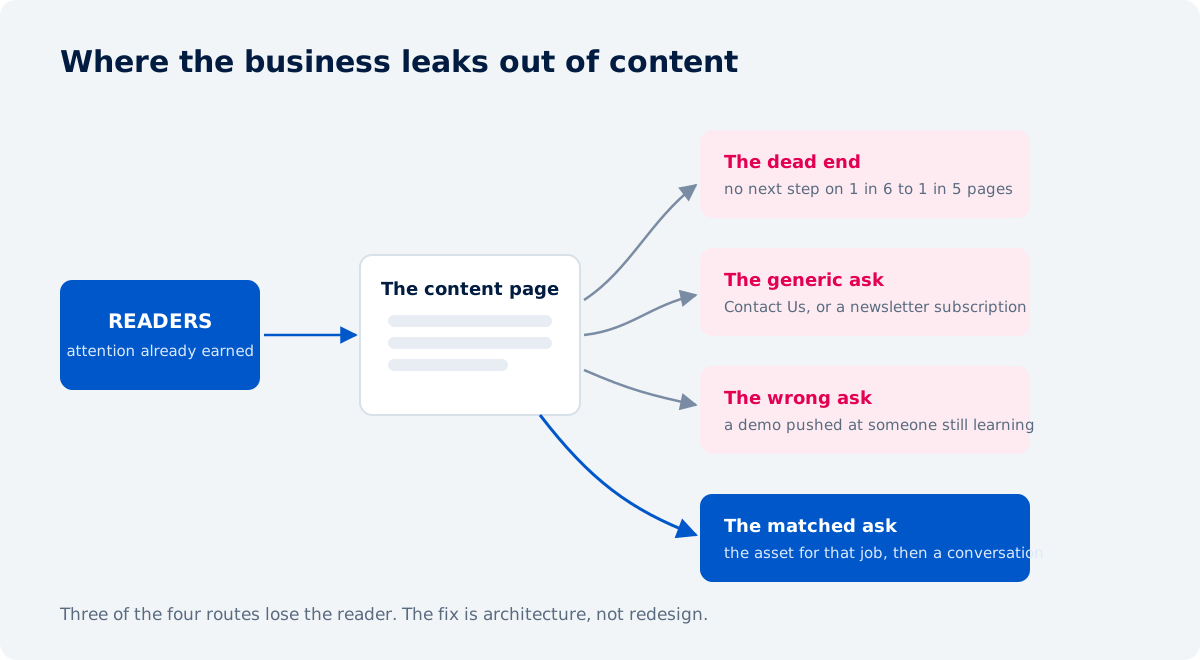
The dead end
Between 1 in 6 and 1 in 5 content pages offer the reader no next step at all. The article finishes, and the page just ends.
Resource hubs make this stranger, not better: two thirds or more of active publishers have one, but the conversion wiring around it, the routes from reading to acting, mostly does not exist. The structure is there; the doorway is not.
Earned attention left to wander the site unguided is the cheapest waste in B2B marketing.
The generic ask
The default ask on B2B content is Contact Us. Calls to action that change with the reader's stage show up on as few as 1 in 8 sites, and rarely on more than half.
The version we see most often: a reader deep in a practical guide gets offered a newsletter subscription, instead of the checklist, template, or benchmark they would happily trade an email for.
The wrong ask
Most pages do carry calls to action. In our analysis of AI-cited B2B pages, 85% had at least one, averaging 2.6 per page.
Alignment is the problem: the ask matched the reader's intent on only about 8 to 17% of them. Demo buttons pushed at someone who is still learning convert nobody.
And the misalignment is structural, not cosmetic: a clear path from blog content to a conversion point existed on fewer than 1 in 10 of the SaaS blogs we studied.
The missing decision layer
Blogs skew 73 to 84% top-of-funnel. Comparison pages appear on fewer than 1 in 20 sites, and ROI calculators on roughly 0 to 3%.
Think about what that means from the buyer's side. They can learn everything about the problem from you, and the moment they start choosing between vendors, you have nothing for them to read.
The market gets educated, and the choosing gets handed to someone else.
We meet these patterns weekly in audits. A sales-training company we reviewed had every piece of conversion furniture, a sidebar newsletter box, a mid-article banner, a footer form, and a chat widget, and every one of them was generic; the article taught a specific skill, and nothing on the page offered the worksheet for it.
An equipment supplier we audited ranks in Google's top three for 144 of its transactional search terms, buying traffic most companies would envy. Its resources section returns a page-not-found error, and the highest-value buying decisions in its market route through competitors' written guides instead.
If your problem is that buyers cannot find you at all, that is a different page: how we help you show up in AI search.
Why does it happen?
Four reasons come up again and again.
Companies learned the easy half of conversion
In the cohort that publishes actively, roughly 9 in 10 place inline calls to action near their content. A relevant button near relevant content is easy.
The hard half, an ask that changes with the reader's intent, stayed rare.
Most programs were inherited, not designed
Press releases lead the content mix in five of the seven verticals we studied.
Content operations grew out of communications departments and got relabelled as marketing; nobody ever designed them around a buyer's decision.
Teams are staffed to publish, not to convert
In our hiring analysis, content marketing appears as a named discipline in about 1 in 6 marketing roles at best.
Writers are hired, editors are hired; nobody owns the step where a reader becomes a lead.
The plumbing is missing
Roughly 45% of high-growth B2B companies show no web-detectable CRM, and in some verticals about 70% lack an integrated CRM-and-automation backbone.
You cannot compound what you cannot capture.
How do we match the ask to the reader?
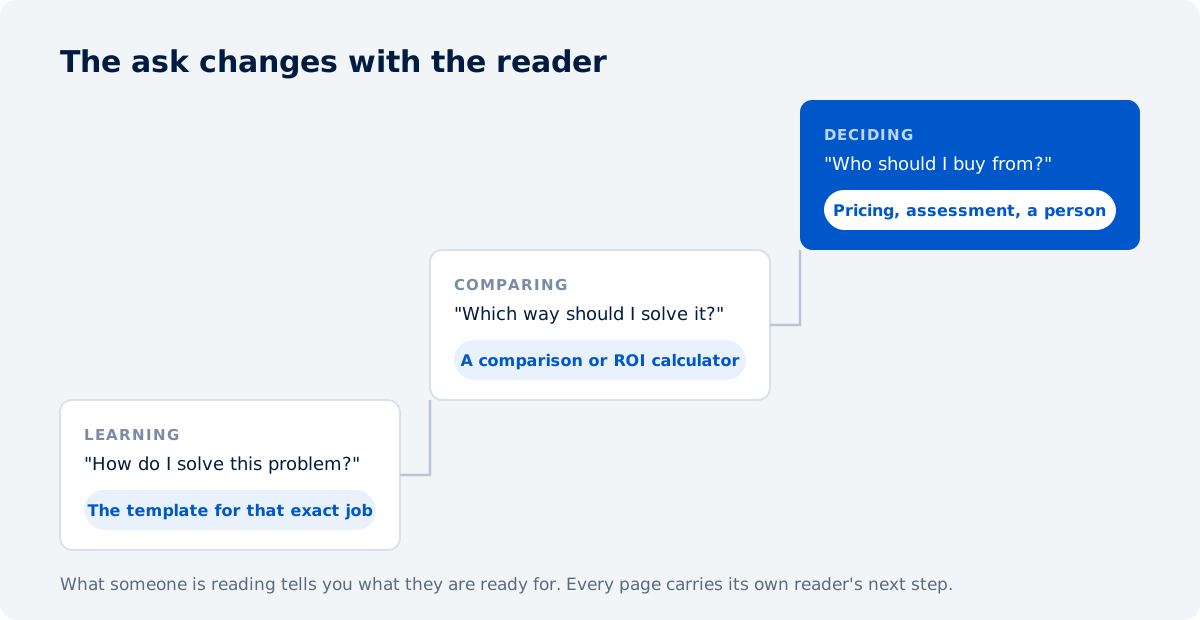
The core move is simple to state: what someone is reading tells you what they are ready for, so the ask should change with the page.
What the reader is doing | The usual ask | The ask that works |
Learning how to solve a problem | Contact us, or subscribe | The template, checklist, or worksheet for that exact job |
Comparing ways to solve it | Book a demo | A comparison guide, an ROI calculator, honest criteria |
Deciding who to buy from | A generic contact form | Clear pricing, an assessment, a fast route to a person |
Three practices turn that table into an actual system.
The ask sits where the need appears
A reader who just finished the section on scoping a project is at peak readiness for the scoping worksheet; two thousand words later, the moment has passed. Placement is inline, immediately after the passage that creates the need.
Fewer than 9% of the AI-cited pages we analyzed use inline bridge CTAs; footer forms carry the rest, and footers convert whoever survives the scroll.
Every page carries a primary and a secondary ask
The primary matches the page's intent. The secondary is a lighter step for readers who are not ready, and this is where the newsletter belongs: as the fallback, never the headline offer.
Bridge assets fill the gap between reading and talking to sales
Almost nobody jumps from a how-to article to a demo request; the gap is too wide. People will jump to a worksheet, and from a worksheet to a conversation.
Building that middle step is most of the work, and it is why we treat the bridge, not the button, as the conversion.
Rolling it out across a site follows the same sequence every time:
Inventory the pages that earn real traffic; on most sites, twenty pages carry most of the attention.
Classify each page's reader intent: learning, comparing, or deciding.
Assign each page the ask its reader is ready for.
Build the missing assets; a handful usually covers the whole estate, because assets map to themes, not to pages.
Measure per page, and move the asks that underperform.
Our conversion layer chapter goes deeper on the mechanics.
What do we offer instead of Contact Us?
Assets that match the theme someone is reading about, built once per theme rather than one gated PDF for the whole site.
What makes an asset worth an email address:
It does the job in minutes, not pages. A filled-in example beats a framework essay; a calculator beats a whitepaper about ROI.
It is specific to the theme. The reader of the account-planning guide gets the account-planning matrix, never a generic ebook.
It teaches you something about the reader. What someone downloads tells you what they are working on, which matters in the next section.
On gating, our rule is: gate the tool, not the teaching. Articles and guides work harder ungated, where search engines, AI assistants, and skeptical buyers can read them; tools are a fair trade for an email because they do a job.
Gated assets already sit on 36 to 69% of the SaaS blogs we studied; the problem is that most companies gate the wrong half.
The asset classes we build most, in rough order of leverage.
Templates, checklists, and worksheets
These complete the job the article teaches. The reader gets the outcome; you get the signal.
Calculators and assessments
At roughly 0 to 3% adoption, this is a nearly uncontested surface, and an interactive answer to "what would this cost or return" is the single most decision-shaped asset a site can carry.
Webinars
A webinar registration is a stronger signal than a download, because it costs an hour, not a click. The live session doubles as discovery: the questions people ask tell you exactly where they are in the decision.
And the recording, the clips, and the follow-up emails keep working after the event. How we build webinar funnels covers the format.
Proof this moves real numbers. For Ori Learning, one well-matched lead magnet became the highest-leverage asset in the funnel, driving roughly 2,000 signups in six months. For Aquanuity, webinars drawing 70 to 90 attendees see around 20% book a demo, and those buyers convert at 2 to 3x the baseline because they arrive educated and trusting.
The estate that houses these assets matters as much as the assets. Built properly, a resource hub is a learning environment rather than a blog roll: category pages organized by problem, bridge pages that connect the educational material to the evaluation material, and several sensible conversion paths, so buyers sort themselves by readiness.
A buyer who self-educates inside an estate like that reaches sales further down the field, and the sales conversation starts warmer. Building your flagship content product covers the architecture.
What happens after someone raises a hand?
Capture is the start, not the finish. Most companies stop here, which is why lead capture so often produces a list instead of a pipeline.
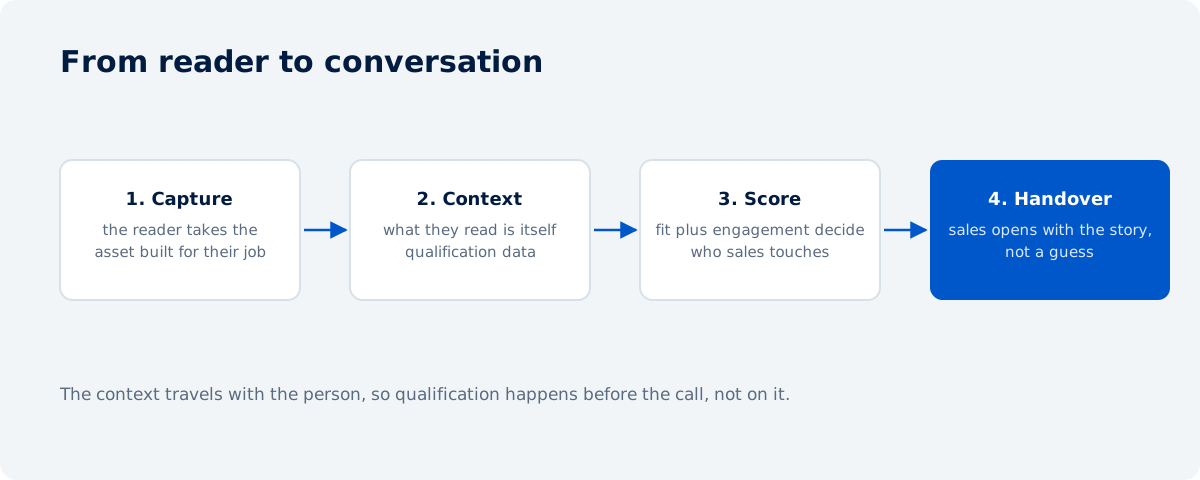
The context travels
What someone read and downloaded is itself qualification data. The visitor who took the pricing calculator and returned twice this week is in a different place than the one who skimmed a glossary page.
We record content touches against the contact, so the trail is part of the record, not a memory.
Scoring decides who sales touches
Two ingredients: fit, whether the company and role match your ICP, and engagement, what they consumed and how recently.
High fit plus high engagement routes to a person. High fit with low engagement enters nurture. Low fit gets left alone, which protects sales time and keeps the pipeline honest.
Not ready means nurture, not goodbye
Most hand-raisers are months from buying. The nurture path continues the education on the theme they showed interest in, one useful email at a time, and watches for the engagement change that signals readiness.
Run patiently, the same machinery reactivates dormant contacts; we have watched roughly a third of stalled deals restart from a well-timed, education-led follow-up.
The handover carries the story
When a lead does route to sales, the rep sees the pages read, the assets taken, the webinar attended, and the score, so the first call opens on the problem the person has been reading about instead of a cold discovery script.
Run this way, the demo calendar can fill without an outbound grind; one client books two to three demos a week through a person who is not a salesperson, because the system qualifies before the call. The lead capture and qualification and lead handover chapters document our exact process.
How do we know it is working?
We judge content by conversations started, never by sessions alone.
The measurement layer is mostly plumbing discipline. Every asset and page carries consistent tracking, content touches write to the CRM as fields and campaign memberships, and each deal record can answer a simple question: which pages and assets did this buyer touch before the first call?
That matters because the default state is blindness with a dashboard. Web analytics already sits on three quarters of B2B sites; whether a page connects to pipeline is a question a tag never answers. Sessions go up and to the right while sales asks where the leads are.
Read the path backwards from every closed deal, monthly, and the content investment decisions start making themselves: double down on the pages that start deals, fix the asks on pages that get read but never convert, and stop producing the categories that never appear in a single deal path.
That wiring now has its own page; the short version is that if you cannot see which page started a deal, you cannot invest in the right pages.
What results should you expect?
Two speeds, honestly stated.
The re-wiring dividend arrives in weeks
Closing dead ends and matching asks on pages that already have traffic converts attention you already earned. No new content, no new rankings, just routes added to pages that were already being read.
This is the fastest revenue work in content.
The asset library compounds over months
Each themed template, calculator, and webinar keeps capturing after it ships, the nurture pool grows, and the hub cross-feeds all of it.
The pattern behind the numbers holds across engagements: buyers who educate themselves on your content before talking to sales convert at multiples of cold traffic. We have watched an education-led motion take a company from roughly 15 inbound leads a month to 120 to 150.
And the ceiling is high because the field is soft: top-performing companies earn around 100x the median's search value at equal revenue, and the gap tracks deliberate investment in a system, not company size.
How do you find out where you leak?
The conversion-architecture pass of our free content revenue audit maps it page by page:
A dead-end count across your top traffic pages.
A CTA-intent map: what each page asks for versus what its reader is ready for.
A rendered-page check, because some failures are invisible in the CMS; we have seen key page elements render blank on the live site.
A dollar band on what the gap costs, with every assumption stated.
Request the free audit or book a discovery call and we will map your top ten pages live on the call.
Frequently asked questions
How do I convert blog readers into leads?
Match the ask to the reader's intent. Someone learning wants the template or checklist for the job at hand, someone comparing wants a calculator or honest criteria, and someone deciding wants pricing and a fast route to a person.
Offer the right one on the right page and capture with context.
Should I gate my content?
Gate the tool, not the teaching. Articles and guides work harder ungated, where search engines, AI assistants, and buyers can read them.
Templates, calculators, benchmarks, and worksheets are fair trades for an email because they do a job.
Why is my content getting traffic but no leads?
Usually one of four architecture problems: pages with no next step, a generic Contact Us ask, an ask mismatched to the reader's intent, or no decision-stage content at all.
In our research, between 1 in 6 and 1 in 5 content pages offer no next step, so start by auditing your top pages for dead ends.
What is a contextual CTA?
A call to action matched to the specific topic and readiness of the page it sits on: an account-planning article offering the account-planning worksheet rather than a demo.
In our analysis of AI-cited B2B pages, only about 8 to 17% aligned their CTAs with reader intent.
How fast can conversion fixes show results?
Faster than new content. Re-wiring pages that already earn traffic, closing dead ends, and matching asks typically shows movement within weeks.
The compounding asset library builds over months.