Top 10 Demand Gen Tools B2B Companies Actually Use (We Measured 478)
Benchmarking your demand gen stack? We help B2B teams build the demand engine that the tools only enable, content, brand, and automation working closed-loop to pipeline.
Book a CallMost "best demand generation tools" lists are built the same way. Someone picks the tools, and the someone usually has a tool to sell. The picks lean toward whatever plays nicely with their own product, and the recommendation arrives dressed as objectivity. Recommendations are cheap, and most of them are quietly a pitch.
Part of The Complete Guide to B2B Demand Generation Strategy.
So we did the opposite of recommending. We measured. We took 478 high-growth, cross-industry B2B companies and scanned what actually loads on their live websites, using two independent technographic sources, BuiltWith and DataforSEO. No opinions, no sponsorships, just what 478 real companies have installed and firing right now.
The answer is more boring, more Google-shaped, and more honest than any curated list. The tools that show up everywhere are the floor, not the edge, so think of this ranking as the cost of entry rather than the secret. What a company does with these tools matters far more than which ones it owns.
Here is what they run.
How we measured what 478 B2B companies actually run
We read the websites, we did not ask anyone. For each of the 478 companies we pulled the full technology footprint from BuiltWith, which returned data on 474 of them and surfaced 40,905 individual technology signals. Then we cross-checked every domain against DataforSEO's technology scan, which returned data on 386. Two independent detectors, one question: what is actually on the page.
Raw technographic data is noisy, so we normalized it to the vendor level. A site firing Google Analytics 4, Universal Analytics, and the old GA Classic counts once as Google Analytics, not three times. Every HubSpot module, from forms to chat to the CMS, rolls up to one HubSpot. Then we stripped out everything that is not demand generation, the hosting, CDNs, JavaScript libraries, fonts, and payment rails, which left 112 demand gen tools across 13 jobs.
One honest limit, stated once. This method sees what runs on the public website, so it under-counts back-office tools that never drop a tag on a marketing page, things like data warehouses, sales engagement platforms, and some attribution stacks. Where two detectors agree, confidence is high; where only one sees a tool, we flag it. Read the percentages as "share of companies with this visible on their site," which is exactly the demand gen surface a buyer, a competitor, or an AI crawler sees too.
The 10 demand gen tools B2B companies actually use
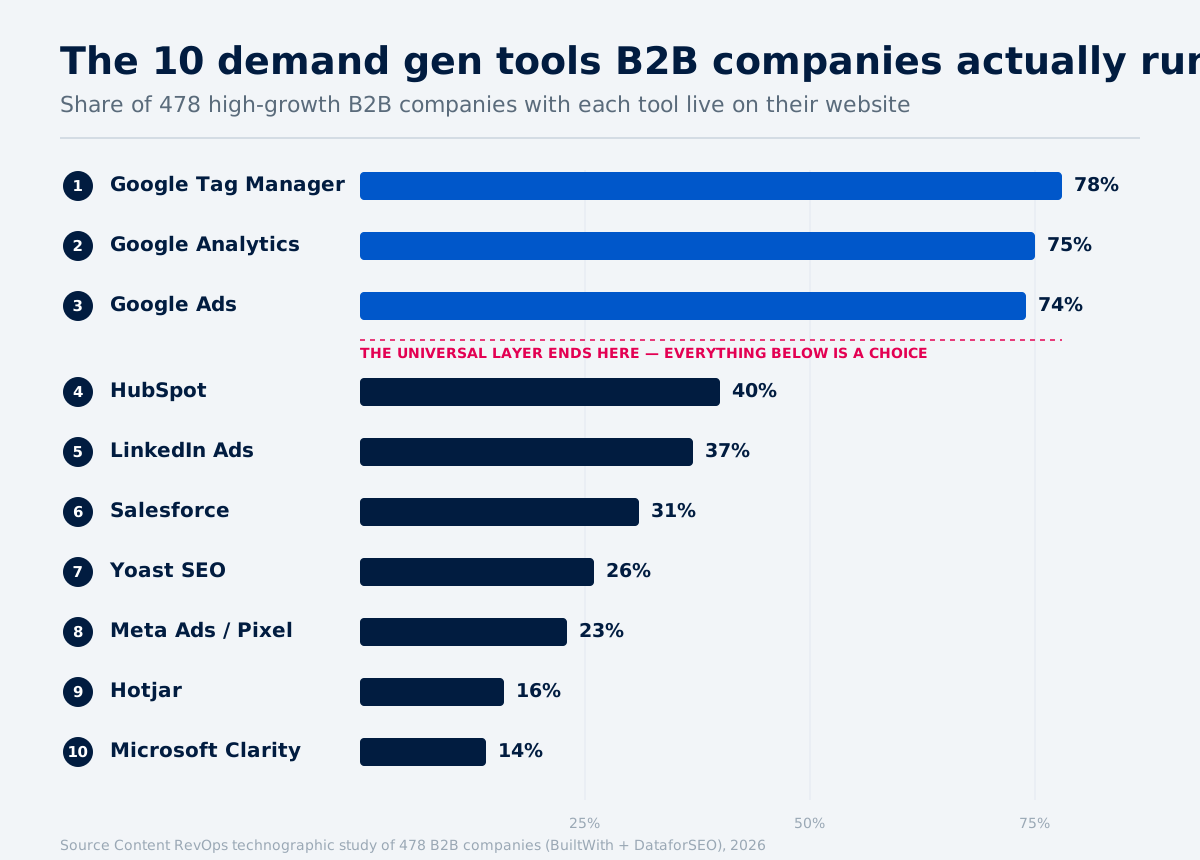
The real top 10, ranked by the share of companies running each one:
# | Tool | Job | Companies running it | Cross-checked |
1 | Google Tag Manager | Tag management | 78% | Both sources |
2 | Google Analytics | Analytics | 75% | Both sources |
3 | Google Ads | Paid + conversion | 74% | One source |
4 | HubSpot | CRM + automation | 40% | Both sources |
5 | LinkedIn Ads | Paid + conversion | 37% | One source |
6 | Salesforce | CRM + automation | 31% | One source |
7 | Yoast SEO | SEO | 26% | One source |
8 | Meta Ads / Pixel | Paid + conversion | 23% | One source |
9 | Hotjar | CRO + UX | 16% | One source |
10 | Microsoft (Clarity + Bing) | Analytics + paid | Clarity 14%, Bing 16% | One source |
1. Google Tag Manager, 78%. The single most common piece of demand gen tech is not a marketing tool at all, it is the container that loads the marketing tools. Google Tag Manager runs on more than three in four sites, and Google's other tag layer, the gtag.js snippet, shows up on a further 61% (the two overlap heavily). Tag management is the floor of the floor. If a company is doing any measurable demand gen, this is almost always how the rest of the stack gets onto the page.
2. Google Analytics, 75%. Three in four companies measure their website with Google Analytics, and both of our detectors agree on nearly every one of them, which makes this the most reliable number in the study. The interesting part is what it implies. Measurement is universal; almost everyone can see traffic. Whether they can connect that traffic to pipeline is a different question, and one a tag never answers.
3. Google Ads, 74%. Nearly three-quarters of these companies have Google's ad and conversion tracking live, which folds together AdWords conversions, remarketing, and DoubleClick into one signal. Demand gen in B2B still starts at the search auction. Whatever the deck says about brand, dark social, and category creation, the pixel on the page says Google Ads.
4. HubSpot, 40%. The first tool on this list that you would actually call a demand gen platform, and the clear mid-market default. Two in five companies run HubSpot, and again both detectors confirm it, because HubSpot drops obvious, persistent tags. It is the connective tissue, the CRM, forms, email, and chat in one, for companies that want one system instead of five wired together.
5. LinkedIn Ads, 37%. The unambiguous number two paid channel for B2B, on more than a third of sites through the LinkedIn Insight Tag. No other social or display channel comes close for this audience. When a B2B company runs paid beyond Google, it runs LinkedIn first and decides on the rest second.
6. Salesforce, 31%. Salesforce sits just behind HubSpot, but the two do not split the market evenly, and they tend to anchor different stacks. Salesforce shows up where the deal cycle is longer and the org is bigger; Marketo, the classic enterprise automation layer, rides almost entirely on top of it. We will come back to the camps, because the CRM split is one of the more revealing patterns in the data.
7. Yoast SEO, 26%. The one tool in the top 10 that skews toward smaller companies, not bigger ones. Yoast is a WordPress SEO plugin, and its prominence index of 0.97 (just below the neutral 1.0) marks it as a long-tail signal; the leanest, most WordPress-heavy sites carry it. A quarter of the field runs it, which tells you how much B2B content still lives on WordPress.
8. Meta Ads / Pixel, 23%. The Meta pixel surprises people in a B2B context, but nearly a quarter of these companies run it. It is rarely the primary channel; it is retargeting and lookalike audiences, the cheap second or third touch after Google and LinkedIn have done the expensive work of finding the account.
9. Hotjar, 16%. The category winner for understanding on-site behavior, and it is not close. Hotjar runs on one in six sites, while the next nearest behavior tool sits under 5%. When a team wants heatmaps and session recordings, the default choice is overwhelmingly one product. Conversion optimization as a discipline is still a minority sport, but inside it there is a clear king.
10. Microsoft's free stack, Clarity 14% and Bing UET 16%. The quiet entrant. Microsoft Clarity (free analytics and session replay) and the Bing conversion tag both carry the highest prominence index in the top tier, around 1.08, which means the bigger, more established companies adopt them at higher rates than the long tail does. Free plus privacy-friendly is winning a second slot in mature stacks. Plenty of teams now pair Google Analytics with Clarity rather than paying for a second analytics tool; we found that exact combination on 64 sites, and Google Analytics plus Hotjar on 70.
The category leader for each job, by adoption
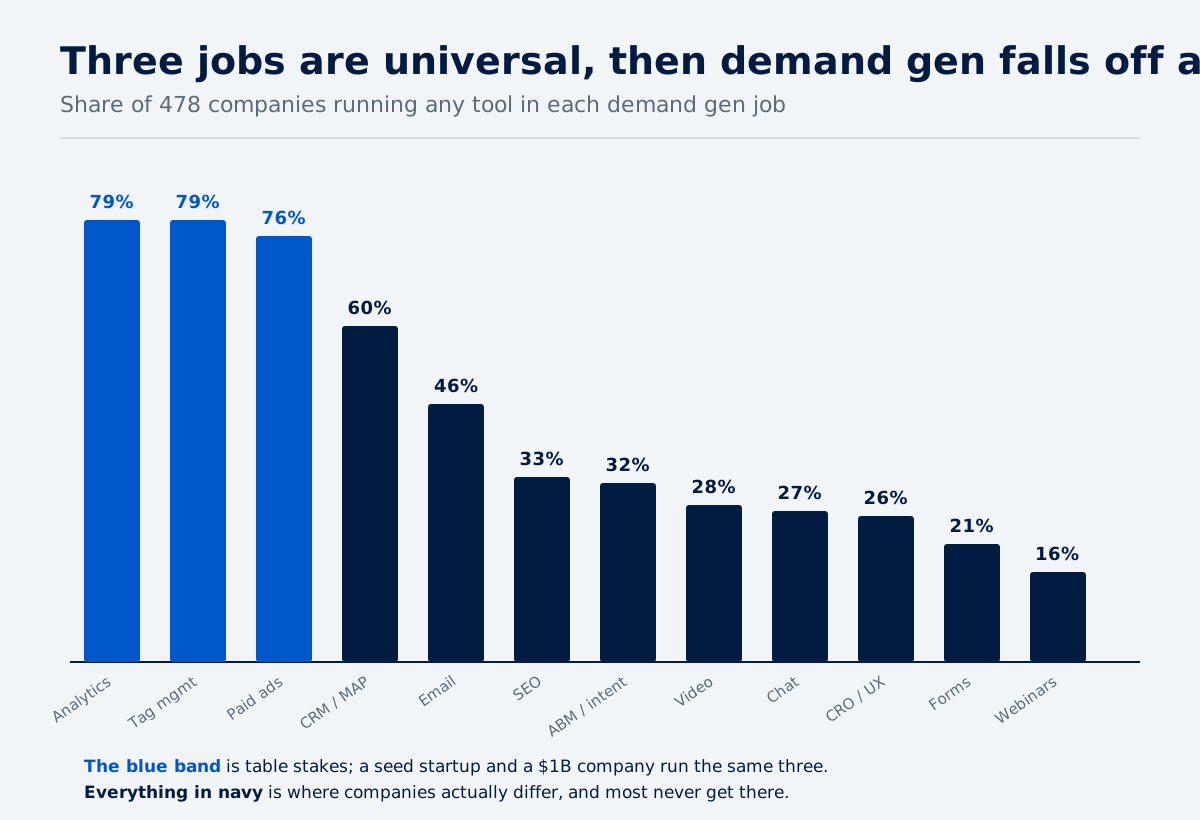
The top 10 is dominated by tools that do measurement, tagging, ads, and CRM. But demand gen is more jobs than that, and most jobs have a clear measured leader with a fragmented chase pack behind it. Here is the winner for each one, with the share of all 478 companies running anything in that category.
Job | Companies with any tool | Measured leader | The chase pack |
Analytics | 79% | Google Analytics 75% | Cloudflare Web Analytics 16%, Microsoft Clarity 14%, FullStory 5%, PostHog 5% |
Tag management + CDP | 79% | Google Tag Manager 78% | gtag.js 61%, Segment 5% |
Paid ads + conversion | 76% | Google Ads 74% | LinkedIn 37%, Meta 23%, Bing 16%, Reddit 10%, X 7% |
CRM + marketing automation | 60% | HubSpot 40% | Salesforce 31%, Marketo 8%, Zoho 7% |
Lifecycle + email | 46% | Mailchimp 14% | Amazon SES 14%, SendGrid 14% (both delivery infra, not campaign tools) |
SEO + content | 33% | Yoast SEO 26% | Google Site Kit 7%, Ahrefs 5%, Rank Math 3% |
ABM, intent + retargeting | 32% | 6sense 11% | ZoomInfo 9%, Apollo 9%, Clearbit 6%, AdRoll 6%, Demandbase 2% |
Video | 28% | YouTube embed 12% | Vimeo 12%, Wistia 7%, Vidyard 2% |
Chat + conversational | 27% | Zendesk 14% | Intercom 9%, Qualified 6%, Drift 2% |
CRO + UX | 26% | Hotjar 16% | Crazy Egg 4%, Google Optimize 4%, VWO 4% |
Forms + scheduling | 21% | Calendly 8% | Contact Form 7 7%, Gravity Forms 5% |
Webinars + events | 16% | Zoom 14% | Webex 5% |
A few of these leaders deserve a second look.
The email row is a trap, and worth being honest about. The most common "email" tools by raw count are Amazon SES and SendGrid, but those are transactional delivery infrastructure, the rails that send password resets and receipts, not campaign tools. Strip them out and Mailchimp is the real demand gen leader, which tells you that owned email is a thinner layer in B2B than the playbooks assume; fewer than half of these companies run any campaign email tool at all.
The CRO row hides a small embarrassment. Google Optimize shows up at 4%, but Google shut Optimize down in 2023. Detecting it means leftover tags firing on tooling that no longer exists, a clean reminder that "installed" and "actively used" are not the same thing, even inside a single stack.
The chat race is genuinely three-way. Zendesk leads on raw presence, but Intercom and the newer conversational-ABM entrant Qualified are both live and serving different buyers; Zendesk leans support, Qualified leans pipeline. This is one of the few jobs without a runaway winner.
The hyped tools that almost nobody actually runs
Here is the gap the curated picks never show you. The tools that anchor most demand gen recommendations, the account-based platforms, the attribution suites, the AI SDRs, are a minority reality at best and a rounding error at worst.
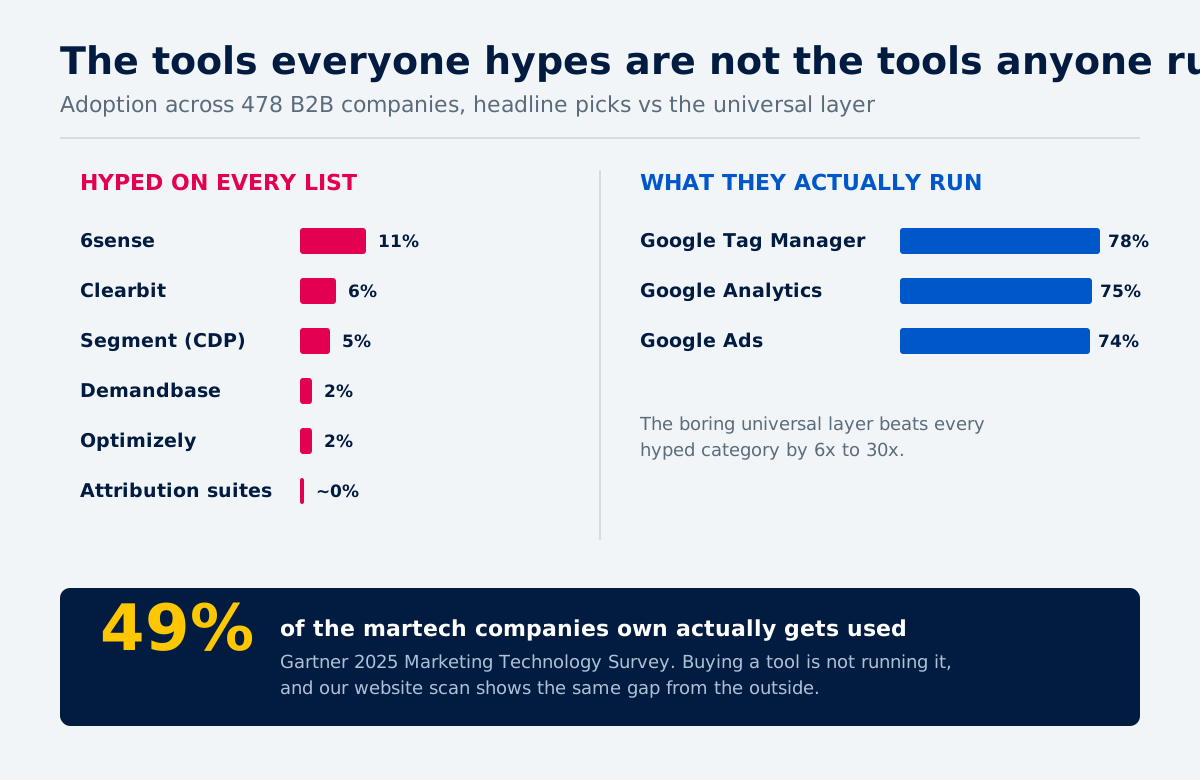
Account-based marketing is the clearest example. ABM and intent data get framed as table stakes for serious B2B. In the actual data, only 32% of companies run anything in that category, and the named enterprise platforms are far rarer than that; 6sense leads the category at 11%, and Demandbase, a fixture of every ABM shortlist, sits at just 2%. The dedicated attribution platforms get hyped hardest of all, the Dreamdatas and Terminuses of the world, yet they barely surfaced (back-office tools sit partly outside what a website scan can see); even so, a tool that leaves no trace on the page is a tool that is not shaping the buyer's on-page experience.
The pattern holds for the rest of the hyped middle. Segment, the customer data platform that headlines every "modern stack" pitch, runs on 5% of sites. Optimizely, a default name in experimentation, sits at 2%. And the AI SDR category that absorbed a year of venture funding and conference oxygen has a rough retention record underneath the hype; independent reporting through 2025 documented steep trial-to-paid drop-off at marquee vendors, and practitioners say the quiet part out loud, that automating a broken process just makes it fail faster.
None of this knocks the tools themselves. It knocks the framing. The hype sells the exciting 2%, and the reality is the boring 78%. That matches what buyers already know from the budget side. Gartner's 2025 Marketing Technology Survey found that companies actively use only 49% of the martech they own, while martech eats roughly a fifth of the marketing budget. Companies buy far more than they run, and our website scan shows the same thing from the outside; the long, ambitious stack on the slide is not the lean, repetitive stack on the page.
What the whole stack looks like underneath the top 10
Strip the picture back and the shape of a real B2B demand gen stack is clear, and a little humbling.
The median company runs 8 demand gen tools, not the 20-plus the category lists imply. The distribution is wide. About 8% of these high-growth companies run zero detectable demand gen tooling at all, mostly sub-$10M or product-led firms whose growth is not coming from an instrumented website. At the other end, a third run 11 or more. Stack depth, not any single tool, is the real signal of demand gen maturity.
There is a hard table-stakes layer and then a cliff. Analytics (79%), tag management (79%), and paid (76%) are nearly universal and sit at a prominence index near 1.0, which is the data's way of saying a seed-stage startup and a billion-dollar company run the same three things. The first real differentiator is the CRM and automation layer at 60%, and adoption falls off a cliff after that. Only a minority instrument the deeper jobs.
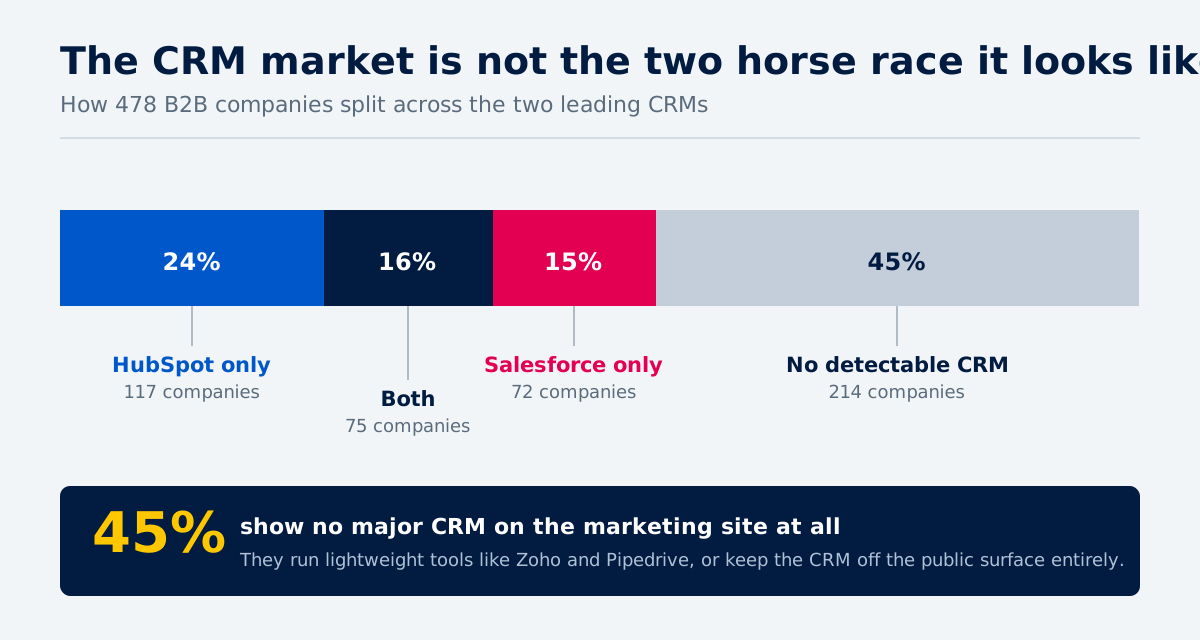
The CRM layer splits into camps rather than a clean two-horse race. Of the 478 companies, 117 run HubSpot without Salesforce, 72 run Salesforce without HubSpot, 75 run both (HubSpot for marketing, Salesforce for sales is the usual reason), and 214 show no major web-detectable CRM at all. That last group leans on lightweight tools like Zoho and Pipedrive or keeps the CRM off the marketing surface entirely. And the enterprise pattern is tight; 89% of Marketo users also run Salesforce, so Marketo is effectively a Salesforce-ecosystem signal.
Finally, the ABM finding lands here, because it reframes the whole category. Companies that run any ABM or intent tool carry a median of 13 demand gen tools, against 8 for the full sample. ABM does not start a stack; it sits on top of a deep one. The vendors even segment by camp; every Demandbase user in the data also runs Salesforce, while 6sense splits across both worlds, 71% on Salesforce and 63% on HubSpot. ABM is a sophistication marker, not a starter tool, and buying it before the base exists is how it ends up in Gartner's unused 49%.

The tools are table stakes. The system is the edge.
Content RevOps builds the demand-creation-to-capture engine that turns a standard stack into pipeline, so you are not just another company running the universal four.
Frequently Asked Questions
About the Author

Founder & CEO, Content RevOps
Stefan Kalpachev is the founder and CEO of Content RevOps, where he helps B2B SaaS companies transform their content into predictable pipeline. With a background in content marketing and revenue operations, Stefan has developed a unique methodology that bridges the gap between content creation and revenue generation.
Connect on LinkedIn