What Does a Demand Generation Content Marketing Agency Do?
Want to see what content run as a demand engine looks like, not content bought by the piece? Take a look at how we do it.
Book a CallA demand generation content marketing agency uses content as the engine that builds your pipeline. It does two jobs at once. It creates demand, which means it teaches your market and earns enough trust that buyers want you before they start shopping. And it captures demand, which means it catches the buyer who is already searching, ranks for what they type, shows up in AI answers, and converts them on the page. That is the work a demand generation agency is hired to install.
Part of The Complete Guide to B2B Demand Generation Strategy.
That is the short answer. The longer answer matters, because most B2B companies meet three different kinds of agency wearing similar words, and the one you pick decides whether content becomes a cost or a revenue asset.
This guide walks through what a demand generation content marketing agency actually does, how it differs from a plain content marketing agency and a lead gen shop, what it delivers, what it costs, and the one test that separates a real one from the rest.
What does a demand generation content marketing agency do?
It runs content as a revenue engine instead of selling you content by the piece.
Most agencies treat content as a deliverable. You buy eight blog posts, an ebook, a handful of LinkedIn graphics, and you hope something comes of it. A demand generation content marketing agency treats the same content as infrastructure that has a job in your pipeline, and it measures the content on pipeline, not on page views. That is the difference between the services you actually need and the ones you do not.
Factors.ai, one of the more useful plain-English explainers on the topic, frames a B2B demand generation agency as one that builds "full funnel programs that create demand, capture it, and turn it into real, sustainable revenue." A demand generation content marketing agency is the version of that where content is the main vehicle. Not ads you rent. Not cold lists you burn. Content you own that keeps working after you stop paying for it.
The two jobs, in plain terms
- Create demand. Publish the kind of content that makes people in your market trust you and think of you first, including the large share who are not shopping yet.
- Capture demand. Publish the kind of content that catches people who are shopping right now, so you rank for their searches, show up in AI answers, and convert them once they land.
A plain content marketing agency usually does the first without the second. A lead gen agency chases the second without building the first. A demand generation content marketing agency is built to do both and to connect them, which is the whole point of an allbound approach.
Here is the tell worth remembering before you read another word. Most agencies do not run a demand engine of their own. We studied how 1,700 B2B agencies market themselves, and about 70% had no real demand engine, running thin or ads-reliant marketing instead. Only about 1 in 10 had a strong inbound engine working for their own business. An agency that sells demand generation through content, yet cannot generate its own, is selling a thing it has never built.
Is it the same as a content marketing agency or a lead generation agency?
No, and the difference is the part buyers get wrong most often.
When companies go looking for help, they tend to use "content marketing," "demand generation," and "lead generation" as if they mean the same thing. They do not. One B2B marketer shopping for a partner put it plainly, saying, "I was under the impression lead gen agencies do more than just run ads campaigns." Another posted looking for a "demand / lead gen agency partner" and used the two terms interchangeably in the same sentence. The confusion is normal. It also costs money, because each kind of agency is good at a different thing.
The three agencies, side by side
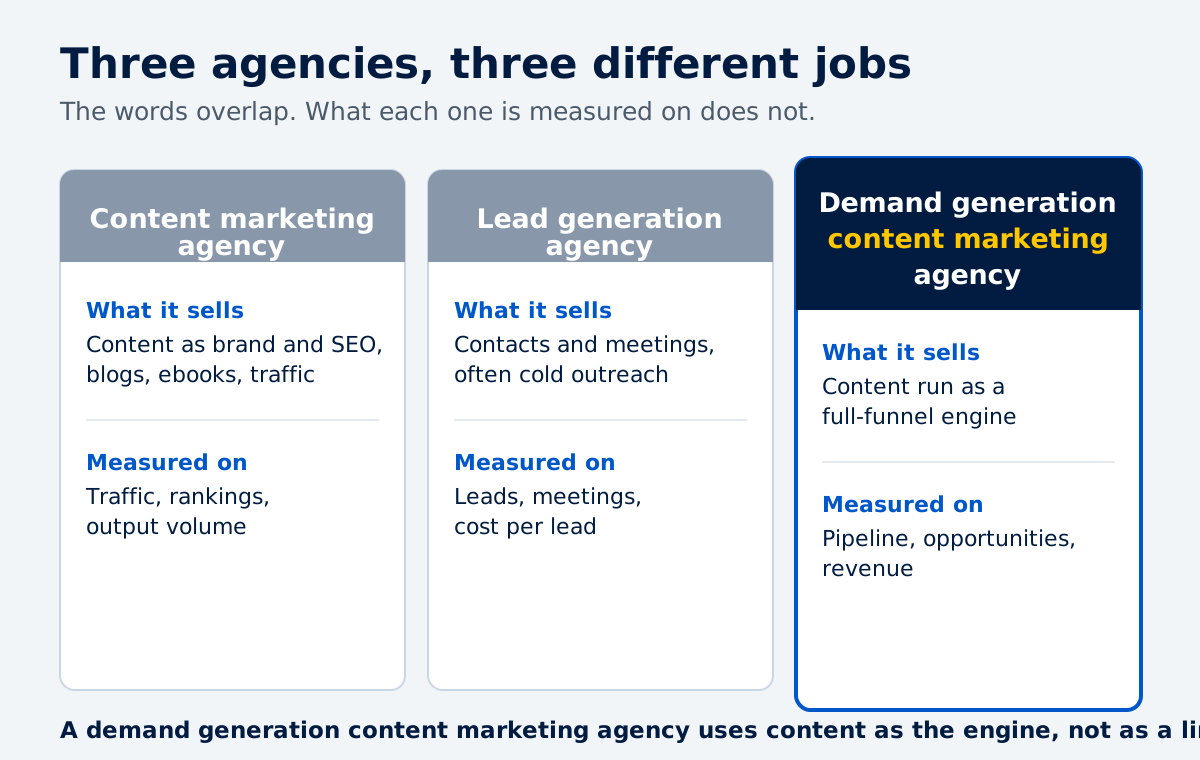
Agency type | What it sells | What it optimizes for |
Content marketing agency | Content as brand and SEO, blogs, ebooks, traffic | Traffic, rankings, output volume |
Lead generation agency | Contacts and booked meetings, often cold outreach | Leads, meetings, cost per lead |
Demand generation content marketing agency | Content run as a full-funnel engine | Pipeline, opportunities, revenue |
A content marketing agency produces content. That is valuable, but output is not the same as pipeline, and a lot of content gets written that never has a job in a deal.
A lead generation agency delivers contacts or meetings, usually through cold email or ads. As Factors.ai puts it, "lead gen collects emails. Demand gen turns prospects into buyers." Lead gen tends to stop once a form is filled or a meeting is booked.
A demand generation content marketing agency sits on top of content but is judged on the full funnel. It uses content to create and capture demand together, then wires that content into pipeline. If you are weighing it against the other outside partners on your shortlist, the demand generation agency versus PR agency comparison sorts a different pair of the same confusion.
Why the labels blur
Part of the blur is that "content" gets treated as a line item rather than an engine. In our study of 1,700 agencies, 72% listed four or more service lines and nearly half called themselves "full-service." Content sits in the bundle next to paid, ABM, and outbound, one tile among many. A demand generation content marketing agency flips that. Content is the engine, and the other channels exist to feed it and amplify it.
What does a demand generation content marketing agency actually deliver?
It delivers a working engine, not a stack of files. The deliverables line up into a system, and the order matters.
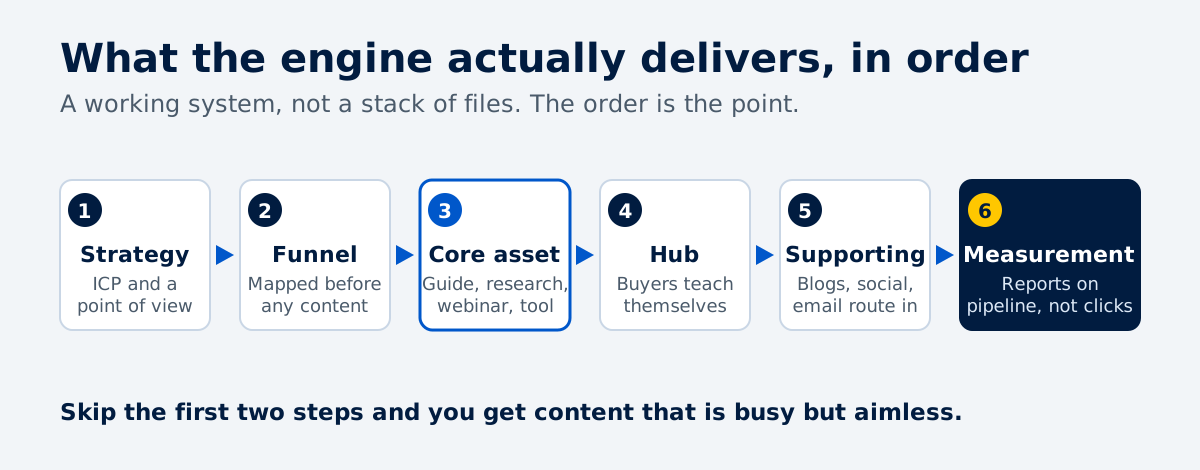
A good one builds the engine roughly like this, and the same sequence is what a team does when it builds a demand generation engine from scratch.
It starts with strategy, not a content calendar
Before a single piece gets written, the agency pins down who you sell to, what they struggle with, and how you are different. It maps your ideal customer's world and turns that into a point of view you can own. Skip this and you get content that is busy but aimless. The groundwork is choosing the right ICP and then mapping that customer's world before any brief exists.
It designs the funnel before making content
The agency decides how a stranger becomes a qualified lead before it briefs a word. The stages are simple: aware, interested, engaged, and then a real sales conversation. It also builds fast-track exits, so a buyer who already wants a demo is not forced through months of nurture. When you know how a lead is supposed to move, you can build the right content for each step. When you do not, you get traffic that never becomes pipeline, which is the same failure behind a SaaS blog that draws readers but no demos. It is also why most teams build the framework backwards and why the funnel shape itself is worth getting right on paper first.
It builds core assets that carry weight
These are the pieces worth building a quarter around, and they do the heavy lifting on trust. The way we build core assets starts from one flagship content product rather than a list of topics.
- A deep guide that answers a real buyer question better than anything else ranking for it.
- Original research or a benchmark, which is the rarest and most linkable kind of content.
- A webinar, run as a content product rather than a one-off event.
- A calculator or self-assessment that helps the buyer make a decision.
If you want the shape of the assets that pay back, our 12 demand generation ideas with the numbers each one produced lists them with results attached, and the five full case study walkthroughs show the same assets inside real programs.
It builds the supporting layer and the hub
Around each core asset, the agency publishes the blogs, social posts, and emails that drive people toward it, and it houses everything in a resource hub so a visitor can teach themselves. A hub built this way means sales starts the conversation further down the field, because the buyer arrives already educated. Which surfaces carry that supporting layer is a real decision, and the channel priority question and the distribution channels that work in B2B both answer it with data rather than habit.
It wires in the plumbing and the measurement
A real engine runs on a stack, a median of about eight demand gen tools per company, with a CRM and marketing automation at the core. The agency connects content to that plumbing so you can see which pages start deals, and it reports on pipeline rather than clicks. Knowing which metrics to track and which to ignore is what keeps that reporting honest. If you want the full picture of who does what and what it costs to staff, the roles break down cleanly.
How does content generate and capture demand at the same time?
Because content is the one asset that can do both jobs, and a demand generation content marketing agency is built to run both sides on purpose.
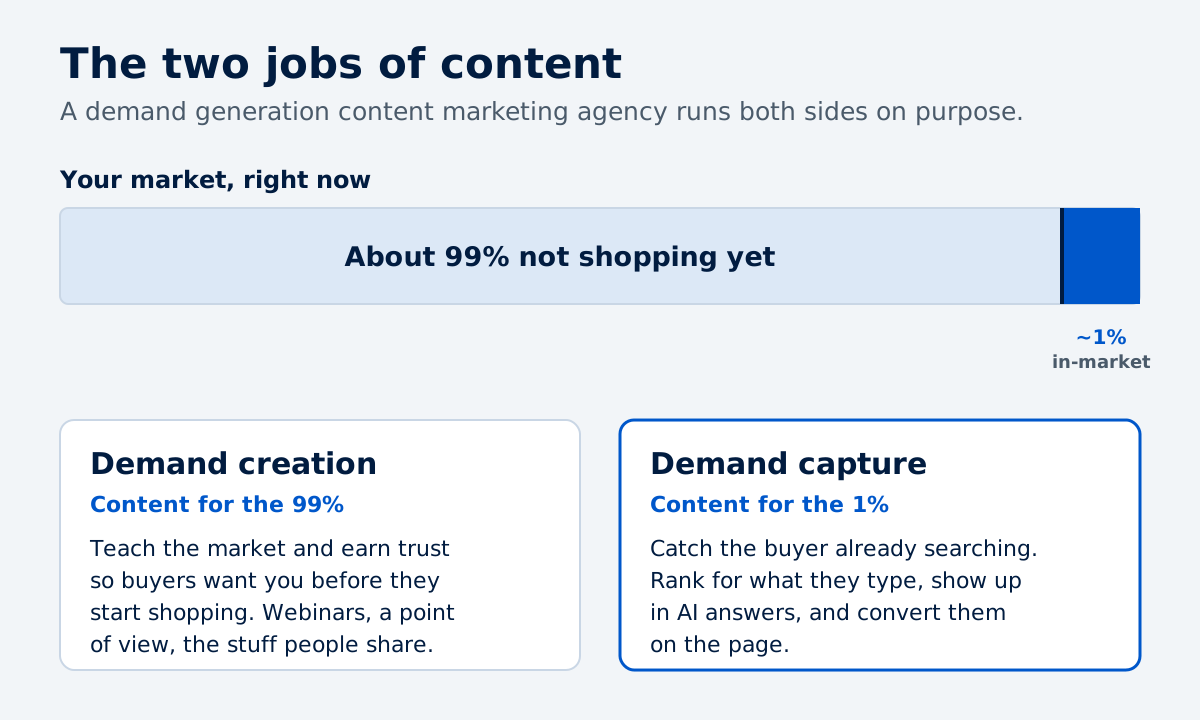
The clearest way to see it comes from Chris Walker, who built Refine Labs and now runs Passetto. He splits the market in two. There is the small slice of buyers shopping right now, and there is the roughly 99% who are not. Most companies, he argues, pour their time and money into fighting over the slice that is actively buying and ignore the rest. "All of the upside," in his words, "is in marketing to the 99% of the market that isn't actively buying."
Demand creation is the patient half
This is content that builds trust with people who are not ready to buy. Strong points of view, useful teardowns, webinars, the stuff people share and remember. It does not convert today. It makes you the name they already trust when they do start looking. It is closer to brand awareness work than to a campaign, and it is the half most teams underfund.
Buyers confirm this is how they actually decide. One, weighing whether an agency was worth it, wrote that for services "the best way to sell consulting and many other services is through webinars. Tried and tested." Another said the lead quality from social content "is insanely higher than paid ads as they trust you more." Pull beats push for complex B2B sales, and content is how you pull.
Demand capture is the part AI just changed
This is content that catches the buyer already searching. It ranks for the terms they type, and now it has to show up in AI answers too. When we analyzed which pages get cited inside AI answers, blog posts made up about 60% of all citations, and the pages that got cited tended to carry original data and clear structure. If your content is not built for that, a competitor's is, and the AI hands them the buyer instead of you. The mechanics behind that selection are worth reading on their own: why one brand gets cited while a better-known competitor gets ignored, and how AI has changed top-of-funnel demand generation for everyone.
Why most content only does one
Here is the catch. Most content generates interest but never captures it. In a study of more than 2,000 B2B SaaS companies, fewer than 1 in 10 had both a clear path from blog to conversion and content matched to buyer intent. The blog gets traffic. The traffic leaves. Demand creation without demand capture is a brand exercise, and demand capture without demand creation runs out of buyers. It is the most common of the mistakes costing B2B teams pipeline.
A demand generation content marketing agency builds both and connects them. That gives you a simple test for any agency you are looking at. Ask where their content creates demand, and where it captures demand. An agency that only writes SEO blogs is doing capture. One that only posts thought leadership is doing creation. A real demand generation content marketing agency does both and can show you exactly where each happens.
How do you tell a good demand generation content marketing agency from a bad one?
Start with one question, then check a short list of tells. The good news is that the tells are easy to spot once you know to look, and they sit alongside the broader criteria for how to choose a demand generation agency.
Ask whether they run their own demand engine
This is the fastest filter, and a buyer in a B2B marketing forum said it better than any pitch deck: "the ones doing their own demand gen well are usually better at doing it for others." He stopped Googling agencies and started watching which ones actually published useful content and showed up in his feed.
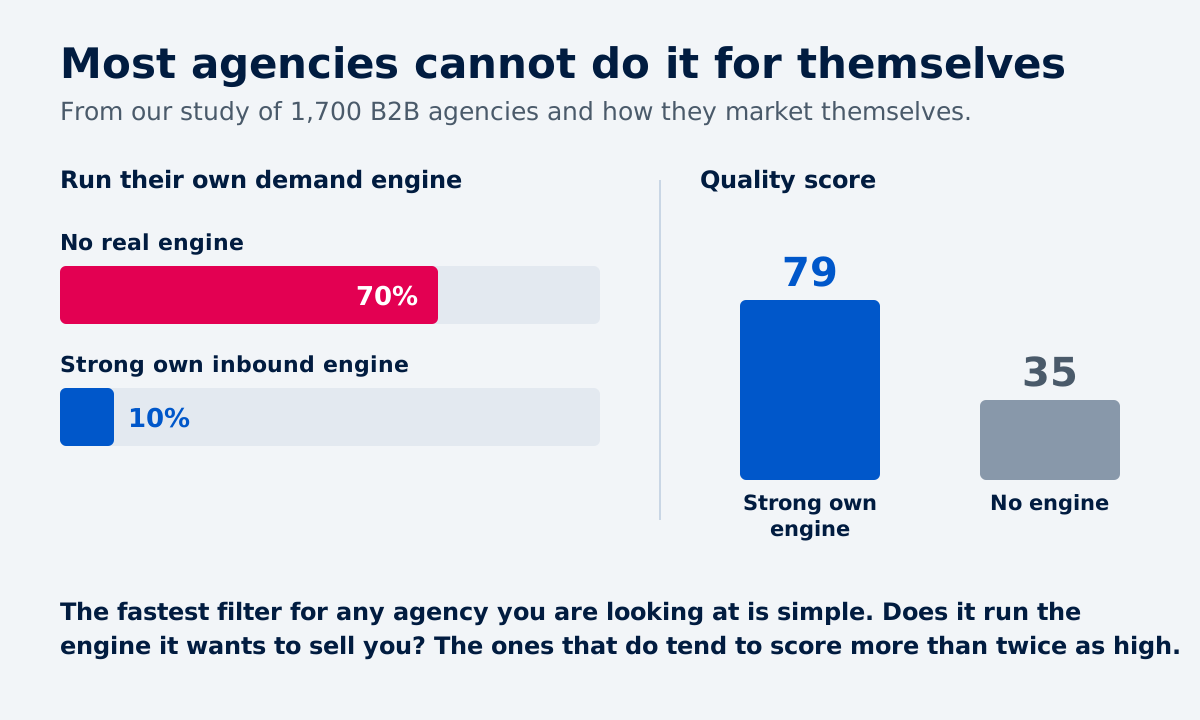
The data backs the instinct. In our 1,700-agency study, agencies with a strong inbound engine of their own scored far higher on quality than those without, 79 against 35 on our scoring. Yet about 70% had no real engine at all. An agency that cannot generate demand for itself is asking you to be its first success story. It is worth checking that against a shortlist, which is why our round-up of B2B demand generation agencies names who clears the bar.
Check the down-funnel proof
The single biggest red flag is an agency that shows you volume without showing you what the volume became. Buyers who have been burned say it clearly.
- "Agencies showing MQL volume without downstream metrics are hiding poor lead quality."
- Ask "what is the average percentage of leads that become SAL or SQL, not 500 leads were generated."
- "If they only show you meetings booked, that's a tell. You want the full funnel."
Make them connect their work to sales-accepted leads, opportunities, and closed revenue. A good partner has those numbers and talks about them without being pushed, and can point to worked examples of how the pipeline was built rather than a testimonial wall. Ours are named and open: Ori Learning and Behavior Advantage both carry the numbers on the page.
Watch for the transparency tells
Our study found a set of red flags that travel together, and 66% of agencies carried three or more at once. Worth checking on any shortlist:
- No pricing anywhere. About 75% publish none, so you cannot compare without six discovery calls.
- No named senior team. About 35% name no senior people, so you do not know who actually does the work.
- Thin or missing case studies. About 44% have few or none.
- No original research or point of view. About 87% publish none, which tells you whether they create demand or just service requests.
Reviews will not save you here. Three in four agencies carry a Clutch score between 4.9 and 5.0, so the ratings do not separate anyone.
Check that they protect your brand and stay narrow
Bad agencies scale by volume, and it shows. One buyer described them as shops that "just load you into their system and send hundreds of cookie-cutter emails that can feel spammy or off-brand real quick." A good agency keeps you in control of the message and starts narrow, then refines. As one practitioner put it, if their answer to a weak result is always "we'll just contact more people," be cautious. You want a partner who tightens the targeting, not one who turns up the volume.
What does a demand generation content marketing agency cost, and should you hire one or build in-house?
Costs vary more than anything else in this category, so treat any number as a starting point, then decide whether an outside team or your own is the better buy.
What it costs
Pricing depends on scope, but the rough shape is consistent. Factors.ai reports retainers that start in the high four figures to low five figures a month, with integrated full-funnel programs running higher, often in the range of $12,000 to $30,000 a month on a six to twelve month commitment. Expect real pipeline movement in three to four quarters, not three to four weeks, because trust and rankings compound rather than switch on. The retainer is only part of the bill, and our breakdown of the total cost of owning a demand generation agency prices the rest of it.
Buyers confirm the bands and the risk. One agency founder laid out the math plainly: "a real SDR fully loaded is $70 to 90k a year. Agencies run $3 to 8k a month with management and tools included. Pays off if they're good, blows up if they're not." Another buyer warned you "could easily spend $25k and not get a single lead" if the fit is wrong. The spend is real, so the fit check matters more than the rate card. Where the money should sit across the program is a separate question, answered in our budget allocation guide.
An agency cannot fix a broken foundation
Before you hire anyone, be honest about what an agency can and cannot do. It cannot fix weak positioning or a product the market does not want. As one buyer put it, "even the best lead gen agencies won't be able to help you if you don't know who your customer is." If your ideal customer, your offer, and your CRM tracking are not in place, a demand generation content marketing agency will move faster but not further. Sort the foundation first.
Hire or build
The choice comes down to speed, skills, and how much you want to own.
- Hire an agency when your team is maxed out or too junior to build a full-funnel engine, when you need to move faster than you can hire, and when you want strategy, content, and operations working together instead of five vendors you have to coordinate.
- Build in-house when you already have a strong demand leader who knows what to do and just needs hands, and when owning the institutional knowledge matters more than speed. A fuller in-house versus outsourced comparison weighs the trade in detail, and there is a clear case for when hiring an agency is the right call.
There is a third option people forget. If you need the thinking rather than the hands, demand generation consulting buys the plan without the delivery team, and it is worth knowing when a consultant beats an agency.
The point of the whole thing
A demand generation content marketing agency earns its fee when it stops treating content as something you buy by the piece and starts running it as revenue infrastructure, an asset that creates demand, captures it, and compounds. That is the work we do, and it is the work we do for ourselves first. The agencies worth hiring are the ones that run the engine they are selling you. If you want to see how we think about content as a revenue system, that is the whole idea.
Is your content creating and capturing demand, or just adding to the pile?
Get a Content RevOps audit: where your content should be creating demand, where it should be capturing it, and what it is leaving on the table.
Frequently Asked Questions
About the Author

Founder & CEO, Content RevOps
Stefan Kalpachev is the founder and CEO of Content RevOps, where he helps B2B SaaS companies transform their content into predictable pipeline. With a background in content marketing and revenue operations, Stefan has developed a unique methodology that bridges the gap between content creation and revenue generation.
Connect on LinkedIn