When to Hire a Demand Generation Agency for Growth
Want the honest answer before any agency call? Run the same readiness self-assessment we give prospective clients.
Book a CallMost companies hire a demand generation agency at the moment of maximum pain and fire it at the moment of maximum arithmetic.
Part of The Complete Guide to B2B Demand Generation Strategy.
The pipeline is thin. The founder, or the one marketer carrying the load, is out of hours. An agency promises meetings, and six months later everyone is staring at a spreadsheet that says the retainer did not pay back. When thin months alternate with full ones and nobody can forecast the next quarter, the brief is steadier pipeline, which is the test behind our list of demand generation agencies for stabilising pipeline.
The usual advice for timing this decision lists symptoms. Leads are not converting, ads are getting expensive, the team is stretched. Those signs measure how much you want help. They say nothing about whether help will work.
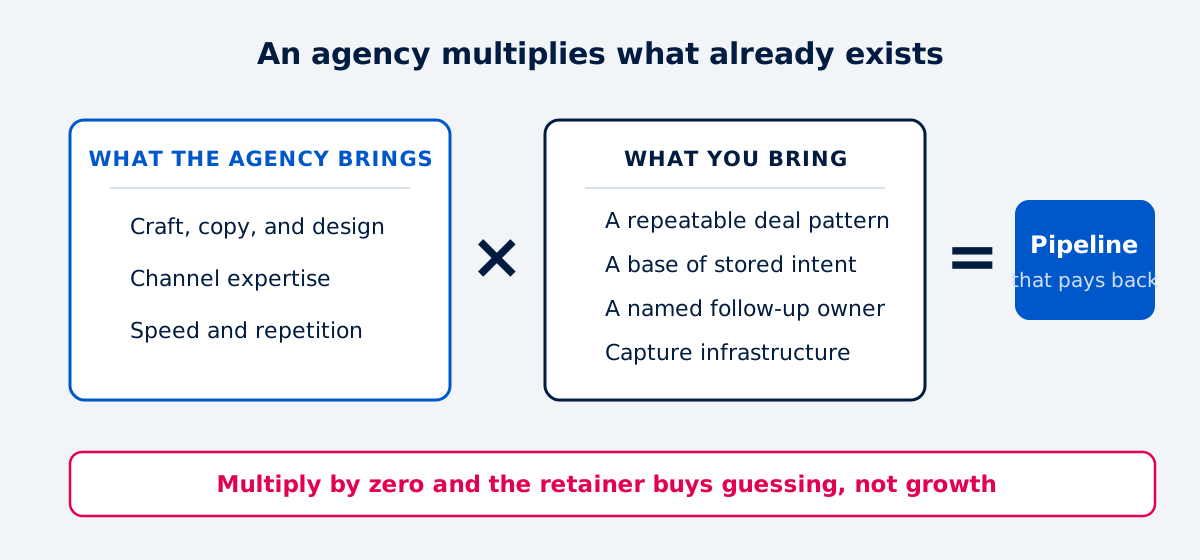
We think the better question is an asset question. A demand generation agency multiplies demand that already exists in latent form; it cannot create demand out of nothing. So before you evaluate a single agency, audit what the agency would have to work with. When the person running that audit is also the one carrying the pipeline number, our list of demand generation agencies for demand gen leads runs the same proof checks across more than 200 agencies that work with demand gen teams.
This piece is that audit. Four signs you are ready, four signs the honest answer is not yet, and the math behind both.
What does a demand generation agency actually multiply?
A demand generation agency builds and runs the systems that create and capture buyer demand for you: content, paid media, outreach, conversion paths, and the measurement that connects them to pipeline. That is a broader job than lead generation, which stops at handing over contacts. When content is the main vehicle rather than one channel among several, the partner you are looking at is a demand generation content marketing agency, judged on pipeline rather than output.
What it brings is craft, channel expertise, and repetition speed. What it cannot bring is your traction, your proof, or your knowledge of why customers pick you.
That division of labor is structural, and you can see it in hiring data. In our analysis of seven B2B verticals' marketing job postings, execution craft like copywriting and design barely appears in internal roles. Companies hire orchestrators and buy the craft from outside; the agency market exists because the craft lives there. Which part of that market fits depends on the category you sell into, and for companies selling to districts and universities we keep a separate shortlist of demand generation agencies for EdTech.
Why do some engagements compound while others die in six months?
The relationship data shows two very different worlds:
- A study of 280 real agency engagements found the average one lasts 8.2 months, a third end within six months, and the top stated reason is "ROI unclear."
- At the other end, the ANA and 4As measured average agency-of-record tenure at large advertisers at roughly seven years.
The two datasets cover different worlds, small-business engagements on one side and big-brand retainer contracts on the other. That contrast is exactly the point.
The seven-year relationships plug into companies that already run a working commercial motion; the agency slots into a system and improves it. The eight-month engagements typically start without one, which leaves the agency guessing at positioning, audience, and offer on the client's budget. Guessing produces the "ROI unclear" verdict.
The breakup data backs this up. In the 2025 Marketing Relationship Survey, clients said they fire agencies over delivery (61 percent), value (61 percent), and "the agency did not understand our business" (44 percent). Agencies, asked the same question, blamed client budget cuts (75 percent) and leadership changes (55 percent).
Read both lists together and they describe the same engagement. The agency never had a pattern to scale, guessed, and got blamed for the guessing.
What are the signs you are ready?
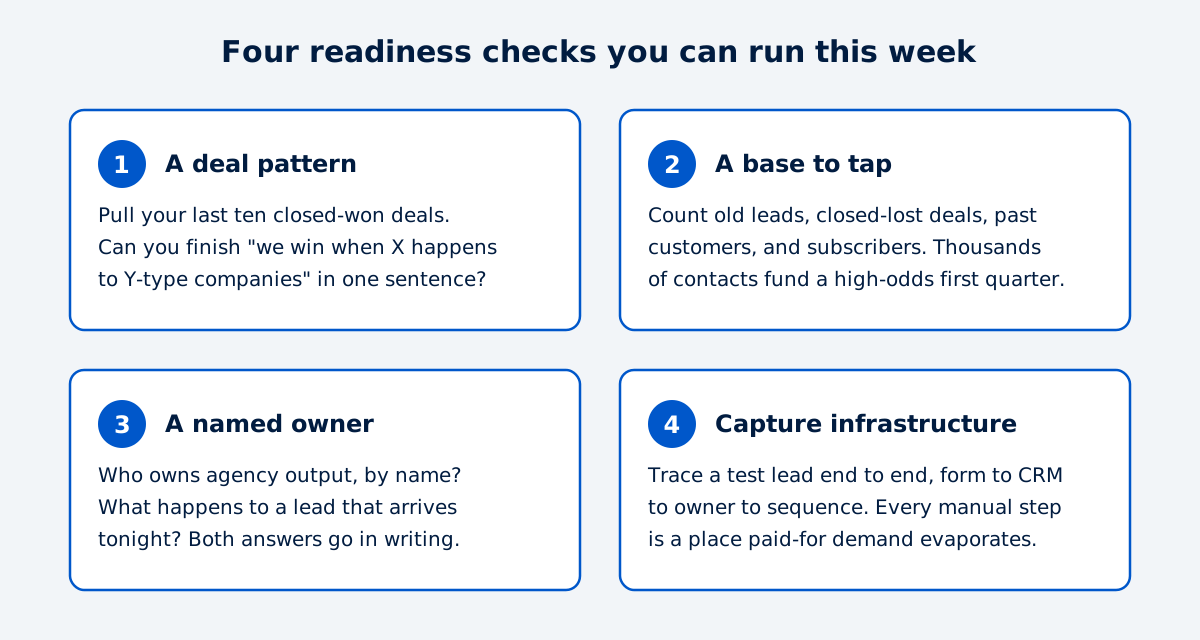
Readiness comes down to four assets. Each one has a concrete check you can run this week, without talking to a single agency.
Do you have traction you can describe as a pattern?
The clearest readiness signal is that you have closed the same kind of buyer, for the same reason, more than once, and you can name the trigger that started each deal.
That is a pattern. An agency can scale a pattern; it should never be discovering one on your budget.
The way we pressure-test this with clients is against won and lost deals, never against aspiration. We list the recent wins and look for repeated titles, sectors, pains, and buying triggers, and we treat the ideal customer profile as a hypothesis until the deal history confirms it. For project-based sales we keep a separate shortlist of demand generation agencies for construction.
Run the check. Pull your last ten closed-won deals and try to complete one sentence:
"We win when [trigger] happens to [type of company], because [reason they picked us]."
If the sentence writes itself, an agency has something to aim at. If every deal has a different story, the pattern does not exist yet, and no outside team can find it faster than you can.
Do you have a base the agency can tap?
The fastest agency wins come from demand you already own. That base usually includes:
- Old leads and stalled conversations sitting in the CRM
- Closed-lost deals from the past two years
- Past customers who could buy again or refer
- An engaged newsletter or event list
- Content that already attracts and converts a trickle of buyers
Every one of those is a stored intent signal you already paid to acquire. The hand-raise you bought eighteen months ago never expired; "not now" from back then often means "now" today, which is why reactivation campaigns on dormant CRM leads still book qualified calls at around 4.4 percent.
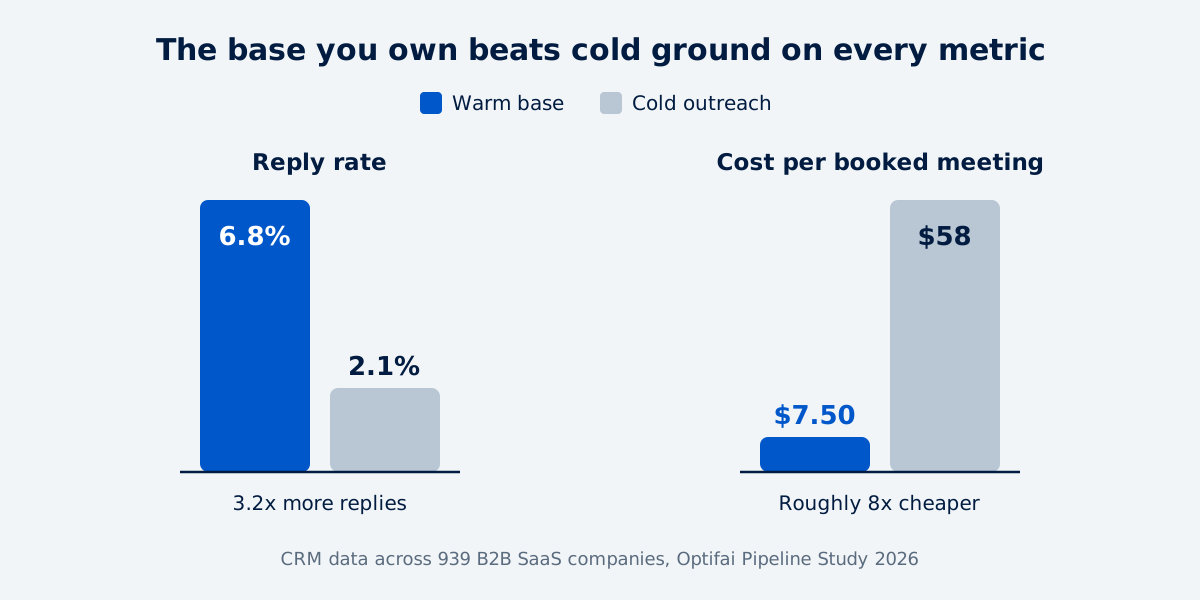
The economics gap between that base and cold ground is wide. Across 939 B2B SaaS companies' CRM data, warm contacts reply at 6.8 percent against 2.1 percent for cold prospects, book meetings at four times the rate, and cost about $7.50 per meeting against $58 for cold outreach.
This is why nurture and database reactivation sit so early in how we sequence engagements. The cheapest pipeline is the pipeline you already bought. If most of that base arrived through referrals and new business still waits on the next introduction, the job is building a source you can plan around. We reviewed more than 60 agencies against that brief for our list of demand generation agencies for referral-dependent companies.
Run the check. Count what sits in your CRM, your inbox, and your subscriber list. A few thousand accumulated contacts give an agency a first quarter of high-odds work. A near-empty database means the agency starts with strangers, at stranger economics. If cold ground is where your outreach already lives, we ran the same checks over more than 160 agencies and kept 14 in our list of demand generation agencies for when cold outbound has stalled.
Does someone inside own what comes back?
An agency produces conversations, not revenue. Somebody on your side has to catch the replies, the form fills, and the booked calls, and move them toward a deal.
Engagements die in that handoff more often than in the campaigns, which is why who owns what on your side matters before volume arrives.
We learned to design for this early, and it shows up across our demand generation case studies. Running a gated-report campaign for a professional services client, the downloads came in at strong rates for cold traffic. The work that actually produced calls sat behind them: an automated nurture and a fast first follow-up.
When we tested competitor sites by filling in their contact forms, only one followed up fast. Speed was the whole gap.
Run the check. Answer two questions in writing:
- Who owns agency output, by name?
- What happens to a lead that arrives tonight?
If the answer to either is "we will figure it out," you are not ready for the volume you are about to pay for. When the honest answer is that one person owns all of it, the shortlist narrows to partners built to act as the whole marketing function, and those are the ones we kept in our list of demand generation agencies for a marketing team of one.
Can your infrastructure capture what the agency creates?
Pipes come before pressure. If nothing captures, scores, routes, and nurtures a lead, agency-generated demand leaks out through the same holes your current demand does.
The holes are the norm, not the exception:
- In our technographic scan of 478 high-growth B2B companies, 45 percent showed no detectable CRM on their marketing surface.
- In some verticals we measured, roughly 70 percent of firms lack an integrated CRM-and-automation backbone entirely.
You cannot compound what you cannot capture.
If those pipes are the part you own, the shortlist narrows to partners who wire campaigns into the system rather than around it, which is the screen behind our list of demand generation agencies for RevOps leads.
Run the check. Trace a test lead end to end: form to CRM, CRM to owner, owner to sequence. Every manual step you find is a place paid-for demand will pool and evaporate.
When is the answer "not yet"?
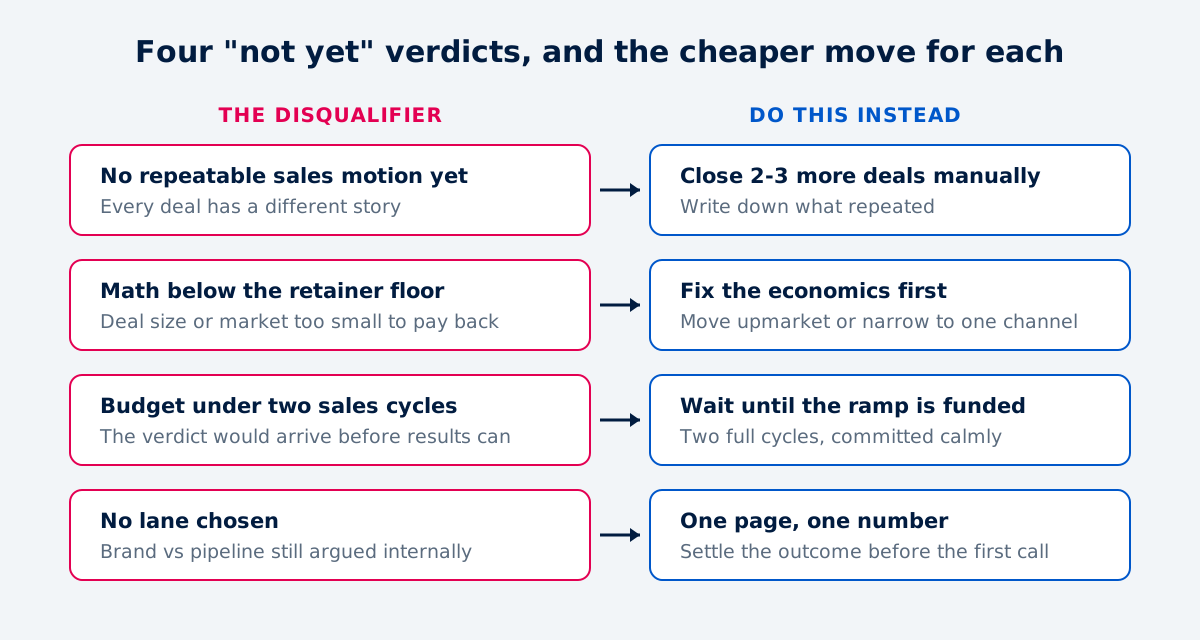
Failing one of the four checks above usually shows up as one of four situations. Each has a cheaper move than a retainer.
Have you sold it repeatably yourselves?
If founder-led or first-rep sales has not closed the same motion several times, the pattern from the first check does not exist, and you would pay agency rates for the discovery work. Once the same sale has repeated and a Series A is funding the move past founder-led deals, the question turns from whether to hire to whom, and we reviewed more than 110 agencies for our list of demand generation agencies for Series A companies. If the founder is still closing most deals and no raise is funding the move, the brief is pipeline that does not need the founder in every conversation, and we ran the same checks over 216 agencies for our list of demand generation agencies for founder-led companies.
Marketers who have watched this up close say it plainly. One operator who ran marketing at three startups put it as "out of the gate asking for lead gen is too premature and wasting money". Behind most "we tried four agencies" stories sits a company that outsourced discovery, not execution.
What to do instead: close two or three more deals manually and write down what repeated. That document is worth more to your future agency than any onboarding call. If you want outside help at this stage, it is usually a consulting question, not an agency one, and our walkthrough on building a demand generation engine from scratch covers the order the pieces go in.
Does the math clear the retainer floor?
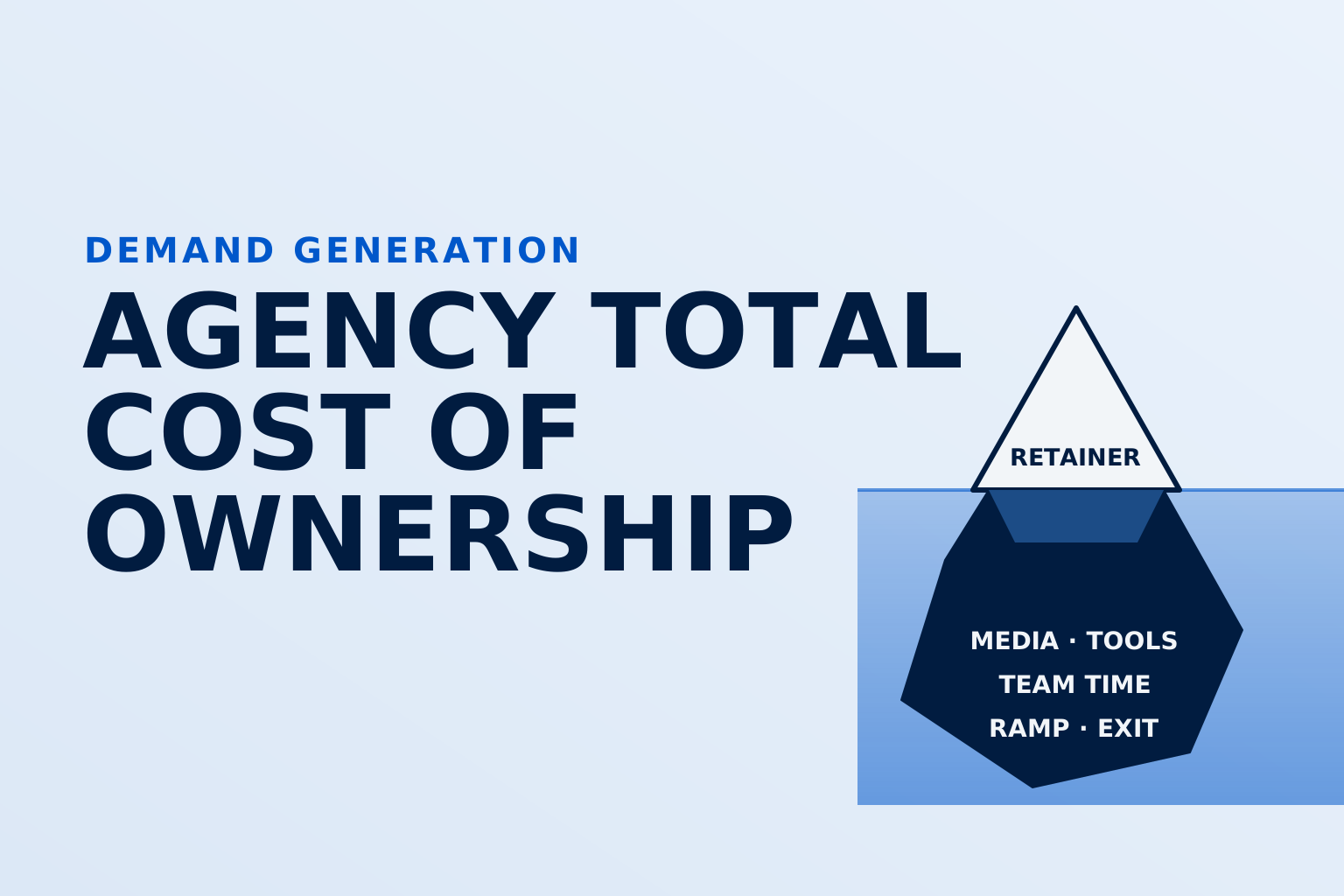
Demand generation retainers have a real floor. Multi-channel programs commonly start around $5,000 to $10,000 per month, serious engagements run $7,000 to $15,000 and up, and mid-market demand generation scopes cluster between $12,000 and $35,000, before media spend. The retainer is also only one line of the bill: our demand generation agency total cost of ownership estimate puts the all-in cost at roughly two to three times the quoted fee once media, tools, and your own team's time are counted.
Below that floor the field narrows rather than disappearing. We ran the same proof checks over the agencies that work with early-stage teams and kept 14 in our list of demand generation agencies for seed-stage startups, three of which publish an entry price rather than a minimum. A company that funds growth from revenue rather than a raise pays that floor out of cashflow, so we kept agencies with clear pricing and lean or fractional models in our list of demand generation agencies for bootstrapped companies.
Walk the math before any agency call, the same way you would allocate a demand generation budget:
- An $8,000 monthly retainer held for the six months a fair test requires is $48,000.
- At a $5,000 deal size and a one-in-four close rate, the engagement must produce roughly 40 qualified opportunities just to break even.
- Against a small reachable market, that model fails before it starts.
- At a $50,000 deal size, two closed deals pay for the year, and the same retainer is obviously rational.
Low deal size, tiny addressable market, or both mean the answer is structural. No amount of agency selection fixes structure. Where the economics do clear, the next question is which agencies actually operate at that level, and we screened more than 450 claiming mid-market work down to the 16 that could prove it in our list of demand generation agencies for mid-market companies.
What to do instead: fix the economics first; move upmarket, package a higher-value offer, or narrow to one channel you can run internally. We broke down that trade-off in in-house vs outsourced demand generation, and mapped which pieces are worth buying in demand generation services: what you actually need.
Can you fund at least two sales cycles of ramp?
Demand generation runs on a measured time lag, not a folklore one. Dreamdata's analysis of real B2B customer journeys found that of all the revenue a quarter's marketing touches eventually influence:
- Only 37 percent lands inside that quarter.
- Half takes six months or more to arrive.
- A quarter lands beyond the twelve-month mark.
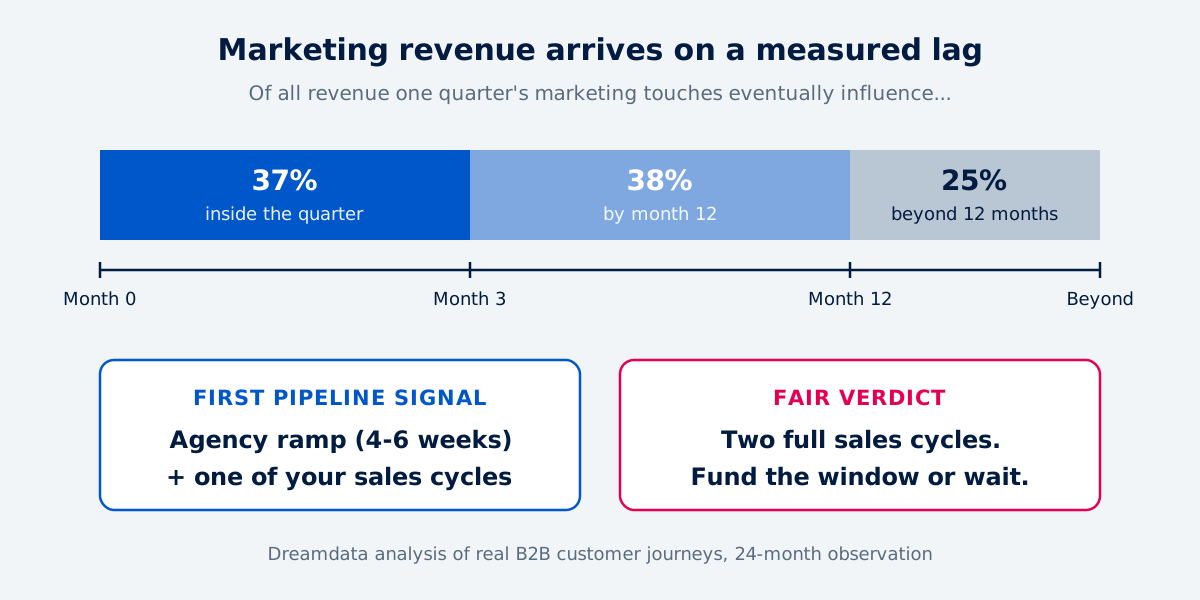
So the expectation formula is simple. First pipeline signal arrives at roughly agency ramp time, call it four to six weeks, plus one of your own sales cycles. A fair verdict on the engagement takes two cycles. When one cycle runs six months or more, that verdict is a year away, so the partner has to be built for the slow stretch, which is what we checked for in our list of demand generation agencies for companies with long sales cycles.
This single piece of arithmetic explains most agency horror stories. A company with a five-month sales cycle that budgets one quarter of retainer has guaranteed its own "zero results in 90 days" review, because the results could never arrive inside the window it paid for. Enterprise buyers feel this hardest, because those cycles routinely run a year or more, which is why we screened demand generation agencies for enterprise buyers separately.
What to do instead: hold off until you can commit budget across two full sales cycles without panicking. Judged against a window it can actually fill, the same engagement often looks fine. Teams that have just closed a round are usually the ones who can commit it, which is why we screened 112 agencies working with Series B and venture-backed teams on the same proof checks. A private equity stake usually brings the budget too, with less patience attached, because the board reviews pipeline monthly and the sponsor wants efficient growth before the next raise or sale. That is the case for the agencies that work with PE-backed companies.
Are you asking the agency to pick your lane?
Growth-focused teams often arrive at agencies mid-argument with themselves. The CEO wants brand presence, the revenue leader wants pipeline, and the agency should apparently resolve the dispute. In a founder-led company both of those jobs sit on one desk, so we ran the same checks over the 454 agencies that name founders and chief executives as their buyer and kept 16 in our list of demand generation agencies for founders and CEOs.
Agencies split along the same line. So whichever shop you pick ends up deciding your strategy by default. Where that pipeline number sits with a revenue leader rather than the founder, we ran the same checks over more than 120 agencies that work with revenue leaders, in our list of demand generation agencies for CROs and heads of sales.
A ready buyer briefs an outcome: one page, one number the engagement is accountable for, and the internal argument settled before the first sales call. If you cannot write that page, the missing piece is a decision, and a retainer will not make it for you. If that number is pipeline and content is the work you are briefing out, start from our review of content marketing agencies for demand generation leads, where 13 of the 57 agencies we checked held up.
What to do instead: agree internally on the one number that defines success in twelve months, then shop for the agency built to move that number. If that lane dispute is really about awareness versus pipeline, separating a demand generation agency from a PR agency settles it before you brief either one. When you get there, we broke down the selection itself in how to choose a demand generation agency, and rounded up the field in the top B2B demand generation agencies.
So, should you hire one now?
Hire when the audit says there is something to multiply:
- A deal pattern you can state in one sentence
- A base of stored intent worth activating
- A named owner catching what comes back
- Infrastructure that holds water
- Economics that clear the retainer with room to spare
Wait when any of those are missing, and spend a fraction of the retainer fixing the gap instead.
If you want the deeper version of this self-assessment, the one we walk prospective clients through before we agree to work together, it lives in how do I know I'm ready for Content RevOps. Run it before you take the first agency call; the most expensive engagement is the one that starts a year early.
Is there something for an agency to multiply yet?
Run the readiness self-assessment we use with prospective clients, and find out whether the next dollar belongs in a retainer or in fixing the gap first.
Frequently Asked Questions
About the Author

Founder & CEO, Content RevOps
Stefan Kalpachev is the founder and CEO of Content RevOps, where he helps B2B SaaS companies transform their content into predictable pipeline. With a background in content marketing and revenue operations, Stefan has developed a unique methodology that bridges the gap between content creation and revenue generation.
Connect on LinkedIn