How Does Demand Generation Consulting Work?
Want demand gen that doesn’t reset every quarter? Let’s build the system.
Book a CallMany B2B teams already have the tools: a CRM, marketing automation, analytics, paid media, and a library of content. Yet pipeline can still feel inconsistent. Leads come in, but quality varies. Sales follow-up is uneven. Marketing reports activity, but ROI is hard to prove. Sustainable growth and pipeline quality are essential outcomes of effective demand generation consulting, ensuring that efforts lead to predictable pipeline growth and long-term revenue generation rather than just short-term spikes.
Part of The Complete Guide to B2B Demand Generation Strategy.
Demand generation consulting exists to fix that gap. It is not simply “getting more leads” or setting up HubSpot, Marketo, or another platform. At its best, it helps build a full-funnel, buyer-led revenue system that connects strategy, content, data, automation, sales, and customer success around measurable growth. Sales teams and marketing leaders play a critical role in aligning demand generation strategies with business objectives, ensuring that marketing programs and sales processes are unified for maximum impact.
That system usually covers the full lifecycle:
Awareness, education, and demand creation
Lead capture, nurture, scoring, and sales handoff
Opportunity acceleration and buying group support
Onboarding, adoption, retention, and expansion
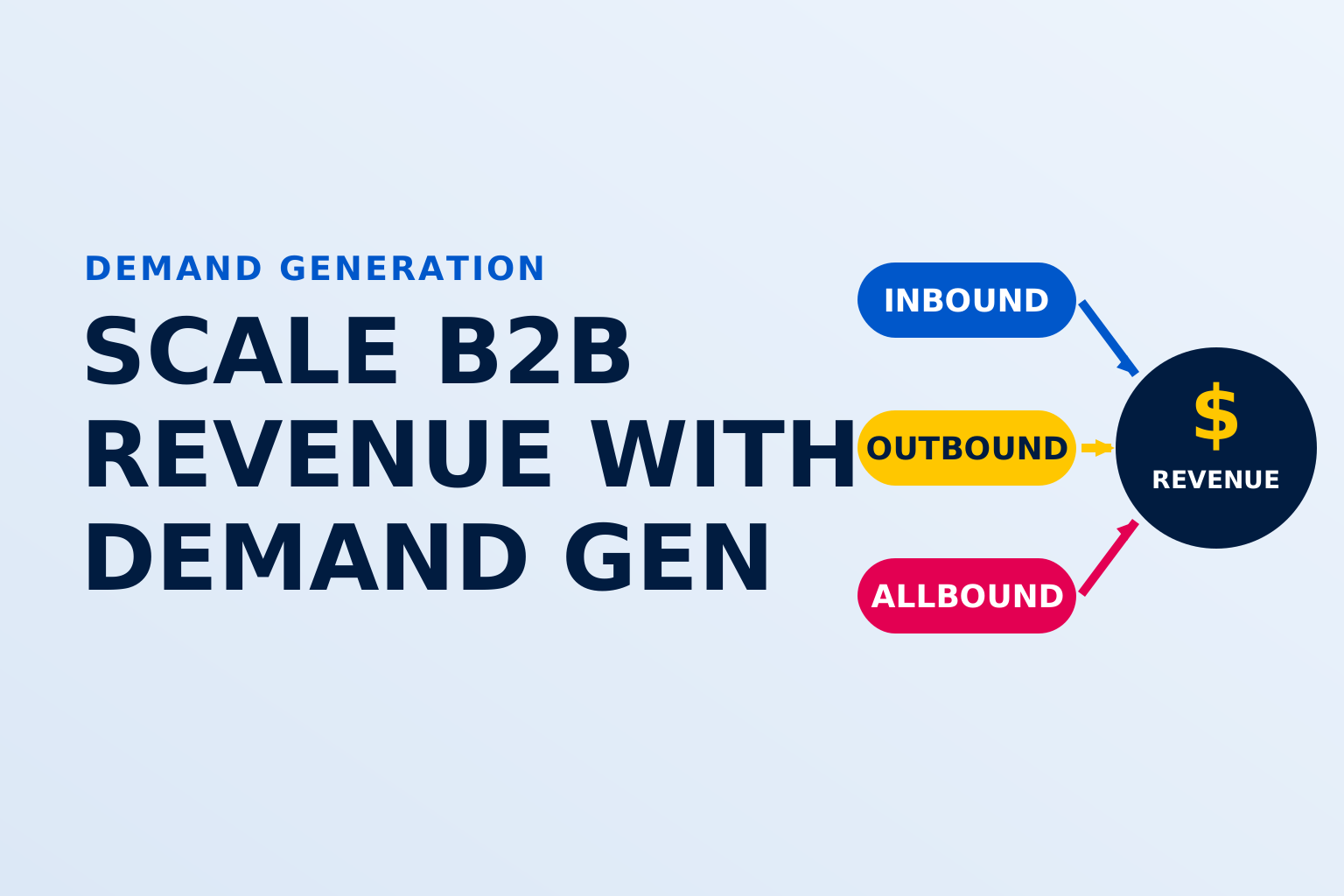
Demand generation consulting leverages digital marketing, inbound marketing, and outbound lead generation to generate high quality leads and support the entire marketing funnel and sales funnel, ultimately leading to improved conversion rates and revenue growth.
This article explains how demand generation consulting typically works in practice, from diagnosis and roadmap planning to execution and ongoing optimization. It is for marketing, revenue, and growth leaders who want to understand what to expect, what good consulting should include, and how to judge whether a partner is the right fit. For the leader who owns the demand number outright, our list of demand generation agencies for demand gen leads applies those judgments to 14 agencies that cleared the checks.
Demand generation agencies focus on creating integrated marketing strategies that encompass content marketing, SEO, paid media, and account-based marketing (ABM) to build awareness and interest in a company's products or services. The best agencies prioritize building buyer trust, connecting marketing spend directly to pipeline outcomes, and using data-driven insights and market research to generate high quality leads and pipeline growth. Where the brief is moving a business off rented attention, we keep a separate shortlist of demand generation agencies for reducing paid ad dependence.
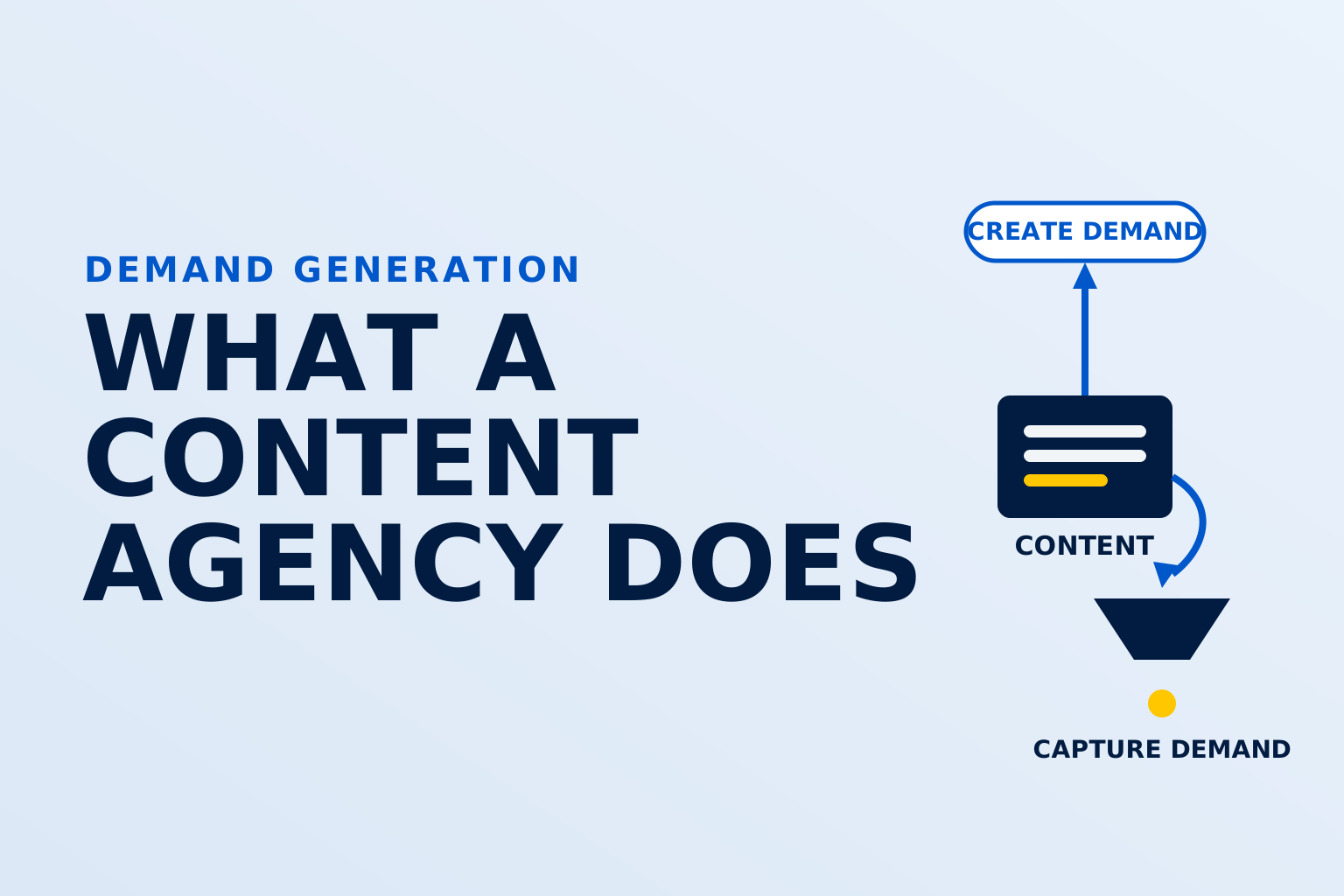
The strongest consultants treat content, data, and automation as infrastructure for better decisions, not as isolated campaigns. Demand generation consulting provides holistic, strategic advisory and planning, while demand generation services are more execution-focused. Consulting helps businesses gain a deep understanding of their target audience and market, ultimately leading to more effective marketing programs and reduced customer acquisition costs.
What Demand Generation Consultants Really Cover
Demand generation consulting is often mistaken for “getting more leads.” That is too narrow. Effective demand generation consulting focuses on improving pipeline quality and lead quality, ensuring that marketing efforts generate qualified leads that drive better sales outcomes and revenue growth. Good demand gen work looks at how buyers and customers move through the whole journey, then builds the system that helps them keep moving.
A robust demand generation methodology and system are designed to align with business objectives and revenue operations, integrating inbound marketing, lifecycle marketing, and unified platforms to support predictable revenue growth.
Sales and marketing alignment is essential for generating high quality leads and improving conversion rates, as it ensures both teams work toward common goals and understand the buyer's journey.
Beyond “more leads”: full-funnel and lifecycle ownership
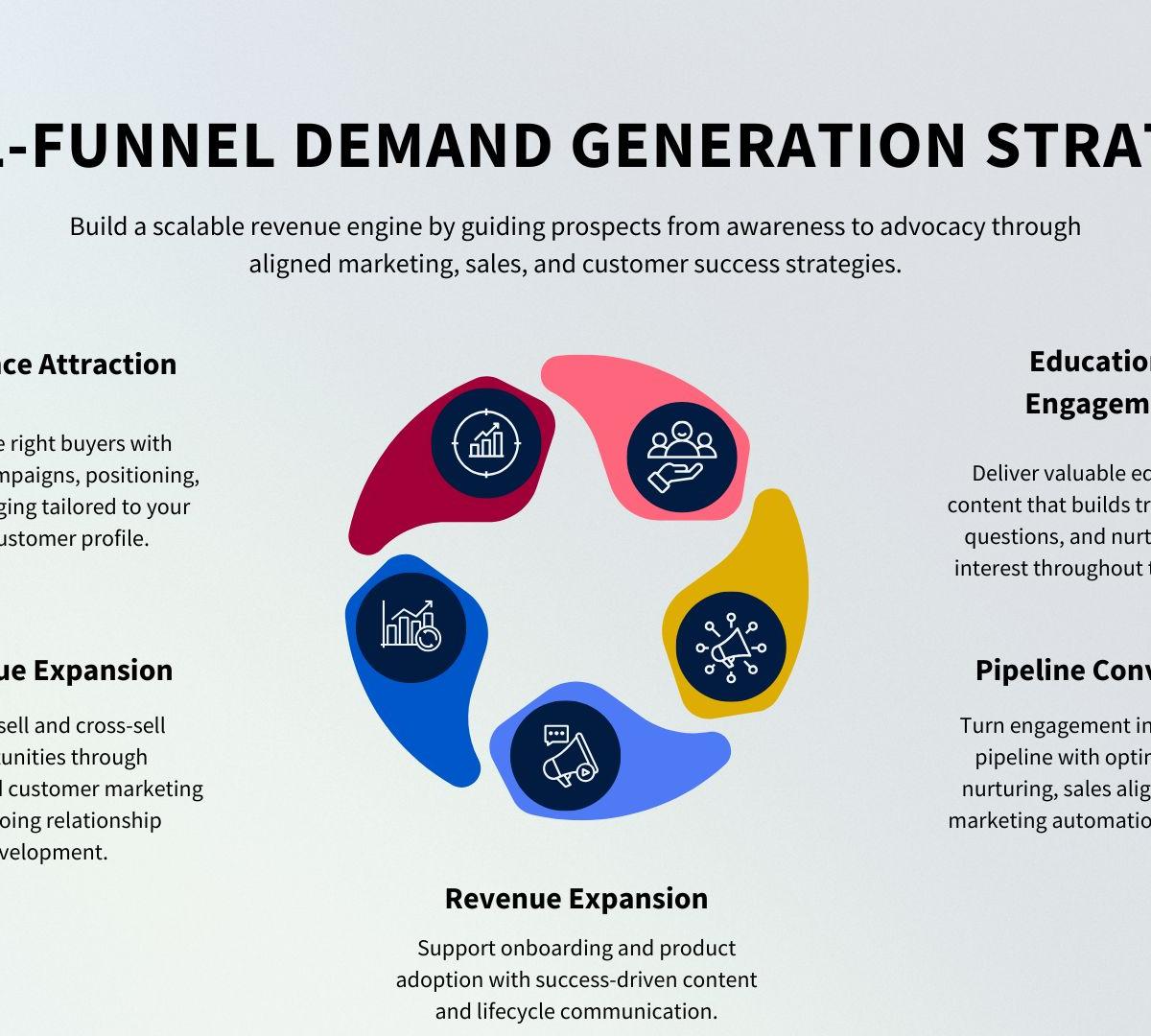
A strong demand generation consultant works across the full hourglass:
Attract the right audience
Engage them with useful education
Convert interest into qualified pipeline
Onboard new customers clearly
Adopt through helpful product and success content
Expand with upsell and cross-sell motions
Advocate through referrals, reviews, and proof
Mapping out the buyer journey is essential for aligning sales and marketing teams, as it clarifies the stages potential customers experience before making a purchase decision. This alignment ensures that strategies are tailored to the complexity and length of B2B sales cycles and well-structured sales processes, guiding prospects efficiently from awareness to advocacy. Leveraging marketing technology platforms and marketing automation platforms - such as HubSpot, Marketo, Pardot, Salesforce, and Salesloft - enables seamless integration, deep attribution, and continuous optimization across channels to support these processes.
This means demand gen is not only about net-new MQLs. It also includes post-sale programs such as onboarding sequences, adoption content, customer marketing, expansion campaigns, and churn prevention. The goal is not just to create demand, but to turn that demand into durable revenue.
The core stack: behavior, content, and automation
Most demand gen consulting sits on three connected pillars.
Behavior means understanding how buyers research, compare, involve stakeholders, and show intent across channels, especially as more B2B buyers prefer self-directed digital research before talking to sales. Utilizing online behavioral data allows consultants to place targeted ads in front of buyers when they are in-market.
Content means creating assets that answer real buying questions. These assets should help people move from curious to confident, not simply fill a publishing calendar. Content and Campaign Architecture involves building multi-channel campaign blueprints to educate prospects before purchase.
Automation and systems means using the MAP, CRM, email, routing, scoring, and triggers to make the journey consistent and scalable. This includes ensuring consistent messaging across all channels and leveraging continuous optimization—using data-driven, automated processes to adjust campaigns in real-time for improved performance.
The consultant’s job is to architect how these pieces work together. They are not just there to “run the marketing automation platform.” The platform delivers the strategy; it is not the strategy itself.
Revenue accountability and sales alignment
Demand gen consulting is accountable to pipeline and revenue metrics, not activity alone. That includes lead-to-opportunity conversion, deal velocity, win rate, average contract value, and net revenue retention. Revenue attribution is essential for connecting marketing activities to pipeline growth, enabling organizations to understand which campaigns and channels drive measurable outcomes.
Consultants also help Marketing and Sales agree on definitions such as MQL, SAL, and SQL, then build SLAs and handoff workflows around them. Effective demand generation consulting emphasizes coordinated sales outreach and the optimization of sales pipelines to accelerate qualified lead flow and maximize revenue impact. If you would rather buy that scoring and routing work than build it, our list of demand generation agencies for MQL overload applies the same test to 368 firms and keeps 14.
A key focus is buyability: making it easier for buying committees to understand the offer, align internally, reduce risk, and say yes. Better budget allocation in demand generation helps pinpoint the most effective channels and messaging for reaching high-fit buyers.
How a Demand Generation Engagement Typically Starts
Discovery: clarifying ICP, goals, and current state
A demand generation engagement starts with diagnosis, not campaigns. Consultants use workshops and audits to define the commercial problem, taking a problem-first approach before recommending channels or tactics.
They clarify:
ICP: customers with enough market size, urgent pain, strong LTV, and a reachable buying path.
Goals and constraints: new ARR targets, CAC limits, sales capacity, deal size, and sales cycle.
Current funnel: traffic, leads, MQLs, opportunities, close rates, lead sources, and NRR.
This often changes the brief. The issue may not be “we need more traffic.” Value may be leaking through weak qualification, slow routing, unclear nurture, low sales conversion, or poor expansion.
Journey and content diagnostics
Next, consultants map how buyers and customers move. This includes buyer journey mapping, where user friction points are analyzed to create targeted content for each stage of prospect awareness. Pre-sale, this may run from unaware to problem-aware, solution-aware, best-fit, and purchase. Post-sale, it continues through onboarding, first value, adoption, renewal, and expansion.
Content and campaigns are checked against that map. A company may have strong anchor assets, such as reports or webinars, but thin mid-funnel content. Late-stage support is often missing too: proof, calculators, implementation guides, pricing context, and internal business-case materials that help buyers make progress through a more self-directed buying journey.
The goal is not more output. Content is treated as infrastructure. Each asset must earn a clear job: educate, qualify, reduce risk, support sales, trigger intent, or help customers adopt and expand.
Systems, data, and measurement review
Consultants also review the operating system behind demand generation. This includes the marketing automation platform, CRM setup, lead routing, scoring, nurture flows, GA4 or analytics implementation, attribution, enrichment, segmentation, and account-based views. Marketing technology optimization is a key part of this process, involving auditing and streamlining tech stacks and implementing cross-channel attribution modeling to ensure all platforms work together efficiently.
This matters because poor data creates poor decisions. If lifecycle stages are unclear or dashboards do not connect marketing, sales, and customer data, the team cannot run a truly data-driven demand engine. Strong engagements usually define the lead lifecycle, scoring logic, nurture architecture, and revenue-focused measurement before scaling execution. If attribution is the specific gap, our list of demand generation agencies for companies with no attribution compares the outside partners that connect marketing to pipeline and revenue.
Strategy blueprint: a focused commercial narrative
The phase ends with a blueprint: one commercial narrative anchored in a real ICP pain point, not random topics.
KPIs cover traffic quality, lead-to-opportunity by segment, pipeline per buying group, sales cycle time, CAC, and expansion influence. The roadmap then ranks first interventions: nurture, proof, routing, ABM, or post-sale expansion. Benchmarks can help pressure-test the plan, especially when funnel visibility shows how visitor, lead, and opportunity performance connects to revenue goal attainment.
Designing the Buyer-Led Demand Engine
Consultants turn strategy into an operating model: content, automation, sales workflows, and measurement working as one system. The goal is easier buying, not more campaigns.
Building buyer-led, self-service experiences
Buyers now self-educate before speaking with Sales. Consultants replace sales-gated information with self-service paths that help buyers learn, compare, and decide at their pace.
Common elements include:
Pricing guidance, calculators, or configurators
ROI tools and comparison pages
Demo libraries and product walkthroughs
Self-booking for demos or consultations
This does not remove Sales. It makes Sales more useful by letting buyers arrive with clearer context.
Consultants also reduce overwhelm by curating paths by role, problem, stage, and job-to-be-done. Sequenced messaging explains trade-offs, disruption, stakeholder impact, risk, and the cost of doing nothing.
.jpg?width=1200&quality=75)
Content as a revenue system, not a publishing calendar
In a buyer-led engine, content is decision infrastructure. It is not a calendar of posts made to keep the brand visible.
Consultants often start with a few anchor assets, such as research reports, webinars, cornerstone guides, or strategic points of view tied to the commercial narrative. These are atomized into blogs, emails, social posts, sales slides, ads, and nurture content.
Every asset should answer three questions:
Who is this for?
What decision or objection does it support?
What measurable next step should it create?
This reflects the Content RevOps philosophy: content as a product-like asset built for reuse, distribution, attribution, and long-term value.
Lifecycle programs: from lead magnets to post-sale growth
Consultants then connect content into lifecycle programs. Lead magnets are used across stages, not only at the top. Toolkits, templates, assessments, and mini-courses can qualify interest while helping buyers take action.
Email programs include welcome sequences, short-term nurture, long-term education, and newsletters that build familiarity. In regulated categories the compliance review sits on top of all of it, which is why we keep a separate shortlist of demand generation agencies for financial services firms, and another of demand generation agencies for law firms. Sales campaigns map content to discovery, validation, consensus-building, and negotiation. Post-sale programs support onboarding, adoption, renewal, expansion, and advocacy.
These motions are planned as one connected lifecycle, not siloed quarterly campaigns.
Sales alignment and enablement baked in
The engine must work for Sales. Consultants create role-specific talk tracks, buying-committee content, and playbooks that show which asset to use at each stage.
They also define SLAs for routing, response times, and follow-up. For larger deals, they add account-based overlays: account tiers, buying group maps, intent signals and coordinated plays.
The focus shifts from individual leads to account momentum.
Implementation, Operations, and Optimization
Turning strategy into a working operating model
Once strategy is set, consultants turn it into a system people can run. The first work is operational: clean and map data, connect the marketing automation platform with the CRM, and configure routing, scoring, lifecycle stages, and sales alerts.
They also build conversion paths: forms, progressive profiling, event tracking, enrichment, nurture, recycling, and handoff workflows. This is where content becomes infrastructure, not output. Each asset needs a defined job in the system, especially as buyers increasingly expect self-service content experiences before engaging sales.
A structured content calendar keeps this work organized. It should tag each item by:
Funnel stage, persona, and buying job
Campaign, channel, and activation plan
Sales use case and follow-up motion
Connecting inbound, outbound, and events
Consultants connect channels so they support one revenue motion. Inbound content and SEO are built around commercial themes validated through buyer research, sales feedback, and search behavior.
Webinars, events, and research reports are not one-time campaigns. They become reusable assets for nurture, outbound, sales enablement, and retargeting. Outbound teams can use these assets with behavioral signals, such as topic engagement or event attendance, instead of generic sequences.
The goal is not isolated channel performance. It is pipeline creation and movement.
Measurement, dashboards, and ongoing experimentation
Consultants usually build dashboards around early signals and revenue outcomes. Leading indicators may include email engagement, content consumption by segment, meeting creation, demo requests, and other micro-conversions.
Core metrics include pipeline volume and value, velocity, win rate, CAC, LTV, payback, and NRR. Good dashboards also show cohort and stage views: where buyers stall, which segments convert, and which assets are linked to faster decisions. This is where benchmarks and revenue outcomes help turn reporting into a performance management system.
Optimization is ongoing:
Review performance against benchmarks and hypotheses
A/B test pages, emails, CTAs, and offers
Adjust messaging, scoring, routing, and nurture based on real data
This prevents automation from becoming “set and forget.”
Change management and enablement
Implementation only works if teams adopt it. Consultants train marketing, sales, and customer success with playbooks, templates, and workflow guides.
They also set governance for data hygiene, content quality, SLAs, and feedback loops. Tools matter, but culture matters too. A demand generation system improves when teams use it, question it, and keep refining it around a shared lead lifecycle, scoring, nurturing, and reporting model.
Conclusion
Demand generation consulting works best when it turns scattered activity into a buyer-led operating system. It is not a collection of campaigns, tools, or content requests. It connects ICP research, buyer behavior, content strategy, automation, sales alignment, measurement, and post-sale growth into one coherent motion.
When that system is built well, buyers can move at their own pace and gain confidence before they speak to Sales. Sales gets clearer signals, better context, and more useful content for the conversations that matter. Leadership gets a more reliable view of how marketing activity connects to MQL quality, pipeline creation, conversion, and revenue outcomes.
This is also how we think about Content RevOps. We treat content and demand programs as go-to-market infrastructure, not disposable outputs. Strategy starts with the real buying context, a clear ICP, and one commercial narrative. The build then focuses on assets, workflows, reporting, and operations that can be reused, tracked, and improved over time.
For teams that suspect they do not have a content problem, but an operating model problem, this is the work that turns disconnected efforts into a durable, compounding growth engine. Demand generation consulting is designed to support sustainable growth, ensuring your business achieves long-term, scalable success rather than just short-term wins.
Is your demand gen a system - or a string of campaigns?
Get a Content RevOps blueprint that turns content into revenue infrastructure: buyer-led journeys, clean handoffs, and measurable pipeline impact.
Frequently Asked Questions
About the Author

Founder & CEO, Content RevOps
Stefan Kalpachev is the founder and CEO of Content RevOps, where he helps B2B SaaS companies transform their content into predictable pipeline. With a background in content marketing and revenue operations, Stefan has developed a unique methodology that bridges the gap between content creation and revenue generation.
Connect on LinkedIn