Demand Generation vs Inbound Marketing: Is There a Difference?
Ready to turn inbound into a demand engine (not just a blog)? Let’s map the system.
Book a Call“Demand generation vs inbound marketing” gets argued like it’s a choice between two competing playbooks. One team wants to double down on SEO and the blog. Another pushes for “demand gen,” which often gets reduced to more ads or a renamed lead gen function. The result is a lot of talking past each other—and a strategy that’s fragmented by definitions instead of aligned to revenue.
Part of The Complete Guide to B2B Demand Generation Strategy.
Here’s the cleaner way to frame it: inbound marketing is a powerful but narrow, mostly passive way to capture existing demand. It typically includes SEO, blogs, lead magnets, email nurtures, and funnels—great for turning active searchers into leads.
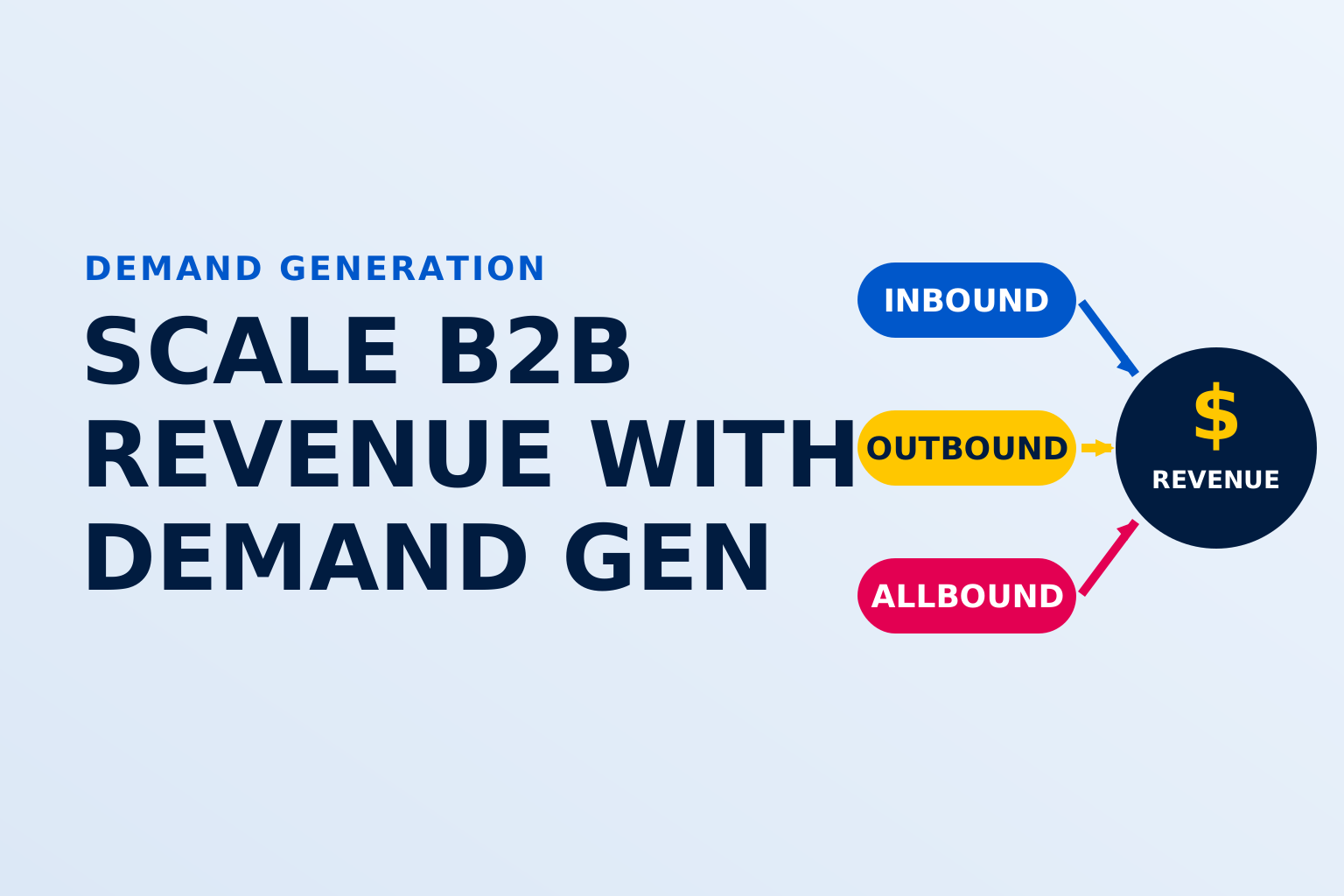
Demand generation is the evolution of inbound into a go-to-market (GTM) system. It doesn’t just wait for buyers to show intent; it creates demand, then captures it across inbound and outbound motions, with tighter Sales integration and faster learning loops.
In this article, we’ll break down:
The core distinction: capture vs create (then capture)
Why inbound-only programs often plateau
What a modern demand gen system includes (distribution, outreach, paid, partnerships, Sales)
How to evolve inbound into a demand engine without throwing away what already works
What inbound marketing actually is
Inbound marketing is best understood as a demand-capture channel strategy: it attracts people who are already searching for answers, vendors, or comparisons in your problem space. In most B2B contexts that means intercepting existing, in‑market intent rather than creating it from scratch, which is why inbound is often described as a way to capture demand, not generate it. The classic inbound stack is familiar for a reason—when it works, it compounds.
Most inbound programs rely on:
SEO-optimized content (blogs, landing pages, comparison pages)
Lead magnets (guides, templates, webinars)
Email nurture sequences and basic funnels
Organic social that supports (but rarely drives) discovery
In practice, inbound often looks like this: someone searches “how to fix X,” finds your article, downloads a resource, and enters an automated nurture until they’re “ready.” That pattern lines up with how buyers increasingly self-educate online and consume multiple pieces of content before ever talking to Sales.
The defining characteristics are what make inbound both powerful and limited:
Mostly passive: you’re waiting for intent to show up in search (or a link) before you engage, which maps closely to what many demand gen teams now call demand capture.
Slow feedback loops: meaningful SEO results and learning can take months, making it hard to iterate quickly or validate new narratives compared with faster, paid or outbound tests.
Compounding over time: once rankings and libraries are established, inbound can deliver durable, cost-efficient acquisition and higher perceived lead quality than many interruptive tactics.
Inbound isn’t wrong—it’s just frequently treated as the whole go-to-market, when it’s really one motion inside it.
What demand generation actually is
Demand generation is the go-to-market operating system that creates demand in your ideal customer profile (ICP), distributes your story proactively across channels, and then converts that demand into pipeline—often in tight coordination with Sales. It pulls together inbound, outbound, ABM, and lifecycle marketing into one revenue-focused system rather than a loose bundle of tactics.
A demand gen system typically includes:
Demand capture pillars: inbound content, SEO, lifecycle email, retargeting—essentially the “intent system” that meets buyers when they raise their hands
Proactive distribution: paid amplification, social distribution, partnerships, content-led outbound, and other motions that build awareness before someone ever searches
Sales alignment: shared account lists, coordinated plays, fast feedback loops on quality and objections, and lead stages that reflect how buyers actually move through the “demand waterfall”
Measurement + ops: CRM-connected tracking, funnel diagnostics, pipeline and revenue reporting, plus intent and attribution data to guide budget and channel mix
This reframes inbound clearly: inbound is included, but demand gen orchestrates it with distribution, targeting, and revenue accountability. In other words, inbound sits alongside outbound, ABM, events, and partner channels inside a single demand engine, instead of being mistaken for the engine itself.
The core distinction: capture vs create (and then capture)
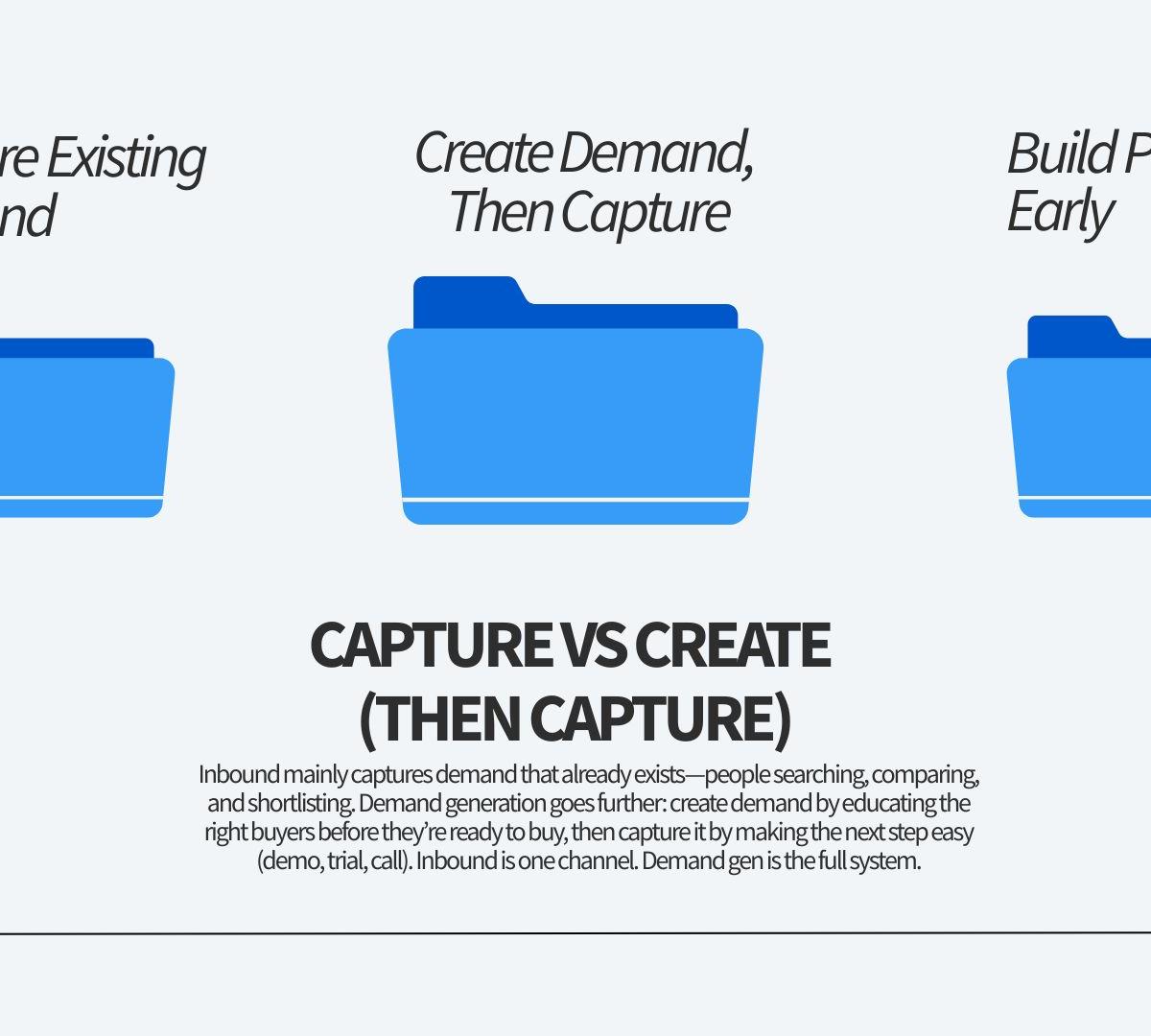
Inbound’s primary job is to capture existing demand—people already researching, shortlisting, and comparing. It helps you show up when someone types a query, clicks a comparison page, or fills out a form, which is why it behaves much more like lead generation and demand capture than like true demand creation.
Demand generation expands the scope:
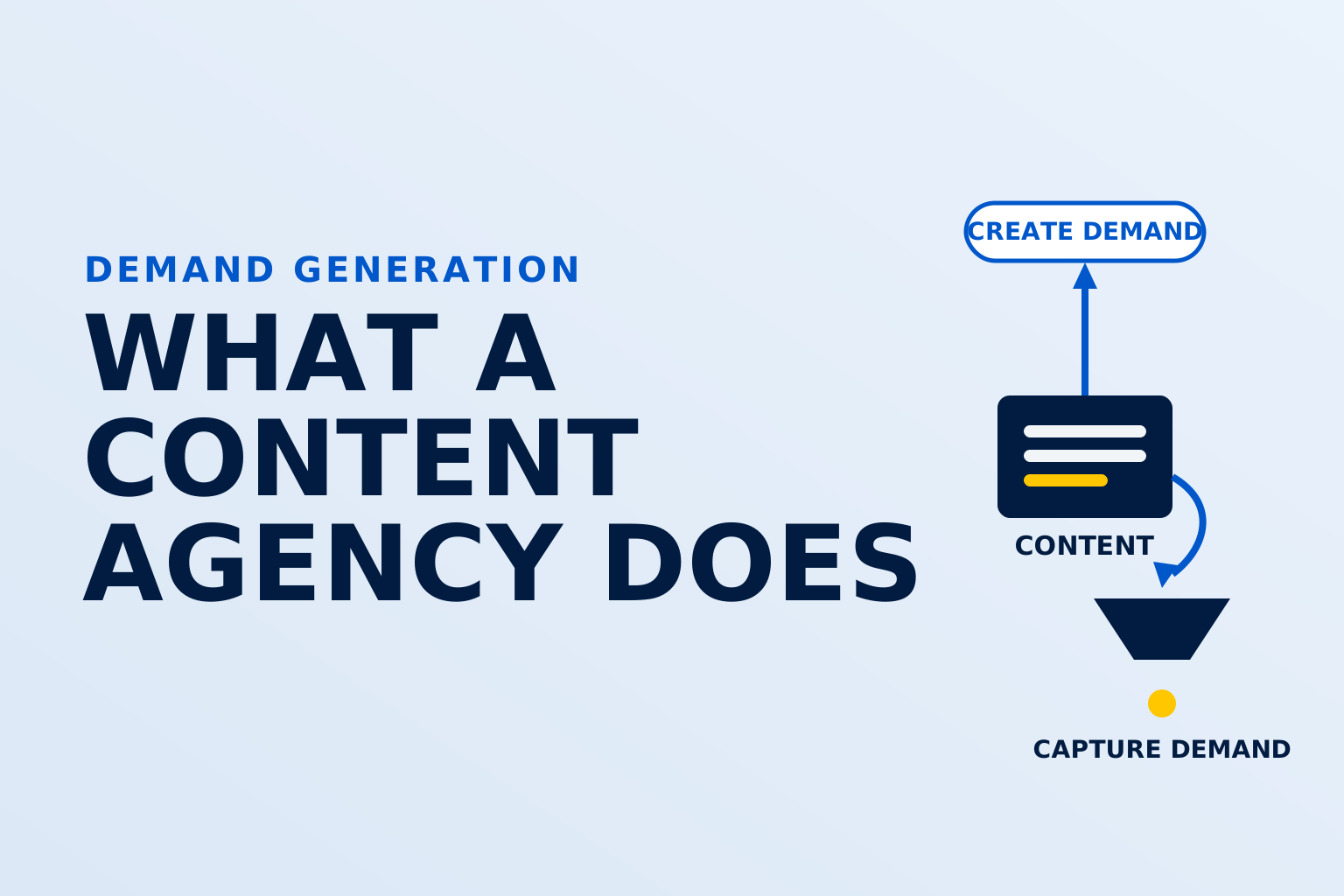
Create demand: educate the right buyers before they’re in-market, shape evaluation criteria, and build preference with always-on, content-rich programs that reach beyond search.
Then capture demand: make it easy for high-intent buyers to convert and move into sales conversations, whether they arrive via inbound, paid, outbound, or account-based motions.
Put simply: Inbound is a channel strategy. Demand generation is a GTM system. The companies that compound fastest treat inbound as one powerful channel inside an integrated demand gen model, not as a standalone growth philosophy.
Over-reliance on SEO and blog funnels
Most inbound programs still run the same playbook: publish generic “ultimate guides,” rank for a few keywords, and gate a template or checklist behind a form. The problem isn’t that SEO or blogs don’t work—it’s that everyone is doing the same thing, so the edge disappears fast. With B2B brands pouring billions into SEO and content and competition intensifying every year, channels that once felt like a moat increasingly look like table stakes.
Search is also a less reliable moat than it used to be. Results are crowded, clicks are harder to earn, and buyers can get “good enough” answers without ever reaching your site as zero-click results and AI summaries eat into organic traffic. When inbound becomes “blog + form fill,” the cost of content production rises faster than the pipeline it creates. And if you try to prop it up with paid search or paid social, you inherit platform risk—policy shifts, disapprovals, and account issues can turn your primary acquisition engine off overnight, especially if you are not balancing search with a broader, integrated demand engine.
Passive acquisition and slow feedback loops
Inbound-only teams often accept long wait times as normal: months to rank, then more months for traffic to compound, then even more time to see whether those visits translate into real opportunities. That creates slow learning loops—especially when success is measured with proxies like page views, time on page, email opens, or raw MQL volume. Even advocates of inbound now frame it as an “intent system” sitting inside a larger demand generation motion, precisely because those lagging indicators are so hard to tie back to revenue in fast-moving markets.
The consequence is structural: you can spend an entire quarter “being consistent” before you learn that a positioning angle, narrative, or offer didn’t land. In fast markets, that delay is a competitive disadvantage. Teams that pair inbound with proactive, multi-channel demand programs get shorter feedback cycles and are better able to adapt messaging, creative, and offers based on what actually progresses deals.
Lead quality, intent, and misaligned funnels
Inbound volume is not the same as qualified demand. Gated top-of-funnel assets tend to attract people with assumed intent—curious researchers, students, competitors, or early-stage evaluators who aren’t ready (or able) to buy. After filtering out partners, job seekers, and students, many “inbound” leads turn out to be late-stage shoppers adding one more vendor to a shortlist, not net-new demand. Sales then inherits a bloated list of “leads” that never wanted a conversation, which wastes SDR cycles and erodes trust in marketing.
Common symptoms of inbound-only lead capture:
High form-fill volume, low meeting rates
Lots of nurture activity, little declared intent (demo/pricing conversations)
Sales chasing downloads instead of buying signals
These patterns are one reason modern demand generation frameworks emphasize “in-market” accounts and behavioral intent over raw lead counts, and why updated models like the SiriusDecisions demand waterfall explicitly separate inbound-sourced names from truly qualified opportunities.
Siloed execution and incomplete measurement
When inbound is treated as a self-contained marketing program, it often lives outside the revenue system. Content performance is tracked in marketing dashboards, while deal outcomes live in the CRM—so it’s hard to see which topics actually shorten sales cycles, improve win rates, or increase deal size. Without closed-loop reporting, teams optimize for what they can easily measure, not what the business needs, and marketing is incentivized to maximize top-of-funnel activity rather than opportunity creation and pipeline velocity.
More mature demand engines are designed the opposite way: they start from revenue goals, align marketing and sales around shared definitions of qualified demand, and use integrated tooling and reporting to connect specific campaigns and content themes to downstream impact. That shift—from channel metrics to system performance—is what separates “we publish blogs” from a true go-to-market engine.
2.5 Bottom line on inbound-only
Inbound works best as demand capture. But when it becomes your dominant strategy, you’re forced into a fragile posture:
You depend on buyers to find you
You learn too slowly to keep pace with the market
You over-index on traffic instead of pipeline
You miss high-fit accounts that aren’t searching yet
Modern demand generation treats inbound as one component in a broader system: a way to capture and convert existing intent while outbound, social, events, and account-based plays create and shape demand upstream. Teams that make this shift stop debating “inbound vs. demand gen” and start using inbound where it is strongest—then surround it with the channels, data, and sales alignment required to build predictable pipeline.
Content as infrastructure, not output
Inbound often treats content like output: publish, rank, convert. Modern demand generation treats content like infrastructure—a revenue-facing layer that supports the entire go-to-market system, spanning both demand creation and capture rather than a single channel play.
That shift changes how you build assets. Instead of writing to fill a calendar, you design content to do specific work: educate buyers, shape intent before they’re in-market, and support sales conversations when they are. This mirrors how mature demand gen programs map content to each stage of the awareness journey—problem-unaware through vendor selection—so marketing and sales can move prospects from MQL to SQL with fewer handoffs and less friction. The best assets compound because they’re built for reuse across channels and stages, and plugged into a broader system that includes outbound, paid, and ABM motions, not just SEO and blogs.
A system mindset looks like this:
One asset, many uses: blog → webinar → sales deck → outbound sequence → nurture track. High-performing teams treat cornerstone pieces as “source material” for multichannel campaigns rather than one-off posts, then use marketing automation to connect the dots between otherwise disconnected efforts.
Every piece has a job: create trust, handle objections, qualify fit, or move an opportunity forward. Mature demand gen teams explicitly assign assets to stages in the demand waterfall so they can see which ones reliably precede opportunities and revenue.
Built for buyer research: comparison, “vs,” pricing expectations, implementation risk, and internal buy-in. These topics line up with what buyers actually search and ask late in the journey—pricing, ROI/TCO, vendor comparisons, and proof—so treating them as core infrastructure materially improves conversion and sales velocity.
In other words, content isn’t “marketing.” It’s decision infrastructure that sits across SEO, social, outbound, sales enablement, and lifecycle nurture, inside an integrated demand generation system rather than as a standalone inbound channel.
Proactive distribution: beyond “they’ll find our blog”
Inbound-only breaks down when distribution is passive. Search is competitive, timelines are slow, and even great content can underperform if it isn’t placed where buyers actually spend attention, especially when the majority of the market is not yet actively searching.
A modern demand gen system adds proactive levers:
Content-led outreach: cornerstone assets (deep guides, webinars, reports) become value-first touches to specific ICP accounts, tailored to role and context. This is the “fishing with a spear” approach: you identify the accounts and people you want, then use content as your opening move instead of waiting for them to wander into a funnel.
Social and dark social: consistent expert presence where buyers share and compare—LinkedIn, communities, niche groups, and peer networks. Content is designed to be re-shared as snippets, visual explainers, and clear points of view, aligning with how modern buyers discover and validate solutions through peers and shared experiences rather than just ranked pages.
Paid amplification: promote proven assets to defined ICP segments, retarget engaged visitors, and use selective PPC on high-intent queries (pricing, comparisons). Paid isn’t just for scale—it’s a faster feedback loop for messaging and audience fit, and a practical way to test narratives before you invest heavily in long-term organic plays.
The key difference: inbound assumes discovery. Demand gen engineers it—integrating inbound, outbound, and paid into one operating system that creates attention and then turns that attention into pipeline.
Sales integration and buyer-centric orchestration
Demand generation works when marketing and sales share ownership of pipeline—not just lead volume. That means aligning on ICP definition, account lists, qualification rules, and follow-up agreements so momentum doesn’t die at the handoff, and so both teams measure success on opportunities and revenue rather than isolated lead counts.
Instead of a rigid funnel, orchestration reflects real buying behavior: nonlinear journeys, multiple revisits, and buying committees with different concerns. Your system should create multiple entry points and progression paths, more like a “demand waterfall” fed by many streams—organic, outbound, partner, and sales-generated—than a single inbound track.
A coordinated play might look like: a targeted ad drives the right person to a key asset → they enter a role-based nurture → an SDR references what they consumed in a warm outbound touch → the AE uses related content to address objections and advance the deal. When this loop is working, marketing is not just tossing MQLs over the wall; it is accountable for helping specific accounts progress, with content calibrated for later stages as much as for top-of-funnel attraction.
Measurement that prioritizes pipeline and learning velocity
Inbound metrics often drift toward proxies: traffic, rankings, downloads, MQL volume. Demand gen measurement prioritizes outcomes and speed of learning, anchoring success in pipeline and revenue rather than channel vanity metrics.
Core demand gen metrics typically include:
Pipeline created and influenced
Win rate, deal size, and sales cycle length
CAC and payback period
Account and buying-group engagement (not just individual lead scores)
Operationally, this requires connecting content and campaigns to the CRM and using multi-touch views (even if imperfect) to identify which combinations of assets, channels, and touches reliably precede opportunities. Benchmarked demand gen programs treat marketing as a predictable process: they know baseline visitor → lead → opportunity conversion rates, track cost per opportunity across inbound and outbound sources separately, and reallocate budget based on which motions actually produce efficient pipeline.
The question becomes: what creates qualified, efficient pipeline among best-fit customers—and how quickly can we learn which messages, channels, and plays improve that answer?
Where inbound fits inside demand gen
Inbound remains a critical demand capture engine: strong SEO, clear conversion paths, and smart email nurtures will always matter for in-market buyers. It is exceptionally good at meeting high-intent prospects in the moment, turning existing interest into opportunities when paired with conversion-focused pages that address real buyer questions.
Demand gen simply adds the missing layers:
Use inbound signals (repeat visits, high-intent keywords, key resource engagement) to trigger outbound and sales actions, treating inbound as an intent system that surfaces timing and interest rather than as the whole strategy.
Repurpose inbound winners into targeted outreach, social series, and sales enablement, so one strong guide or case study becomes the backbone of webinars, ads, SDR sequences, and ABM plays instead of living only as a blog post.
You keep everything good about inbound—but plug it into a broader system designed to create demand, accelerate learning, and drive revenue, with content operating as shared infrastructure across channels, functions, and stages instead of as isolated “top-of-funnel” output.
Evolving from Inbound-Only to a Demand Gen Operating System
Start from ICP and commercial narrative, not channels
If your inbound foundation is “SEO + blog + lead magnet,” your next step isn’t more content. It’s sharper focus. Demand gen starts by choosing who you’re creating demand for and why they should care, then using inbound as one expression of that strategy.
Prioritize an ICP segment with strong economics (high LTV, clear urgency) and that’s realistically reachable where they already learn and compare. In many B2B markets, that means buying groups of 6–10 people with different roles and information needs, not a single “decision-maker” persona. Then map the real buying context: jobs-to-be-done, objections, and the places they actually talk—not just where you want them to search. Treat “do nothing” and DIY as competitors, because they’re often the default.
Finally, define one core commercial narrative: a clear point of view that connects the ICP’s pain to your differentiated approach. Strong demand gen teams treat this as the system-level “source of truth” that ties together inbound, outbound, ABM motions, and sales conversations, not just as a blog topic list.
4.2 Restructure content around campaigns and reuse
Inbound-only teams often run a publishing schedule. Demand gen teams run a campaign system, where each asset has a job and a follow-through path. That shift mirrors how high-performing B2B orgs structure demand generation as an integrated, full-funnel program rather than a collection of isolated content pieces.
Build campaigns around:
Cornerstone assets: guide, webinar, report aligned to your narrative
Supporting assets: posts, comparison pages, checklists, calculators
Activation assets: email sequences, social posts, outbound scripts, sales decks
For each asset, define the persona and stage (aware → engaged), whether it creates demand or captures it, and how it gets distributed beyond “waiting for search.” Modern demand gen programs deliberately combine inbound content with outbound, paid social, and partner distribution so that the same core ideas show up in search results, social feeds, sales sequences, and events, compounding their effect instead of fragmenting it.
Operationalize distribution and sales alignment
Distribution is not an afterthought; it’s the plan. Pair owned content with proactive moves: social sharing where buyers trade opinions, targeted paid amplification to speed learning, and content-led outreach that opens conversations with specific accounts and buying-group roles. This is the difference between a channel strategy and a go-to-market system: you are designing how awareness, education, and intent get manufactured across channels, not hoping organic discovery is enough.
Tighten the handoff with shared triggers based on real intent (pricing visits, “vs” comparisons, repeat engagement), not generic scoring. Frameworks like the updated SiriusDecisions demand waterfall show how inbound, outbound, tele, and sales-sourced motions can coexist in one measurement model, with clear definitions for stages and responsibilities. Then shorten feedback loops by combining paid tests, outbound responses, and sales call insights—so you refine messaging in weeks, not quarters, and can reallocate budget toward the channels and narratives that are measurably creating qualified pipeline.
Evolve how you report success
To graduate from inbound to demand gen, reporting has to move from activity to outcomes. Track traffic, but prioritize what it creates. Consistently high-performing demand engines tend to share two traits: they measure the full journey from early attention through closed revenue, and they benchmark their funnel so they can spot where volume, conversion, or velocity is breaking down.
Focus on:
MQL-to-opportunity conversion
Pipeline created and influenced
Sales cycle impact and win rate shifts
Message learning velocity (what’s working, what changed, what you’ll test next)
Industry data on demand gen benchmarks shows that companies exceeding revenue goals almost always know their visitor → lead → opportunity metrics and use them to make budgeting decisions, not just to report on “marketing performance.” This is the cultural shift: marketing and sales align around one system-level question—which parts of our content and distribution reliably create and convert demand from best-fit buyers?—and treat inbound metrics as inputs to that answer, not the finish line.
Conclusion
Inbound marketing isn’t wrong—it’s incomplete. At its best, inbound captures existing demand through SEO, educational content, and conversion paths. But as a full go-to-market (GTM) motion, it tends to be too passive, too slow to learn, and too dependent on search to reliably drive pipeline—especially as organic search gets more competitive and zero-click behavior grows and algorithms keep shifting in ways that erode pure SEO plays.
The cleaner reframe is this: inbound is a channel strategy. In most modern models, it functions as a demand capture and intent layer inside a broader engine, not the engine itself. Demand generation is the evolution of inbound into a proactive, multi-channel, sales-integrated system that creates demand, distributes a point of view, and then captures and converts intent. That includes orchestrating inbound with outbound, ABM-style motions, and person-based advertising so you are not just waiting for in-market buyers to show up, but actively shaping and accelerating opportunity in your ICP.
Modern teams typically need a few shifts:
From publishing to distribution: social, partnerships, paid amplification, and content-led outreach that combine inbound-style content with proactive reach across channels, rather than “publish and pray” on a blog
From leads to pipeline: measurement tied to revenue outcomes and faster feedback loops across inbound, outbound, and teleprospecting, so you can compare how different sources actually convert to opportunities and deals
From marketing-only to commercial alignment: one narrative across inbound, outbound, events, and nurture, with shared account lists, intent signals, and handoffs so marketing and sales are operating from the same GTM system instead of disconnected campaigns
This is the lens behind a Content RevOps approach: start with ICP and jobs to be done, build campaigns that blend demand creation and capture, and connect content to CRM, nurture, and sales workflows. In practice, that looks like using inbound content as your “intent system,” then layering on ABM-style targeting, closed-loop reporting, and always-on orchestration so content shows up wherever buyers actually research and make decisions. That’s the practical path from “we publish content” to “content is how we create and capture demand” within a true demand generation engine.
Is your “demand gen” actually creating pipeline—or just collecting leads?
Build Content RevOps infrastructure that creates demand, captures intent, and connects content to Sales and CRM outcomes.
Frequently Asked Questions
About the Author

Founder & CEO, Content RevOps
Stefan Kalpachev is the founder and CEO of Content RevOps, where he helps B2B SaaS companies transform their content into predictable pipeline. With a background in content marketing and revenue operations, Stefan has developed a unique methodology that bridges the gap between content creation and revenue generation.
Connect on LinkedIn