Social Media Marketing for Construction Companies
Not sure whether your construction firm's social reach is building anything you own? Start with a content revenue audit.
Book a CallMost construction companies do not have a social media problem. They have a distribution problem that social media was supposed to solve, and never did. Social only starts winning work once it runs inside a content marketing system that moves people from a feed to a list you own.
Part of The Complete Guide to B2B Demand Generation Strategy.
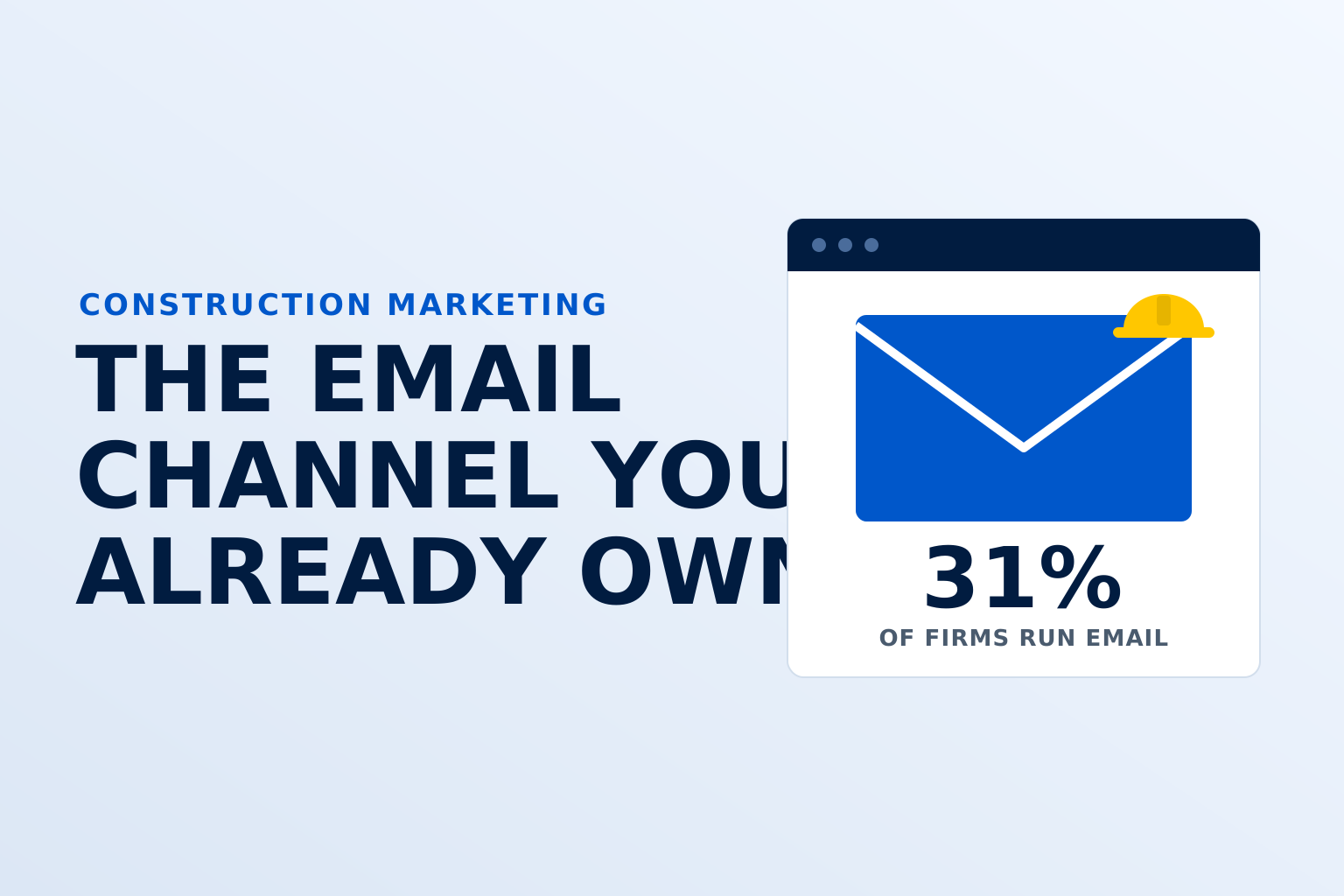
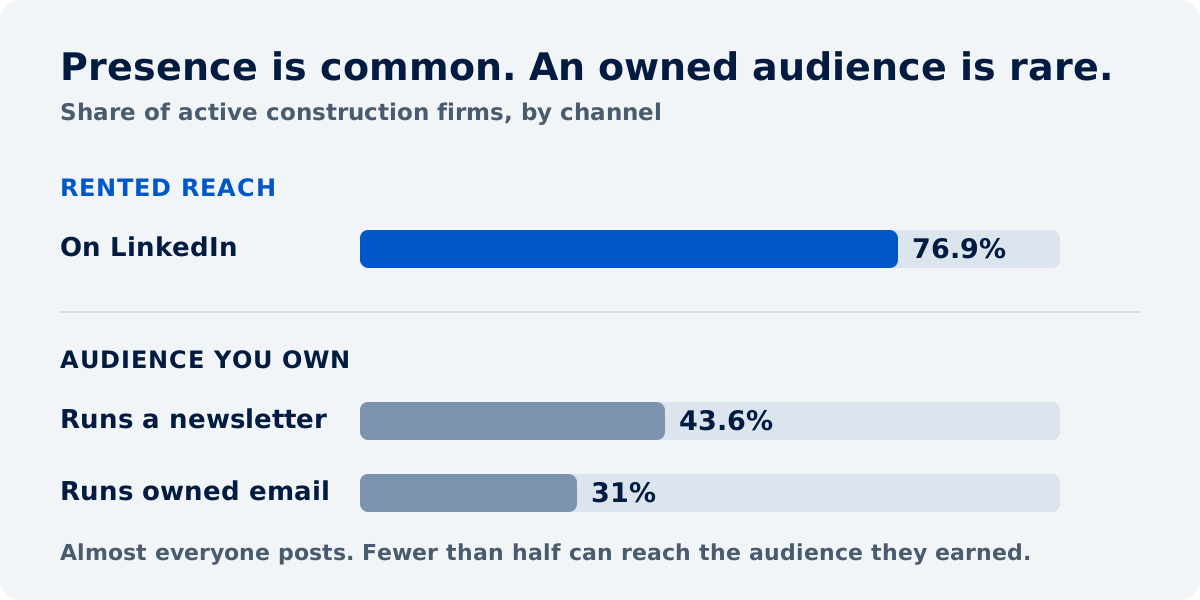
Almost every active construction firm is on at least one platform. In our study of the construction content estate, 76.9% of active firms use LinkedIn. Far fewer own an audience they can actually reach on demand. Under half run a newsletter, and under a third run email at all.
That gap is the whole story. Social media marketing for construction companies works when it stops being a posting habit and becomes a system that feeds an audience you own. This guide walks the decisions that get you there: which platform your work actually lives on, what to post, how to turn borrowed reach into leads, and whether to run it yourself or hire it out.
What is social media marketing for construction companies?
Social media marketing for construction companies is the practice of using platforms like LinkedIn, Instagram, Facebook, and YouTube to win work and recruit crews, by turning your projects and your people into proof that buyers and future employees can see.
It does two jobs. It keeps your firm visible to the owners, developers, homeowners, and general contractors who might hire you, and it shows tradespeople a company they might want to work for. The 76.9% of construction firms already posting on LinkedIn have the first job half-started. The rest of this guide is about finishing it, and it sits alongside our broader look at how content marketing and social media marketing differ.
Does social media marketing actually work for construction companies?
Yes, but not the way most contractors try it, and the honest answer starts with the objection.
Walk into any contractor forum and you will hear the same thing. On r/GeneralContractor, one general contractor put it flatly: "In the contracting world, sales is the easiest part. More work available than licensed contractors can handle. Marketing really not required to stay busy. Capacity to do more work at a profit is the limitation." Another said the quiet part out loud: "Yes, we have a website. We don't get any business from it. We have our repeat clients. We don't need the business."
They are not wrong about today. Referrals and repeat work carry most construction firms, and a busy backlog makes social media feel like a chore with no payoff.
The catch with referrals
Referrals work right up until they don't. They are unpredictable, you cannot turn them up when a project ends early, and they dry out exactly when the market softens. The firms that treat social as optional are betting their pipeline on relationships they cannot control. A lead pipeline you can see and influence is the alternative.
What the firms that win actually do
The contractors who take it seriously tell a different story. On r/ConstructionManagers, a builder running $50 to $60 million a year explained why his firm invests: "That's why some guys are doing $100k a year and a company like ours is doing $50 to $60M. Marketing matters." His marketing lead runs Instagram, keeps the website current, and packages finished projects into the bid decks that win multimillion-dollar contracts.
Another described becoming the front door for his trades: "We are the marketing company for our subs. We only do 10% of the work we sell." His firm has over 900 five-star reviews and ranks first for its service in its city. Two of his best subcontractors told him he is responsible for 70% of their business.
The pattern is consistent. The firms that turn social into a system out-earn the ones that post as a chore, and the difference is not talent or budget. It is treating reach as an asset to build, not a box to tick. Our breakdown of what good looks like in construction content shows the same split across the whole estate.
That is also why the money most construction firms already spend goes soft. Firms put 10% to 15% of their marketing budget into organic social, but rarely tie it to a measurable path to a lead. The spend is real. The system behind it usually is not, which is the pattern our construction content maturity data keeps finding.
Which social media platform should your construction company use?
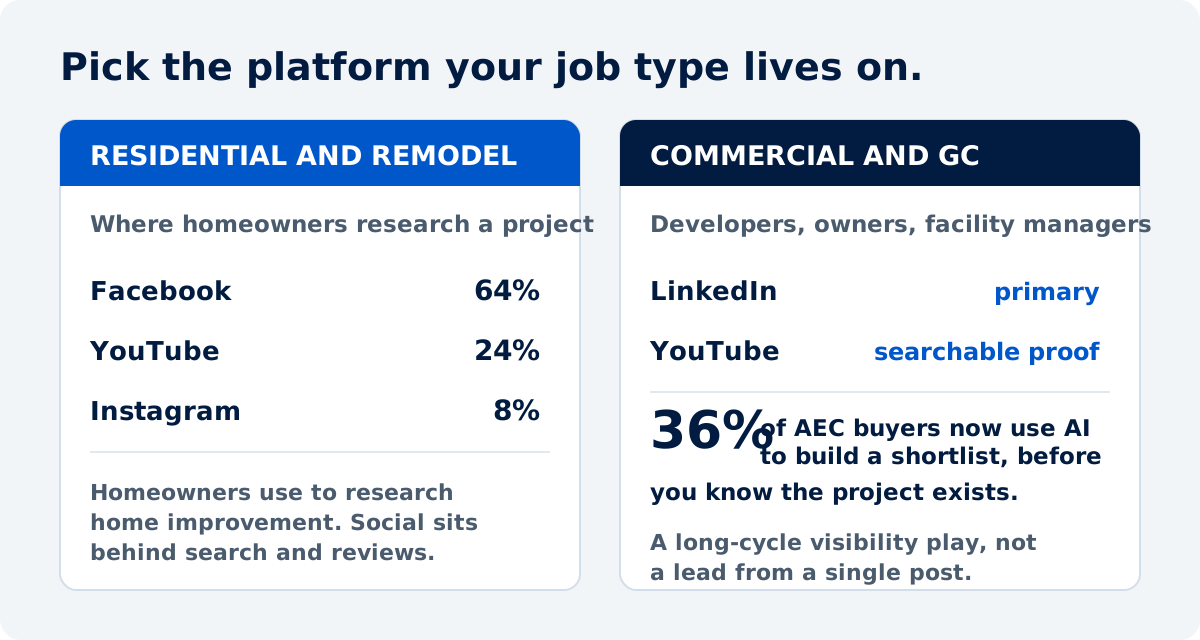
Pick the platform your job type actually lives on, not the one with the most users. For construction companies, that decision splits cleanly between residential and commercial work.
Residential and remodel work lives on Facebook, then Instagram and YouTube
If homeowners are your buyers, meet them where they research home projects. In Modernize's 2025 survey of more than 150,000 homeowners, Facebook was the runaway leader for home-improvement research at 64%, with YouTube next at 24% and Instagram at 8%.
One caveat keeps this in proportion. Homeowners still start on search far more than on social. In Tinuiti's 2025 Home Services study of 1,000 homeowners, roughly three times as many begin their search on Google as on a social platform, and reviews on Google carry the trust. So social sits behind search, referrals, and reviews for residential contractors. It is where a homeowner meets you and warms up, not usually where they first go looking.
For residential firms, that means Facebook for local reach and community, Instagram for the visual before-and-after, and YouTube for the walkthrough a homeowner watches at night.
Commercial and GC work lives on LinkedIn and YouTube
If your buyers are developers, owners, general contractors, or facility managers, the platform is LinkedIn, and the timeline is long. Commercial buyers watch a firm for months before a project ever reaches a bid, and the shortlist forms before you know the project exists.
That last part is measurable now. In the 2026 AEC Buyers Survey from SMPS, which polled 109 decision-makers including VPs of facilities and directors of plant operations, 36% said they now use AI tools like ChatGPT to build an initial shortlist of firms, often long before the firm knows a project is coming. To be on that list, you need a visible, specific body of published expertise, and LinkedIn plus YouTube is where it accumulates. Our guide to getting cited in AI answers covers the mechanics.
Technical specificity is what travels. A UK construction manufacturer, ISOQUICK, saw its best LinkedIn post draw 88,979 impressions by answering one precise technical question architects were searching for. It was written to be useful to a narrow, high-value audience, and that audience engaged hard enough for the algorithm to carry it.
YouTube deserves a place on both sides. It is a search engine as much as a video app, and project walkthroughs and explainers rank in Google and keep working for years. Yet only 41% of active construction firms use it, and on-page video appears on under half of construction sites, so it is a searchable proof surface most of your competitors have not claimed. The same AI shortlists and search results reward that kind of documented expertise, and firms that skip it tend to rank on Google yet stay invisible in ChatGPT and Perplexity answers.
The one job social does for the biggest contracts
For a large commercial job, be clear-eyed about the role. As one contractor on r/GeneralContractor said, "No large project, I'm speaking over a million, will ever come from an online source." That is mostly true, and it does not make social pointless. On a long, relationship-led sale, the platform's job is to keep you visible and credible during the months of consideration, so you are already a known name when the shortlist forms.
Recruiting runs across every platform
There is a second payoff that has nothing to do with winning work. In a trade short on labor, 41% of construction firms hire through social, and our construction hiring data shows how thin most firms' marketing teams are. A feed that shows your crew, your culture, and your job sites is a recruiting tool that runs while you sleep. Contractor coach Jesse Lane makes the point plainly: a feed that shows your culture gets people saying they want to work for that company.
Is posting on social media enough for a construction company?
No, and this is the difference between the firms that get leads from social and the ones that just get tired of posting.
Here is the mechanic most contractors miss. The reach you build on social media is rented, not owned. You do not control who sees your posts, and the platforms have made sure of it.
Why the reach disappears
Organic reach has collapsed. Industry benchmarks now put a Facebook business page's organic reach near 2% of followers, down from around 16% a decade ago, and Instagram sits near 3.5%. That means more than 96% of the audience you worked to earn never sees a given post unless you pay to boost it.
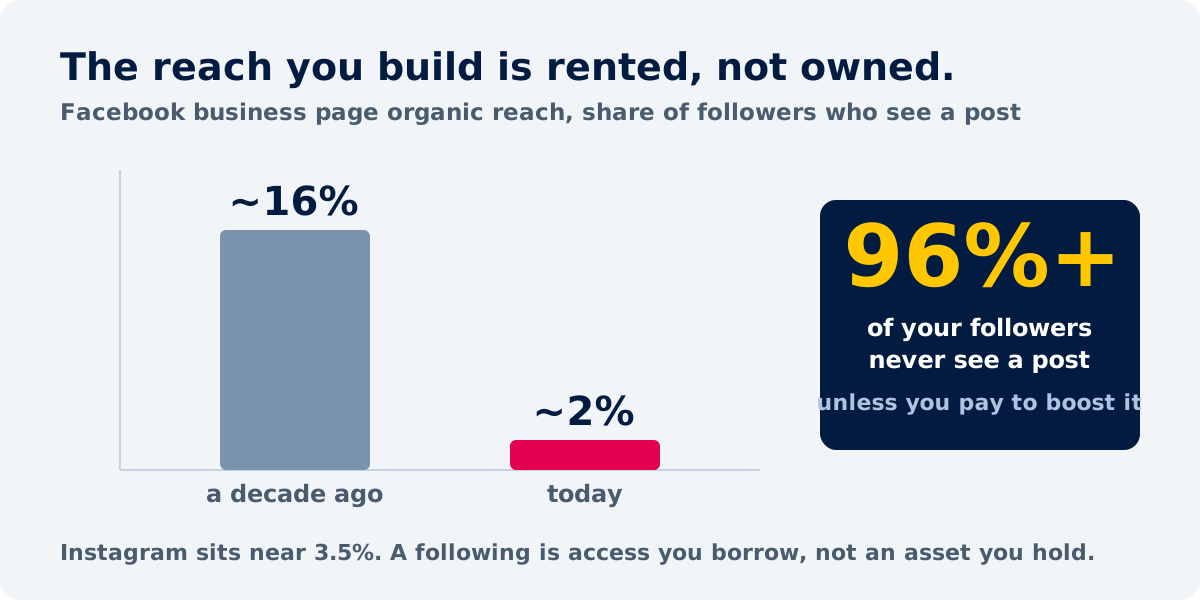
So a following is not an asset you hold. It is access you borrow, and the landlord keeps raising the rent.
The audience you own is the piece that is missing
The construction estate shows the gap in sharp relief. Distribution for most active firms means LinkedIn and little else, a single channel treated as a habit. For more than a third of firms, passive social-share buttons stand in for an actual distribution plan. And the owned layer that would fix it is thin: fewer than half run a newsletter, and only 31% run owned email, so most firms cannot reach an audience they already earned.
The tooling is not the problem. Two-thirds of construction firms own a CRM, they just do not wire content into it. They have the pipe and never connect it. A real content distribution strategy is what connects it.
Jesse Lane, who coaches contractors to a 59,000-subscriber channel, describes the fix in one move. Use a post to offer something useful, then capture the email address: "Give them something for free and then they give you their email address, then you can be like, hey, you checked out this thing, do you want a project done?" The post is rented reach. The email list is the audience you own. One feeds the other, and our guide to email marketing for construction companies covers what to send once you have it.
That is the whole reframe. Posting fills a feed. A system moves people off the feed and onto a list you control, so your reach survives the next algorithm change. It is the same logic behind our approach to content distribution.
What should construction companies post on social media?
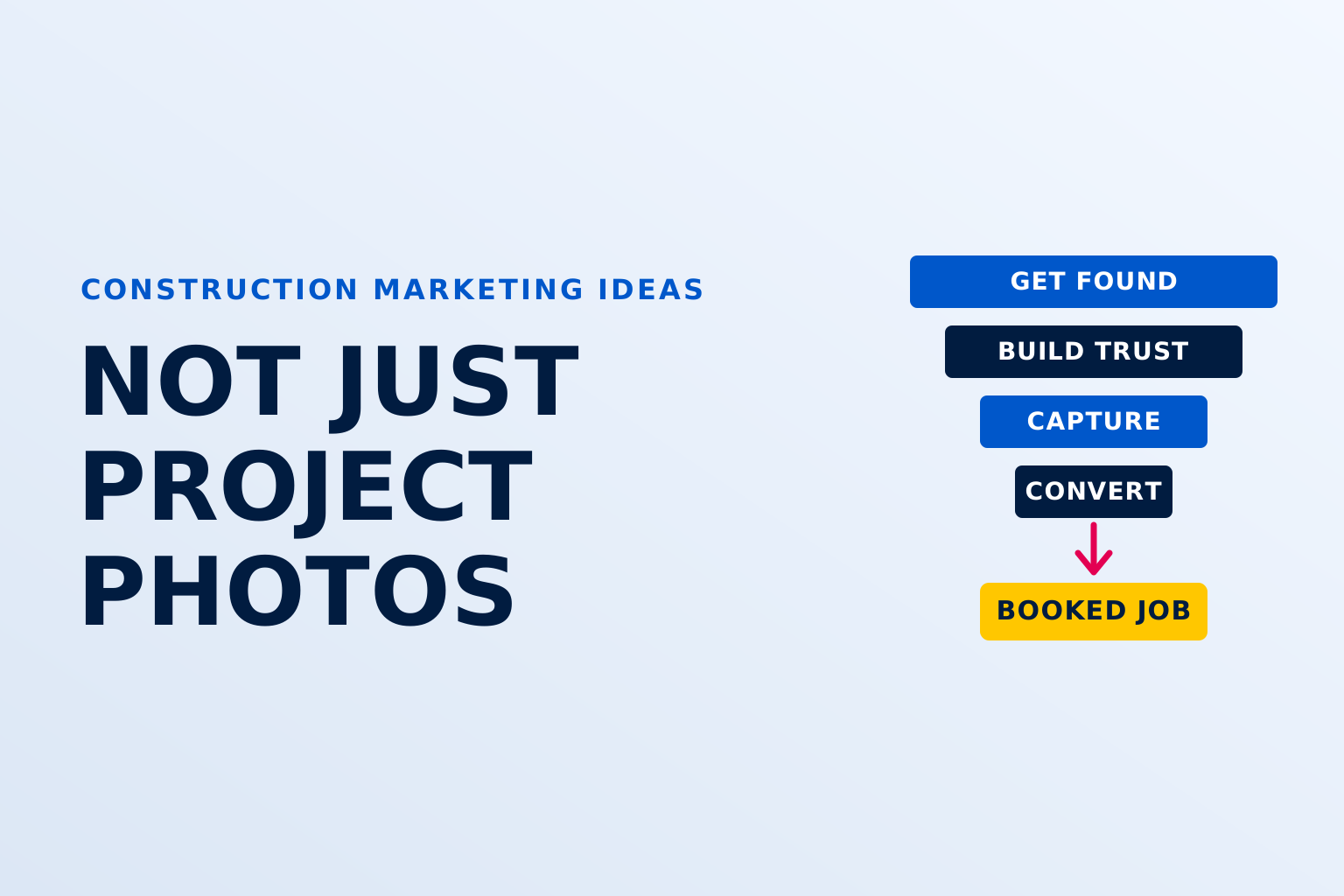
Post proof, tied to a purpose, from the work you are already doing. The goal is not a full content calendar; it is a repeatable habit that survives a busy crew. For more formats beyond the feed, see our list of construction marketing ideas that are not just project photos.
Proof of people and process beats a wall of finished photos
The most common mistake is a feed of nothing but completed projects. Jesse Lane sums it up: "People don't connect with drywall, bro. People connect with people." Show the crew, the problem you solved, the reason a detail matters. A thirty-second clip explaining a tricky pour does more than a polished after-photo, because it proves expertise instead of just showing a result.
Format helps here. Short video and before-and-after content pull more reach than static photos, and video is still rare in construction; on-page video appears on under half of construction sites, so it is an easy edge.
A capture habit, so you never run out of ideas
The real blocker is supply, not ideas. One contractor managing a firm's account on r/DigitalMarketing said it well: "ideas run short, and it's hard if you're not constantly at the sites."
Fix it at the source. Make capture part of the job, not a separate marketing task, the same way we approach extracting raw assets from your team:
Ask project managers and superintendents to shoot a few photos and one short clip on every site visit.
Bank the raw material in one place, so a slow week has something to post.
Turn one visit into several posts: the problem, the method, the result, the crew.
Post for the person who hires you
Aim the content at your buyer, not at your peers. A sharp tactic from the same thread: a general contractor's audience is often the people who refer the work, so feature them. "Realtors are a huge referral source, so feature one per week. Work backwards from the end goal. You want people who might hire your client, so speak to them." For a commercial firm, that means content aimed at developers and facility managers, not other builders.
How do you turn social media followers into construction leads?
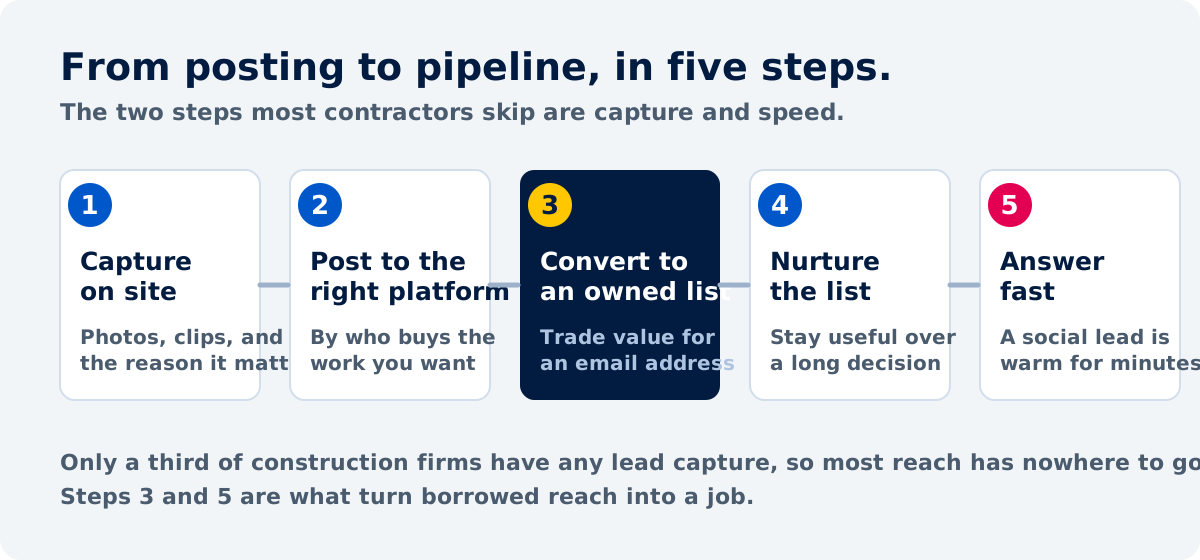
Followers become leads when you add the two steps almost every contractor skips: capture and speed. Reach on its own does nothing. A five-step loop turns it into pipeline.
Capture on site. Collect the photos, clips, and short explanations while the work is happening.
Post to the right platform. Residential proof to Facebook and Instagram, technical proof to LinkedIn and YouTube.
Convert reach into an owned audience. Offer a reason to hand over an email, a project guide, a quote, a spot on a short list of homeowners you notify, and add it to your list.
Nurture the list. Stay useful over the months a buyer takes to decide, so you are the name they already trust.
Answer fast. When a lead raises a hand, respond immediately.
The capture step almost nobody builds
This is where most construction firms leak. Only a third of construction firms have any lead capture on their site, and fewer than half use contextual calls to action. Half the reach they earn has nowhere to go. A post that ends at a like is reach spent for nothing; a post that ends at an email is reach banked. Our walkthrough of lead capture and qualification shows how that step gets built.
There is idle proof to reuse here too. As one contractor observed, most firms have "50 to 200-plus five-star reviews, but none of them are actually using those reviews when they're sitting at the kitchen table giving estimates." The reviews you already earned belong in your posts, your emails, and your bids, not just on a profile.
Why speed decides whether the lead survives
The last step is the one that kills the most deals. In Harvard Business Review's study The Short Life of Online Sales Leads, companies took an average of 42 hours to respond to an online lead, and 23% never responded at all. A social lead is warm for minutes, not days.
Contractors see it firsthand. On the r/marketing thread where an owner spent over $7,000 on marketing and landed zero jobs, the diagnosis from another marketer was blunt: the leads "don't sell themselves," and if you miss the call, your odds of ever reaching that customer drop hard. Marketing sends the lead. Only you, fast, turn it into a job. A clean lead handover process and steady nurture of the list you already have are what keep that window open.
How much should a construction company spend on social media, and should you hire an agency?
Match the spend to your stage. Social media marketing for construction companies runs from nearly free to a full agency retainer, and the right number depends on how much of the work you can carry yourself.
The three cost tiers
Do it yourself: roughly $0 to $200 a month. Your phone, a scheduling tool, and one to three posts a week. Jesse Lane's advice for starting out is exactly this: one to three posts a week, batch-filmed so a busy month does not break the habit.
Freelancer or part-time help: about $500 to $3,000 a month. In Demand & Convert's 2026 pricing for blue-collar contractors, freelance social runs $25 to $150 an hour, or a $500 to $3,000 monthly retainer for regular posting and reporting.
Agency: roughly $2,000 to $10,000 a month. Contractor-specific agency pricing tiers from basic curation around $1,500 to $2,000, up to full-service with site visits at $3,500 to $5,000 and beyond. Percepture, a construction marketing agency, lists social packages from $2,500 a month.
To see how your current spend and output compare with other construction firms, run your numbers through the construction marketing benchmarking tool.
When each one is the right call
Start in-house. If your crew can capture proof on site and someone can post a few times a week, you keep the cost near zero and learn what your buyers respond to before you pay anyone.
Bring in a freelancer when the posting is slipping because you are too busy to keep it up. That is the most common failure, and a reliable part-timer fixes it cheaply.
Hire an agency when social is one channel in a larger system, running alongside search, email, and paid, and you need the whole thing to work together. Interview more than one, and ask for the deliverables and the timeline in writing before you commit. The trade-offs mirror the wider in-house vs outsourced comparison, and our construction industry page shows how we approach it for builders specifically.
Whichever you choose, do not buy more posting. The content you already produce, your projects, your crews, your reviews, is worth more than another feed of photos. Give it a job as revenue infrastructure: a system that turns proof into an owned audience and an owned audience into pipeline. That is the difference between spending on social media and building with it, and the State of Content Marketing for Construction 2026 shows how few firms have made that move yet.
Ready to turn borrowed reach into construction pipeline you control?
Our content revenue audit maps your social and owned channels against the buying decision, finds where the reach leaks, and puts a number on the audience you should own.
Frequently Asked Questions
About the Author

Founder & CEO, Content RevOps
Stefan Kalpachev is the founder and CEO of Content RevOps, where he helps B2B SaaS companies transform their content into predictable pipeline. With a background in content marketing and revenue operations, Stefan has developed a unique methodology that bridges the gap between content creation and revenue generation.
Connect on LinkedIn