Email Marketing for Construction Companies
Want to see how your construction firm's owned channels stack up before you send a single email? Start with a content revenue audit.
Book a CallEmail is the one marketing channel a construction company owns outright, and most firms leave it idle. Under a third of construction companies run email at all. Fewer than half of the ones that publish anything send a newsletter. Meanwhile the same firms pay Google, Thumbtack, and Angi for leads that stop the day the spend stops.
Part of The Complete Guide to B2B Demand Generation Strategy.
This guide is about using the audience you already earned. Not building a list from scratch, not a new ad budget, just mailing the people who already know you, on a simple schedule, with content they actually want. It answers the questions construction owners and marketers ask when they decide whether email is worth the effort: who is on the list, what to send, how often, how to stay out of spam, and how to tell if it is working.
Why is email the one marketing channel a construction company actually owns?
Most construction lead generation is rented. You pay a platform, leads come in, and the moment you stop paying, they stop. Email is the opposite. You own the list, you reach it for free, and it does not disappear when a budget meeting goes the wrong way.
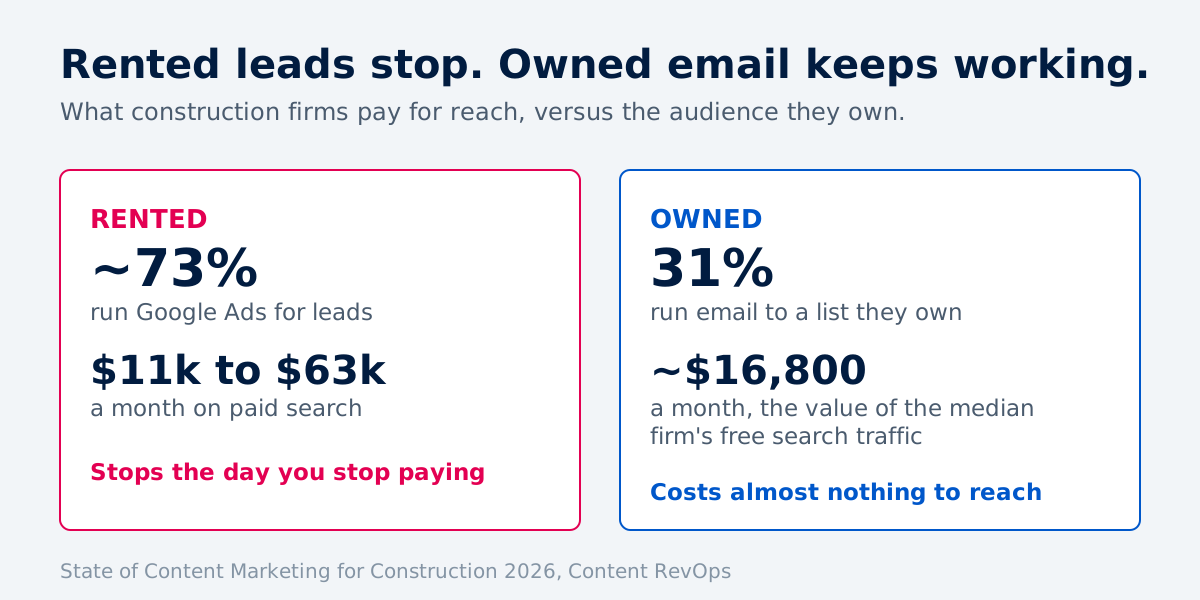
The rented side is where most construction firms spend. In our analysis of construction companies, around 73% run Google Ads, and their paid search bills land somewhere between roughly $11,000 and $63,000 a month. The average click costs about $6.24, and a click is not a customer. That is real money for attention you are renting by the hour.
Contractors feel the burn. One owner on Reddit described spending over $7,000 on marketing with nothing to show for it, across ads, flyers, and word of mouth. Another called lead-platform pricing what it is: the leads "rarely play out, and the prices they charge for these leads are sometimes ridiculous." A third had spent $180,000 in a year and then dropped his agencies.
Now put a number on the owned side. The median construction firm's free search traffic would cost about $16,800 a month to rent through ads. That is the value of an audience you own instead of rent. Email works the same way. Once someone is on your list, every message you send costs close to nothing and reaches them directly, with no algorithm in the middle and no per-lead fee.
That is the whole case. Rented channels stop when you stop paying. Email keeps working, and it is the cheapest owned channel a construction company can stand up.
How many construction companies actually use email?
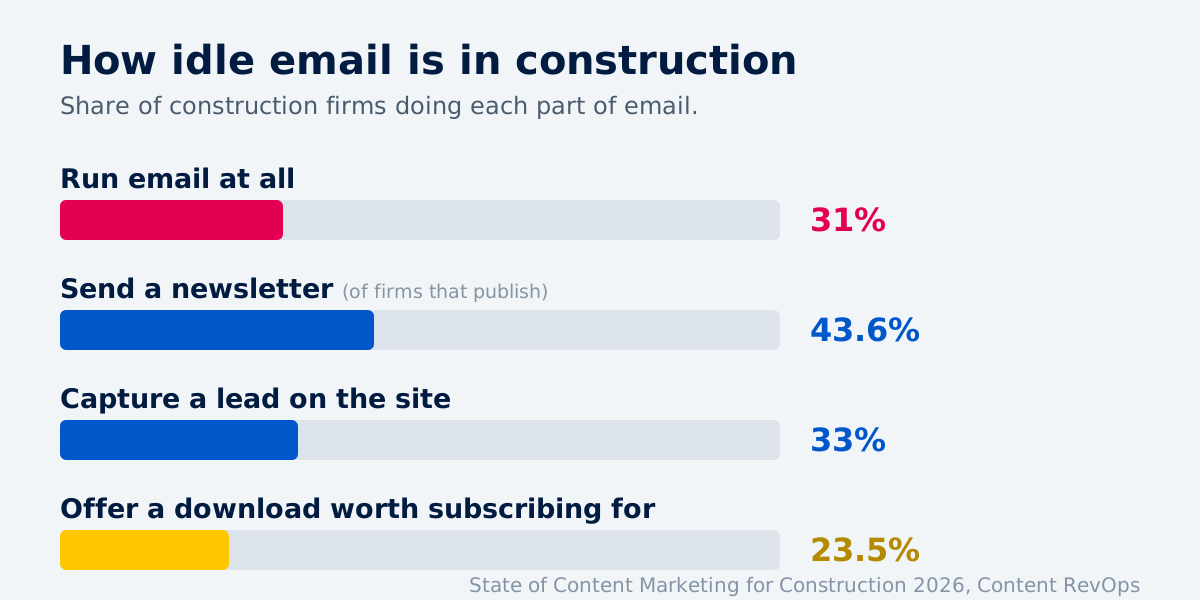
Not many, and that is the opening. Only about 31% of construction firms run owned email. Roughly two in three cannot reach an audience they have already earned, because they never set up a way to email it.
It gets thinner from there. Among construction firms that publish content at all, only 43.6% send a newsletter. Fewer than half of the active group mail their audience on any regular basis. Most lean on rented reach instead, posting to platforms they do not control.
Two more numbers show how early the whole channel is:
- Only about 33% of construction sites capture a lead at all, and where capture exists it is usually a bare newsletter signup with no reason to join.
- Only 23.5% publish a downloadable worth handing over an email for, like a checklist or a cost guide.
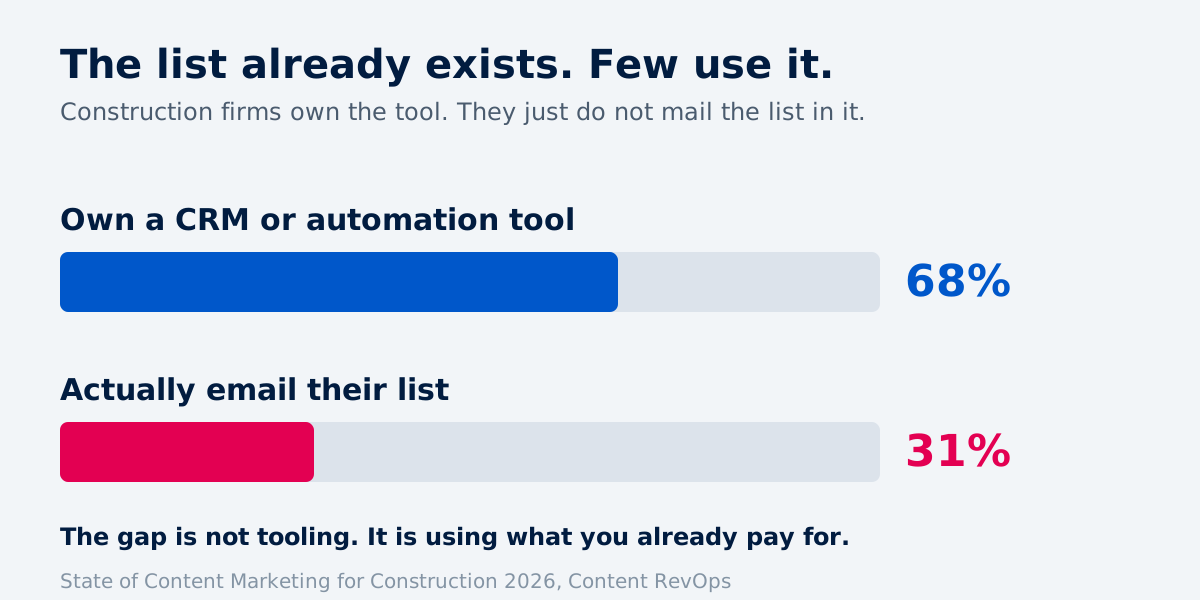
Here is the part that matters. This is not a tooling problem. Around 68% of construction firms already own a CRM or automation tool; they just do not wire content into it. Close to three in ten sites are digital brochures sitting on a content estate that is ready to activate.
So the list you need is not something to go build. For most firms it is already sitting in the CRM or the invoicing software you already pay for. The next question is who is on it.
Who is already on your construction email list?
Your construction email list already exists. It is the pile of names in your accounting software, your project management tool, and your old estimates. You do not start from zero; you start by collecting what you already have.
Practitioners say the same thing. One contractor-marketing channel, Rapid Result Creators, puts it plainly: most contractors have "a list of past clients from 5 years, 10 years" sitting in their bookkeeping software or on their phone, and the whole job is to collect those emails and re-engage them. A remodeler on Reddit gives the same advice to a peer: "Do you collect email addresses for all of your leads? Maybe do an e-newsletter to past clients."
And the people on that list want to hear from you. This is the fear that keeps contractors from sending anything, the worry that a newsletter is annoying. A homeowner on Reddit answered it directly:
I've used contractors for a few things in my home. I'm surprised they don't advertise to me otherwise. I wouldn't mind receiving a monthly newsletter talking about a variety of different services I could receive. Nobody is trying to sell me this stuff.
Nobody is mailing them. That is the gap. Who sits on your list, and what email does for them, depends on the kind of construction work you do.
Residential contractors and remodelers
Your list is homeowners, past clients, and referral sources like realtors and interior designers. The job of email here is to stay on the fridge until the timing is right.
Home projects run on long, quiet decision cycles. A homeowner who liked your bathroom remodel might call about the kitchen in two years, not two weeks. Another homeowner on the same thread described exactly the trigger: he wanted a simple reminder he could "put on my fridge and call when I had the $20k to blow on a job." A monthly email is that fridge magnet. It keeps you in mind through the long wait, so when the money and the motivation line up, you are the name they already trust.
Commercial and general contractors
Your list is developers, architects, general contractors, project managers, and the subs you work with. The job of email here is to stay on the bid list and top of mind for the next project.
These are longer relationships with repeat buyers. A quarterly update on a project you completed, a note on a capability you added, or a case study on a job like theirs keeps you in the running for work that gets awarded on relationships and track record.
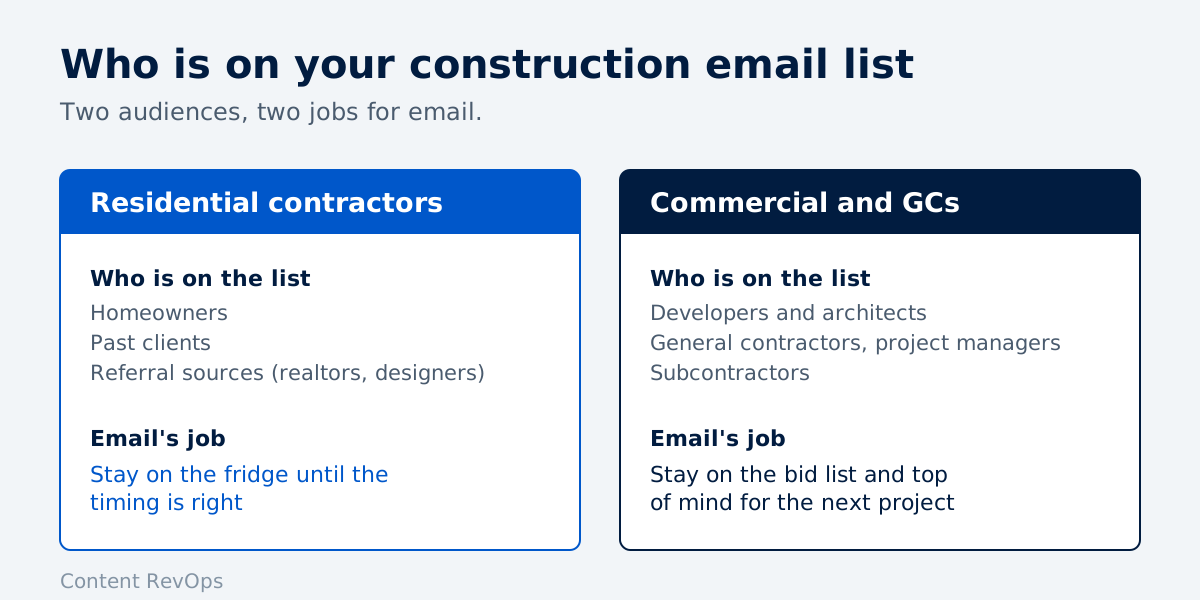
The reason to split the list is that the two audiences care about different things, and construction firms almost never make that split. Barely one in eight tailor the message to where the buyer is, and only about 30% run any content built for a specific audience. Sorting your list into homeowners versus commercial contacts, and mailing each what it cares about, puts you ahead of most of the field with one afternoon of work.
What should a construction company send in its emails?
Send things that are useful first and promotional second. A good rule of thumb is the 80/20 rule: about 80% of your emails help the reader, and about 20% ask for something. Help builds the trust that makes the occasional ask land.
For a construction company, the useful 80% is easy to source from work you already do:
- Project highlights and before-and-afters. A photo of a finished job and a line about what made it tricky. This is proof of quality without a sales pitch.
- What-to-expect explainers. Timelines, permits, material choices, and what really drives cost. These set expectations and answer the questions buyers are worried about but rarely ask.
- Seasonal planning reminders. A spring note about booking summer work, a fall note about beating the winter rush.
- Company updates. A new crew, a new service, a certification. Short, human, occasional.
The 20% ask is the direct part: you are now booking fall projects, you have an opening next month, you are offering a free estimate.
Example subject lines
Keep subject lines short and specific. A few that fit a construction list:
- Before and after: a kitchen we just wrapped
- What a bathroom remodel really costs in 2026
- Now booking fall projects (a couple of slots left)
A simple welcome email to copy
The first email someone gets after joining should welcome them, tell them what to expect, and give one useful thing. Welcome emails are the best-performing message you will send. In GetResponse's benchmark data, they earn roughly twice the opens and about four times the clicks of a regular newsletter, because the person just chose to hear from you and you are top of mind.
Here is a plain version you can adapt:
Subject: Thanks for reaching out to [Company]
Hi [First name],
Thanks for getting in touch. We build and remodel homes across [area], and we like to keep the people we meet in the loop with the odd useful tip and a look at recent projects.
To start, here is a short guide on what a remodel really costs and where the money goes: [link].
When you are ready to talk about your own project, just reply to this email. No rush.
[Name], [Company]
After the welcome, a short nurture sequence carries the relationship: a recent project and the lesson from it, a plain explainer on cost or timeline, then a proof email built around a review or a finished job, spaced a week or two apart. It runs on autopilot, so you write it once instead of every month. One practitioner calls this escaping the "hamster wheel" of writing a fresh email each time, setting up an evergreen drip that every new subscriber moves through automatically.
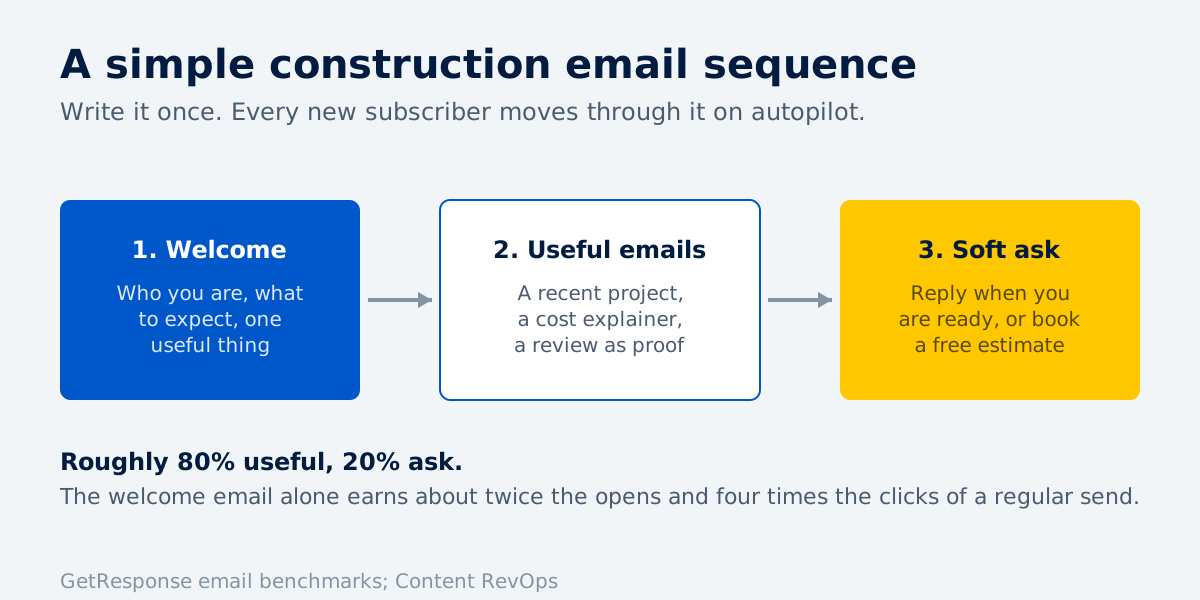
We are building a full construction welcome-and-nurture sequence template to go with this guide. For now, the structure above is enough to start: one welcome, a few useful follow-ups, one soft ask.
How often should a construction company send emails?
Once a month is enough for most construction companies. Consistency matters far more than volume. A steady monthly email that shows up when people expect it beats three emails in one week followed by six months of silence.
The fear of sending too much is what keeps most firms at zero. It is misplaced. The honest reason construction email sits idle is not that customers hate it; it is that nobody likes writing, as one contractor-marketing channel admits. The evergreen sequence solves the writing problem, and the homeowner who would happily take a monthly newsletter settles the annoyance problem.
Long construction decision cycles reward showing up steadily, not often. You are not trying to close a sale in an email. You are trying to be the name they remember when the project finally starts.
How do you keep construction emails out of the spam folder?
Getting into the inbox comes down to three things: prove the email is really from you, make it easy to unsubscribe, and keep your list clean. Since February 2024, Google and Yahoo treat these as requirements, not suggestions.
Authenticate your domain
Authentication is how the inbox knows an email claiming to be from your company is actually from your company. There are three pieces, and you set them up once:
- SPF lists the services allowed to send email for your domain.
- DKIM adds a tamper-proof signature to every message.
- DMARC tells inboxes what to do with mail that fails those checks.
Google's sender guidelines and Yahoo's sender best practices both require SPF and DKIM for everyone, and add DMARC for bulk senders who send more than 5,000 messages a day to Gmail. Most construction firms send nowhere near 5,000 a day, so the strictest rules may not bind you yet. Set all three up anyway. They are the bar the whole inbox is now judged against, and your email service provider usually handles most of it for you.
Make unsubscribing easy
Marketing emails now need a one-click unsubscribe, and you have to honor it within two days. This sounds like a way to lose people. It is the opposite. An easy unsubscribe keeps unhappy readers from doing the thing that really hurts you, which is marking the email as spam.
Keep the list clean
Google and Yahoo both want your spam complaint rate under 0.3%, and Google says to aim under 0.1%. The way you stay there is list hygiene: remove addresses that bounce, and stop mailing people who never open or click. Only mail people who asked to hear from you. A clean list of people who want your email is worth far more than a big list that keeps triggering spam filters.
How do you know if your construction email marketing is working?
Track clicks, replies, and quote requests, not just opens. Email is the one channel where you can actually connect a message to a booked job, because you own the list and the relationship. That is its measurement advantage over rented ads.
Start with a realistic bar. For construction and building-products email, an open rate of 25% to 35% and a click rate of 4% to 8% is a solid campaign. The architecture and construction category actually posts some of the strongest click-through rates of any industry, around 14.5%, second only to media. Construction email performs well when firms bother to run it.
One caution on open rates. Since Apple launched Mail Privacy Protection in 2021, Apple pre-loads the tracking pixel in an email before a human ever reads it, which registers an open that did not happen. Apple Mail is about half the market, so a big share of your reported opens are machines, not people. Clicks, replies, and conversions are unaffected, because they need a real human action.
So watch the signals that mean something:
- Clicks on the link in the email.
- Replies to the email, especially the ones asking about a project.
- Quote and estimate requests that trace back to a send.
- Booked jobs from people on the list.
This is where most construction firms fall down, and where email lets you leap ahead. Nearly everyone can measure traffic, but almost no one measures the contribution to pipeline, and only a third of firms build a clear path from content to a booked job. If you want to see how your own site stacks up against the field, our construction marketing benchmarking tool will show you.
Should you run construction email yourself, and what tools do you need?
Most construction companies can start email themselves, this month, with the list they already have. The tools are cheap and the first version does not need to be fancy.
A simple email service provider is enough to begin. Mailchimp, Constant Contact, or MailerLite all let you import your contacts, build a basic email, send a monthly newsletter, and see who clicks. If you already own a CRM, and about 68% of construction firms do, wire your list into that instead of buying more software. The gap for most firms is not tools; it is using the ones they already pay for.
Here is the honest split on doing it yourself versus getting help. Starting is a solo job. Import the list, send a useful email once a month, and you are already ahead of the two-thirds of construction firms that send nothing. What is harder to run alone is the system: segmenting the list, building an evergreen sequence, keeping deliverability healthy, and wiring the results back to booked jobs so you know what the channel is worth.
That system is the difference between occasional sends and real pipeline. It is also the job we do, giving an idle content estate a real function as revenue infrastructure rather than a brochure nobody reads. The email list a construction company already owns is the cheapest place to start that work. You can read how we help construction firms get more business from content, or you can open your CRM this week and email the list yourself. Either way, the audience is already there. Use it.
Ready to turn the list you already own into booked construction jobs?
Our content revenue audit maps your owned channels against the buying decision, finds where the pipeline leaks, and puts a number on what your idle email list is worth.
Frequently Asked Questions
About the Author

Founder & CEO, Content RevOps
Stefan Kalpachev is the founder and CEO of Content RevOps, where he helps B2B SaaS companies transform their content into predictable pipeline. With a background in content marketing and revenue operations, Stefan has developed a unique methodology that bridges the gap between content creation and revenue generation.
Connect on LinkedIn