Digital Marketing for Construction Companies: What Works in 2026
Not sure whether your construction firm's digital marketing is built to win work, or just built to exist? Start with a content revenue audit.
Book a CallDigital marketing for construction companies is the set of online channels, your website, local search and Google Business Profile, SEO and content, paid ads, video, social, email, and now AI search, that a firm uses to get found, build trust, and win bids before a buyer ever calls. Almost every construction company now runs some of it. A site is up, a few ads run, someone posts on LinkedIn.
Part of The Complete Guide to B2B Demand Generation Strategy.
So digital presence is common. Digital performance is rare.
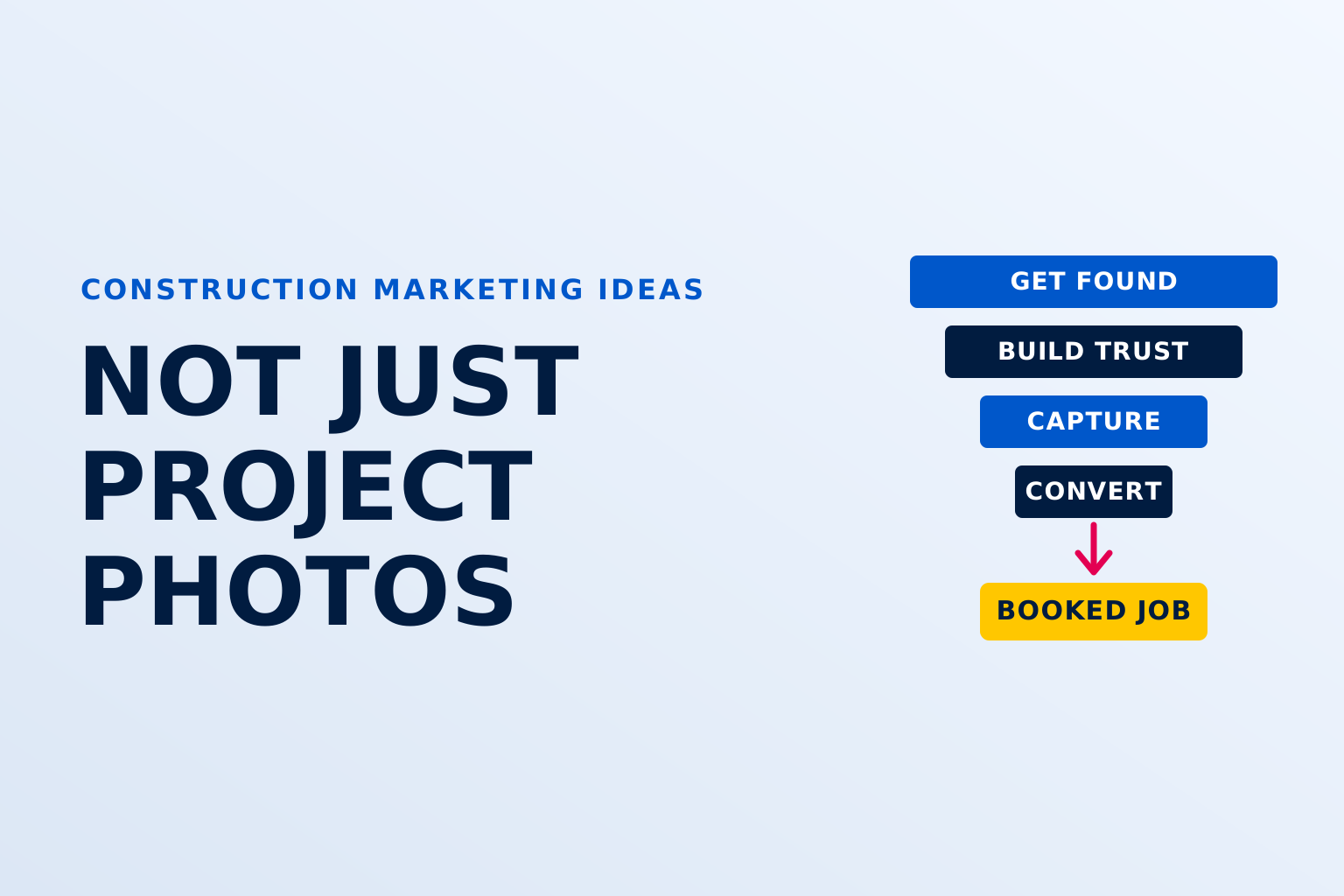
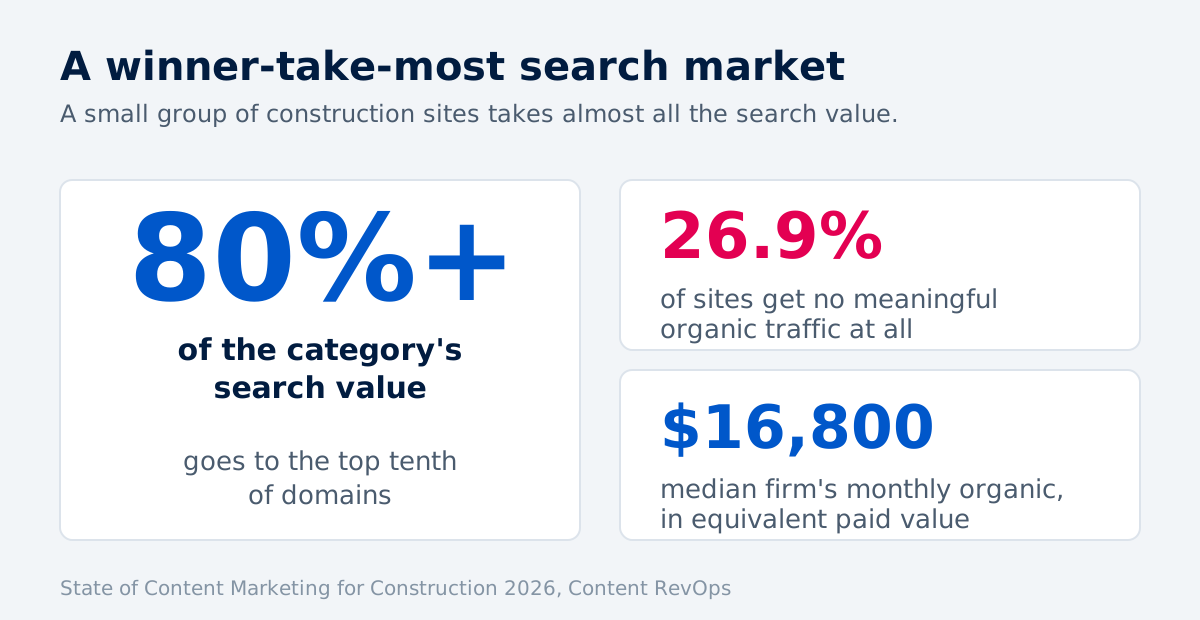
When we studied construction companies' websites for the State of Content Marketing for Construction 2026, a tenth of domains captured more than 80 percent of the category's search value, and over a quarter of sites pulled no meaningful search traffic at all. The gap between those two groups is not which channels they run. It is whether they run them as one system, with a website that converts, tracking that is wired to the sales process, and demand they own instead of rent.
This guide grades every digital marketing channel against what construction firms actually do with it, and gives you a plain order to fix them in.
What is digital marketing for construction companies?
Digital marketing for construction companies is how a firm earns attention and trust online across the whole buying journey, so that owners, developers, general contractors, and procurement teams find you, believe you, and shortlist you before the first conversation. The channels are familiar: a website, local SEO and your Google Business Profile, organic SEO and content, paid ads, video, social and LinkedIn, email, and answer engines like Google AI Overviews and ChatGPT.
The channels are not the hard part. Every construction company can buy a website and run a Google Ads campaign, and most have. The hard part is operating them together so they produce work.
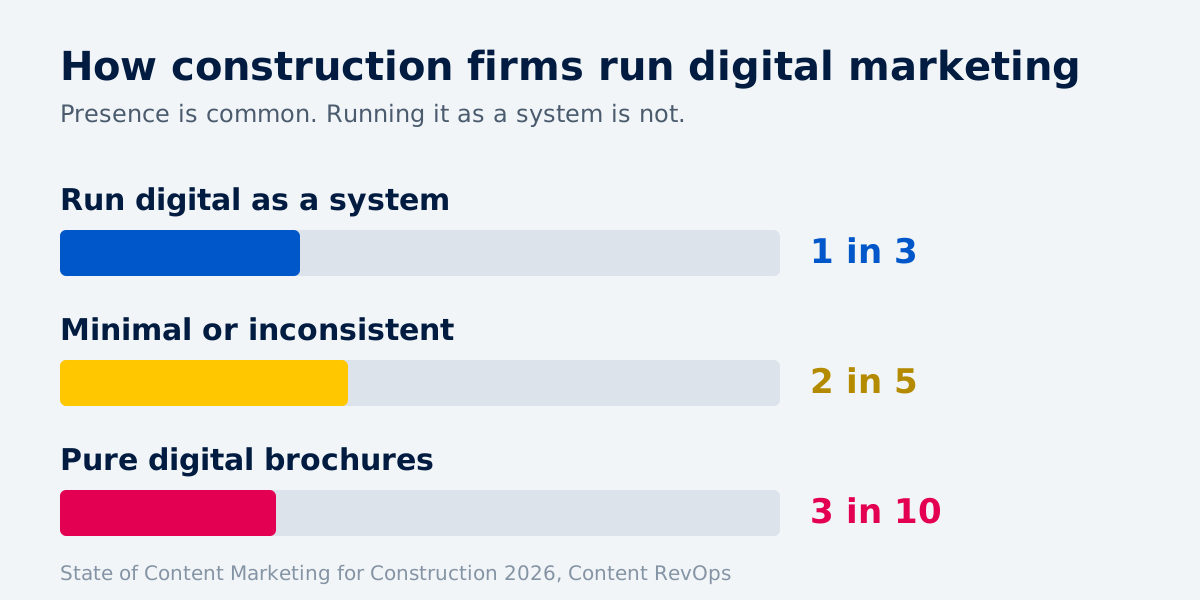
Only one in three construction companies runs its marketing as an actual operating system, according to our analysis of the category. Two in five publish in fits and starts, random acts of marketing rather than a program. Close to three in ten are pure digital brochures, a site and a contact form sitting idle. So when a construction firm asks what digital marketing is, the honest answer is that it is less about adding another channel and more about making the channels you already pay for do their job.
Does digital marketing actually work for construction companies?
Yes, digital marketing works for construction companies, and the numbers are not small. The median construction firm's organic search presence is worth roughly $16,800 a month in equivalent paid traffic, which is what that firm would have to spend on ads to buy the same visibility it earns for free. That is real money, and it compounds.
But it only works with the operating discipline behind it. This is the part the channel is not responsible for, and it is exactly where most construction firms lose the return.
The best summary of it came from a general contractor on Reddit, answering another contractor who was about to hire an agency. Digital marketing can be effective, he wrote, if you have someone dedicated to the phones and a solid sales process. If you lack either of those, it is easy to waste money. That is the whole thesis in a sentence from someone who lives it.
The data backs him. Harvard Business Review's study The Short Life of Online Sales Leads found that the average company took 42 hours to respond to an online inquiry, and nearly one in four never responded at all. The firms that answered within the first hour were far more likely to actually reach a decision-maker. A construction company can rank first, run great ads, and still lose the lead by answering slowly. The channel delivered. The system behind it did not.
The other common objection is that word of mouth is all a construction business needs. Agency owners hear it constantly; one wrote that construction clients all seem to think word of mouth is enough. Word of mouth is powerful in construction, and it is not in tension with digital. A referral almost always ends in a search. Someone hears your name, then looks you up, reads your reviews, and scans your projects before they call. Digital marketing is how you win that check, and how you turn one referral into a reputation more people can find.
Why does having a construction website not mean getting results?
Having a construction website does not mean getting results because most sites are built and then left to sit. Presence is common; performance is concentrated in a small group of firms that operate their sites, and everyone else is effectively invisible.
The maturity split tells the story. Across the construction companies we studied, one in three runs content and search as a system, two in five publish inconsistently, and close to three in ten are digital brochures with no meaningful activity at all. That distribution is why "we have a website" and "we win work online" are two different sentences.
It shows up hardest in the traffic. A tenth of construction domains capture more than 80 percent of the category's search value, and more than a quarter of sites get no meaningful organic traffic at all. This is a winner-take-most market. The firms that treat their site as an operating asset take the traffic; the firms that treat it as an online business card take none.
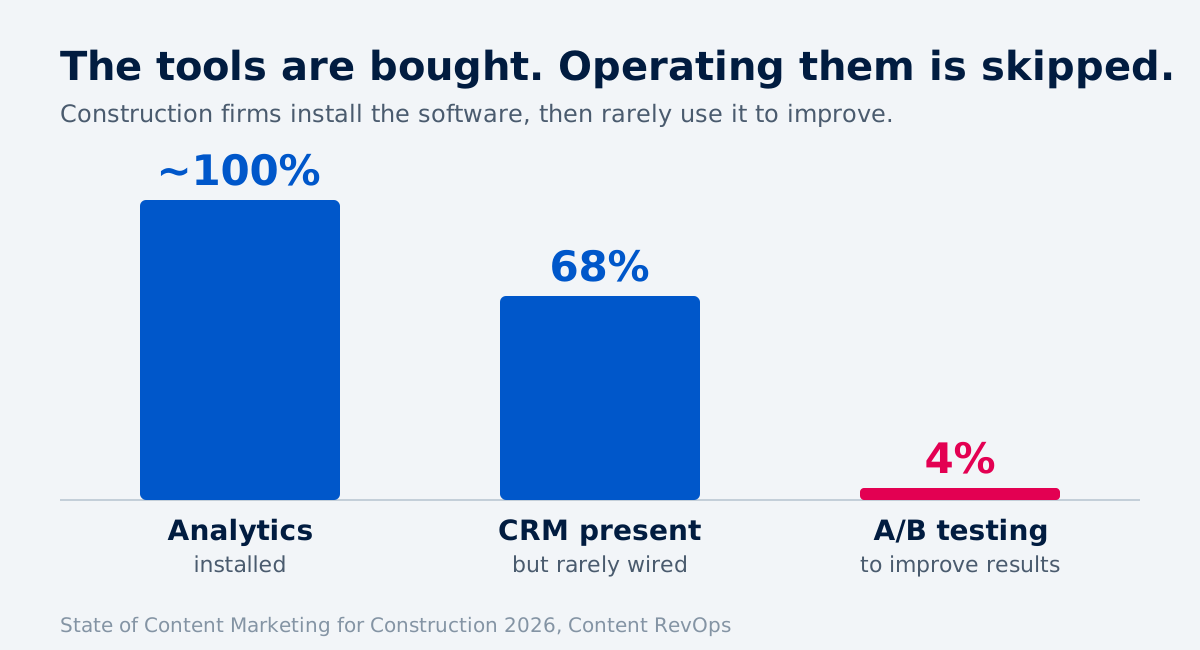
The clearest proof that the problem is operating discipline, not tooling, is measurement. Almost every construction firm has analytics installed. Almost none use it: only about 4 percent run any kind of A/B testing to improve what they publish. Two in three have a CRM, but few wire their content into it, so leads arrive and go cold. The tools are bought. Operating them is the step that gets skipped, which is the gap our guide to reporting on content marketing is built to close.
Which digital marketing channels work for construction companies?
Every major channel works for construction companies when it is operated well, and each does a specific job. The most useful way to sort them is by what you are paying for. Some channels rent demand, so the leads stop the moment you stop paying. Others build an asset you own, so they compound. Here is each channel, what it is for, and where construction firms actually stand on it.
Your website, the hub every channel feeds
Your website is where every other channel sends its traffic, so a leaky site wastes all of it. This is the first place to be honest about performance. Only a third of construction sites give a visitor a strong path from reading to a commercial next step. An equal third publish with a weak path or none, a polite dead end.
The gaps are specific and fixable. Case studies, the proof buyers most want to see, sit on only 38 percent of sites, and usually parked away from the decision moment instead of driving it. Pricing information, which high-intent buyers use to qualify you, appears on only 38 percent. A construction website that shows real projects, names the work, and makes the next step obvious is doing more than most of the field.
Local SEO and your Google Business Profile
Local SEO and your Google Business Profile decide whether you show up when a buyer searches for a builder near them, and for a large share of construction work, that search is the whole game. A survey of more than a thousand residential homeowners found a search engine is the single most common place they research a contractor, ahead of the directories, and that most decide after only an hour or two of looking. The window is short, so you have to be visible and credible when they look, not a week later.
Reviews are the trust signal that closes it. In a survey of 400 homeowners, 91 percent called online reviews important when choosing a contractor, and most read them on Google. Commercial construction buyers check the same thing in a different form, through references, certifications, and case studies rather than star ratings, so the principle holds across the industry: the proof has to be real. One homeowner described hiring a contractor with plenty of ads and good reviews, then discovering most of the reviews were his family. He went back to word of mouth for good. Fake or thin proof does not just fail to help; it destroys the trust the channel exists to build.
SEO and content, the demand you earn
SEO and content are how you get found by buyers who are not searching your name yet, and they build an asset you own rather than rent. This is the biggest open opening in construction. Three quarters of the search value in the category, 75 percent, sits at the bottom of the funnel, on people already looking to buy. Only 17 percent of construction search value is top-of-funnel, the educational content that creates demand before a buyer is ready.
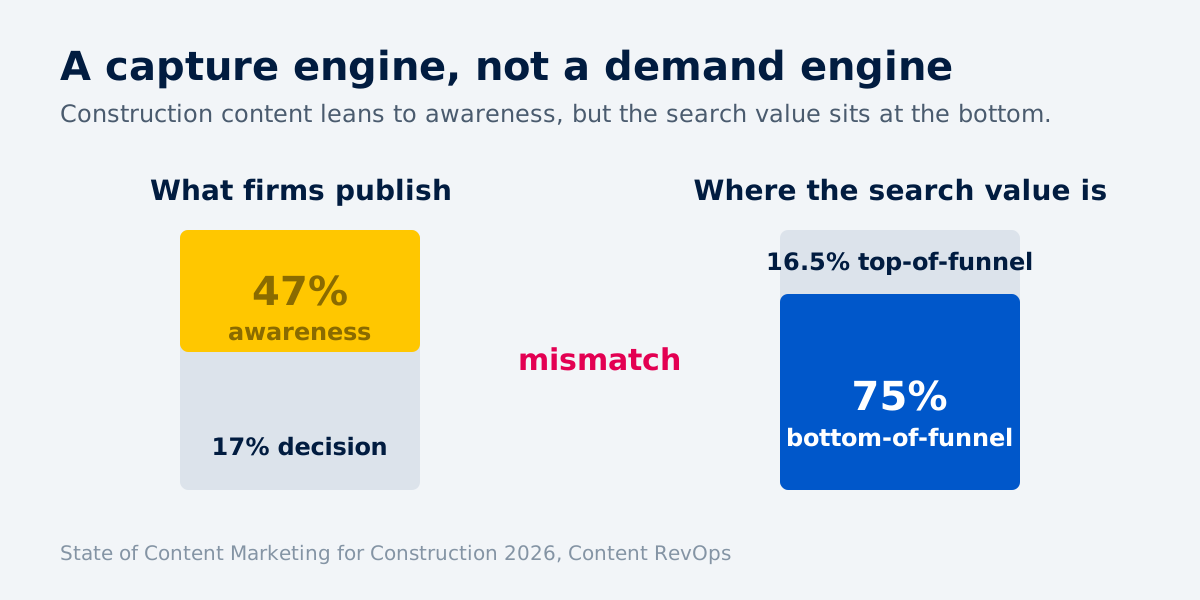
That imbalance means the industry runs a demand-capture engine, not a demand-generation one. It fights over the buyers already searching and ignores the far larger group forming an opinion earlier. The firms that publish the educational content, what a project costs, how to choose a delivery method, what a code change means, own the buyer before the shortlist forms. For the full picture of what strong construction content looks like, we mapped it in what good looks like for construction content.
Paid ads and Google Ads, the demand you rent
Paid ads put you at the top of the results today, and they stop the moment you stop paying. Roughly 73 percent of construction firms run Google Ads, spending an estimated $11,000 to $63,000 a month, often more than the owned asset would cost to build. At an average cost per click near $6.24, the meter runs fast.
Ads work, and they work best as speed, not as a strategy. One contractor described getting a 15 to 1 return on Google Ads for a kitchen remodeler, and in the same breath warned that you can waste a ton of money if you do not know exactly what you are doing. Use paid to capture urgent demand while your owned channels build. Do not use it as the only channel, or you are renting your entire pipeline.
Video, the format complex buyers prefer
Video is how construction buyers judge quality and competence before they meet you, and it is badly underused. On-site walkthroughs, project stories, and how-it-is-built explainers appear on under half of construction sites, 46 percent, and video ads on barely 3 percent.
The operators who commit to it pull ahead. Matt Risinger, who runs Risinger Build in Austin, has said that by the time buyers reach out, many have already made a decision after watching a couple of his videos. His Build Show channel has more than a million subscribers, and his firm's website draws three to four million views a month. That is a construction company using video to pre-sell trust at a scale no sales team could match in person.
Social and LinkedIn
Social media keeps you visible between projects, and in construction it usually means LinkedIn and little else. Among firms that distribute their content, 77 percent use LinkedIn, often as the only channel. Social shows up on 41 percent of construction marketing teams, but as a posting habit rather than a measured channel.
The lesson is not to add five more platforms. It is to treat the one you already use as a distribution system for your real content, your projects, your video, your point of view, rather than a place to post and hope.
Email, the audience you own
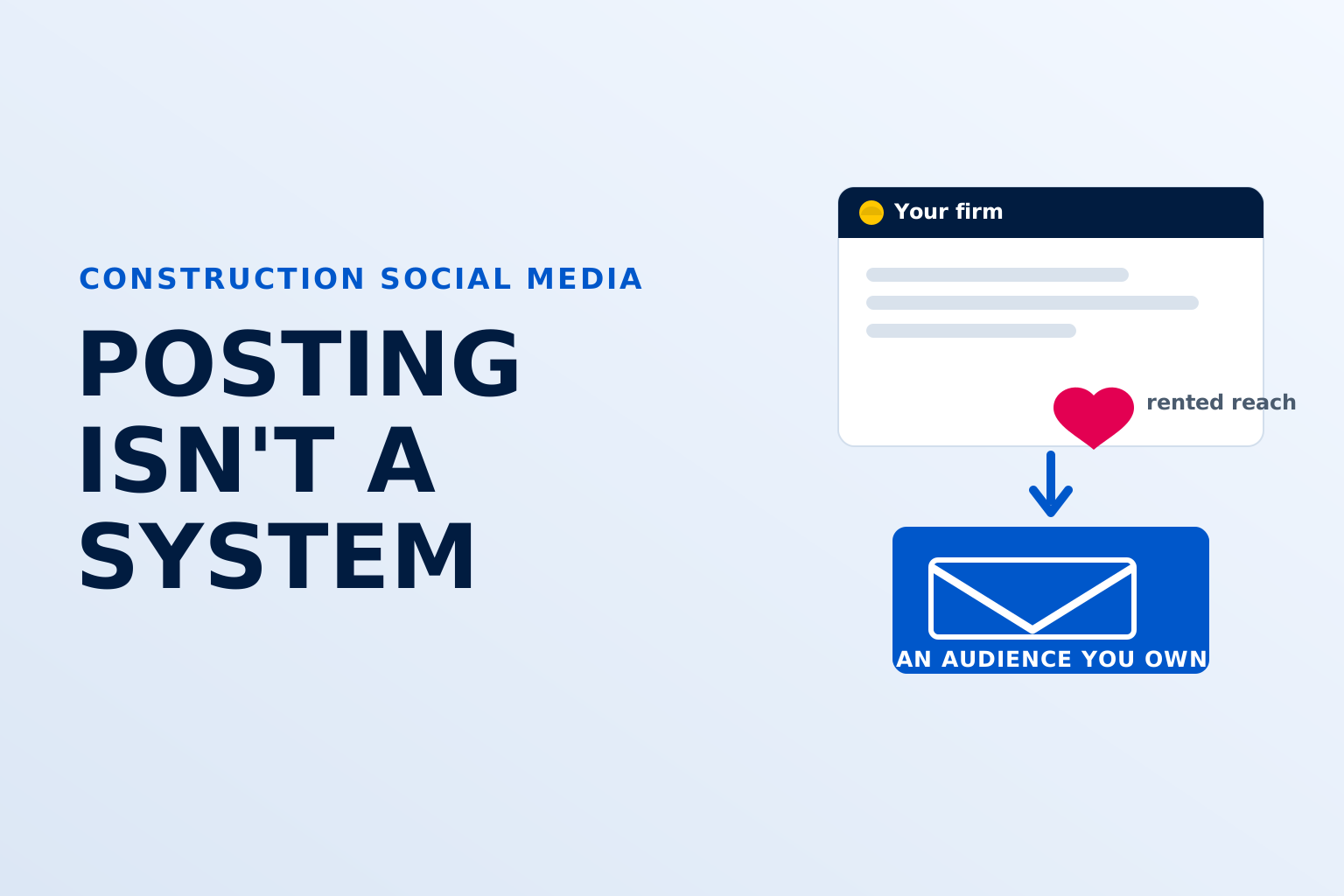
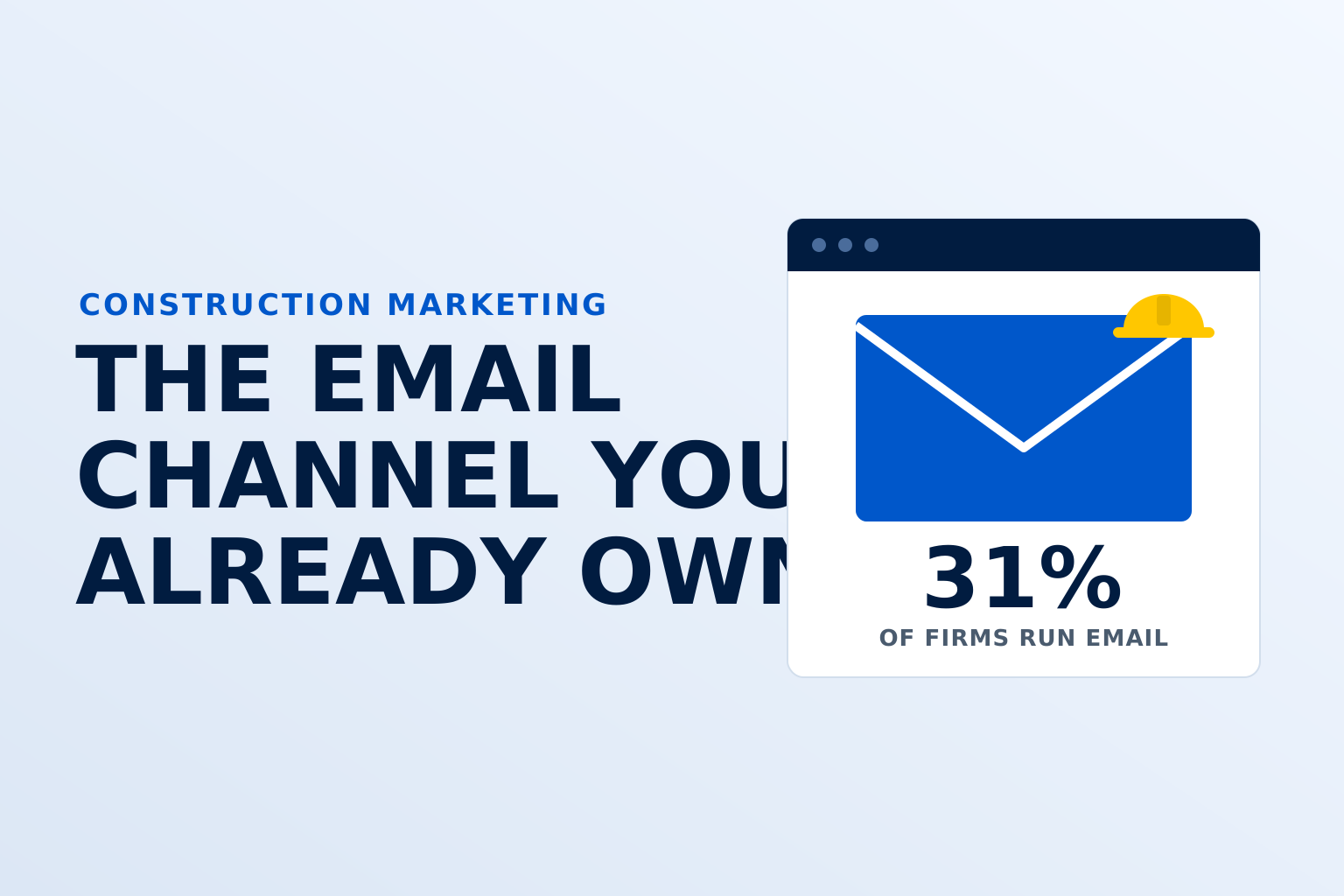
Email is the one channel where you own the audience outright, and no algorithm sits between you and them. Only 31 percent of construction firms run owned email, and newsletters appear on 44 percent of active sites. For a long-cycle business where a buyer might research for months before a project starts, staying in front of past clients and slow-moving prospects by email is close to free pipeline, and most of the field leaves it on the table.
AI search and answer engines
AI search is the newest channel, and construction firms are almost entirely absent from it. When buyers ask ChatGPT or read a Google AI Overview about construction topics, brands appear in only about 2.5 percent of answers. Aggregators, forums, and regulators own the answer layer instead, with sources like Reddit cited far more than any construction company.
That is a greenfield. The firms that publish clear, well-structured answers to the questions buyers actually ask are the ones AI will start to cite, because almost no one else is competing for the spot. Adam Cooper, who built Ascent Consulting in Atlanta after starting as an electrician, put the stakes plainly: his biggest competition, he said, is anonymity. Pillar content became the driver of his growth, and more than 90 percent of his work now comes inbound. If your firm ranks on Google but never surfaces in an answer, this is usually why.
What should a construction company fix first?
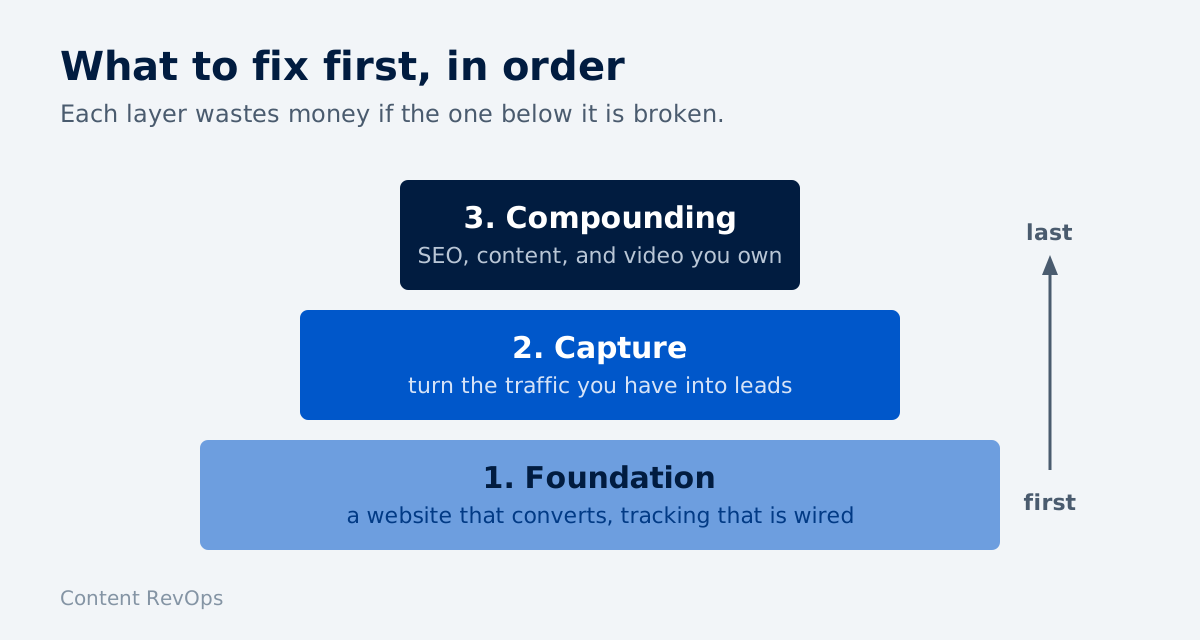
Fix your digital marketing in order, not all at once. The order matters because each layer wastes money if the one below it is broken. Fix the foundation, then capture, then compounding.
First, the foundation
Start with a website that converts and tracking that is actually wired to your sales process. Everything upstream, every ad, every search, every video, dumps its traffic here, so a leaky hub wastes all of that spend at once. This is the tools-bought-but-not-operated problem: the CRM two in three firms already own, connected to the site so leads do not go cold, and the analytics everyone installs actually used to see what works. Fix this before you spend a dollar sending more people to a site that cannot catch them.
Second, capture
Next, turn the traffic you already have into leads before you buy more. This is the cheapest lift in construction marketing, because the visitors are already arriving and leaking away; only a third of sites give them a strong path to act. Put your proof and your next step where the buyer is ready to take it. Getting more from the traffic you already have beats paying for traffic you cannot convert.
Third, compounding
Only once the foundation converts should you fund the channels that compound: SEO, content, and video that earn durable demand you own. These are the slowest to pay back and the only ones that keep paying after you stop spending. That is why the median firm's organic presence is worth $16,800 a month and climbing, while an ad campaign is worth exactly what you put in this month and nothing next month. Build the compounding layer last, on top of a foundation that can hold it.
How much should construction companies spend, and on renting or owning demand?
Construction companies should spend in proportion to their size, and split that spend deliberately between demand they rent and demand they own. As a rough guide from what we see across the industry, a firm under $10 million in revenue runs a marketing program around $8,000 a year, a $10 to $50 million firm around $35,000, a $50 to $500 million firm around $150,000, and the largest firms well into the hundreds of thousands.
The more important question is what the money buys. Paid ads buy leads today and stop when the budget stops. SEO, content, video, your Google Business Profile, and email build an asset that keeps producing after you stop paying. Michael Stone, who advises builders through Construction Programs and Results, makes the point in construction's own language: a marketing-only website is a pretty brochure, a house with just walls and a roof, and rented leads stop the day you stop paying for them.
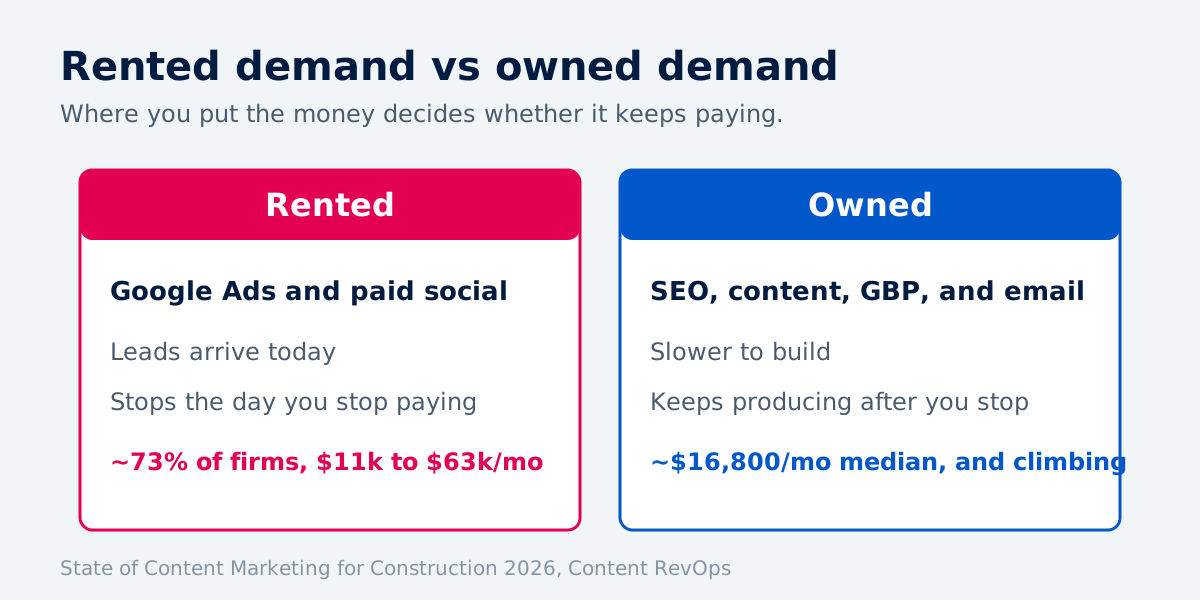
So the allocation logic is simple. Rent enough demand to keep work coming in now, and put the rest into the owned channels that lower what you have to rent next year. The firms spending $11,000 to $63,000 a month on Google Ads with no owned engine behind it are the ones renting their whole pipeline, forever.
How do you choose a digital marketing agency for construction companies?
Choose a digital marketing agency for construction companies by testing three things, because the industry is full of generalists who will sell you channels without a system. Ask each of these before you sign.
Do they run their own demand engine? An agency that cannot get itself found is not going to get you found. Original research and real content are the single biggest lever for owning a category, and only 13 percent of active construction firms publish any, so the agencies that actually do it are rare and worth finding. Our study of 1,700 demand generation agencies found the same gap on the agency side.
Do they wire tracking and conversion, not just traffic? Traffic is easy to buy and easy to show off. Ask how they connect a click to a booked job, and whether they fix your website and CRM before they sell you ads. If the answer is only more traffic, they are renting you a number, not building you a pipeline. Our list of the metrics worth tracking is a good test to bring to the call.
Do they actually know construction? Long sales cycles, multi-stakeholder bids, and trust built over months are not the same as selling e-commerce, and a plan that ignores that will not survive contact with a real buying committee.
Watch the proof, too. One homeowner learned the hard way that ads and ratings can be faked, and went back to word of mouth for good. Ask any agency for named clients and results you can verify, and use our agency selection guide to structure the conversation. You can see how we think about construction specifically on our construction page.
The channels are not the problem, and they are not the offer
Most construction companies already own everything digital marketing needs. The projects worth showing, the technical knowledge worth publishing, the reputation worth amplifying, it is all in hand. What is missing is the operating discipline that turns a presence into performance, and demand the firm owns instead of rents.
That is not another marketing project to bolt on. It is a modernization job, closer to moving your sales onto a CRM than to running a campaign. Give the channels you already pay for a real job, wire them to the sales process, and the same website, the same ads, and the same LinkedIn account start producing work instead of sitting there.
If you want to see where your own digital marketing stands, run a content revenue audit or book a call. And the full data behind this piece, the maturity split, the channel numbers, and the performance concentration, is in the State of Content Marketing for Construction 2026.
Want to see where your construction digital marketing leaks, and what it is worth?
Our content revenue audit maps your channels against the buying decision, finds the pages and ads that should convert and do not, and puts a number on the gap.
Frequently Asked Questions
About the Author

Founder & CEO, Content RevOps
Stefan Kalpachev is the founder and CEO of Content RevOps, where he helps B2B SaaS companies transform their content into predictable pipeline. With a background in content marketing and revenue operations, Stefan has developed a unique methodology that bridges the gap between content creation and revenue generation.
Connect on LinkedIn