Construction Marketing Ideas That Aren't Just Project Photos
Have plenty of construction marketing ideas but no system turning them into booked work? Start with a content revenue audit.
Book a CallThe best construction marketing idea is not another tactic. It is taking the ideas you already have, the photos, the website, the Google listing, the project you are proud of, and giving each one a job inside a content marketing system that runs from first search to signed contract.
Part of The Complete Guide to B2B Demand Generation Strategy.
Most construction marketing ideas fail for the same reason. They sit in a pile. A firm posts a before-and-after photo, runs a few ads, prints business cards, and nothing connects. One contractor spent over $7,000 on marketing across ads, flyers, and word of mouth "without landing a single job." The problem was never a shortage of ideas. It was the absence of a system to move a stranger from never having heard of the company to a booked project.
So this is a list of construction marketing ideas organized by the four jobs marketing actually has to do:
Get found by a buyer who is searching.
Build trust so they believe you can do the work.
Capture the lead so you can reach them again.
Convert and keep so the interest turns into a job, and the job turns into more.
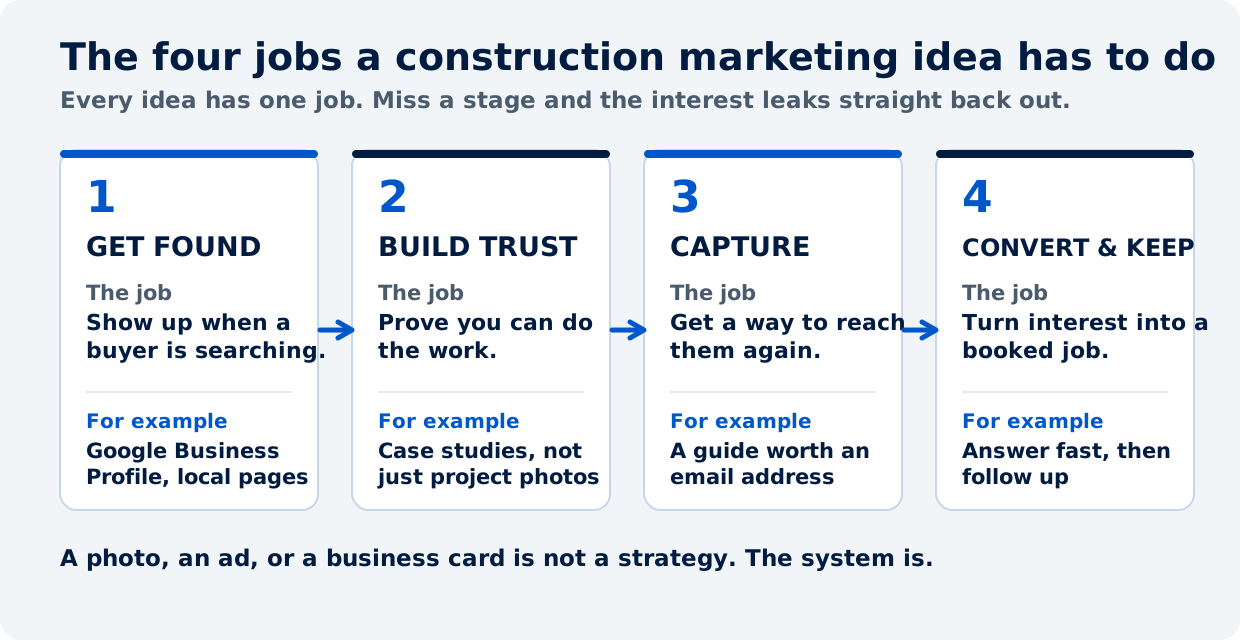
Every idea below closes with the job it does and your next step. Use the ones you are missing.
The problem isn't a shortage of construction marketing ideas
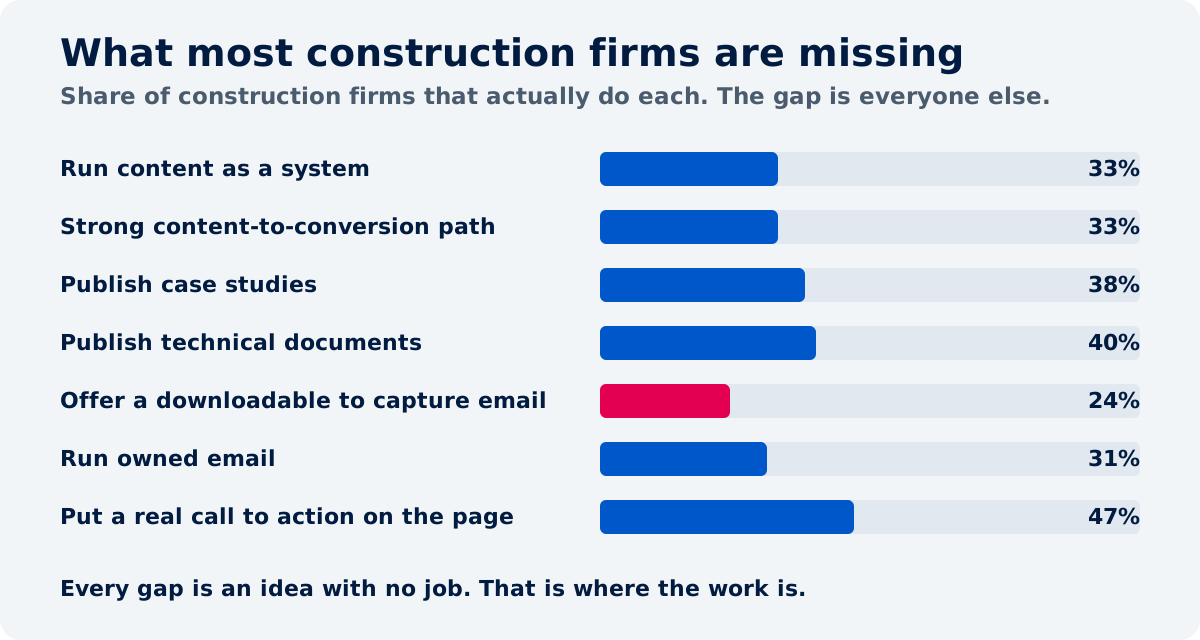
Only about one in three construction firms runs content as an operating system. For everyone else it is optional, and two in five publish in fits and starts, random acts of marketing rather than a program.
The gap shows up most at the finish line. Only a third of construction firms have a strong path from a piece of content to a commercial next step. The rest is a polite dead end. Ideas go out, and interest leaks straight back out with them. It is the same pattern our cross-vertical study of B2B content marketing finds in every industry: publishing is common, a pipeline behind it is rare.
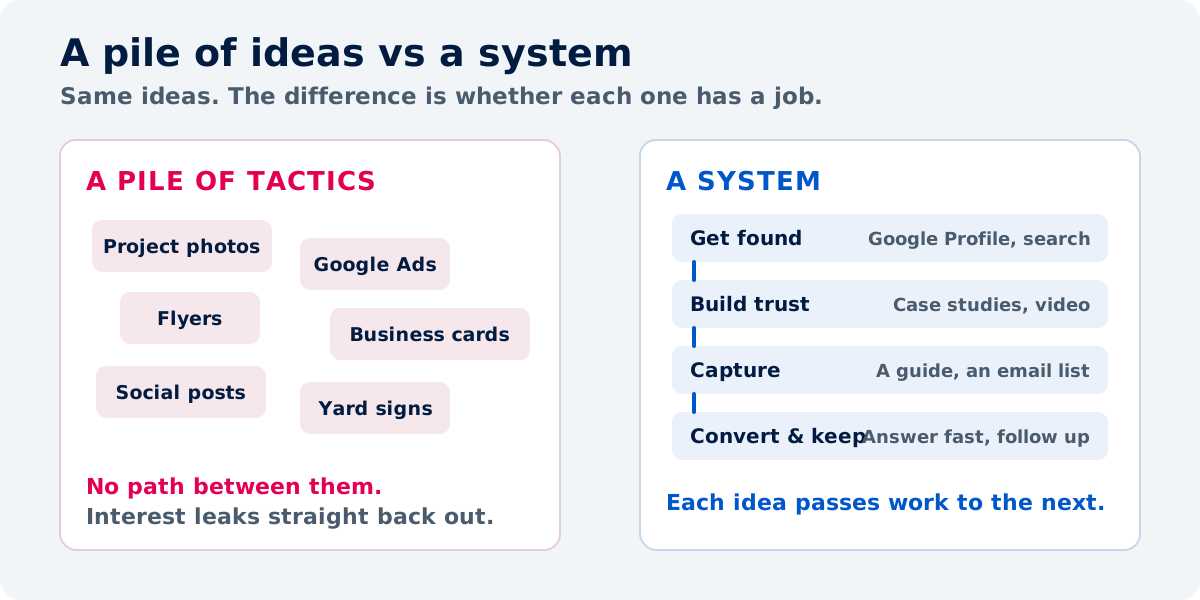
Jesse Lane, who runs a construction YouTube channel with more than 59,000 subscribers, says it plainly: "marketing is a package, it's not just one thing," and the pieces only work when "all these things are going to start tying together." The Contractor Fight, a coaching channel for trades, makes the paired point: word of mouth "is the best lead on the planet, but it's not predictable. If you are not visible then nobody can call you and hire you."
That is the whole idea behind the list. Not more tactics. A job for each one.
Construction marketing ideas that get you found
The top of the funnel is about one thing: showing up when a buyer is already looking. For residential work that means local search. For commercial work it increasingly means AI answers. These construction marketing ideas capture demand you did not have to create.
Run your Google Business Profile like a channel
For a construction firm that serves a local area, your Google Business Profile is the first door most buyers walk through. When someone searches "roofer near me," Google shows a box of three listings with a map, and 42% of local searchers click one of those three map-pack results, the single largest destination on the page. If you are not in the three, you are competing for the scraps below it.
The catch is that a half-finished profile does not rank or convert. Google's own data says a customer is 2.7 times more likely to consider a business reputable, and 70% more likely to visit it, when the Business Profile is complete.
So treat the profile as a channel you feed, not a listing you set once. Correct primary category, real service area, recent job-site photos, and reviews you ask for at the end of every job. One contractor's advice in an r/AskMarketing thread was exactly this: "google maps will be huge. Optimize your google business profile" and follow up with every customer to ask for a review.
The job it does. Puts you in front of a buyer at the exact moment they are ready to hire, for free.
Your next step. Audit your profile this week for a correct category, accurate service area, fresh photos, and a review request that goes out after every completed job.
Build service and city pages for the searches buyers actually type
A single homepage cannot rank for everything you do in every town you serve. That is why more than a quarter of construction firms get no organic traffic at all, and another 41% sit at fewer than 500 visits a month. They are published, but unfindable.
The opening is that 91.5% of construction search demand is non-branded. People are not searching for your company name; they are searching for the work. That demand is winnable by whoever actually shows up for it.
You show up by building a page for each service and each area, "tankless water heater installation in [city]," "commercial tenant improvements in [region]," so a search has something specific to land on. For commercial builders this matters more, not less; only about 30% of construction firms publish industry or use-case pages, the specificity a commercial buyer searches on.
The job it does. Turns the searches buyers already run into pages you can rank, instead of one generic homepage that ranks for nothing.
Your next step. List your top five services and your top five towns, and build a page for the combinations you most want to win.
Show up in AI answers and the places buyers now ask
More buyers now start with an AI assistant instead of a search box, and construction firms are almost invisible there. Brands surface in only about 2.5% of construction AI answers, and rarely as the cited source. Forums, aggregators, and regulators own the answer layer instead, which is exactly the pattern behind why one brand gets cited while a better-known competitor gets ignored.
For commercial construction this is already a live channel. In the 2026 AEC Buyers Survey from the Society for Marketing Professional Services, 109 decision-makers, including vice presidents of facilities and directors of plant operations, were asked how they pick firms. 36% said they had used AI tools like ChatGPT and Claude in the past year to build an initial shortlist of providers, before ever contacting a firm.
You earn a place on that shortlist the same way you earn a featured snippet: with clear, answer-shaped content that names the exact work and answers the exact question. Yet FAQ-style blocks appear on only about 15% of active construction sites, which is exactly the format AI engines lift. Our guide to answer engine optimization covers the full method.
The job it does. Gets your firm named while the buyer is still building the list, long before a project reaches the market.
Your next step. Take the ten questions you answer on every sales call and publish a clear, direct answer to each one.
Construction marketing ideas that build trust
Getting found gets you a look. Trust gets you the call. This is where project photos finally earn their keep, because a photo on its own is wallpaper. These construction marketing ideas turn the same raw material into proof a buyer can act on.
Turn projects into case studies, not just photos
A photo shows what you built. A case study shows the problem you solved. That difference is why "before and after" content wins, and it is the reframe the whole list is named for.
Case studies appear on only about 38% of construction sites, and even where they exist they are usually parked away from the decision, not driving it. A marketing pro in an r/AskMarketing thread put the fix in one line: "Your portfolio sells more than anything else... Case studies on your website build credibility. Detail the client's needs, your approach, the outcome."
Another contractor in an r/marketing thread named the common mistake: posting only "hey call us we can build your home" content instead of showing recent projects and what they took to deliver.
The job it does. Converts a look into belief by showing the problem you solved, not just the finish.
Your next step. Pick one recent project and write it up in three short parts, the constraint, what you did, and the result.
Publish the technical and code knowledge only you have
Construction firms sit on the one asset most industries would kill for, hard technical and code knowledge, and leave it dormant. Technical documents appear on only about 40% of construction sites, and regulatory or compliance content on roughly 44%. A third of active firms publish both, which is a defensible edge that a generalist competitor cannot fake, and it is one of the habits that separates the construction firms doing content well.
This is trust that is hard to copy and easy for AI answers to reward. A spec explainer, a permitting walkthrough, a "how this system is built to code" page, each one signals expertise to a buyer and to the model deciding who to cite. It skews commercial, where buyers are technical and specific, and it is the kind of thought leadership a buyer can actually use.
The job it does. Proves depth in a way photos cannot, with knowledge a competitor cannot copy.
Your next step. Turn one spec or code question you answer on every job into a single clear page.
Use short project video, not just stills
Buyers who are weighing a complex, expensive decision want to see the work move. Embedded video appears on under half of construction sites, and only 41% use YouTube at all, so a short walkthrough still stands out.
It does not need production polish. A phone-shot tour of a finished basement, a time-lapse of a pour, a 60-second client testimonial. Jesse Lane describes testimonial videos as part of the sequence that gets a buyer to "know you like you trust you before they even call you," so that by the time they do, they are already "80% sold".
The job it does. Shows craftsmanship and character in the format complex buyers prefer.
Your next step. Film one 60-second walkthrough of your next finished job, and ask that client for a short video review on the spot.
Use LinkedIn as a channel, not a habit
For commercial construction, LinkedIn is where the developers, general contractors, and facility owners are. It is also the one place most construction firms already show up, 76.9% treat it as their main distribution, but they treat it as a posting habit rather than a channel with a job.
The shift is to use LinkedIn to distribute the case studies and technical content above, aimed at the people who hire firms like yours, instead of posting "we're hiring" into the void. As one contractor put it, LinkedIn is "for B2B if you're targeting commercial projects," to connect with developers, contractors, and partners. It is one of the B2B distribution channels that rewards a steady cadence over volume.
The job it does. Puts your proof in front of the commercial buyers and partners who actually award the work.
Your next step. For the next month, post one project story or spec answer a week, written for the developer or GC you want to work with.
Construction marketing ideas that capture the lead
Getting found and building trust is worth nothing if the visitor leaves and you have no way to reach them again. This is the step almost every construction marketing list skips, and our census of construction firms shows why it matters.
Give buyers a reason to hand over an email
Most construction sites give a visitor no reason to leave contact details. Downloadable resources appear on only about 24% of sites, and real lead capture on a third. Few firms publish anything worth an email, so few have built any reason to capture a lead.
A useful resource fixes that. For residential, a cost-and-planning guide, a "what to ask before you hire a contractor" checklist, or a maintenance guide. For commercial, a spec sheet or a compliance checklist. One reply in an r/marketing thread asked the right diagnostic question of a builder's site: does it have "a landing page with a free white paper, or similar, to capture email addresses?" That is the lead capture layer most construction sites never build.
The job it does. Trades something genuinely useful for a way to keep talking to a buyer who is not ready yet.
Your next step. Build one simple guide your buyers actually want, and put it behind a short form.
Put a next step on every page
Most construction content ends without an ask. Contextual calls to action appear on under half of construction sites; the rest fall back on a generic "Contact us" in the footer. Fewer than 13% match the ask to where the buyer is in their decision. It is the same reason so many sites get traffic but fail to generate enquiries.
The fix is to give each page a next step that fits it. A finished-project page ends with "see how we would approach yours." A cost guide ends with "get the checklist." An emergency-service page ends with a click-to-call. The ask should match the page, not sit in the footer hoping. We call this the conversion layer, and it is usually the cheapest fix on a construction site.
The job it does. Catches the interest a page just built, instead of letting the reader hit a dead end.
Your next step. Add one specific, page-appropriate call to action to your three most-visited pages this week.
Own an audience you can reach again
A follower on a platform is rented. An email address is yours. Only 31% of construction firms run owned email, and while more keep a newsletter, most rent their reach from platforms they do not control. For a third of firms, passive social-share buttons stand in for an actual distribution plan.
An owned list is the difference between hoping the algorithm shows your post and knowing your best prospects will see it. Put the list your lead magnet builds to work with a simple monthly email, a recent project, a seasonal tip, a reminder that you exist. Our guide to email marketing for construction companies walks through who goes on the list, what to send, and how often.
The job it does. Gives you a way to reach earned prospects directly, again and again, without paying for access each time.
Your next step. Set up one recurring monthly email to everyone who has ever downloaded a guide or asked for a quote, and use it to reactivate the contacts already sitting in your inbox.
Construction marketing ideas that convert and keep
The last job is the one everyone calls sales. Marketing sends leads down the funnel; it does not close them. As one contractor put it bluntly, "only you or your sales team can close them. If you or your team don't have the ability to close, then you'll be wasting marketing dollars." These construction marketing ideas make sure the interest you built turns into work.
Answer fast, or the lead is gone
An idea that generates an inquiry is worth zero if you do not answer it quickly. Most firms are far too slow. Harvard Business Review researchers audited 2,241 companies by sending each a web lead and timing the reply. Almost a quarter, 23%, never responded at all, and among those that did respond within a month, the average time was 42 hours.
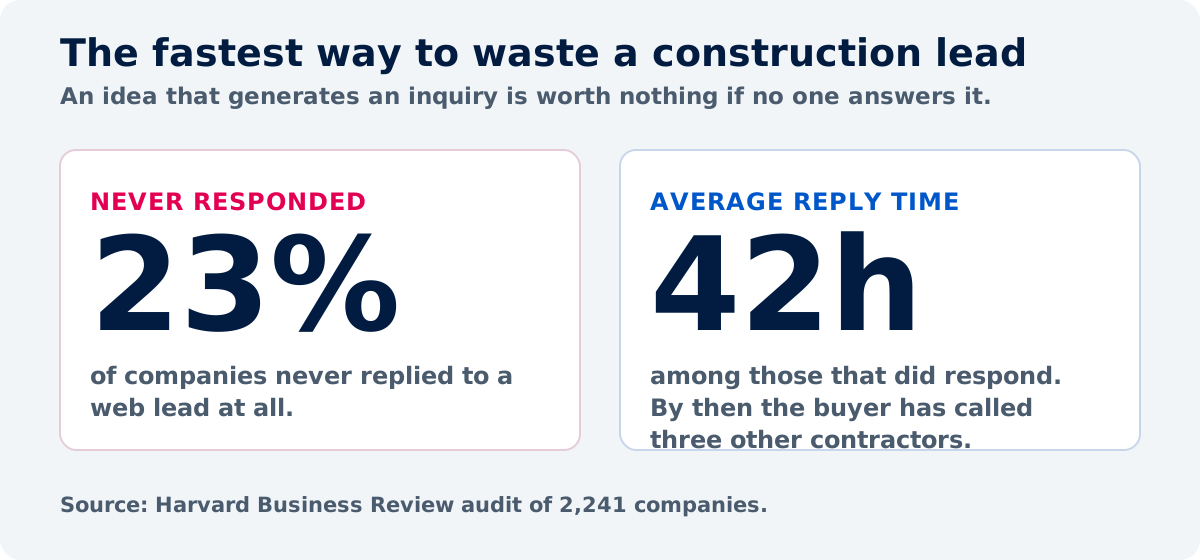
By 42 hours, a homeowner has called three other contractors. A marketer in the same r/marketing thread noted that when an inbound call comes in and you miss it, "the odds of getting the customer on the phone or in for an appointment drop by about 90%." A clear lead handover process is what stops that leak.
The job it does. Turns the leads your marketing earned into conversations, before a competitor answers first.
Your next step. Decide today who answers new inquiries within the hour, and how, then hold that as a rule.
Wire your content into the CRM you already pay for
Two-thirds of construction firms already own a CRM, and few wire their content and leads into it. The gap is integration, not tooling. Only about a third connect content to the sales motion at all.
Wiring it up is simple and it stops leads from falling through the cracks. Every lead magnet download, every quote request, and every inbound call lands in the same system, tagged and followed up, so nothing sits forgotten in an inbox. You already pay for the tool; the job is to use it as the memory of your lead pipeline, which is the core of most RevOps best practices.
The job it does. Keeps every earned lead in one place with a next action, so none go cold by accident.
Your next step. Route your form submissions and quote requests into your CRM this month, with an owner and a follow-up step for each.
Build a referral and showcase-project engine
Your happiest clients are distribution, trust, and capture in one, and most firms leave that to chance. A contractor in an r/marketing thread described a cheap, high-return version: pay a small bounty for a referral that turns into a job, and "offer discounts to clients if you can use their project on your social media or website as a 'showcase home.' Get photos and video testimonials."
Make the ask systematic instead of occasional. A review request after every job, a referral offer written into your closeout, and permission to feature the project. That single relationship then feeds your Google Profile, your case studies, and your video, all at once.
The job it does. Turns finished work into new leads, fresh proof, and better local ranking at the same time.
Your next step. Add a review request, a referral offer, and a "can we feature this?" ask to your standard job closeout.
Stop renting the leads you could own
Most construction firms rent their demand. Around 73% buy Google Ads, often spending between $11,000 and $63,000 a month, and lead-reseller platforms take a further cut. Chuck the Contractor, who runs a lead-generation channel for contractors, calls those platforms "lead reselling middlemen" that sell the same lead "to five other contractors at the same exact time," and warns that renting leads "shouldn't be your main source of new customers."
The alternative is the system above, which compounds. The median construction firm's organic presence is worth about $16,800 a month in equivalent ad spend, and unlike ads, it does not switch off when you stop paying. This is not "never run ads." It is "don't let rented leads be your only engine," because paid demand stops the moment the budget does, and an owned channel keeps working. That is the practical difference between demand generation and lead generation.
The job it does. Shifts you from renting every lead to owning a channel that keeps producing after the spend stops.
Your next step. Add up what you spend on ads and bought leads this month, and move a slice of it into building the owned assets above. Our budget allocation guide shows how to split it, and the construction benchmarking tool shows how your firm compares to peers before you move a dollar. For how we install this system for builders, see our construction marketing practice.
Ready to give your construction marketing ideas a job?
Our content revenue audit maps every idea to the buying decision, finds where interest leaks, and puts a number on what your owned content is worth.
Frequently Asked Questions
About the Author

Founder & CEO, Content RevOps
Stefan Kalpachev is the founder and CEO of Content RevOps, where he helps B2B SaaS companies transform their content into predictable pipeline. With a background in content marketing and revenue operations, Stefan has developed a unique methodology that bridges the gap between content creation and revenue generation.
Connect on LinkedIn