Why Your Construction Website Gets Traffic but No Leads
Getting construction website traffic but no leads? Start with a content revenue audit to find where it leaks.
Book a CallYour construction website gets traffic but no leads because it was built to be seen, not to convert. The visits arrive, and then nothing on the page turns a ready buyer into a phone call, a quote request, or a booked walkthrough. In our 2026 study of content marketing in construction, only about a third of construction sites route a visitor to a clear commercial next step. The rest is a polite dead end, and closing that gap is the core of inbound lead generation for a construction firm.
Part of Content Marketing for Construction: The Complete 2026 Guide.
That is good news, in a way. Traffic is the expensive part, and you already have it. What you are missing is the conversion architecture between the visit and the call, and that is the cheaper thing to fix.
This guide covers why a construction website pulls traffic without leads, what the data says is actually broken, and the specific fixes that turn those visits into work.
Why does my construction website get traffic but no leads?
A lead is a captured intent, not a visit. Someone landing on your page is a visit. Someone who calls, fills out a short quote form, or books an estimate is a lead, and the first entry in your lead pipeline. Most construction websites collect the first and never ask for the second.
Devon Stone of Construction Programs and Results, the team behind the contractor business book Markup and Profit, puts it in terms any builder understands. A properly structured website is like a well-built home. Without the pipes, the wiring, and the insulation behind the walls, a house is just a pretty shell. His line is blunt: "if the structure doesn't exist, your website is only a pretty brochure."
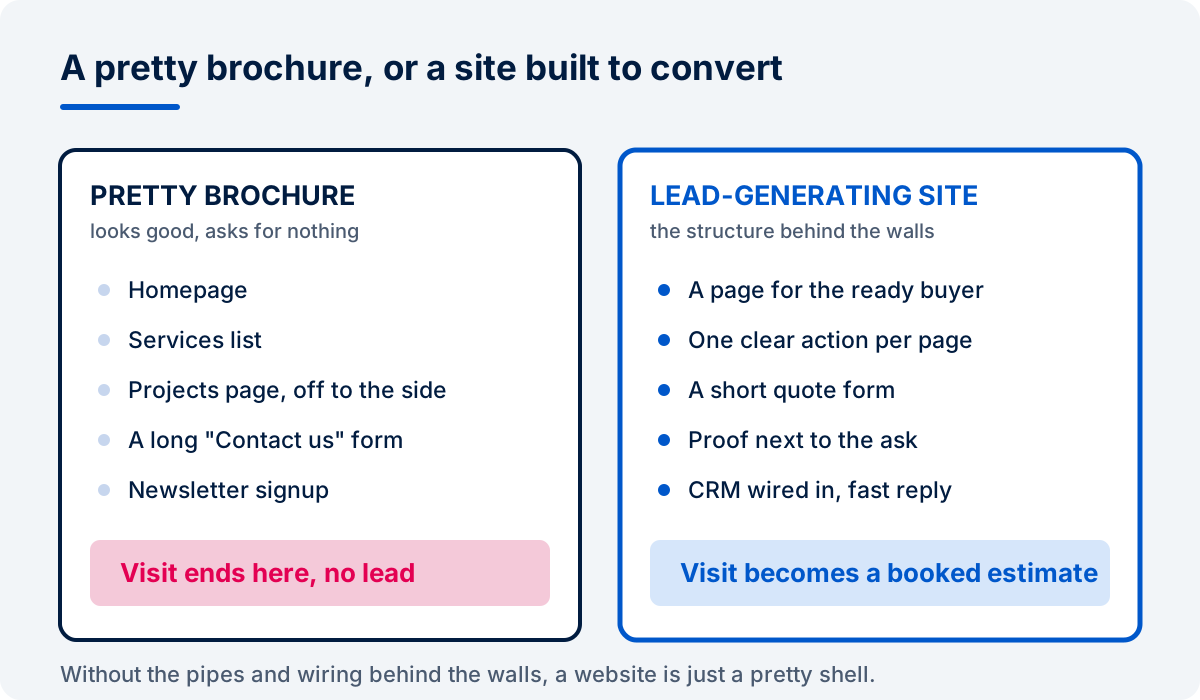
That is what most construction sites are. Close to three in ten show no meaningful signs of content marketing at all, just a homepage, a services list, and a contact form, which is the absent cohort in our construction content maturity audit. They are digital brochures waiting to be turned into something that works.
The pattern shows up across the whole field. One third of construction sites route a reader toward a commercial step, and an equal third publish pages with no route from reading to hiring at all. Traffic lands on those pages, reads, and leaves, because the page never asked it to do anything.
A web designer on Reddit described the same thing after years of watching it happen: "decent design, zero enquiries." The design was never the problem. The missing structure was.
Is it a traffic problem or a conversion problem?
It is almost always a conversion problem, and the reason is timing. By the time someone reaches your construction website, they are usually late in their own decision.
A pricing-tool company, Priceguide, analyzed 100,000 home-improvement pricing estimates worth around $130 million across 11,000 US locations. The research and shortlisting phase, when a buyer forms opinions and decides who to trust, happens weeks and sometimes months before anyone picks up the phone. The contractor who shows up during that research window earns a spot on the shortlist. The one who only shows up when the buyer is ready to buy has already lost.
So the visit is not the start of the relationship. It is closer to the middle. The page has to convert an almost-decided buyer, and that is a different job than attracting a curious one. It is the difference between creating demand and capturing it, and most construction sites are set up for neither.
Here is where construction sites break. Look at what the content is built for against what buyers actually want.
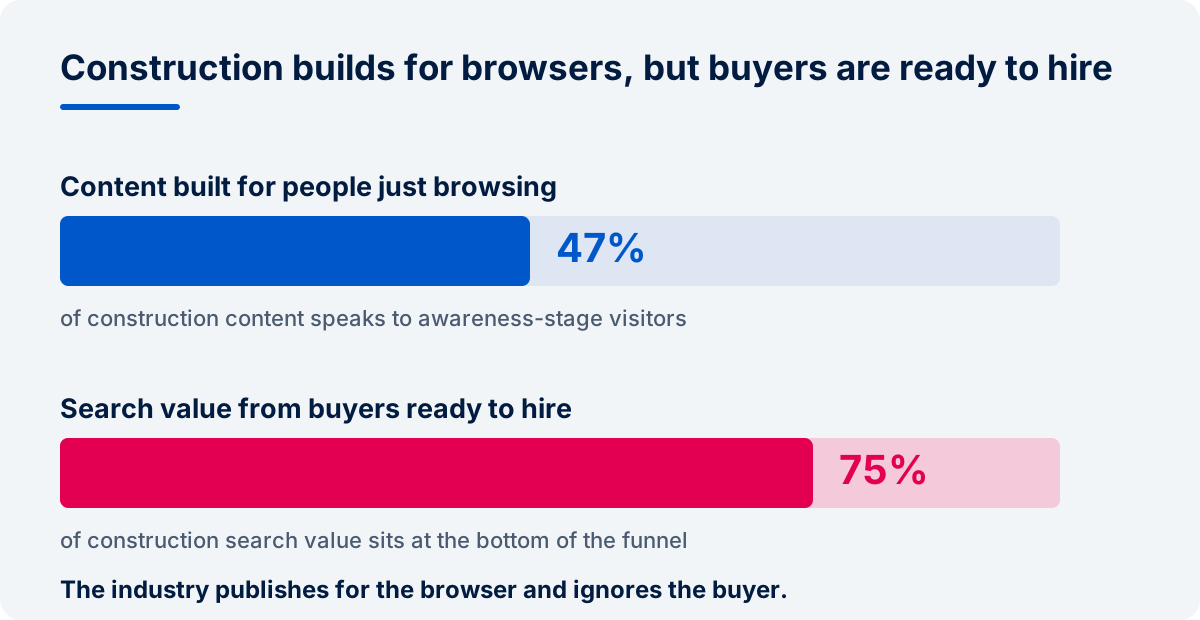
Across construction, content is heavily front-loaded: about 47 percent of it speaks to people who are just becoming aware, while 75 percent of the real search value sits with buyers who are ready to hire. The industry publishes for the browser and ignores the buyer. Only 17 percent of construction content supports the decision itself, and more than one in five active firms offer nothing at all to a buyer who is ready to act. If you want to see how each stage should carry its share of the load, the demand generation funnel by the numbers lays it out.
The visitor who is ready to hire lands on a page about industry trends, or a general services list, and finds nothing built to help them choose you. So they leave, and you call it a traffic problem. The same thing happens with visitors arriving from AI answers, as we covered in why AI traffic often fails to convert.
One contractor running Google Ads described it exactly: "decent traffic, people are visiting and browsing around, but almost nobody is actually contacting us." Another put the fix in one sentence: "don't just dump ad traffic onto your site to browse and hope they take the initiative to contact you."
What actually stops a construction website from converting?
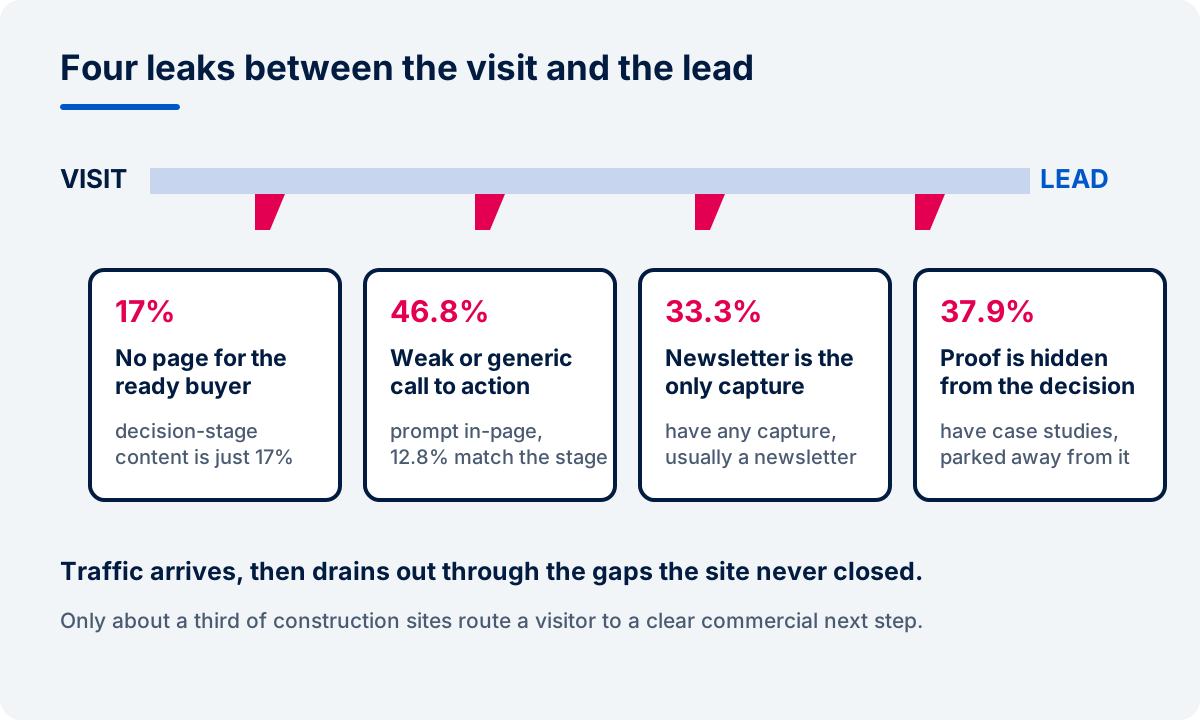
Four things break the path from visit to lead on most construction sites. Each one is measurable, and each one has a matching fix in the next section.
There is no page for the ready buyer
The buyer who is ready to hire needs a page built for that moment, and most construction sites do not have one. Decision-stage content makes up just 17 percent of construction content, and more than one in five active construction firms publish no decision content at all.
So the ready buyer lands on a blog post about roofing trends when what they wanted was a clear "here is how to get a quote from us, and here is what happens next." The page that would convert them was never built.
The call to action is missing or generic
Even when the content is good, most construction pages never ask the reader to do anything specific. Under half of construction sites, 46.8 percent, prompt the reader to act inside the body of the page. The rest fall back on a generic "Contact us" buried in the footer.
Fewer still match the ask to where the buyer actually is. Only about one in eight construction sites, 12.8 percent, tailor the next step to the buyer's stage. A first-time visitor and a ready buyer get the same footer link, or no link at all. Mapping the funnel first is what makes a stage-matched ask possible.
The two failures are different. The first is having no in-context call to action at all. The second is having one that asks for the wrong thing at the wrong time, like pushing a "book a call" on someone who is still deciding whether to trust you. As one marketer put it, the mistake is "asking for a decision before trust is earned."
The only way to leave your details is a newsletter
When a construction site does capture leads, it usually captures the wrong ones. Lead capture exists on just one in three construction sites, 33.3 percent, and where it exists, it is usually a newsletter signup.
Among the firms that do distribute content, the newsletter is the most common capture tool, showing up on 43.6 percent of them. A newsletter is presence, not a reason to convert. A homeowner who wants a kitchen remodel does not want your monthly email. They want a quote. Email still earns its place after the enquiry, as a nurture and follow-up channel, which is how we approach email marketing for construction companies.
The proof is hidden and the form is a tax return
Construction firms own the exact proof buyers ask for, and then they hide it. Case studies exist on 37.9 percent of construction sites, but they sit on a separate "projects" page, parked away from the decision moment instead of driving it. Pricing, the thing a high-intent buyer is trying to qualify, appears on just 37.5 percent of sites.
When there is a form, it often asks for too much. One commenter described a local plumber "asking for company size, annual revenue, and preferred communication method just to get a quote for fixing a toilet." Another contractor summed up the cost: "every field you add drops conversion by like 10 percent. Nobody's filling out a damn intake questionnaire just to ask about your services."
How do you turn a construction website into one that generates leads?
Fixing a construction website that gets traffic but no leads is mostly a matter of building the conversion architecture the site never had. Here are the six fixes, each one closing a specific leak.
Build the pages a ready buyer needs
Start with the decision shelf, the pages a buyer visits right before they hire someone. For a construction firm, that means service pages and location pages, a real "request an estimate" or "get a quote" page, an honest pricing or cost-range page, and an FAQ that answers the objections a buyer raises before signing.
This closes the biggest gap, the 17 percent of content that speaks to decision-stage buyers. It also plays to a construction advantage most firms waste: specificity. Only 30.5 percent of construction sites publish pages tailored to a specific trade, project type, or region, in a market where buyers choose on exactly that. Our guide to digital marketing for construction companies covers how those pages fit alongside search and paid.
Put one clear next step on every page
Give every page a single primary action, matched to who is reading it. A ready buyer gets "request an estimate." A researcher gets "see similar projects" or "download the planning checklist." Put it above the fold, and repeat it at the bottom.
One action, not seven. As one contractor on Reddit said plainly, "one CTA is plenty. Too many options is rarely a good plan." And write the action for the customer, not for your board. Copy full of "we deliver quality craftsmanship" reads, in one commenter's words, like it "was written for a board meeting instead of an actual customer."
Offer something a ready buyer actually wants, and ask for little
Swap the newsletter for something a buyer in the market will trade their contact details for: a project estimate, a free consultation, a site visit, or a genuinely useful download like a materials checklist or a permit guide.
Then keep the form short. When one firm cut its contact form from eleven fields to four, submissions rose about 160 percent, and the shorter form did not lower the quality of the leads it brought in. On phones the stakes are higher, because form completion on mobile runs roughly half of what it does on desktop, and most construction-site traffic is mobile. Ask for a name, a way to reach them, and the project type. Qualify the rest on the call, the way we set up lead capture and qualification.
Move the proof to the decision moment
Take the proof off the separate projects page and put it next to the ask. Project photos and before-and-after shots, a short project video, named reviews, the certifications and awards you already hold. Place them right where the buyer decides. We collected more ways to put that proof to work in construction marketing ideas that aren't just project photos.
Video does real work here, and construction underuses it: on-page video appears on under half of construction sites, 46.2 percent, despite being the format complex buyers prefer. Builder Matt Risinger has said buyers reach him having "already made a decision after watching a couple videos." The same clips can do double duty on your construction social media. Trust signals matter too, and firms leave them on the shelf: certifications and awards appear on just 35.9 percent of sites, even where the firm clearly holds them.
Adam Cooper of Ascent Consulting, a former electrician who now advises contractors, names the real enemy: "my biggest competition is anonymity." Deep, specific content became, in his words, "the driver of all the growth," and now more than 90 percent of his firm's business comes inbound.
Wire the CRM you already own and answer fast
A lead only counts if it reaches a human quickly. Two-thirds of construction firms, 68 percent, already own a CRM or automation tool, and few wire it to the website, so the problem is integration, not tooling. Form fills land in an inbox nobody watches, or nowhere at all. One business owner on Reddit described exactly that: visitors "fill the form, but business owners do not get the visitor's information." A defined lead handover process is what stops that leak.
Speed is the second half. Harvard Business Review's audit of 2,241 US companies found the average first response to a web enquiry was 42 hours, and 23 percent of companies never responded at all. Firms that made contact within an hour were about seven times more likely to have a real qualifying conversation than those that waited even an hour longer. A construction enquiry goes cold fast, and the first firm to reply usually gets the job. Wire the form to your CRM, route it to a person, and set the expectation that it gets answered the same day.
How do you know your construction website is actually converting?
You measure leads and the path to them, not pageviews. Almost every construction site has analytics installed, 100 percent of them, and almost all of it points at traffic rather than at contribution to pipeline. Watching traffic tells you the visit happened. It does not tell you why the visit did not become a call.
Track three things: how many leads the site produces, which pages produce them, and where visitors drop off on the way. That short list is the construction version of the metrics worth tracking and the ones to ignore. Then improve one thing at a time. Testing is nearly absent in construction, running on just 4 percent of sites, so content ships once and is never touched again. You do not need a testing program to start. Session recordings and heatmaps show where visitors stall, and changing one headline or one form at a time tells you what actually moved the number. To see where your site sits against the field before you start, run it through the construction content benchmarking tool.
What does a construction website that generates leads look like?
A construction website that generates leads is an owned asset that keeps producing. It has a page for every kind of buyer, one clear action per page, proof at the decision moment, a short form wired to a CRM, and a fast reply behind it. You can see the full picture of what good looks like in construction content, and the same conversion problem, solved for a different industry, in our breakdown of why a SaaS site gets traffic but no signups.
The alternative is renting your leads. About 73 percent of construction firms run Google Ads, spending an estimated $11,000 to $63,000 a month, often more than the owned asset would cost to build once. Devon Stone's warning about lead-generation services applies to paid traffic too: "when you stop paying, the leads stop coming, and you can spend far more on a lead generation service than you would have invested on your own website." It is the same trade-off we unpack in demand generation vs lead generation.
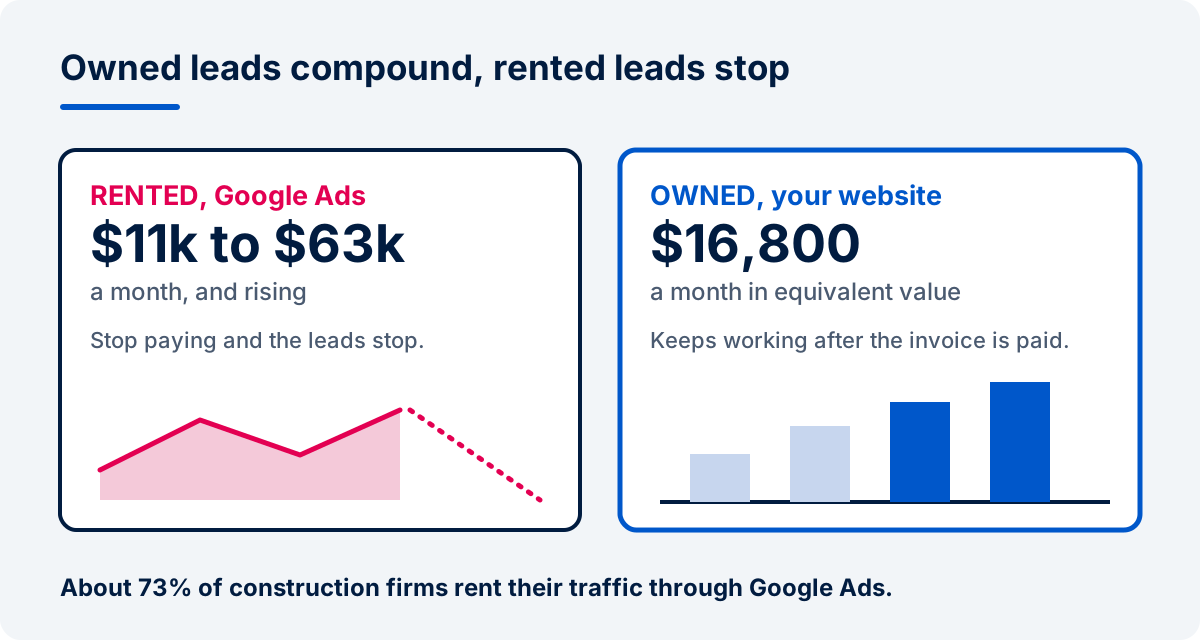
Meanwhile the owned asset compounds. The median construction site's organic presence is worth around $16,800 a month in equivalent ad spend, and it keeps working after the invoice is paid. The waste is that over a quarter of construction sites, 26.9 percent, get no search traffic at all, so they have neither the owned engine nor a reason to build one. The construction search and AI benchmark shows how wide that spread runs.
If your construction website gets traffic but no leads, the traffic is not the problem worth solving first. The architecture is. It is the kind of work we do with construction firms every week. A content revenue audit will show you exactly where your site leaks between the visit and the call, and which fix to make first. You can also book a call to walk through it.
Want to know exactly where your construction website leaks between the visit and the call?
Our content revenue audit maps your site against the buying decision, finds the pages that should convert and do not, and puts a number on the gap.
Frequently Asked Questions
About the Author

Founder & CEO, Content RevOps
Stefan Kalpachev is the founder and CEO of Content RevOps, where he helps B2B SaaS companies transform their content into predictable pipeline. With a background in content marketing and revenue operations, Stefan has developed a unique methodology that bridges the gap between content creation and revenue generation.
Connect on LinkedIn