Construction Video Marketing: Where It Actually Pays
Not sure whether video is your next move or a distraction? Our construction content landscape analysis shows where the field is winning and leaking, so you can see where a video would actually pay.
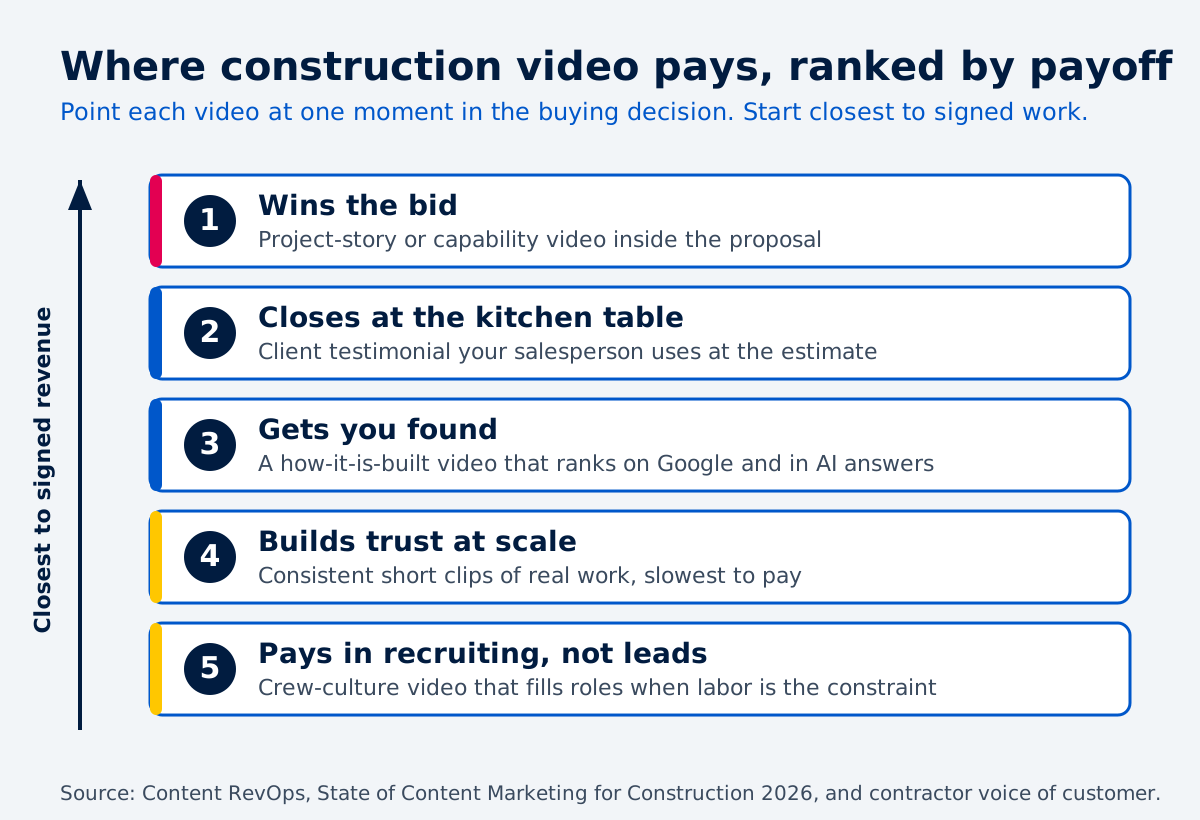
Book a CallConstruction video marketing pays when a specific video is pointed at a specific moment in the buying decision. A project-story video inside a bid. A client testimonial in the sales meeting. A "how it's built" video that gets you found on Google and in AI answers. Short clips that build trust over months. A culture video that helps you hire. It rarely pays when it is a one-off drone reel made because someone said you should post more video. This guide ranks each use by payoff, tells you what it costs, and ends on the one video to make first.
Part of Content Marketing for Construction: The Complete 2026 Guide.
Does construction video marketing pay for you yet?
Video marketing starts to pay for a construction firm at a specific point: when word of mouth has stopped filling the calendar, and after the basics that a referral checks are already in place.
Referrals are the best lead a contractor gets, and for a while they are enough. The problem is the ceiling. A high-ticket builder feels it first. One remodeler who works on luxury homes with a $200,000 average ticket put it plainly: "These are once in a lifetime projects for most people. There aren't a lot of referrals there." His growth comes from search and five-star reviews, "not 'I know a guy.'" When each customer buys once in a lifetime, the referral network cannot grow the business on its own, and video becomes one of the few ways a stranger builds enough trust to call.
There is also an order of operations, and video is not first. A marketing agency that works only with construction and engineering firms lays out the sequence: a findable website first, then search and paid ads, because those are the lowest-hanging fruit. That is the same order we lay out in our guide to digital marketing for construction companies. Their advice on video is honest: "Don't invest in content creation or organic social up front. It CAN pay off but it's really brand awareness, top of funnel, so you will end up paying for something that takes a lot longer to start working."
So the gate has two questions:
Has word of mouth capped out? If referrals no longer fill the schedule, or you want bigger and better projects than they bring, video has a job to do.
Are the basics in place? A site a buyer can find, and reviews they can read. Video amplifies a working business. It does not fix a broken one, and if your site already gets traffic but no leads, fix that before you film.
One more thing decides timing: track record. As one contractor noted, in the early years you take small and public jobs that do not care about your marketing. "Once the private sector sees you have 3, 4, 5 years of experience, that is when your marketing becomes important." If you are there, construction video marketing is worth the spend. The rest of this guide is about where to point it.
Why most construction video marketing doesn't pay
Most construction video marketing fails for one reason: the firm makes video as a vanity act instead of pointing it at a decision.
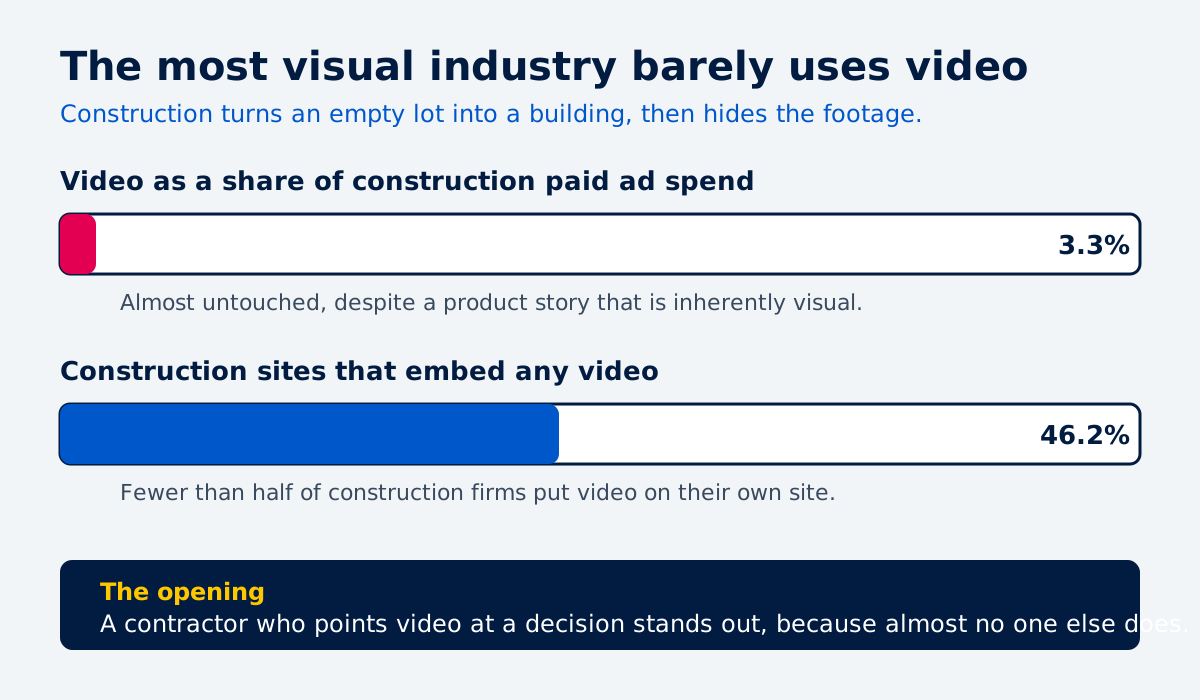
The irony is hard to miss. Construction is the most visual product in business. You turn an empty lot into a building. Yet in our analysis of the construction content landscape, video advertising is just 3.3% of paid spend across the firms we studied, almost untouched despite a product story that is inherently visual. On the organic side, fewer than half of construction sites embed any video at all, 46.2%. The most visual industry there is treats video as the smallest, most optional slice of its marketing.
When video does get made, it is usually hired as production, not as a plan. Construction firms staff to make things, not to point them at pipeline. In the same data, design and creative work shows up in 44% of marketing roles and events and field work in 69%, while content is named in only 13.6%. Firms buy hands to produce and a presence to show up. Almost no one owns the job of turning either into leads.
That is why the reel with 300 views feels like a waste. It probably was. One contractor put the working rule bluntly: social media "rarely converts for trades unless you're doing really consistent video content showing actual work." The same trap catches the rest of the playbook, which is why we argue for construction marketing ideas that aren't just project photos.
Video itself is not the problem. In Wyzowl's 2026 survey of video marketers, which asks marketers to report their own results, 85% say video has helped them generate leads and 83% say it has directly increased sales. The medium works. It works when it has a job. The rest of this guide is those jobs, ranked by how directly they win construction work.
The construction video that wins the bid
The highest-paying construction video is the one that goes inside a proposal for a big project. Nothing else you film sits this close to signed revenue.
This is where the money is decided, and it is where construction content is thinnest. In our landscape analysis, only 17% of construction firms publish real decision-stage content, the material a buyer needs at the moment of choosing. Case studies exist on 37.9% of sites, but they sit on a portfolio page instead of driving the decision. The proof buyers ask for is made, then parked.
Put it in the bid instead. A commercial builder doing $50 to $60 million a year described exactly this: "I've snagged 5 to 6 million dollar contracts because my numbers were comparable but my package was gorgeous." Their marketer coordinates the finished project photos and videos that go into it. For high-end residential, the logic is the same: "if we want their 6 to 10 million for a home it's about showing who and what we are and how we do it."
A video does that in a way a spec sheet cannot. It shows process, safety, and finished scale, so the general contractor or developer deciding your shortlist can see the work rather than read about it. Construction video studios now sell this as its own product. One Western Canada studio's cost guide names a "capability or RFQ video" tier: "the procurement asset, proof of process, safety, and scale built to win the bid." A Seattle construction-video service reports the same pattern, that before-and-after construction videos are especially effective for winning competitive bids.
What it is: a 90-second to 3-minute project-story or capability video that shows one flagship job from problem to finished result, dropped into your proposal or linked by QR code in a printed one.
When it pays: any time you compete for work worth enough that the buyer weighs more than price. If you win on lowest bid alone, skip it.
The construction video that closes at the kitchen table
The second-highest-paying construction video is the client testimonial, and its real job is not on YouTube. It is in the room when you are quoting the work.
Most contractors already own the raw material and waste it. As one pointed out about his peers, companies have "50 to 200-plus 5-star reviews, but none of them are actually using those reviews when they're sitting at the kitchen table giving estimates. They're explaining everything from scratch instead of letting past customers do the selling for them." A testimonial video fixes that. You hand the prospect a past customer, on camera, saying the thing you cannot credibly say about yourself.
This matters more in construction than in almost any other trade, because the buyer is scared. A construction job is expensive and hard to undo. As one owner put it while advising a struggling firm, "People don't want to take a chance on random construction services. You really need testimonials and client referrals to start." Video testimonials are how you stop being random to someone who has never met you.
One caution on what the video does and does not do. It warms the buyer; it does not close them. As a marketer reminded that same worried owner, "marketing can send leads down the funnel but only you or your sales team can close them." Treat the testimonial as a tool your salesperson uses at the table, and a piece of proof the download or the site visit leads into. The video starts the trust. The follow-up finishes the deal, and a short email follow-up sequence is the cheapest way to make sure the testimonial reaches the buyer again after the meeting.
What it is: a 30 to 90-second clip of a real client describing their worry before the job and their result after it, in their own words.
When it pays: the moment you have happy customers and a sales conversation to use them in, which is almost always.
The construction video that gets you found
A "how it's built" video is how a construction firm gets found by a buyer who has not heard of it, on channels almost no competitor works.
Video ranks in places text cannot reach. Because YouTube is owned by Google, an optimized construction video can surface in Google's video carousel, the Videos tab, and AI answers. It carries into AI search too: in Semrush's analysis of more than 80,000 AI Overviews, YouTube is one of the most-cited sources in AI answers, second only to Wikipedia. That matters in construction now, because 36% of buyers in the AEC industry already use ChatGPT or similar tools to build their shortlist before a firm knows a project exists. Our Ultimate AEO Guide explains how those engines pick the sources they cite.
The opening is wide because so few contractors take it. Video SEO is far less competitive than written SEO for local service firms, since very few local providers publish video at all, and fewer than 1 in 10 small businesses use the platform for marketing. Our own landscape analysis shows the same greenfield in construction: brand mentions in AI answers sit at about 2.5%, and the answer layer is owned by aggregators and forums, not by the firms doing the work. If you want to know what makes one brand get cited in AI answers while a better-known competitor gets ignored, answer-shaped proof is most of it.
The content that works here is not an ad. It is the process. One marketer, recommending video for a construction company, named the winning formats: testimonials, before-during-after project videos, videos explaining the materials you use and why they are better, and the common problems clients face and how you solve them. The trick, they added, is to "add your work area in your video title, descriptions, tags to rank higher than your competitors in the area." Others in the same thread found that "edutainment," showing how the work is actually done, pulls viewers because "people love seeing other people be good at their job."
What it is: a small library of short videos answering the exact questions your buyers type, with your city and service in the title.
When it pays: over months, not days, as the videos rank and compound. This is the get-found layer, and it keeps working long after you make it.
The construction video that builds trust at scale
Short-form video that shows real work is how a construction firm builds trust with people who are not ready to buy yet. It is the slowest to pay, and the easiest to get wrong.
The reason it is slow is worth stating up front, so you do not repeat a common mistake. Organic social video is a top-of-funnel, brand-building layer. It takes time to work, and it does not send leads next week, which is the same trade-off we unpack in demand generation vs brand awareness. The construction firms that quit after a month of posting quit right before the payback starts.
The reason it is easy to get wrong is that most of it has no substance. A steady feed of logo intros and stock music builds nothing. What builds trust is proof of the work: the pour, the framing, the finished detail, the crew solving a real problem on a real site. The one rule that separates trust-building video from vanity video is consistency plus reality, only "really consistent video content showing actual work" converts for trades. Our guide to social media marketing for construction companies covers where those clips should run and how to keep the cadence.
This is also the layer construction firms are least equipped to sustain, which is exactly why it pays for the ones who do. When the whole industry publishes text and parks its best visual proof, a contractor posting genuine site footage every week stands out by default.
What it is: a regular cadence of short clips, cut from real jobsite footage, posted where your buyers already scroll.
When it pays: last, after the bid, testimonial, and get-found videos are working. It compounds, but only with a real commitment to keep filming.
The construction video that pays in recruiting, not leads
Not every construction video is aimed at customers. One of the clearest payoffs is a video that helps you hire, and for many firms it is the most urgent one.
Plenty of contractors do not need more leads at all. As one put it flatly, "Any decent GC has a backlog til 2028, so there's no need for external marketing." What that firm's marketing does instead is make the jobsite signs, run internal communications, and go to job fairs to recruit. Another said the point of getting their projects seen is to put them "in front of prospective employees."
The data lines up with the instinct. Events and field work is the single most common marketing hire in construction, at 69%. Firms already spend on presence and on people. A recruiting video fits that spend exactly: it shows crew culture, the career path, and the owner talking about what it is like to work there, so the roles fill faster and with better people.
What it is: a 90-second to 3-minute video about your crew, your culture, and the work, made to fill roles rather than win clients.
When it pays: when your constraint is labor, not leads, which in this market is often.
One warning: a recruiting film and a sales video are different jobs, and using one for both is why neither lands. A capability video proves to a customer you can do the work. A recruiting film proves to a worker what it is like on your crew. Film them separately.
What construction video marketing costs
Construction video marketing costs less than most owners fear, and far less than the paid ads they already run. The trap is not the price of a video. It is paying for one with no job.
Real market pricing is public. A Seattle construction-video service publishes its rates: roughly $100 to $200 an hour, so a typical 2-hour shoot with drone coverage and three to four edited reels runs about $425 to $650 all in, and ongoing site documentation runs $200 to $2,400 a month depending on how often the crew visits. A one-time client testimonial video from a service that specializes in them starts around $497. These are small numbers next to a single won project.
Cost tracks the job, which is the useful way to think about it. A construction-video cost guide lays the tiers out in order: a single jobsite reel is the cheapest, a recurring monthly cadence more, a capability video built to win a bid more again, then a recruiting film, then a full brand documentary. The more a video has to do, the more it costs. Match the spend to the payoff, and start where the payoff is closest to revenue.
The smartest lever is reuse. One shoot day should produce five to ten finished pieces, and a good library keeps working for 12 to 18 months. A capability cut, a recruiting clip, and a stack of short social videos can all come off the same footage, because each extra cut is edit time, not another shoot. That is the logic of raw asset extraction, and it only pays off with a content distribution strategy that decides where each cut goes.
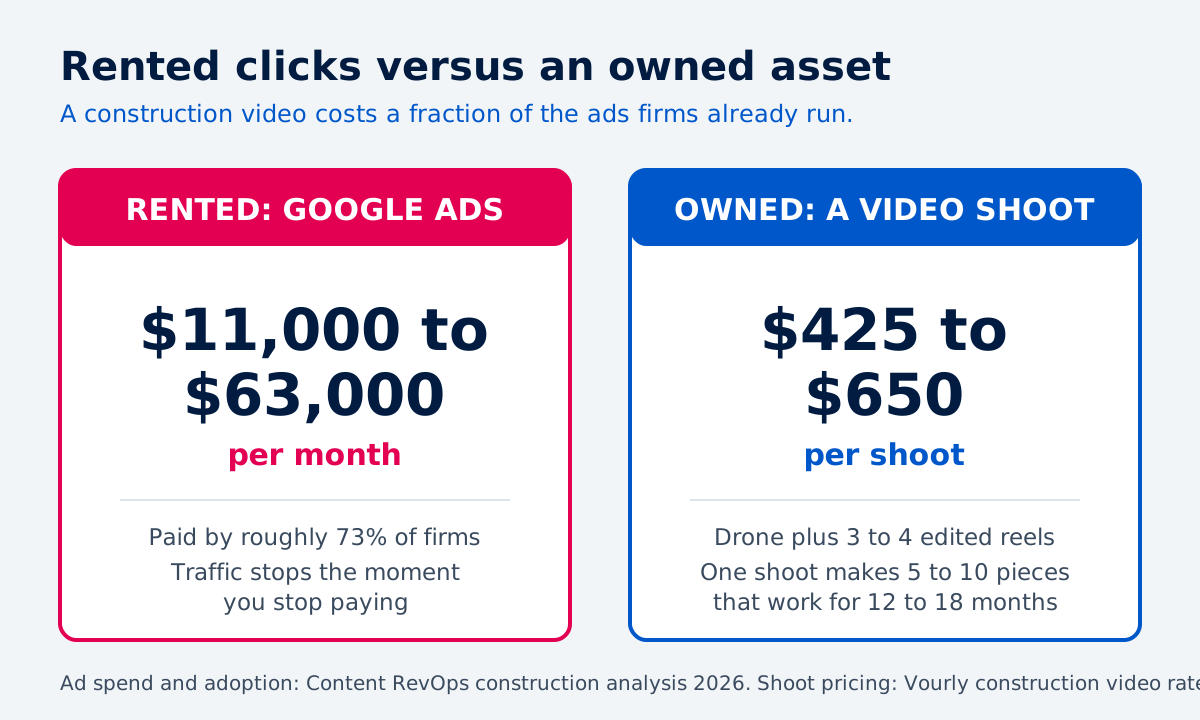
Now set it against what construction firms already spend to rent attention. Most pay for traffic through Google Ads, about 73% of the firms we studied, and the firms running paid search spend roughly $11,000 to $63,000 a month on it. Video advertising, by contrast, is 3.3% of paid spend. To put the video budget in context: a small firm's entire yearly marketing budget runs around $8,000, a mid-size firm's around $35,000. A few hundred dollars a shoot for an asset you own, against tens of thousands a month for clicks that stop the moment you stop paying, is not a close call.
Which construction video should you make first?
Make the video closest to a signed job first, then work outward. The order follows the payoff, not the format.
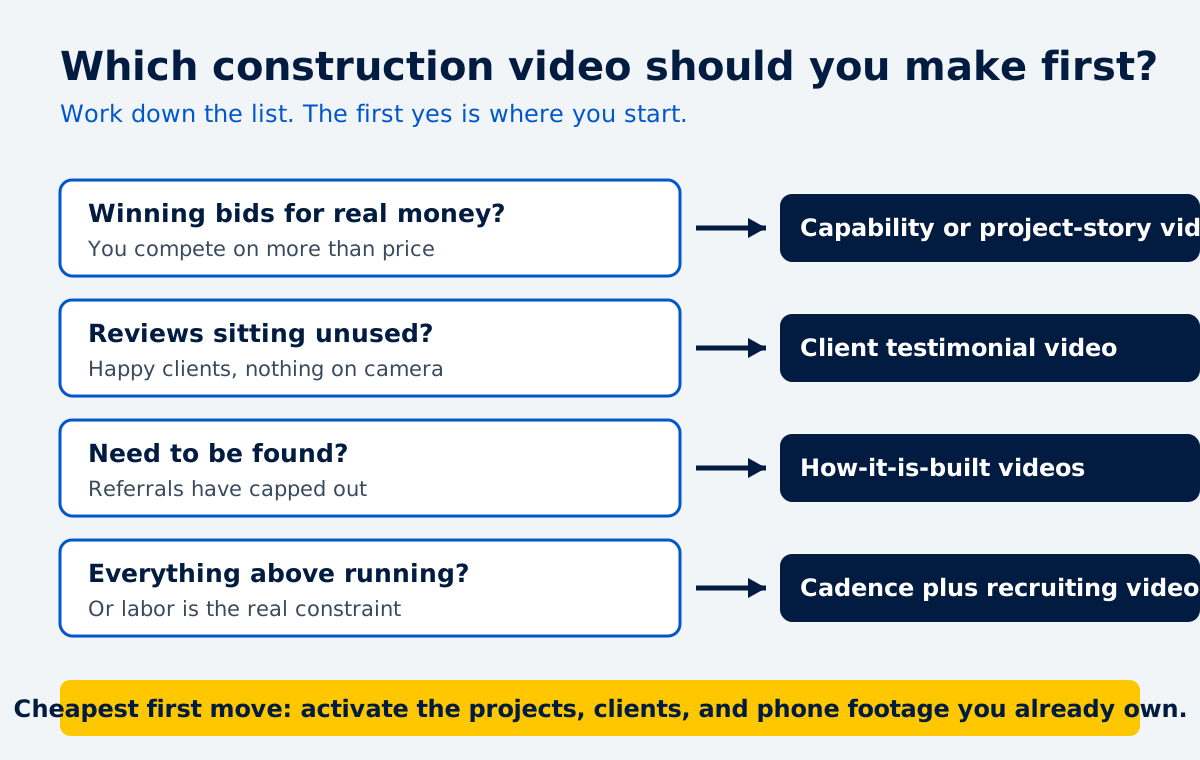
Winning bids for real money? Make the capability or project-story video and put it in your next proposal. It sits closest to revenue, and construction content is thinnest exactly here.
Reviews sitting unused? Film one client testimonial and hand it to whoever gives your estimates. You already earned the proof; this puts it to work at the table.
Need to be found? Record a few "how it's built" videos that answer the questions buyers type, with your city and service in the title. This is the get-found layer, and almost no competitor works it.
Everything above running? Then commit to a steady cadence of short clips showing real work, and a recruiting video if labor is your constraint.
The cheapest first move is to activate what you already own. Most construction firms have finished projects, happy clients, and a phone that shoots fine video. A small firm working from an $8,000 marketing budget does not need a film crew to start; it needs to point one video at one decision. To see where your firm already sits against the field before you spend, score it with the construction content benchmarking tool.
That is the whole shift. Construction firms already own the most visual product in business, and most already make video. They just make it for views. Give each video a job in the buying decision, and it stops being a cost and starts being infrastructure that wins work. That is how we approach content for construction firms, and the complete guide to content marketing for construction shows how video fits the wider system.
Want your construction marketing to win work instead of collect views?
See how we turn content into revenue infrastructure for construction firms.
Frequently Asked Questions
About the Author

Founder & CEO, Content RevOps
Stefan Kalpachev is the founder and CEO of Content RevOps, where he helps B2B SaaS companies transform their content into predictable pipeline. With a background in content marketing and revenue operations, Stefan has developed a unique methodology that bridges the gap between content creation and revenue generation.
Connect on LinkedIn