Why Construction Brands Almost Never Show Up in AI Answers
Not sure whether ChatGPT, Gemini, or Perplexity even know your construction firm exists? Start with a content revenue audit.
Book a CallMore buyers now start with a question typed into ChatGPT, Gemini, or Perplexity instead of a search box. They ask which firm to hire, and the tool answers with a short list of names. Construction brands are almost never on that list. In our study of content marketing in construction, a construction brand surfaced in roughly one in forty AI answers, and rarely as the source the tool actually cited. The reason is not that AI search dislikes construction. It is that the answer layer in construction sits empty. Forums, reference sites, and regulators publish the clear, answer-shaped content these tools lift, while construction firms keep their expertise in photo galleries, PDFs, and login-only portals that AI cannot read. This guide covers whether your construction brand shows up in AI search, why it does not, whether it matters yet, and how to get cited with content marketing built for the answer layer.
Part of Content Marketing for Construction: The Complete 2026 Guide.
Do construction brands actually show up in AI answers?
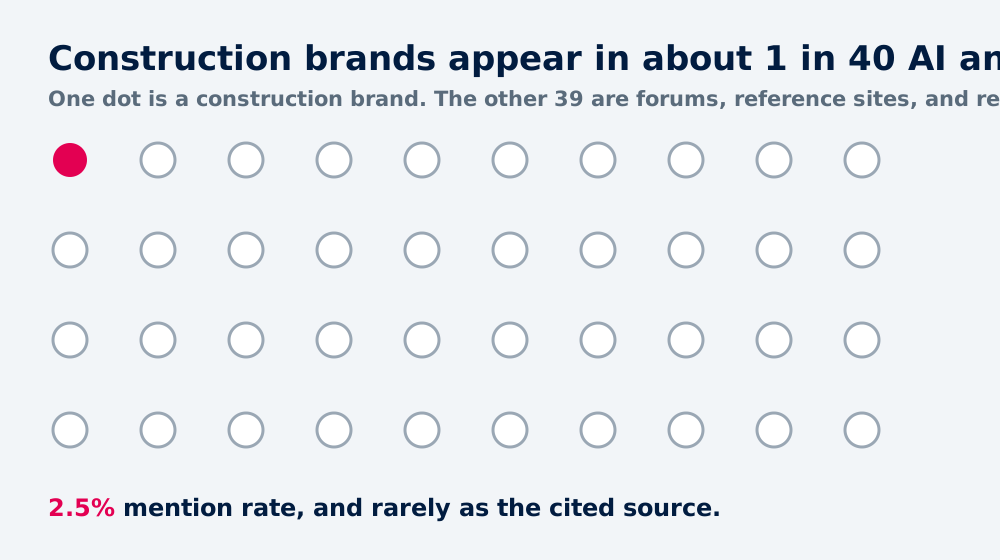
Barely. When we looked at how AI answers cite sources on construction questions, construction brands showed up in about one in forty answers, and even then usually as an unnamed mention rather than the cited source. Company websites, the places these firms spend the most, are almost invisible in the answer layer.
Someone else fills that space. When we ranked which sources AI answers actually pull from on construction topics, the pattern was consistent and uncomfortable.
Source cited in AI answers | Relative citation share |
Reddit and other forums | 100 (the top) |
Wikipedia | 78 |
Indeed (a job board) | 21 |
Niche reference sites (for example LegalClarity) | 16 |
OSHA.gov and other regulators | 10 |
Forbes and general press | 5 |
Construction company websites | near zero |
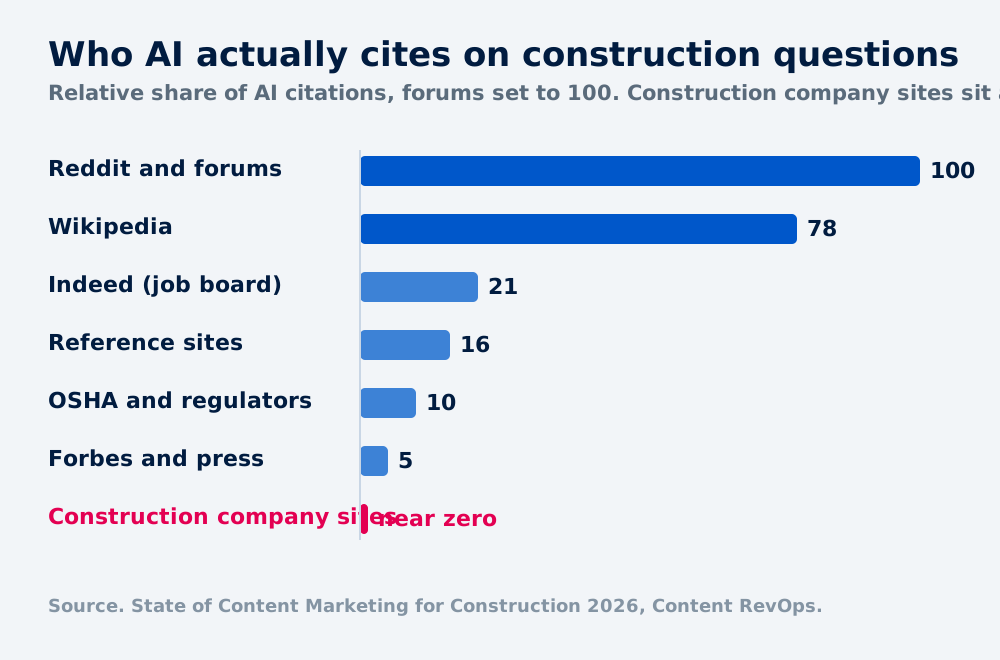
Read that top to bottom. Forums lead what AI cites, because that is where lived construction experience actually gets written down. Reference sites like Wikipedia dominate, because the firms' own expertise never reaches the answer. Job boards out-cite the operators on their own subjects. Regulators get cited directly, because firms do not translate the rules into content themselves. Even general press beats specialist firms on specialist questions.
This is not only a construction problem, which tells you the bar. Across business-to-business search, ChatGPT cites a source in about 87% of its answers but names a brand in only 20.7% of them, and most citations are what one analysis calls "ghost citations," where the tool reads a site but never says its name out loud. So getting cited at all is the first hurdle, and getting named is the second. Construction is failing at the first.
Why don't construction companies show up in AI search?
Three reasons, and none of them is about AI having a grudge against construction. The expertise is real. It is just not in a form an answer engine can find, read, or trust, which is the same gap behind brands that rank on Google but vanish from ChatGPT.
Construction treats AI as a tool, not a place to be found
Ask a builder about AI and they will talk about takeoffs, not visibility. Walk through any construction forum thread on AI and every reply is about software that does the work. On one popular r/Construction thread about AI tools, project managers describe using AI to search drawing sets, check pay-app math, pull spec sections, and draft RFI responses. One called it "a Ctrl+F on steroids." Nobody in the thread asks the other question: when a buyer asks AI which firm to hire, does it describe mine.
The staffing follows the same blind spot. Answer-engine work shows up in almost no construction marketing role, and generative AI appears in the specs of barely 1.6% of them. Firms hire for presence and production, for events and brand and design, far more than for the acquisition and measurement work that AI visibility needs. The whole industry is on the consumption side of AI, using it to do jobs faster, and almost nobody is on the visibility side, being the answer.
The content AI lifts barely exists on construction sites
Answer engines have a favorite shape of content. They lift short, direct answers, question-and-answer blocks, quick summaries, and pages that cite real numbers. On construction sites, that shape is rare.
Only 15.4% of construction sites use FAQ blocks, the exact answer-shaped format engines pull into responses.
Only 5.1% summarize their content with key takeaways, so there is nothing clean to skim or extract.
Only a third cite their own sources, a credibility signal the other two thirds leave on the table.
Only 12.8% publish any original data, which is the single strongest thing you can own to earn a citation.
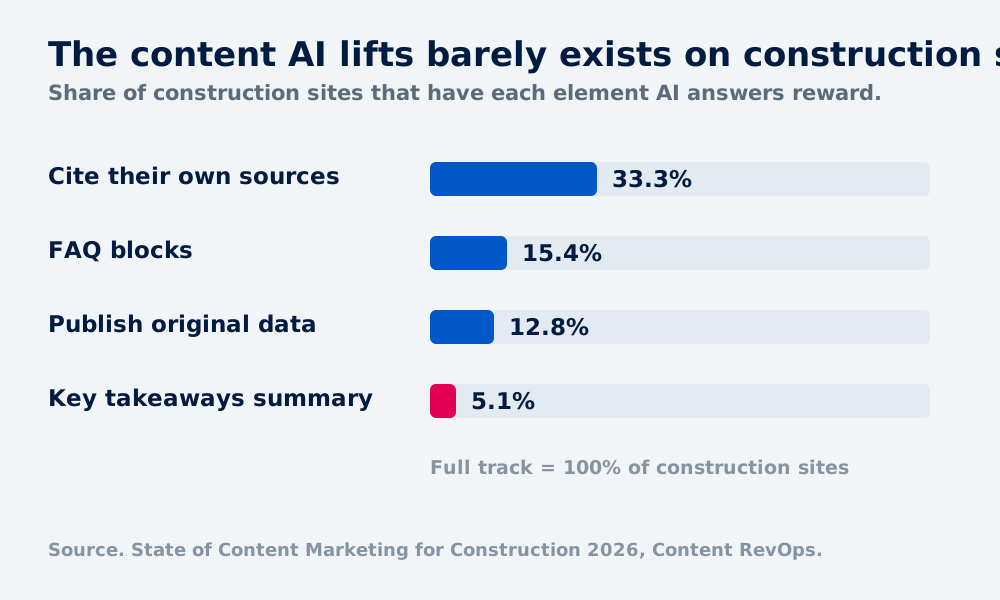
A photo gallery with a caption is not answer-shaped content. Neither is a services page that lists trades without explaining anything. The tools cannot lift what is not written down.
The expertise is real, it is just in a form AI cannot read
Construction firms know an enormous amount. It sits in finished projects, solved site problems, and specs the team knows cold. Very little of it reaches a plain web page.
Project pages carry photos and almost no words, so a tool reading text has nothing to match a buyer's question against. The best knowledge lives in PDFs, submittals, and login-only portals. Where firms do write, they write for peers, in shorthand and jargon, not for the buyer asking a plain question.
It helps to know how the tools actually find pages. ChatGPT's search feature reads the live web through Microsoft's Bing index and its own crawler, and Google's Gemini and AI Overviews lean on Google's index. Both read the words on a page, not the pictures. When a buyer asks a broad question, the tool runs several searches of its own and adds qualifiers like "top rated," "licensed," or "commercial." Marina Dryga, an SEO manager at Houzz, calls this a query fan-out, and a firm with a thin or inconsistent presence simply drops out of the summary. The knowledge exists. The page the tool needs does not.
Does AI search matter for a construction business yet?
Yes, because most of the demand you want is not searching for your name. In construction, 91.5% of search demand is non-branded. People look for the category, the service, and the problem, not for your firm. Whoever shows up for those questions wins the introduction, and AI answers are increasingly the thing that shows up.
On the commercial side, the buyers have already moved. The Society for Marketing Professional Services ran its 2nd Annual AEC Buyers Survey in 2026, and 36% of buyers of design and construction services said they now use AI tools like ChatGPT and Claude to build a first short list of firms with the exact scope they need, long before those firms know a project exists. If AI builds the short list and your firm is not in the answer, you are cut before anyone reads a proposal.
On the residential side, the same shift is early but real. Houzz found that nearly one in ten homeowners already use AI to find, evaluate, and communicate with pros. And AI visibility matters twice, because even a strong referral now gets checked. A homeowner who hears your name from a neighbor still asks the AI about you before calling, so the answer either confirms the referral or ends it.
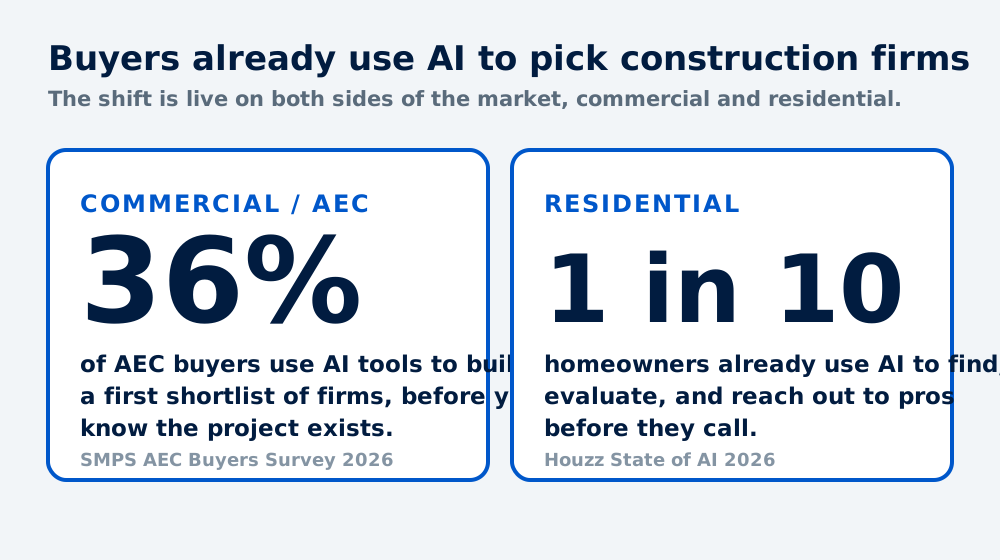
AI answers are already the front door to a large share of construction demand, and right now that door opens onto everyone but the firms who do the work.
How do AI answers decide which construction sources to cite?
They cite the pages built to be quoted. In an audit of nearly two million sessions of search traffic, the strongest thing a cited page had was a short, self-contained answer of about twenty to twenty-five words placed right under a question-style heading, paired with the page's own data. Roughly a third of cited pages combined those two things, and that combination outperformed everything else.
So the tool is not judging how good your projects are. It is judging whether your page states a clear answer, backs it with a number, and does it somewhere it can find and read. That is the whole game, and it is one construction firms can win.
How do you get your construction company cited in AI answers?
You do not need a new tool or a rebuild. You need to put the knowledge you already have into the shape AI can lift. Here is the order to do it in.
Answer the questions your buyers actually ask, in writing
Take the questions you field on every call, about timelines, permits, cost drivers, and what goes wrong, and answer each one in plain writing on your site. Lead each answer with a direct two or three sentence reply, then explain. Put a short scope description on every project page, not just photos, so a tool reading text knows what the job was. This is the content most construction sites are missing, since answer-shaped FAQ blocks and key-takeaway summaries barely exist in the category.
Put your own numbers on the page
Original data is the strongest citation magnet there is, and almost no construction firm publishes any. You do not need a research budget. A cost range you actually see, a schedule you hit, the square footage and result of a finished project, a small tally from your own jobs. A page that says something specific and countable gets pulled into answers that a page of adjectives never will.
Put a name and real credentials on the work
AI answers reward content that shows a person and their experience behind it. Just over half of construction firms put a named author on their content, and the rest publish anonymously. Add a real author, a short bio, and the experience that makes the claim credible. It is a small change that signals the page is written by someone who has done the work.
Say the same thing about your firm everywhere
Because the tools run a query fan-out and drop firms with a thin or inconsistent presence, your name, services, and service area need to match across your website, your Google Business Profile, Bing Places, and the directories you appear in. When every source agrees on what you do and where, the tool grows confident enough to name you.
Let the crawlers in and get onto Bing
None of the above matters if the tools cannot reach your pages. Make sure your site does not block the AI crawlers in its robots file, and confirm your pages are indexed on Bing, since ChatGPT's search leans on Bing while Gemini leans on Google. Keep the pages current, because fresher pages get cited more often.
Test yourself
Open ChatGPT, Gemini, and Perplexity in a private or signed-out window and ask the questions a buyer would ask, like who the best firms are for your type of work in your area. See whether you show up, and whether what the tool says about you is right. Repeat it every couple of months, because the answers shift as the tools recrawl the web. It is the cheapest AI visibility check you have, and the construction benchmarking tool scores the rest of your content against 2,000 firms.
If you want to see how this fits the wider picture of winning construction demand, our construction marketing hub and the State of Content Marketing for Construction 2026 study go deeper on the foundation this sits on.
The bigger picture
The expertise is not missing from construction. It sits in the projects you have finished, the problems you have solved, and the specs your team knows better than anyone. It is just not in a form an answer engine can lift, so a forum thread or a reference site gets cited on a question your firm could answer better than any of them.
Getting cited in AI search is not a new marketing project bolted onto everything else. It is taking the knowledge you already own and giving it a job it can do, as content that brings you work. The firms that do it first will own the answer layer in construction while it is still empty, and right now it is still empty.
Want to know which buyer questions AI answers without your construction firm?
Our content revenue audit runs the questions your buyers ask through the AI tools, shows who gets cited instead of you, and puts a number on the work you are missing.
Frequently Asked Questions
About the Author

Founder & CEO, Content RevOps
Stefan Kalpachev is the founder and CEO of Content RevOps, where he helps B2B SaaS companies transform their content into predictable pipeline. With a background in content marketing and revenue operations, Stefan has developed a unique methodology that bridges the gap between content creation and revenue generation.
Connect on LinkedInRelated Articles
How to Turn Before-and-After Construction Project Photos Into a Marketing Strategy
Oct 8, 2026

How to Build a Construction Marketing Strategy That Generates Pipeline
Oct 7, 2026
Construction Video Marketing: Where It Actually Pays
Oct 5, 2026