Top Demand Generation Trends to Watch in 2026
Want your 2026 demand gen to run like an operating system—not a stack of tactics? Let’s map your Content RevOps plan.
Book a CallDemand generation is entering its first truly AI-native cycle. Buyers are not just searching and clicking the way they did a few years ago. They are asking AI tools to summarize options, compare vendors, and recommend next steps. At the same time, search layouts keep shifting, making visibility harder to predict and harder to measure by clicks alone.
The pressure built through 2025: weaker third-party signals, tighter budgets, longer buying cycles, and more stakeholder-heavy decisions. Many teams responded by adding tools and shipping more content. But volume and point solutions are not fixing the core issue: the work is fragmented.
In 2026, the teams that outperform will rebuild demand gen as a connected operating system—linking content, data, and orchestration across the full journey, with clear governance and revenue accountability. That means fewer disconnected campaigns and more durable “content as infrastructure” that supports discovery, self-education, sales conversations, and measurement.
In this article, we’ll cover 10 trends that reflect that operating-model shift, including how they change:
how you create and prove content (credibility, expertise, research)
how you distribute it (AI discovery, multi-touch, communities, partners)
how you measure it (pipeline impact, trust signals, and visibility beyond clicks)
Demand Generation Trends: Agentic AI Becomes the Operating Layer
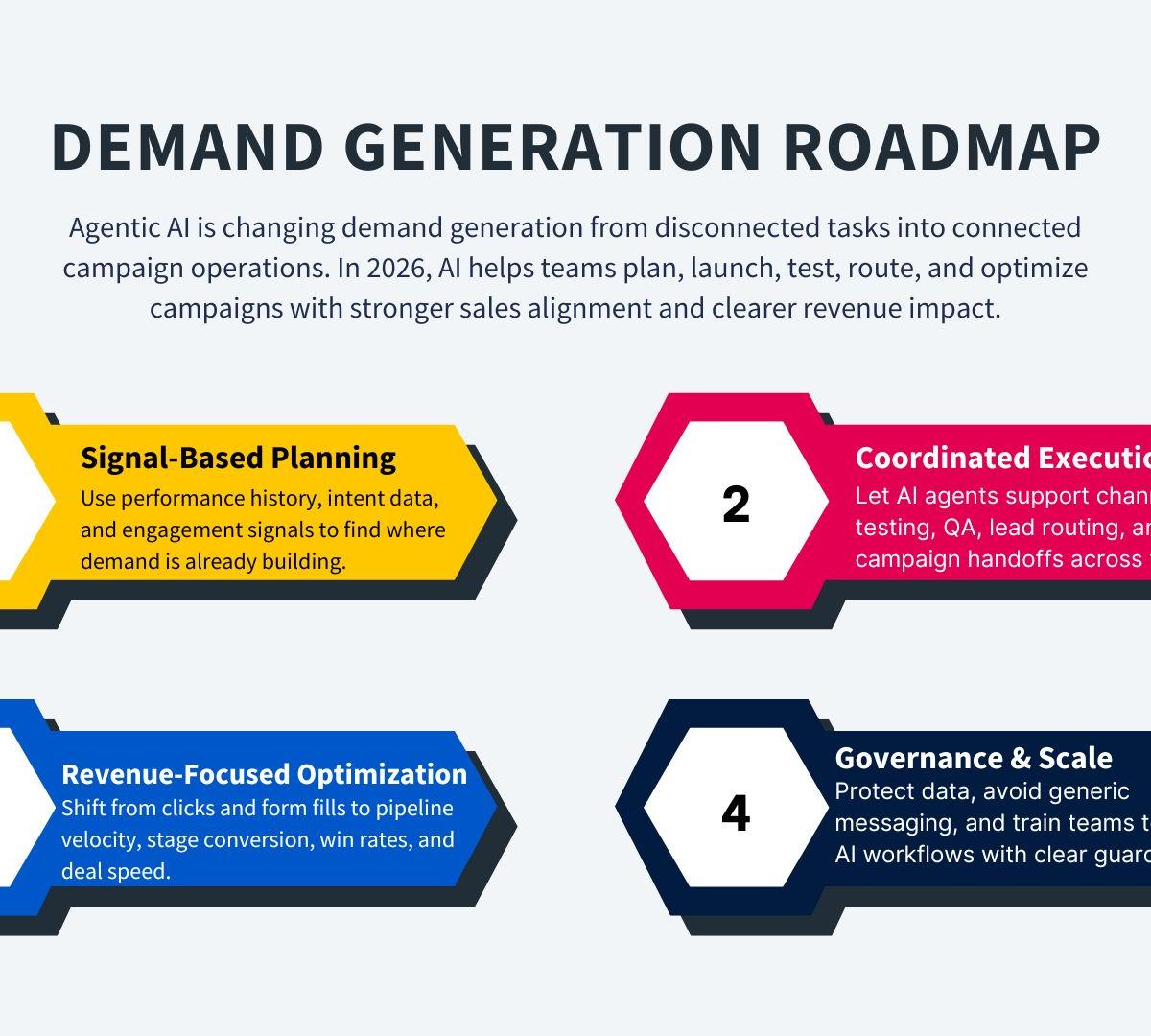
In 2026, the big shift is from using AI as isolated helpers (copy tools, chatbots, quick analysis) to running AI as an orchestration layer. In today's marketing landscape, efficiency, ROI, and alignment between marketing and sales teams are more crucial than ever, driving the need for integrated strategies. These agentic systems plan, route, test, QA, and optimize campaigns across channels, often inside the tools teams already use. You’ll see this show up as marketing orchestration engines, revenue AI “operating systems,” and workflow copilots embedded in MAPs and CRMs.
When planning campaigns, sales marketing alignment and close collaboration between marketing and sales teams are essential for sustainable growth. This ensures that marketing teams and sales teams share insights, coordinate strategies, and focus on high-value accounts, leading to improved lead quality and better sales performance.
Operational wins include:
Faster campaign launches and iterations
More accurate targeting and personalization
Improved lead quality for sales teams due to data-driven insights and predictive analytics
Optimization is now continuous, with predictive analytics and data-driven insights used to prioritize high-quality leads and streamline the qualification process, resulting in more efficient handoffs to sales teams.
As demand generation shifts from just driving lead volume to focusing on revenue outcomes, it has evolved into a full-funnel strategy that emphasizes engagement, nurturing, and long-term conversion. Using data to drive decision making helps streamline the qualification process, resulting in improved lead quality for sales teams. Notably, 95% of B2B marketers report improved demand generation effectiveness when using a data-driven strategy, as these approaches lead to more accurate campaigns, reduced costs, and higher-quality leads over time.
In summary, strong alignment between marketing teams and sales teams, especially inside sales, is crucial for effective demand generation and sustainable growth in today's marketing landscape.
What actually changes in demand gen ops
Campaign planning moves upstream. AI agents can cluster audiences and themes using performance history plus intent and engagement signals, so planning starts from what is working and where momentum is building. AI now analyzes behavioral data—such as website visits and content depth—to identify high-intent prospects, further refining audience targeting. That aligns with how high-performing teams are already using signal-based, in-market data to prioritize accounts and programs instead of relying on broad persona lists alone.
Execution becomes coordinated by default. Instead of manual handoffs, agents can adjust channel mix, run multivariate tests (subject lines, creative variants, offers), and route leads based on fit and behavior. Marketing automation streamlines marketing processes by consolidating data, enabling real-time lead routing, and supporting coordinated, always-on campaigns. Research on multi-step email sequences and multi-channel mixes shows these orchestrated, always-on cadences materially outperform one-and-done blasts in both reply and meeting rates, especially when powered by shared data and automation across channels.
Optimization shifts to revenue outcomes. Budget and effort get reallocated using pipeline velocity and stage conversion, not just clicks or CTR. That mirrors the broader move in B2B toward pipeline- and revenue-centric attribution models over lead volume, with demand gen success judged on sourced and influenced opportunities, win rates, and deal speed—not just form fills.
Key operational wins tend to be:
Faster experiment cycles and higher test volume
Less manual ops debt (list pulls, segmentation, QA, data syncing)
Better alignment between content, channels, and pipeline impact
AI agents autonomously handle initial research, data enrichment, and real-time lead routing, greatly reducing response times
Risks and gaps to address
The risk isn’t “AI replaces marketers.” It’s teams letting AI generate undifferentiated messaging at scale. Another gap is governance: free tools can expose sensitive data. Finally, teams need training for “AI operators” who can manage workflows, guardrails, and measurement—not just write prompts. Recent demand gen benchmarks show that scattered or incomplete data is already a top barrier to confident decision-making; layering poorly governed AI on top of that just amplifies the problem.
Answer Engine Optimization (AEO/GEO) and AI Visibility
Discovery is shifting. Classic blue-link SEO still matters, but it is no longer the only (or even primary) path for many research queries. Effective seo strategies and the creation of relevant content are now essential for improving both AI and search visibility, ensuring your brand stands out in evolving demand generation trends. Buyers now see AI Overviews, Web Guide-style modules, and LLM answers that summarize multiple sources. That creates more “zero-click” moments, but it also changes what a high-intent click looks like: fewer visits, sometimes better-qualified.
When optimizing for AI-generated answers, it’s crucial to leverage data insights and valuable insights from audience engagement to inform content creation and ensure your messaging resonates with target segments.
Content briefs and measurement should prioritize high-authority, research-backed content, as this is increasingly outperforming generic, AI-generated material in marketing effectiveness.
What AEO/GEO actually involves
AEO/GEO is optimizing for inclusion in AI-generated answers, not just ranking a page. That means:
Publishing content that is easy to extract, quote, and summarize
Earning presence in third-party sources that models treat as authoritative (reviews, analysts, communities)
Fixing technical basics that still gate visibility (non-JS crawlability, structured data, and clear bot permissions), especially as many AI crawlers behave more like lightweight, non-JS search bots than full browsers
Practical implications for demand gen
Content briefs now need “AI visibility” goals: Which questions should we be the default answer for? Measurement expands beyond sessions into patterns like:
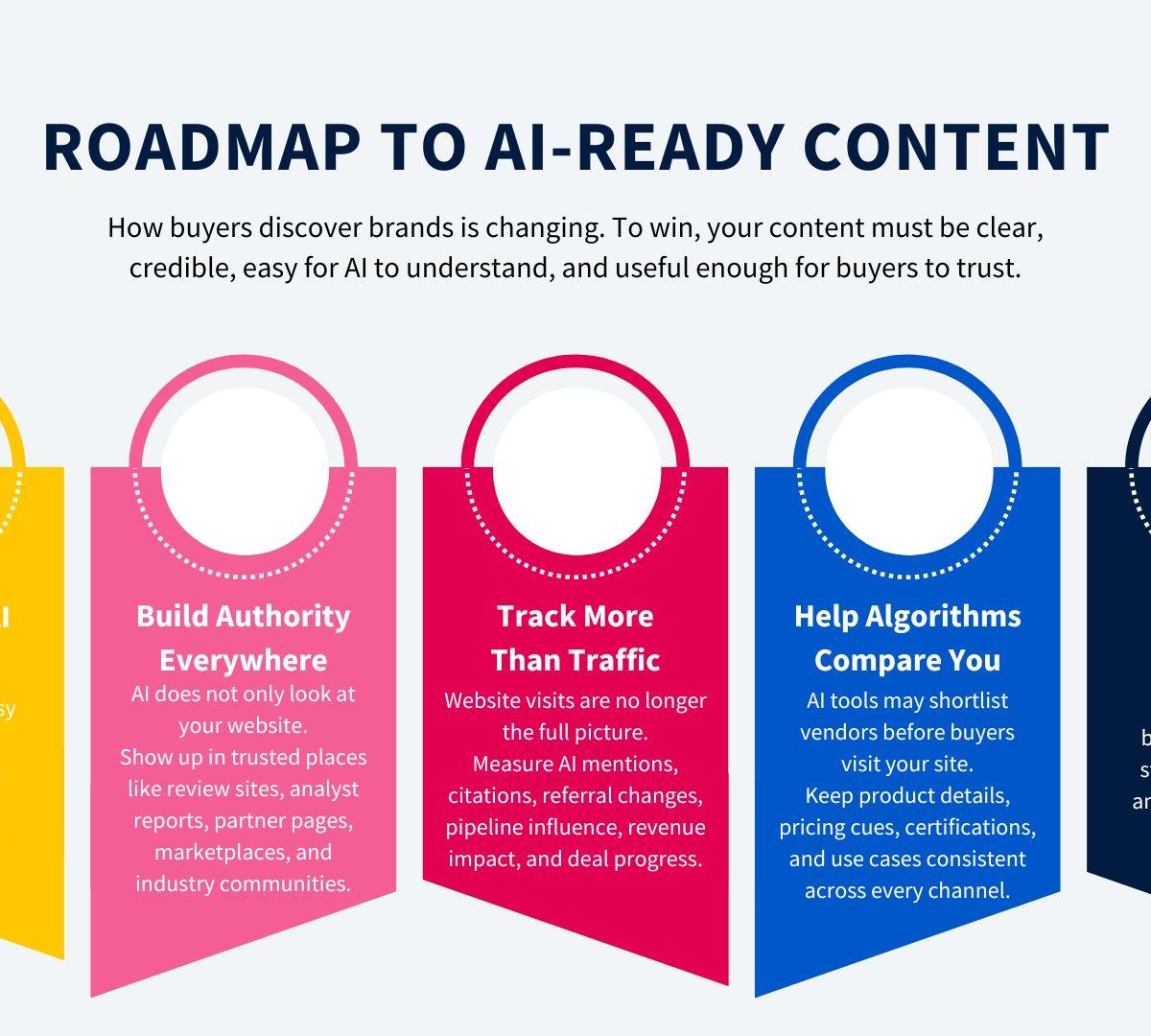
Brand mentions in AI answers and generative summaries, where inclusion functions more like top-of-funnel brand exposure than a classic traffic channel
Citations/linked sources shown in AI modules
Referral changes from hybrid AI search surfaces as Google experiments with Web Guide-style interfaces that blend AI explanations with standard organic links
Additionally, measuring success of demand generation campaigns now requires tracking full-funnel performance, ROI, and overall demand generation success. Modern demand generation strategies prioritize ROI and require marketers to demonstrate the value of their campaigns in terms of pipeline expansion and revenue generation.
The B2A (business-to-algorithm) angle
Algorithms shortlist vendors early. Product specs, certifications, and pricing cues need to be digitized and consistent across your site, marketplaces, and data partners—so machines can compare you fairly and do not quietly exclude you from AI-mediated vendor lists. Leveraging customer data further enhances your targeting, enabling more precise inclusion in AI-driven vendor selection and supporting Account-Based Marketing (ABM) strategies.
Proof-Driven, Expert-Led Content Marketing Becomes the New Demand Fuel
Search is getting less predictable, and AI summaries often answer questions without sending clicks. At the same time, buyers are flooded with safe, generic advice. That combination is pushing thought leadership away from opinion-first posts and toward proof assets that help real buying committees make decisions, mirroring the broader move toward research-led demand programs and “market conditioning” rather than surface-level awareness. Leveraging the brand's expertise through content marketing is now essential for positioning your company as an industry leader, building authority and credibility in the market.
Why this is rising now
Thin, keyword-first content is easier for algorithms to ignore and easier for buyers to dismiss. What stands out is original, practitioner-led insight that shows how something works in practice and what it costs, takes, or risks—particularly as B2B teams lean on original research and benchmarks to anchor 6–12 months of demand campaigns and sales conversations, not just top-funnel blogs. Demand generation marketing increasingly relies on high-quality, research-backed content to educate and engage potential customers, setting brands apart from competitors.
What “proof-driven” actually means
Proof-driven assets tend to be:
Original research: benchmarks, market snapshots, pricing/ROI norms that your market starts to quote and compare against
Teardown case studies: real numbers, steps, constraints, and what failed, framed so buying committees can see risk and tradeoffs clearly
Field guides/playbooks: authored or co-authored by credible operators, not anonymous copy, and designed to help buyers navigate complex decisions rather than just restate best practices
Content marketing is evolving to focus on building a meticulously crafted library of content that captures prospects at any stage of their journey, rather than just churning out articles filled with keywords. Effective content marketing strategies must be intelligent, focused, and aligned with AI-driven analytics, moving away from vanity metrics to genuinely solving the pain points of the target audience.
Impact on demand gen
These assets are used to:
Earn inclusion in shortlists and AI-generated vendor summaries, where depth and credibility increasingly act as authority signals
Help buying groups validate choices and reduce perceived risk, a growing focus as teams measure content on opportunity influence and deal acceleration as much as on traffic
Create reusable decision infrastructure for sales and customer success, not just top-funnel traffic—fuel for ROI models, objection handling, and self-service content experiences that let buyers progress 70–80% of the journey without a rep
Buyer-Led, Self-Serve Experiences as a Core Conversion Engine
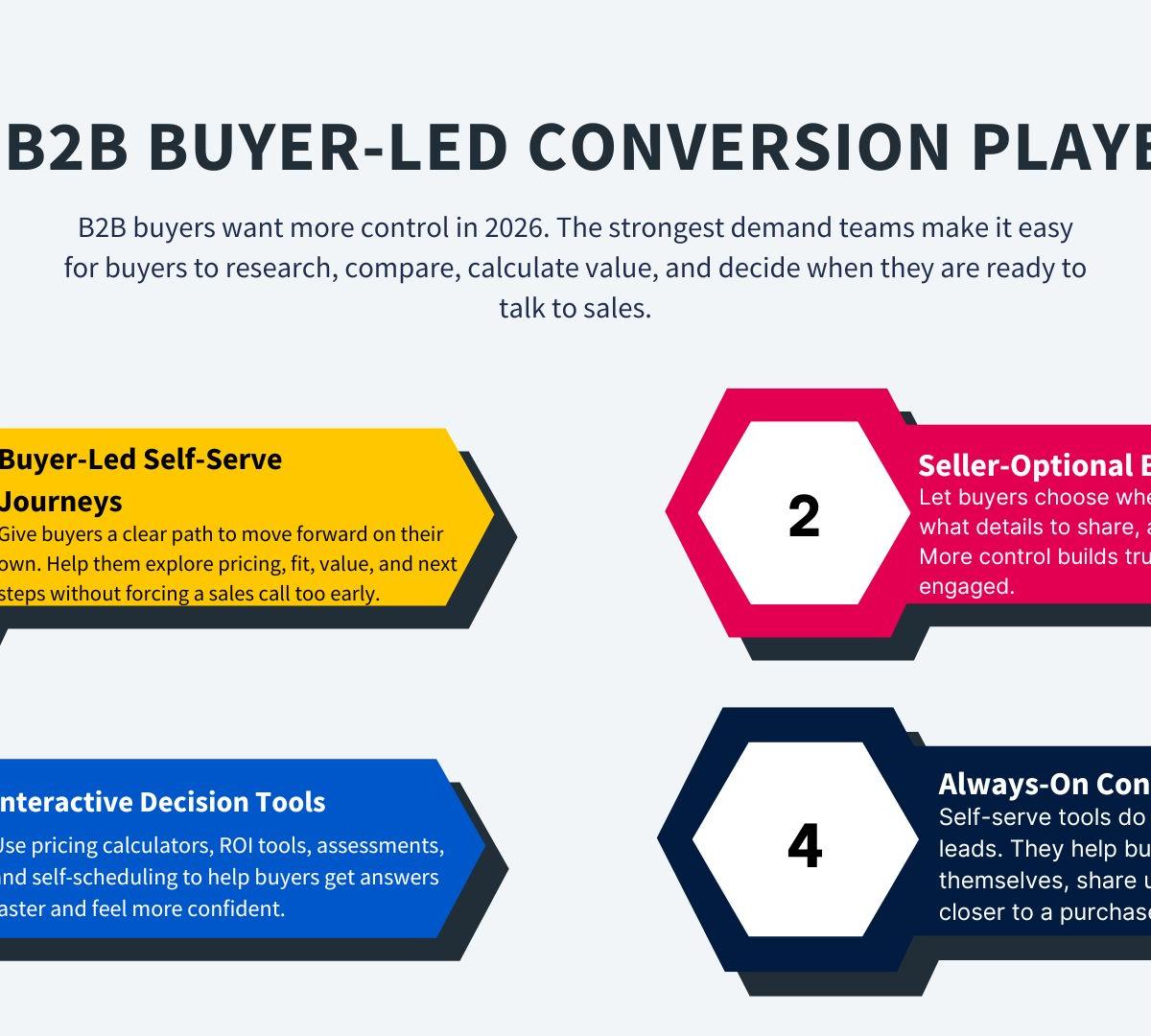
Self-serve is becoming a primary way buyers move themselves forward, especially in early and mid-funnel steps. Understanding the buying journey and buyer's journey is crucial for optimizing these self-serve experiences, ensuring prospects are supported at every stage from awareness to conversion. Many want a seller-optional path: they decide when to talk to sales, what to share, and how fast to go. In fact, 61% of buyers now prefer rep-free purchasing experiences, highlighting the growing importance of self-directed research and the need for demand generation strategies that align with this trend. That shift forces demand teams to treat “help me decide” experiences as conversion assets, not just UX polish, especially as research shows most B2B buyers now prefer digital self-service for the bulk of their journey and often reach 70–80% of the way through evaluation before engaging sales in earnest (Content Marketing Institute).
Self-serve tools not only empower prospects but also support the buying process by facilitating ungated content consumption, which helps build trust faster before prospects engage with sales.
The behavior shift
Buyers increasingly expect to complete meaningful buying tasks without a meeting. If your site can’t answer pricing, fit, and impact questions, they will keep researching elsewhere—often turning to third-party content and peers. Engaging prospective buyers early in the funnel is crucial to build trust and influence their decision-making, especially as they seek validation from customer success stories and advocacy programs. Only a small minority of customers say vendor content is sufficient to help them solve their problem, which means gaps in your self-serve experience effectively push demand off your properties and into someone else’s ecosystem.
Self-serve patterns gaining traction
Common patterns now show up across B2B journeys:
Pricing calculators and configurators that offer transparent ranges and trade-offs
Self-scheduling that lets buyers choose a rep, add context, and pick a topic
Interactive ROI models, assessments, and diagnostics that return a tailored result—formats consistently associated with higher engagement, better self-qualification, and richer first-party data in demand gen research (Content Marketing Institute). These interactive tools also collect valuable customer data, enabling more targeted marketing and personalized outreach.
Why these outperform “download the PDF”
Interactive tools convert better because they build confidence and self-qualify intent. They also capture high-consent first-party data during use (use case, constraints, budget range), which becomes cleaner segmentation signal than a generic form fill. As more teams lean on first-party data to drive targeting and personalization, these tools effectively become always-on demand engines rather than one-off lead magnets.
ABM/ABX Evolves into a Predictive Analytics Revenue Engine
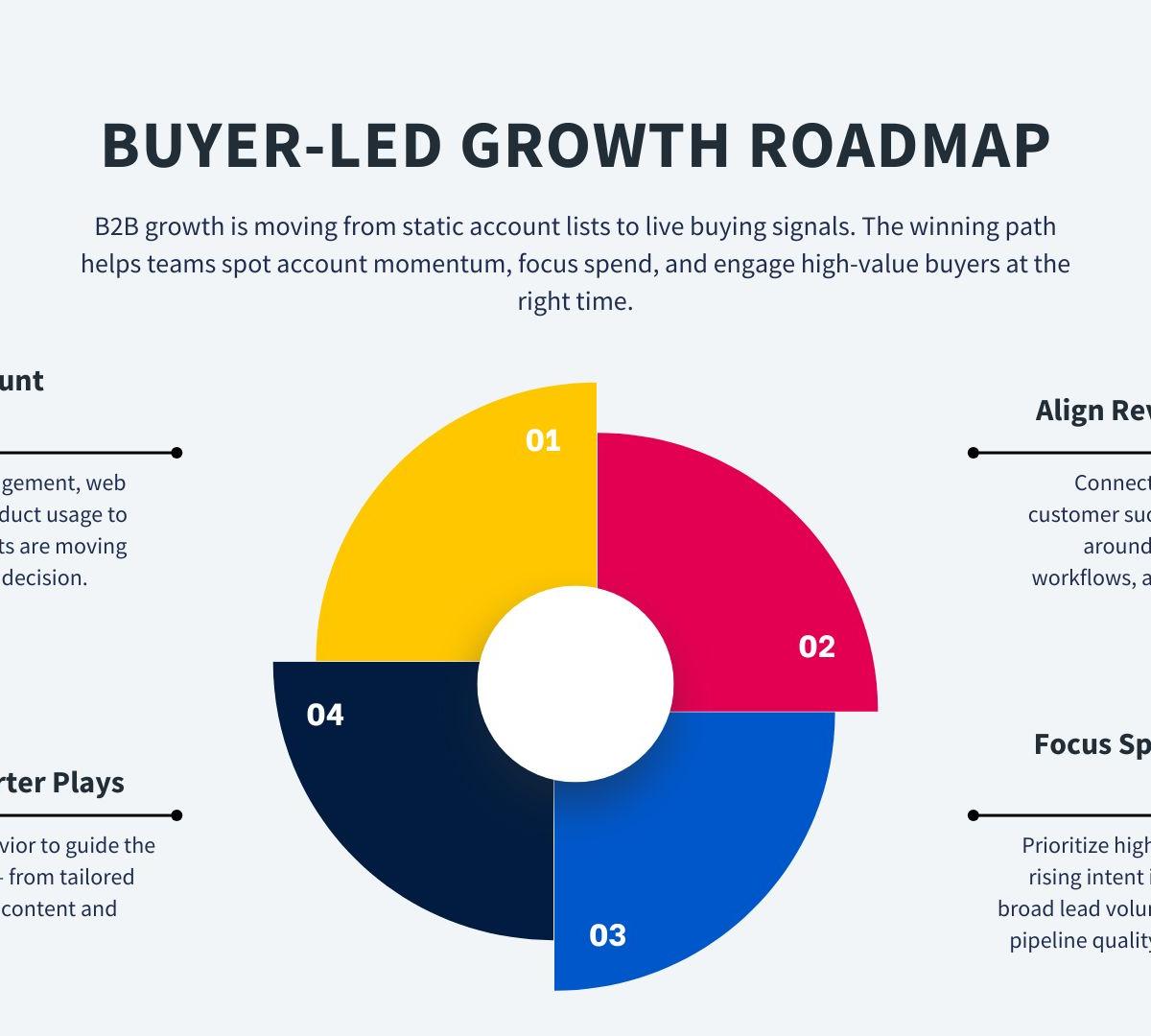
In 2026, account-based approaches keep moving past static “ABM lists.” Account based marketing (ABM) emerges as a leading demand generation strategy, focusing on high-value accounts with the highest conversion potential and treating each account as a market of one. The focus shifts to predicting account momentum by reading signals across the buying committee, not chasing individual leads. Teams blend intent, engagement, and (when relevant) product usage to decide where to spend time, ads, and outbound, echoing broader moves toward signal-based, in-market demand generation in B2B programs.[^signal]
Signal-led orchestration relies on the close integration of sales and marketing teams, ensuring coordinated efforts to engage high-priority accounts. The use of predictive analytics is transforming demand generation strategies by enabling real-time lead scoring, predicting customer behaviors, and identifying high-value prospects for optimized marketing efforts.
Key ABM components include deep account research, tailored content, and personalized outreach. ABM integrates a multi-channel approach, ensuring that marketing and sales teams work together to engage high-priority accounts effectively throughout the buyer's journey. The success of ABM lies in its ability to align marketing and sales teams around common revenue targets, ensuring that high-priority accounts receive tailored messaging and attention.
From targeting to signal-led orchestration
ABM 2.0 looks more like an always-on system: it watches for patterns, then triggers coordinated plays across marketing, sales, and customer success using shared RevOps infrastructure. Tech and SaaS marketers are already seeing better pipeline yield when ABM and RevOps are fused into a single operating layer for revenue.[^abm]
Core components tend to include:
Multi-signal models (web behavior, content depth, third-party intent, social cues)
Joint workflows for routing, follow-up, and reporting, involving close collaboration between marketing, sales, and customer success teams within revenue operations
Playbooks tied to patterns, not personas (for example: competitor research spike + pricing-page visits → tailored sequence + high-intent proof content)
What this changes for demand gen
Brand programs, campaigns, and outbound get tighter around named accounts, which helps under budget pressure. Spend concentrates on accounts with clear fit and rising momentum, instead of broad volume targets, generating high quality leads and quality leads that improve conversion rates and ROI. Cycles can shorten because committee alignment is orchestrated, not left to chance.
First-Party Customer Data Governance and Unified Profiles as a Competitive Edge
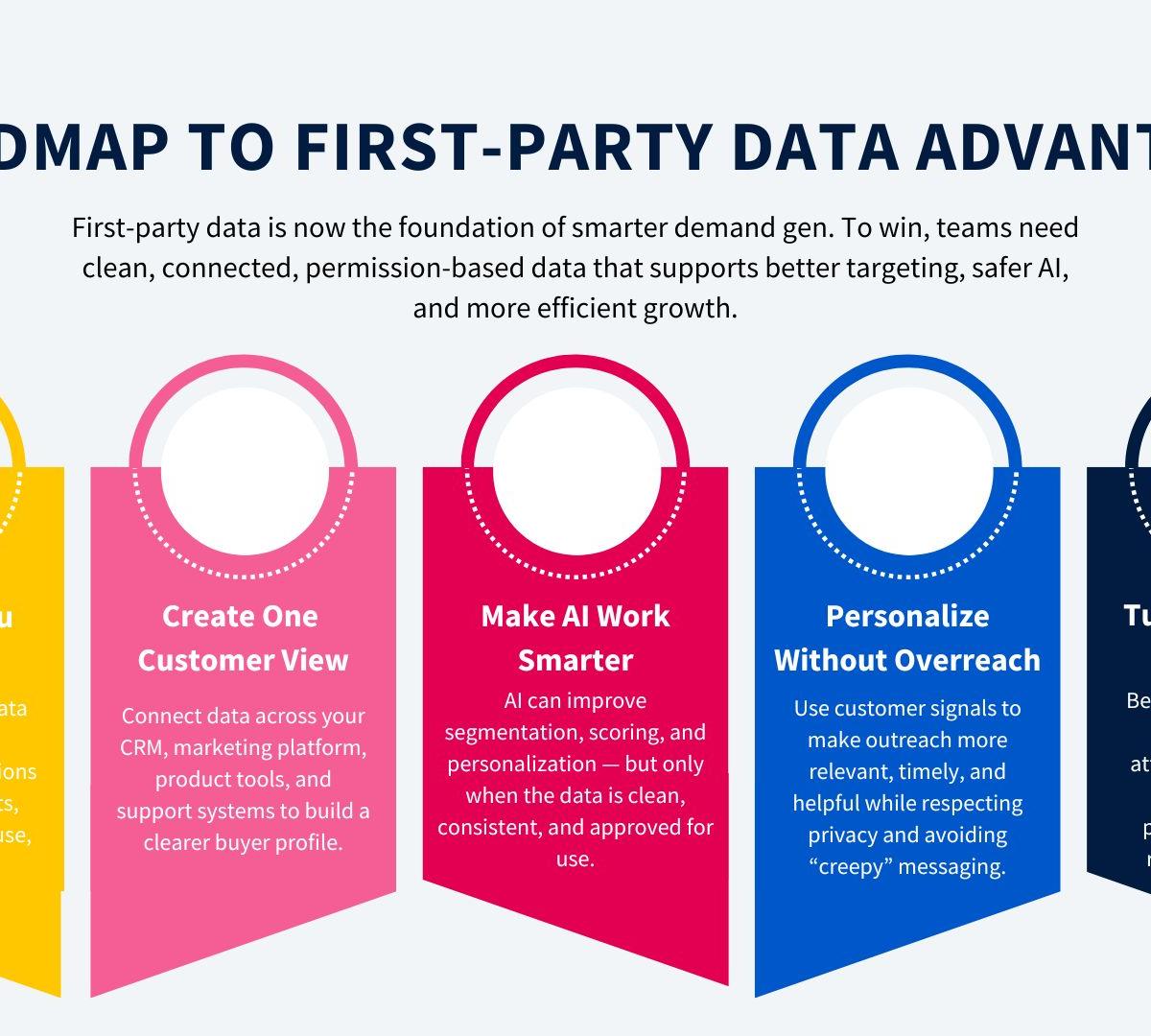
First-party data is now the center of demand gen because outside signals keep shrinking. As cookies fade and privacy expectations rise, teams can’t rely on rented audiences or fuzzy tracking. At the same time, AI is being pushed deeper into segmentation, scoring, and personalization, and it only works well when inputs are clean, consistent, and permissioned. Bad data doesn’t just reduce performance; it increases compliance and brand risk—and “scattered or incomplete data” is already cited as a primary barrier to confident decision-making in recent B2B trends research from Demand Gen Report (example).
Leading teams are treating data governance as a growth lever, not an IT project. They’re capturing better signals through content-led experiences (interactive tools, webinars, events, and in-app moments), then resolving identity across systems to form a unified profile spanning MAP, CRM, product, and support. Interactive content in particular is emerging as a workhorse for this kind of first-party data collection and self-qualification (research overview). They’re also setting clear guardrails for AI use—access controls, redaction rules, and approved models—so sensitive data doesn’t leak into the wrong places.
Demand gen impact shows up quickly:
More accurate segmentation and timing for outreach
Personalization that feels relevant (and avoids “creepy” overreach)
Clearer attribution and forecasting as journeys are stitched together
Improved data quality directly reduces customer acquisition cost and enhances marketing efforts by enabling more targeted campaigns and better engagement, ultimately supporting more efficient customer acquisition.
Operationally, data quality work (standardization, deduping, enrichment) is being tied directly to campaign KPIs, with shared ownership across marketing, RevOps, and IT/security. Better data governance also supports more efficient customer acquisition by lowering costs and improving the effectiveness of marketing efforts. Data-driven demand generation strategies lead to more accurate campaigns, which can reduce costs and improve the quality of leads over time.
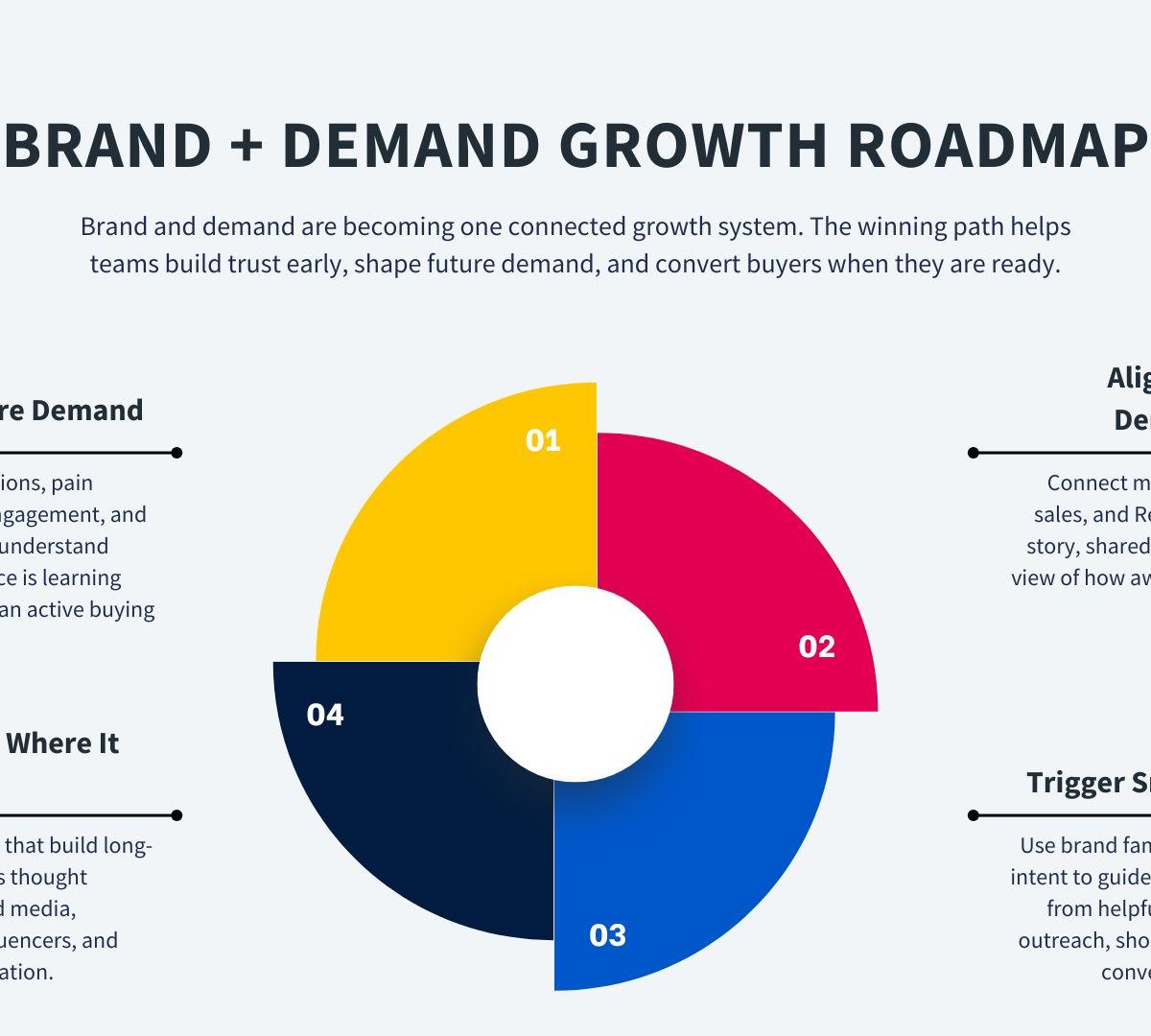
Brand and Demand Run as One Market-Conditioning System
In 2026, brand building and demand gen are collapsing into one system designed to shape future pipeline, not just capture leads. Brand and demand programs now work together to create awareness and generate demand, ensuring long-term revenue growth by building trust and authority that pays off when prospects are ready to buy. The reality is simple: most of your market is not buying today—various B2B benchmarks estimate only about 5% of buyers are in-market at any given time, with the other 95% sitting in “future demand.” As AI assistants and search experiences filter options, recognizable and trusted brands are more likely to show up in default recommendations and summaries, especially as buyers increasingly rely on generative AI during research and procurement.
“Market conditioning” means teaching the market how to frame the problem, what good looks like, and why your POV is different—long before a form fill. Demand generation ensures your company remains top-of-mind and recognized as a trusted industry leader when prospects are ready to make a purchase. It relies on consistent, problem-first narratives across channels, supported by distinctive creative and credible thought leadership that actually helps buyers navigate complexity and make better decisions. Influencer collaborations and community participation help spread that story in places where buyers actually learn and compare, even when clicks are limited, and they are rapidly becoming funded, core demand channels rather than side projects.
How this shows up in measurable demand:
Higher-quality direct and branded search traffic
More shortlist inclusion (including AI-generated vendor summaries)
Lower CAC as warmed audiences convert faster and often at higher deal sizes
Brands are investing in owned media like podcasts, newsletters, and private communities to build durable customer relationships and sustainable growth, moving away from reliance on unstable social platforms.
Operationally, teams plan together: shared budgets, one commercial narrative, and success metrics that link awareness to pipeline health, intent signals, and sales enablement impact.
B2B Influencer Co-Creation Becomes a Core Credibility Lever
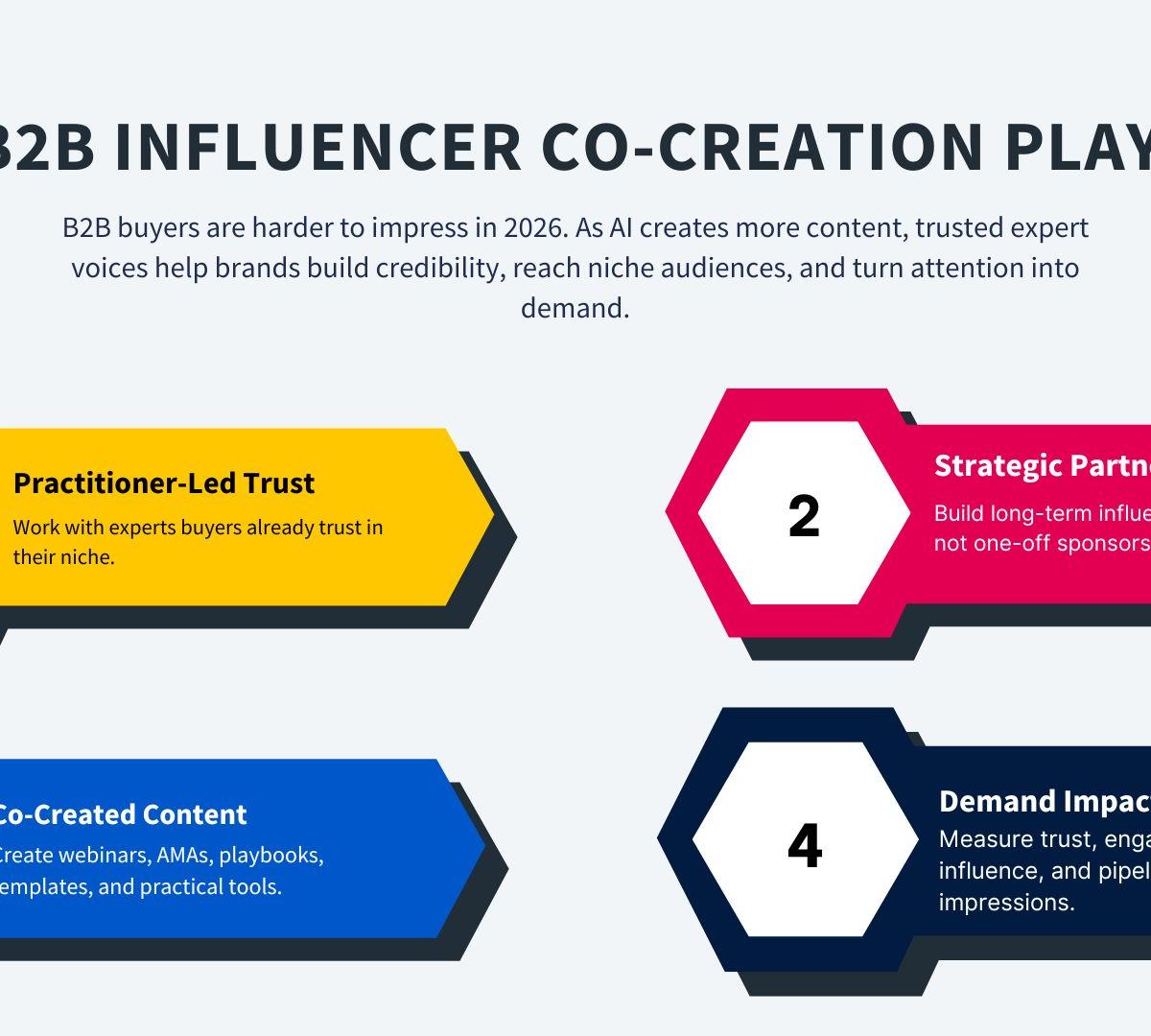
As AI increases content volume, buyers are getting stricter about what feels real. Practitioner voices with visible track records are becoming a practical trust shortcut, especially in niche communities where reputation is earned over time. That is why B2B influencer programs are moving from experiments to funded, repeatable demand channels—mirroring broader shifts toward thought leadership as a core demand lever rather than a brand “nice-to-have.”
Modern programs look less like sponsorships and more like collaboration with operators in your ICP. Increasingly, organizations are cultivating strategic partners—long-term, relationship-based alliances with influencers and industry leaders who act as integral extensions of the marketing team. By leveraging both strategic partners and customer advocacy, brands can build trust, credibility, and sustainable demand generation, moving beyond transactional or campaign-centered tactics. The work is built to travel across platforms, then reinforced through nurture and sales plays, and many teams now plan explicit influencer line items as part of their marketing budgets rather than testing them ad hoc.
Common co-created formats include:
Webinars, teardown series, and live AMAs with practitioners
Playbooks, templates, and simple tools tied to real workflows
Multi-platform distribution (often LinkedIn, X, YouTube, podcasts, and selective TikTok/Instagram)
Done well, the demand impact is not just awareness. You get faster trust with new audiences, higher time-on-content, and more influence on shortlists when respected operators use your product publicly—especially as buyers increasingly rely on expert-led content to navigate complexity and evaluate vendors.
To scale, teams are adding governance (claims, disclosures, brand fit) and measurement that ties influencer work to account engagement and pipeline—not impressions.
Experiential Marketing as a Data-Rich Demand Engine
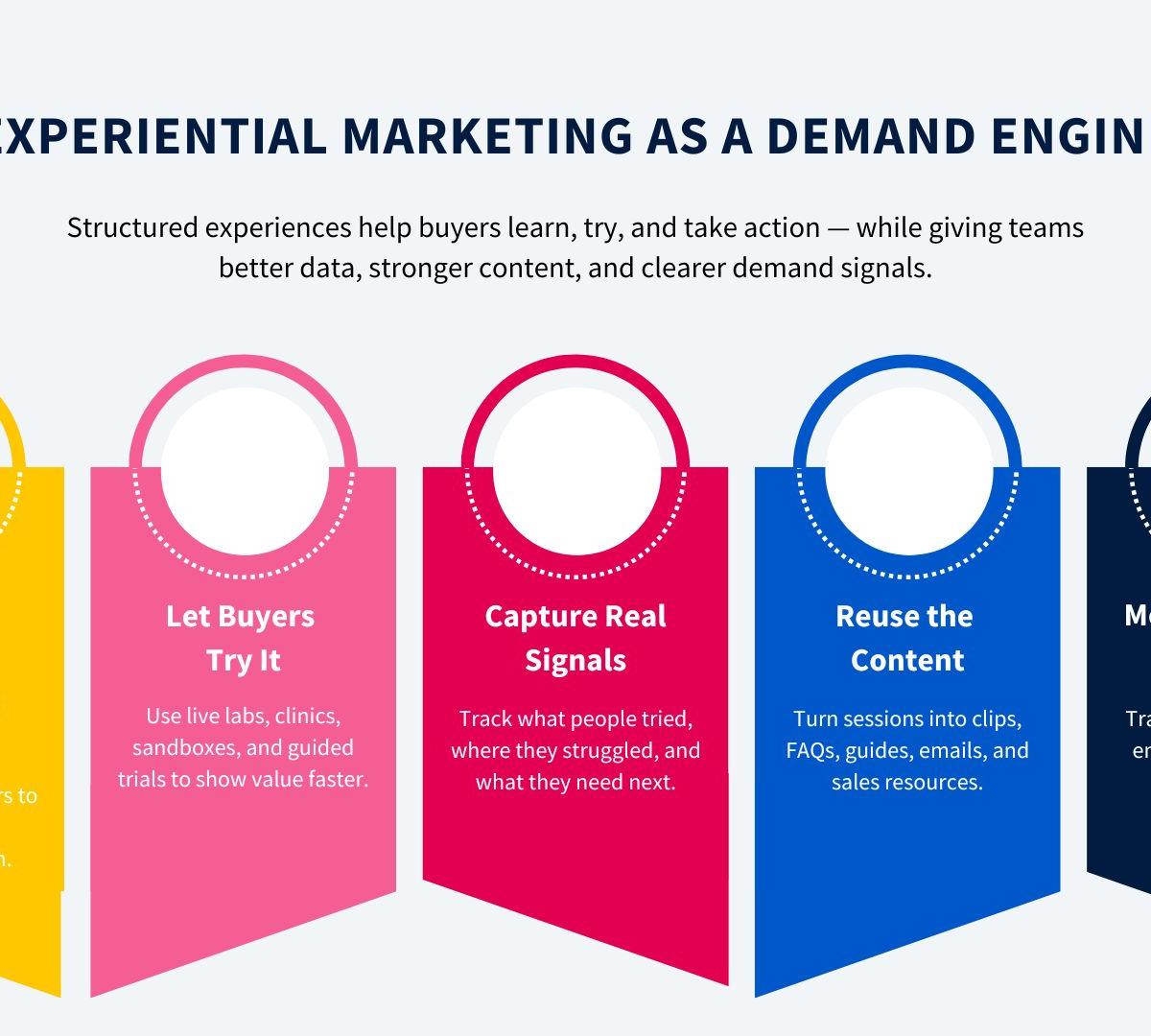
In 2026, experiential marketing is being treated less like a brand add-on and more like a measurable pipeline workflow. Event marketing, including live and digital events such as webinars and conferences, is now a key demand generation strategy that helps engage customers by fostering interactive experiences, building trust, and nurturing leads. Teams are “productizing” events, workshops, product tours, and onboarding into structured experiences with a clear job: teach, diagnose, or solve a real problem for a defined audience.
Experience archetypes that tend to perform well include:
Live labs and clinics for specific roles and high-friction problems
Hands-on product sandboxes and guided trials that lead to clearer fit
Cohort onboarding or accelerator programs that help new customers reach early wins
Video marketing has also become a core element of modern demand generation strategies, using storytelling to engage audiences, simplify complex concepts, and build a human connection with the brand, which helps engage customers and build trust throughout the customer journey.
These experiences create rich first-party data: what people tried, where they got stuck, who showed up across the account, and what they asked for next. That data becomes fuel for ABM models and nurture streams, while the experience itself generates reusable content (clips, FAQs, guides) for search, email, and sales. Research on interactive formats and original research–led programs points to similar patterns: higher engagement, better self-qualification, and more first-party data capture that can power downstream demand programs and sales conversations (Content Marketing Institute).
Measurement is also upgrading. Success is defined by pipeline created or advanced, plus post-experience behavior like product signups, content engagement, meeting requests, and renewals. Tech marketers, in particular, are already budgeting for experiential marketing and tracking it on revenue and ROI alongside engagement, signaling that events and experiences are becoming formal components of the demand engine rather than one-off campaigns (Technology Content and Marketing Trends 2026).
Social Listening Evolves into Cultural Intelligence for Fast Activation
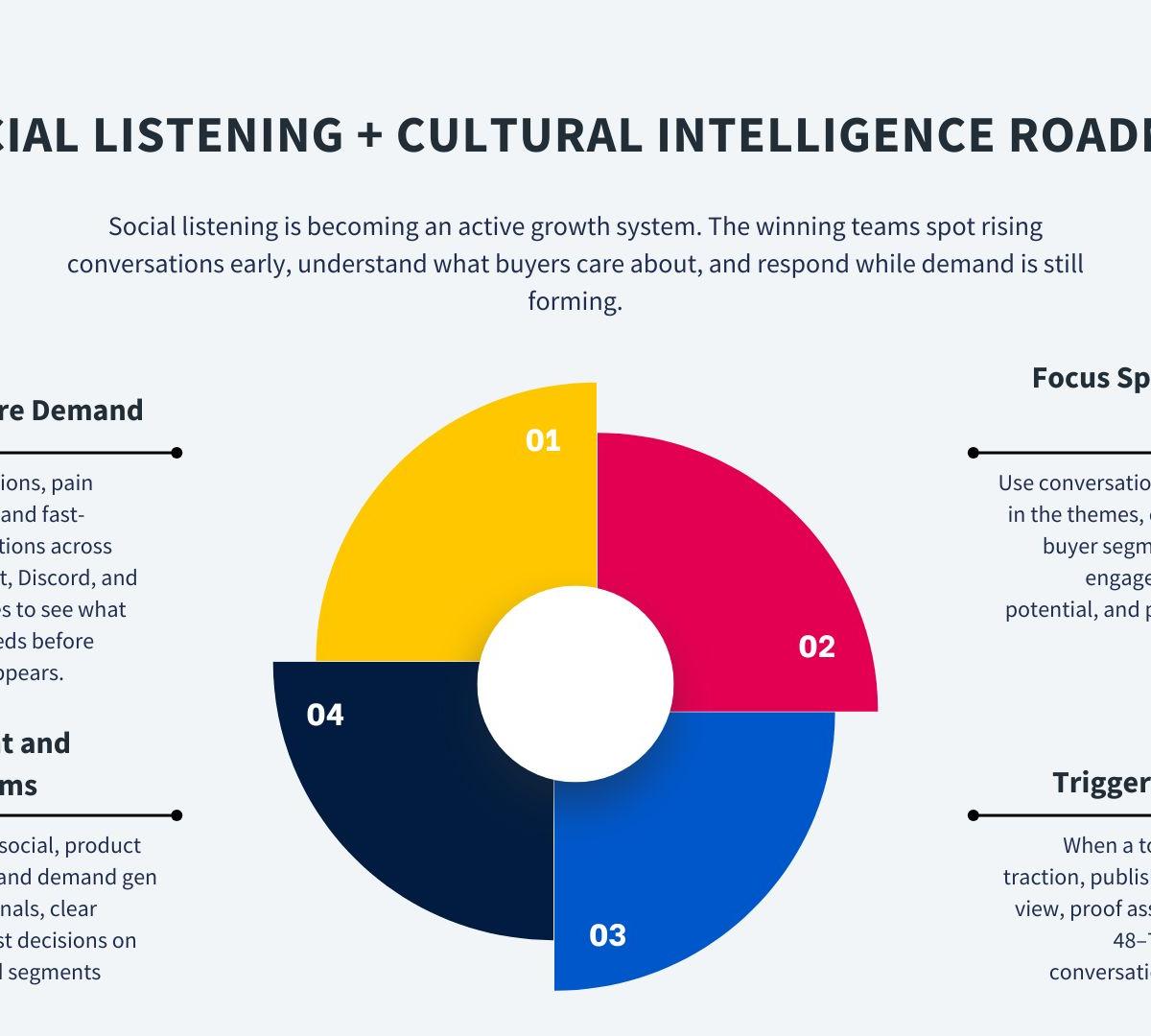
In 2026, social listening is moving from passive dashboards to an active performance system. The goal is not just to report mentions, but to understand what specific communities are saying, how fast a conversation is growing, and what emotions are driving it. Leveraging social media platforms like LinkedIn and X allows marketers to better understand and activate around their target audience, ensuring demand generation efforts are focused on the right segments. Many of the strongest signals appear before search demand exists, especially in niche spaces like Reddit threads, Discord groups, private communities, and subcultures on LinkedIn and X—where “micro-virality” in tight communities often precedes broader trends and new demand themes.
This kind of cultural intelligence can improve demand gen by helping teams spot emerging pains and the exact language buyers use, then decide which themes get budget and which segments to prioritize. It also enables “micro-viral” activation: when a topic spikes, teams can ship a responsive point of view, proof asset, or offer within 48–72 hours, while the conversation is still rising, a reaction window that’s increasingly seen as critical for performance content tied to live conversations.
To make this safe and repeatable, teams need guardrails and small cross-functional squads (content, social, product marketing, sales) that can act fast, supported by a lightweight listening stack that can mature from native analytics into more advanced suites as needs grow.
Measure impact by comparing listening-informed work vs. pre-planned content:
engagement and conversions by theme
reaction speed (signal → publish)
pipeline influence tied to specific conversation clusters
From Tactics to an Integrated Demand Operating System
In 2026, demand generation won’t be about chasing 10 separate trends. It will be about rebuilding how demand works end to end. Demand generation marketing will require aligning marketing strategies across sales and marketing teams to ensure effective demand generation and successful demand generation. AI, new discovery surfaces, proof, self-serve paths, ABM, and experiences only create leverage when they’re connected through one operating model.
The core shift is simple: content is no longer just output or campaign filler. It’s infrastructure. In a world of AI-mediated research, mixed SERPs, and buyer fatigue, the differentiator is a system that unifies content, data, orchestration, and measurement around a clear commercial narrative—mirroring how leading tech marketers now attribute improved results more to content relevance and sales alignment than to tools alone, even in heavily martech-enabled environments (CMI/MarketingProfs tech trends).
What this implies for teams:
Fewer random acts of content; more durable assets that do specific jobs (education, qualification, proof, sales support), similar to research-led programs that fuel campaigns for 6–12 months instead of one-off eBooks (CMI demand gen research)
AI that supports orchestration and testing, not just faster drafting
Trustworthy first-party data and governance, so personalization feels relevant—not intrusive
Channels that reinforce one story, from outbound sequences to self-serve tools and account plays
This is the lens behind Content RevOps: treating content as a go-to-market operating system, grounded in research, built around one theme, and activated across the full funnel. As these trends accelerate, the winners will be the teams that turn their demand generation efforts into a coherent Content RevOps engine that compounds over time instead of resetting every quarter. These efforts generate leads, nurture marketing qualified leads, and improve lead quality and conversion rates. In B2B demand generation, understanding how buyers engage and move through the funnel is essential for converting prospects into paying customers.
Is your demand gen built to compound—or does it reset every quarter?
Build Content RevOps: content as revenue infrastructure that drives AI discovery, self-serve conversion, and pipeline you can prove.
About the Author

Founder & CEO, Content RevOps
Stefan Kalpachev is the founder and CEO of Content RevOps, where he helps B2B SaaS companies transform their content into predictable pipeline. With a background in content marketing and revenue operations, Stefan has developed a unique methodology that bridges the gap between content creation and revenue generation.
Connect on LinkedIn