Pharma marketing compliance and FDA-ready content workflows
Most pharma content stalls in MLR review, not because the rules are hard but because the workflow is missing. Want to see where your compliance process loses time?
Book a CallMost teams treat pharma marketing compliance as a craft problem. Write more carefully, add more caveats, and hope the reviewers wave it through. That framing is why so much pharma content sits unpublished, and why the content marketing system behind it never turns into revenue infrastructure.
Part of Content Marketing for Pharmaceutical Companies.
Compliance is an operations problem. The rules are fixed and knowable, and the companies that publish regularly clear them every week. What separates them is not better writing. It is a content workflow built so that assets arrive at medical, legal, and regulatory review already close to approvable.
This guide gives you that workflow. It covers what pharma marketing compliance actually requires, the FDA rules you design around, and the step by step process that turns review from a bottleneck into a system that moves.
What does pharma marketing compliance actually mean?
Pharma marketing compliance means your promotional content is truthful, balanced, not misleading, and on-label. Every claim has to be supported, risk has to sit alongside benefit, and you cannot promote a use the label does not cover.
Inside a company, the checkpoint that enforces this is MLR review.
- MLR stands for Medical, Legal, and Regulatory review. It is the cross-functional sign-off every promotional asset passes before it ships.
- Some companies call the same thing a Promotional Review Committee (PRC) or simply copy review. The names differ; the job is identical.
- The FDA governs prescription-drug promotion, and it does so through the Office of Prescription Drug Promotion (OPDP).
None of this is exotic. Regulation is a solved problem for the companies that publish. In our state of content marketing in pharma study, about 9 in 10 of the sites that run an active content program publish regulatory content as a matter of course. The rules are not the thing standing between you and a live page. What stands there is the operating model, which is why compliance belongs inside your pharma marketing strategy rather than at the end of it.
Why most pharma marketing is invisible online, and why compliance is not the reason
Most pharma marketing is invisible online. About 9 in 10 pharma and biotech websites show no meaningful signs of content marketing at all, according to our pharma content study. The brochure site is still the industry's default operating model.
It is tempting to blame the regulator for that. The evidence does not support it.
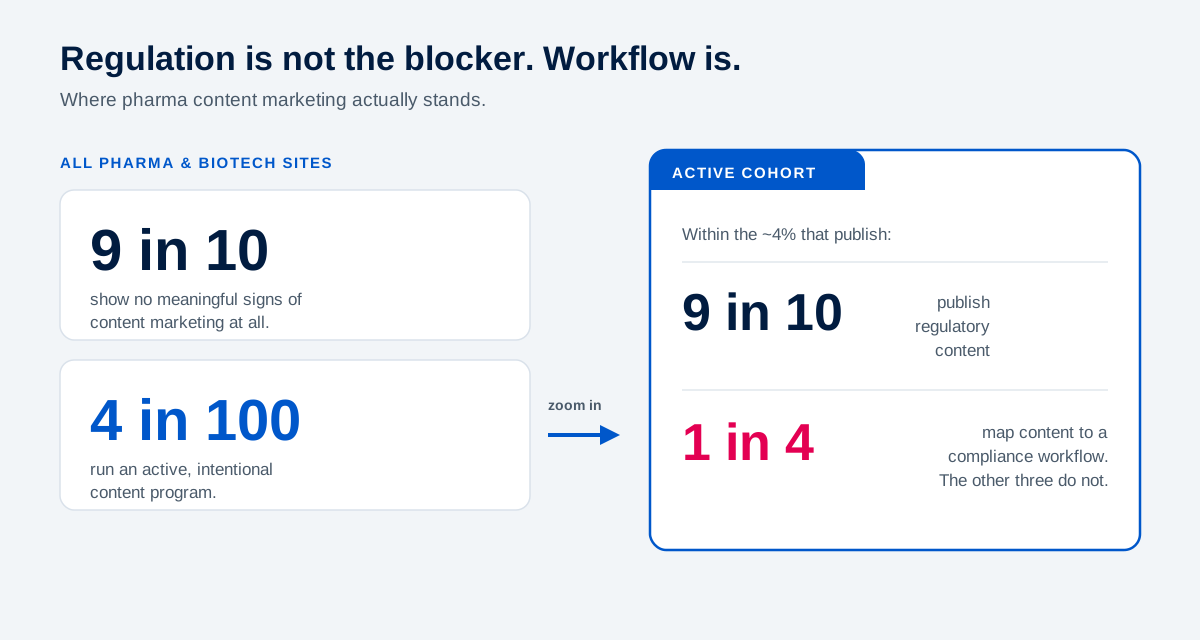
Look at the small group that does publish. Only about 4 in 100 pharma sites run an active, intentional content program, and inside that active cohort roughly 9 in 10 publish regulatory content while about 91% of their content shows real technical depth, per our life sciences content study. These are regulated companies under the same MLR obligations as everyone else. They clear the bar routinely. The constraint is plainly workable, across life sciences generally and not only in pharma.
So the gap is not the rules. It is the workflow. In the same life sciences analysis, only about 1 in 4 companies map their content to a compliance workflow at all. The other three are writing carefully and then handing raw copy to review with no system behind it.
Practitioners say the quiet part out loud. In a widely read r/digital_marketing thread, one pharma marketer put it plainly: "the real bottleneck isn't the platform, it's MLR review cycles killing campaign momentum. Most pharma brands underperform digitally because of slow approvals, not poor channel choice." Others in the same conversation describe reviewers who are close to retirement and comfortable with the status quo, and cultures that treat any change as a risk.
The cost of that inertia shows up where buyers now look. Pharma sites appear in about 0% of AI-generated answers for consideration and decision-stage queries, and in only about 1 in 3 answers even at the awareness stage, per our pharma study. The companies that publish are claiming that ground across every digital channel that moves pipeline. The rest are absent, and slow approvals are the reason far more often than the regulator is.
The FDA rules you actually design pharma marketing compliance around
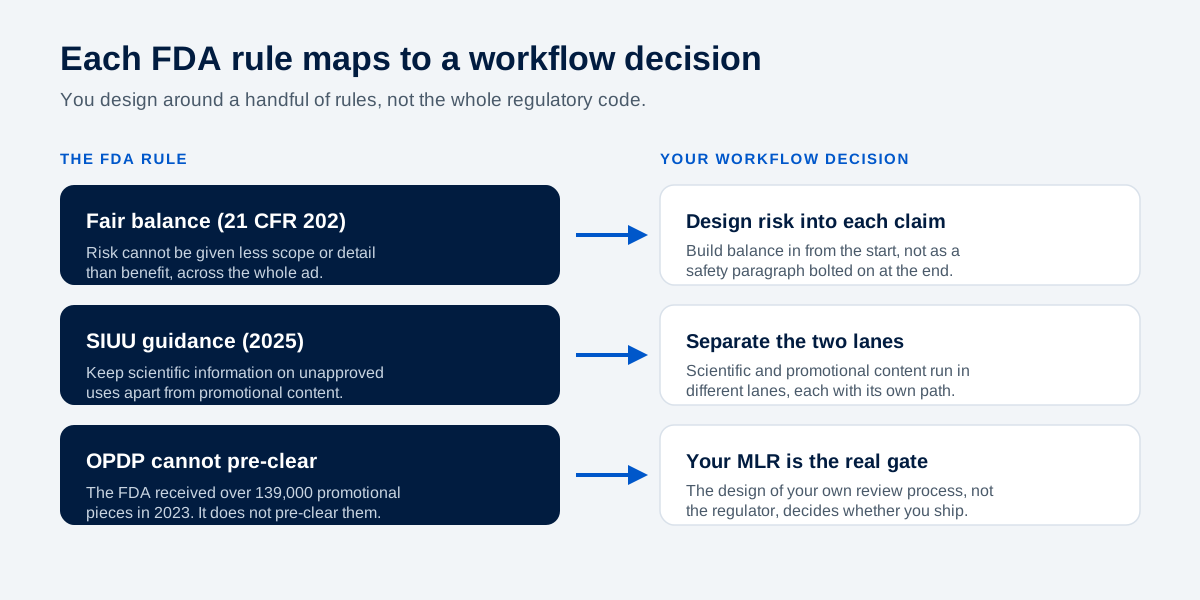
You do not need to memorize the entire regulatory code to run compliant content. You need the handful of rules that shape how the workflow is built. Here are the ones that matter, and the workflow decision each one drives.
21 CFR Part 202 and fair balance
Prescription-drug advertising sits under 21 CFR 202.1, and its paragraph (e) carries the obligations an operator designs around.
Every ad must present a true statement of information in a brief summary covering side effects, contraindications, and effectiveness. Broadcast ads must carry a major statement of the major risks. And the ad must present fair balance, which means effectiveness cannot be given greater scope, depth, or detail than risk. The standard applies to the entire advertisement, so a true claim in one place does not cure a misleading one somewhere else.
The workflow decision: fair balance is a design constraint, not a late edit. You build risk into the claim from the start, rather than bolting a safety paragraph onto finished copy.
The consequence of getting this wrong is concrete. In a February 2025 untitled letter, OPDP flagged an exhibit panel for presenting efficacy claims while failing to communicate any risk information. That is a content mistake, not a science mistake, and a workflow that designs fair balance into each claim prevents it.
OPDP and how the FDA actually acts
OPDP reviews promotional materials and, when it finds a violation, acts through two escalating letters. An untitled letter is a lower-tier notice asking the firm to stop. A warning letter is the escalated form, used when, per FDA's Regulatory Procedures Manual, the agency is prepared to support further regulatory or administrative action.
Here is the part that reframes the whole job. In 2023, OPDP received over 139,000 individual promotional pieces. The FDA does not pre-clear that volume. Your own MLR process is the real gate, which is exactly why the design of that process decides whether you ship.
The 2025 SIUU guidance and lane separation
In January 2025, the FDA finalized its SIUU guidance, on communications to health care providers about unapproved uses of approved products. It recommends keeping scientific information about unapproved uses separate from promotional communications about approved ones, so providers do not conflate the two.
Worth stating accurately: the guidance is finalized but not for current implementation pending an information-collection review, so it reflects the FDA's current thinking rather than a binding rule.
The workflow decision: scientific and medical-information content runs in a different lane from promotional content, with its own review path. Your workflow tiers the two rather than pushing everything through one queue, which is also what makes HCP content marketing work on the open web.
What an MLR-friendly content workflow looks like, step by step
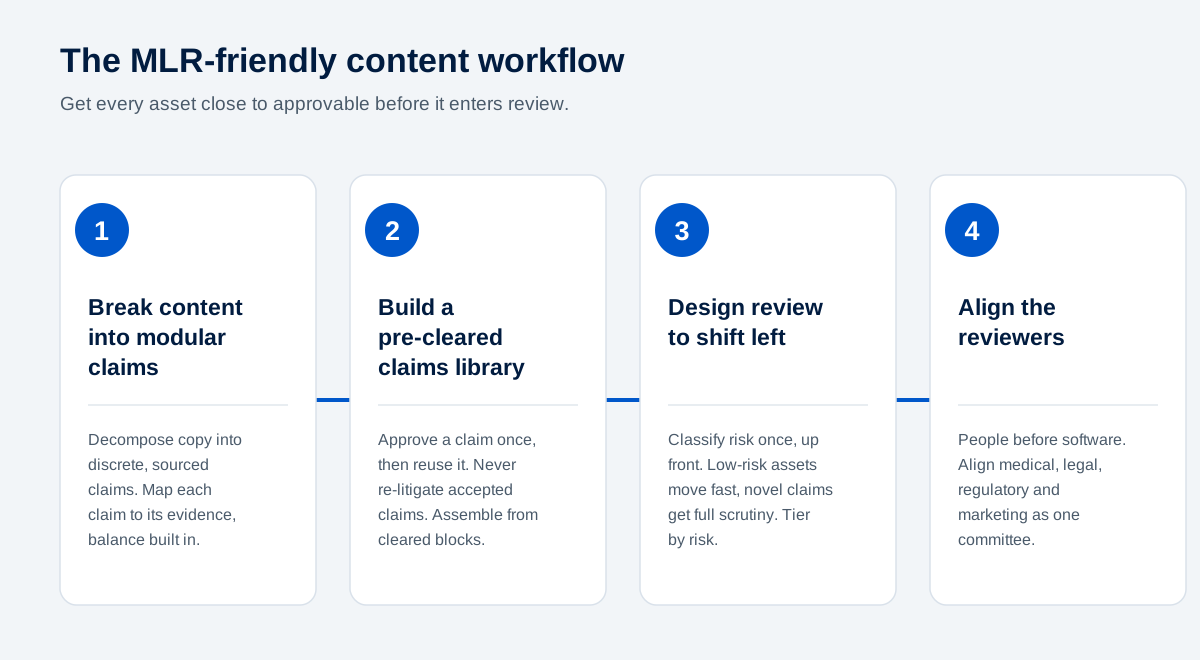
The whole point of the workflow is to get every asset close to approvable before it enters review. When reviewers open a piece, their attention should go to the genuinely new or risky claims, not to problems the process should have caught upstream. That is what shortens the cycle.
Step 1. Break content into modular claims
Start by decomposing content into individual claims. Marketing copy tends to bundle three or four claims into a single sentence, which forces reviewers to untangle it before they can approve anything.
A pharma tool builder describing their own MLR approach on r/biotech put the principle well: decompose the copy into individual claims rather than checking it as a block, and make sure everything is cited or it does not render. Map each claim to the evidence that supports it, and design fair balance into the claim itself.
When content is a set of discrete, sourced claims, review becomes a claim-by-claim check instead of an argument about a wall of text.
Step 2. Build a pre-cleared claims and asset library
Once a claim is approved, it should never be re-litigated. Put every accepted claim into a library, linked to its source, and assemble new content from those pre-cleared blocks.
This is the single biggest lever most teams ignore. Only about 1 in 4 companies map content to a compliance workflow in the first place, per our life sciences study, which means most are reviewing the same claims from scratch on every new asset. As the same r/biotech practitioner noted, accepted claims should go into a library so the same claim is not reviewed twice on the next piece.
A modular claims library turns each new asset into an assembly job rather than a fresh negotiation, and it is what makes the tactics that compound possible at all.
Step 3. Design the review cycle to shift left
Do not treat review as a gate at the end. Move it upstream and design the cycle deliberately.
Renee Ott, Head of Global Medical Information and Scientific Communications for Oncology at AstraZeneca, makes the case directly: "MLR needs to shift left, MLR needs to become far more proactive than how reactive it is, and it needs to be integrated far more upstream." Her second point is the practical one: "why not use this initial review to assign the rules and carry that through the whole process?" You classify an asset's risk once, at the start, and let that classification drive how it moves.
That upstream design is what tiering delivers. Low-risk assets assembled from pre-cleared claims move fast. Novel or high-risk claims get full scrutiny. Scientific and promotional content run in separate lanes, in line with the SIUU lane-separation principle above.
The results are measurable. Kaylie Stansfield, Head of Marketing for the Americas at Tag, describes embedding quality-control, medical-editor, and compliance experts from ideation to final approval, which took one global pharma client to an approval process four times faster than before, at consistently over 90% pass rates.
Step 4. Align the reviewers, do not just add tools
A workflow is people before it is software. The failure mode is treating review as a transaction rather than a shared process.
Andres White, Head of Global Marketing Operations at Allergan Aesthetics, describes the old pattern: "historically MLR review has always been very reactive, and thought about as a very quick transactional exercise," which is when you discover the misalignment too late. His fix is alignment within the MLR committee across compliance, commercial, and marketing operations, backed by change management, because "you may have the best technology but then you will not be able to operate it."
The data says the role is built for this. Cross-functional collaboration appears in about 4 in 5 pharma marketing job posts, per our pharma study, which means the pharma marketer is hired as a connector first and an executor second. And the load only grows with scale. Compliance demand in job posts rises from about 11% at the smallest firms to about 49% at the largest, per our life sciences study. Bigger companies need the alignment most.
Isn't MLR review supposed to be slow?
Yes, and that is the objection worth taking seriously. As one experienced reviewer put it on r/biotech, MLR is slow on purpose, and that is the feature. Reviewers who wave things through are how a retracted study ends up cited in a leave-behind.
The distinction that resolves it: the workflow removes rework and re-litigation, never scrutiny.
Speeding review by reducing scrutiny is dangerous. Speeding it by never reviewing the same approved claim twice, by catching missing safety language before submission, and by letting reviewers focus on the genuinely new claims is not. The first cuts corners. The second cuts waste.
It also keeps the tools honest. In the same discussion, a regulatory professional described a claims-checker that flagged 19 issues on near-final copy that were just plain wrong. A workflow that shifts left reduces the volume reviewers handle so they can spend their judgment where it belongs, on the large or novel claims a machine cannot settle.
Where do compliance tools fit in pharma marketing?
Tools serve the workflow. They do not replace it. Buy one expecting it to fix a broken process, and you will own an expensive checker bolted onto the same slow cycle. The same rule governs every infrastructure decision a regulated marketing team makes.
The incumbent content system, Veeva Vault PromoMats, already ships the workflow's core natively. It runs a Claims Library with linked references and auto-linking, adds an AI Quick Check Agent that scans content before MLR review, and describes its tier-based review as cutting time to approval by 50% to 75%. Standalone checkers like Red Marker and Acrolinx run first-line reviews during drafting.
Every one of these gets an asset closer to approvable before a human reviewer sees it. That is genuinely useful, and it is the ceiling of what a tool does. The wider question of where AI helps in pharma marketing and where it is just language resolves the same way.
Practitioners are clear on the limit. There is "no magic bullet, no single platform" that handles the whole process end to end, as Renee Ott says in the same session. And a tool cannot supply the alignment Andres White names. Treat compliance software as a way to modernize the operating model, not as a point purchase that substitutes for one.
How to tell your pharma marketing compliance workflow is working
Track four numbers, and watch them move together.
- First-pass approval rate. The share of assets approved on the first circulation. Higher means your content is arriving closer to approvable.
- Cycle time. Concept to approved. The headline number the business feels.
- Circulations per asset. How many review rounds each piece takes. This is your re-litigation proxy, and the one to drive down.
- Rework rate. How often approved claims get reopened. A pre-cleared library should push this toward zero.
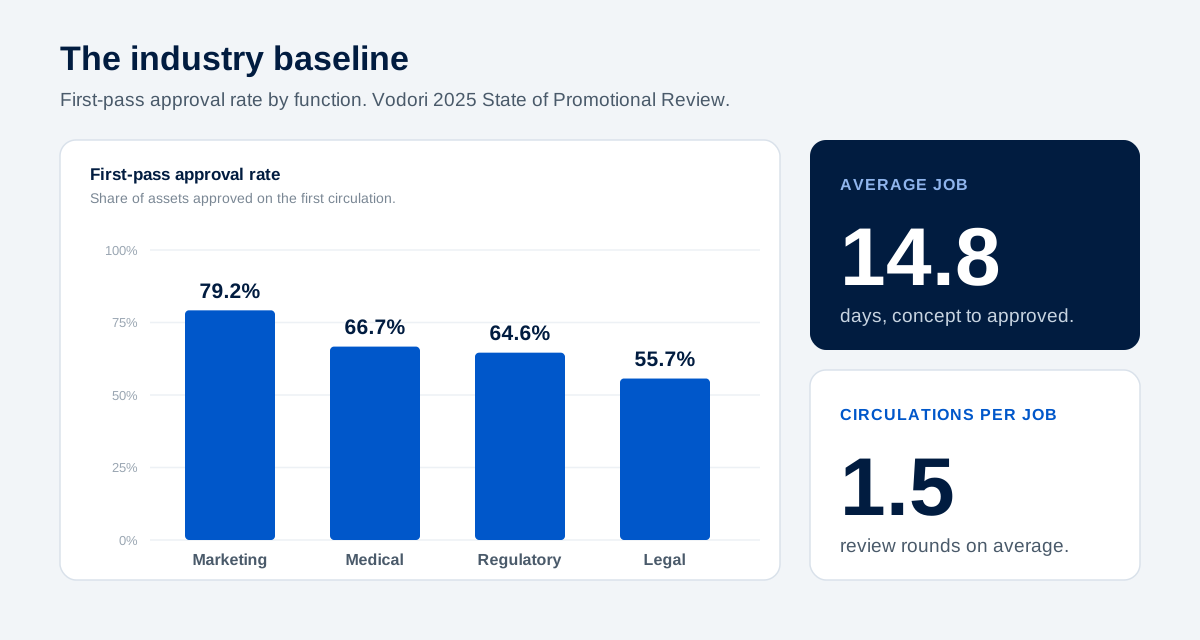
The industry gives you a baseline. In Vodori's 2025 State of Promotional Review benchmark, the average job runs 14.8 days across about 1.5 circulations, with first-pass approval rates of 79.2% for marketing, 66.7% for medical, 64.6% for regulatory, and 55.7% for legal. Vodori also reports that the top-performing teams cut job duration by more than half through steady system improvement. Tag's embedded model, at over 90% pass rates and four times faster, shows the ceiling.
Those four numbers belong next to the commercial ones. Cycle time only matters because it decides how much content reaches a buyer, which is where pharma marketing analytics connects the workflow to pipeline.
The mechanism is the same one that works in any regulated, technical market. Working with Westlab, a life science manufacturer serving labs, we operationalized expertise that had been locked inside the sales team into a structured content system, which is the same move MLR asks for: turn a slow, person-dependent sign-off into a repeatable process.
That is the shift worth making. Once the workflow exists, compliant content stops being a cost center that drags on every launch and becomes revenue infrastructure that ranks, gets cited, and carries the trust-building work your reps used to do one meeting at a time. It is the same operating change content marketing across life sciences asks for, and the regulator was never the reason to stay invisible.
Is your MLR process a bottleneck, or a workflow that ships?
Get a Content RevOps audit, your review-cycle friction, claims reuse, and content-to-compliance gaps benchmarked against the pharma 2026 data, with every gap priced in numbers your CFO can argue with.
Frequently Asked Questions
About the Author

Founder & CEO, Content RevOps
Stefan Kalpachev is the founder and CEO of Content RevOps, where he helps B2B SaaS companies transform their content into predictable pipeline. With a background in content marketing and revenue operations, Stefan has developed a unique methodology that bridges the gap between content creation and revenue generation.
Connect on LinkedInRelated Articles
Pharma email marketing and nurture that respects the rules
Sep 14, 2026
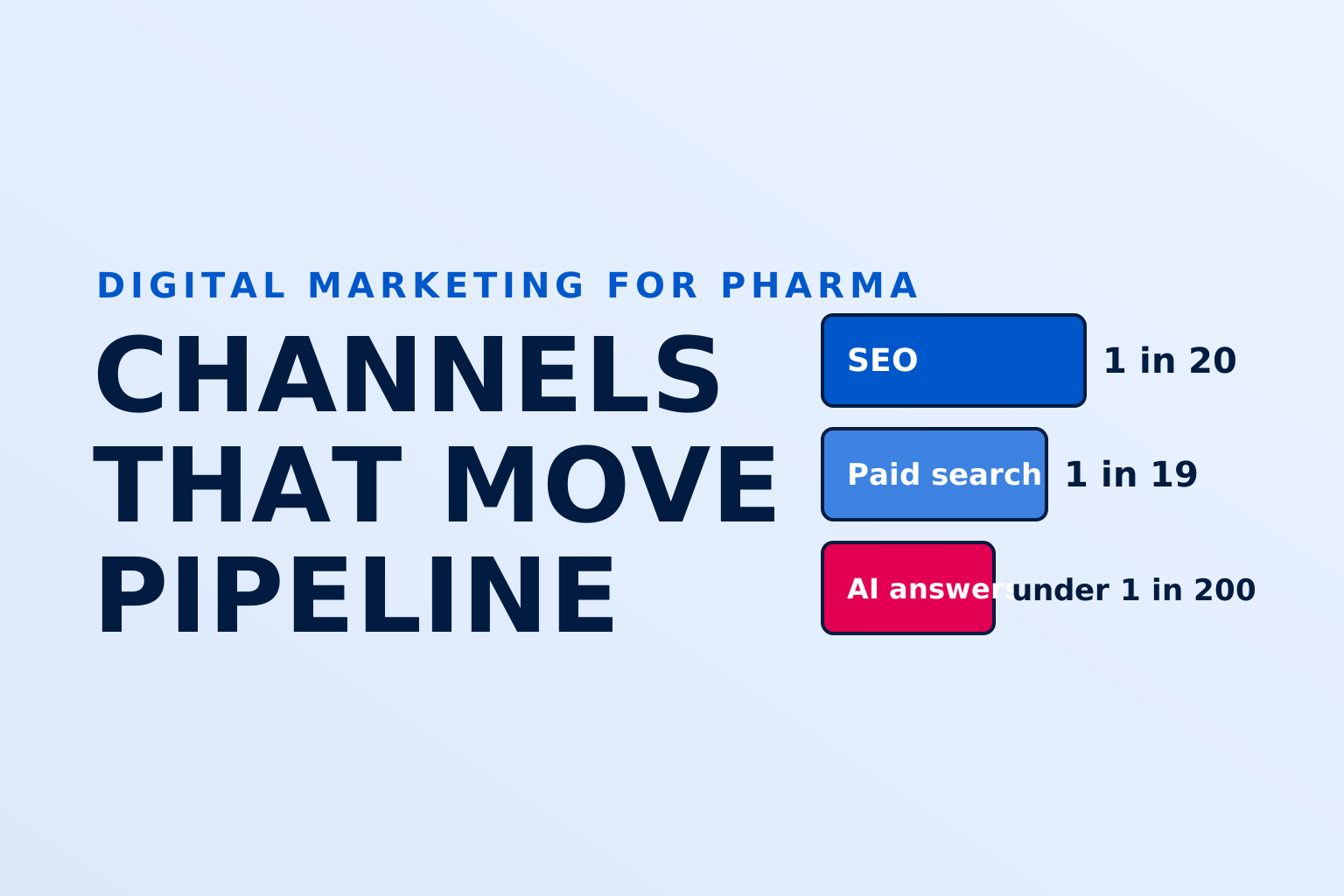
Digital marketing for pharma, channels that actually move pipeline
Sep 9, 2026
Pharma marketing analytics and ROI, connecting content to pipeline
Sep 8, 2026