Marketing automation for pharma, the infrastructure decision
Fewer than 1 in 10 pharma companies run the layer that turns content into pipeline. Want to see whether yours is one of them?
Book a CallMarketing automation in pharma is not a features decision. It is an infrastructure decision, and most pharma companies have not made it yet.
Part of Content Marketing for Pharmaceutical Companies.
That sounds strange, because pharma runs more automation than almost any other industry. Reps carry approved content on iPads, field activity syncs to a commercial platform, and campaigns fire across channels. But almost none of that touches the website, the gated report, or the webinar signup, which is where a modern buyer actually shows up. The automation pharma owns is built to reach doctors through reps. The automation pharma is missing is the layer that turns owned content into tracked, nurtured, sales-ready demand. Without it, omnichannel marketing in pharma stays a slide rather than a running system.
The numbers say it plainly. In our analysis of the pharmaceutical sector, fewer than 1 in 10 pharma sites run marketing automation and fewer than 1 in 12 run a detectable CRM. So the content gets made, and then it has nowhere to go.
This guide is for the pharma marketing operator, growth leader, or founder-marketer deciding whether and how to install that missing layer. It covers what marketing automation actually is next to CRM and closed-loop marketing, whether the sector uses it, why content leaks without it, what it unlocks, the regulated build it demands, the tools that fit, and how to decide if now is the time. If the wider picture is still forming, our pharma marketing strategy playbook sets the five decisions this one sits inside.
What is marketing automation in pharma, and how is it different from CRM and closed-loop marketing?
Three systems get lumped together in pharma, and buyers conflate them constantly. They do different jobs, and knowing which one you are missing is the whole point.
The CRM is the system of record
A pharma CRM holds who your customers are and what your field team does with them. It manages healthcare professional (HCP) identity, accounts, territories, call planning, and approved-content sequencing. As Pulse Health describes it, the CRM becomes the system of action for the brand team, field reps, and digital marketing. It is where a rep logs a visit.
The CRM is not built to run a nurture sequence off a website download. It records engagement; it does not generate it from your content.
Closed-loop marketing is the rep's feedback loop
Closed-loop marketing (CLM) is the loop between a rep and a doctor. A rep presents approved, interactive slides on an iPad during a visit, and the system tracks which slides were shown and for how long, then feeds that back to the brand team to refine the next version.
That is the whole loop, and it is worth seeing how closed it is. Veeva's own documentation describes CLM as reps presenting content hosted in Veeva Vault and tracking slide-level activity. The production reality is tighter still. As the agency WAV explains, CLM slides run offline inside the Veeva CRM app, in a local shell, "not hitting a CDN." The content lives on the device.
So closed-loop marketing is real automation, but it is rep-facing and it runs on the field side of the house. It has nothing to do with the person reading your page at 11pm.
Marketing automation is the missing web-to-pipeline layer
Marketing automation is the layer that connects owned content to pipeline. It watches what a buyer does on your site, your emails, your webinars, and your gated assets, then triggers the right follow-up, scores the contact, and hands a warm, context-rich lead to sales. The way we build that layer in practice is set out in our automation architecture notes.
In plain terms: the CRM knows your reps' accounts, closed-loop marketing knows what happened in the exam room, and marketing automation knows what the buyer did with your content. Pharma has built the first two. It has skipped the third.
Do pharma companies actually use marketing automation?
Mostly, no. This is the wedge, and it is the opposite of what the usual "pharma is going digital" story implies.
Across our pharma study, under 10% of pharma sites run marketing automation, which is fewer than 1 in 10. The most common platform where it exists is HubSpot, and even that leads at only about 10%. The CRM picture is thinner: fewer than 1 in 12 pharma sites run a detectable CRM at all.
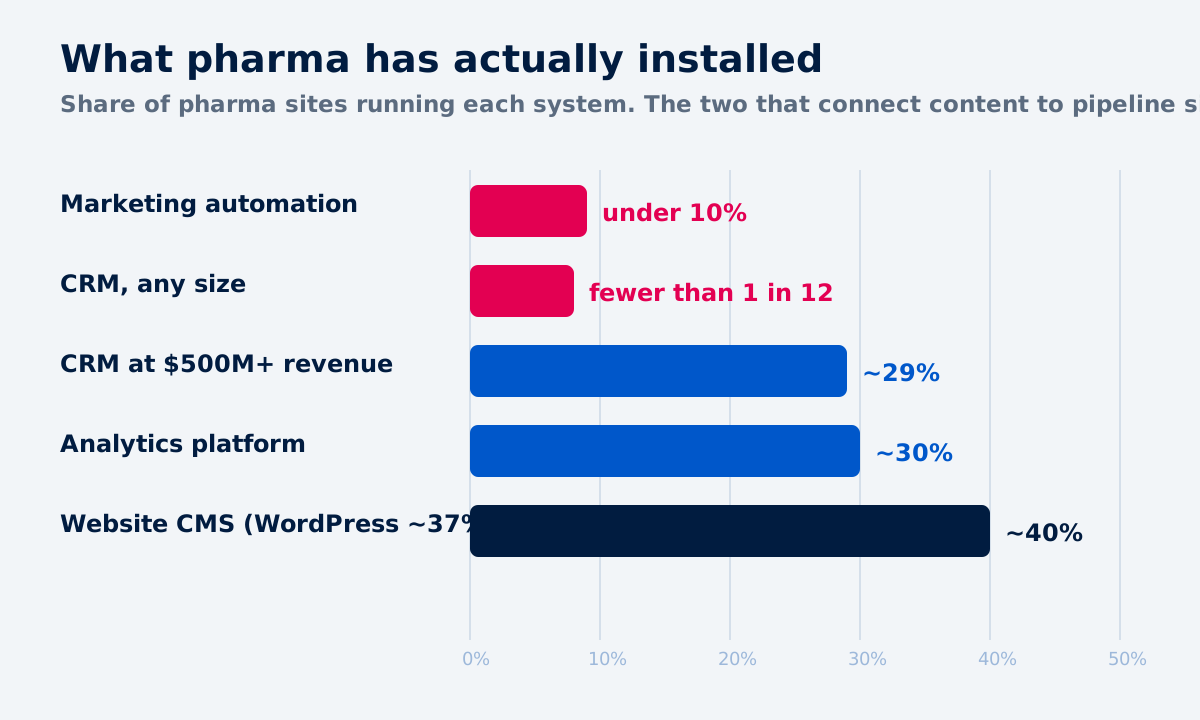
Read that next to what content marketing needs to work, and the constraint is obvious. A CRM is the single largest infrastructure gap on content marketing maturity in pharma, because content cannot connect to pipeline without one.
It stays low even at scale
You might expect this to be a small-biotech problem that large pharma has solved. It is not. Even among companies above $500M in revenue, CRM adoption reaches only about 29%, roughly 3 in 10. That is a figure that would be considered unacceptably low in almost any other B2B sector, and it is a sign that pharma's commercial operating model has lagged on the marketing side specifically. The same pattern shows up across the sector in our life science marketing statistics.
The plumbing underneath tells the same story. About 30% of pharma sites run any analytics platform, and most of those are just Google Analytics. Around 40% run a detectable content management system, and roughly 37% of all pharma sites are on WordPress. The website exists. The layer that would make it produce pipeline does not.
For context, in the wider B2B world a marketing-automation platform is standard rather than exotic. Industry benchmarks put dedicated-platform use across B2B in the large-majority-to-near-universal range. Pharma at under 1 in 10 is the outlier, not the norm, and our cross-vertical study shows how far the gap runs against every other sector we measured.
Why isn't your pharma content generating leads or pipeline?
If you produce good pharma content and see no pipeline from it, the cause is usually structural, not creative. Here is how to tell if it is you.
The tells
- Almost none of your ranked keywords are commercial. In pharma, only about 2% of ranked keywords sit at the bottom of the funnel, so third-party review sites and directories win commercial intent by default. Your content ranks for awareness and then hands the buyer off to someone else at the moment they are ready to act.
- You have no middle of the funnel. About 1 in 4 pharma content producers run no consideration-stage content at all. The funnel does not exist on those sites; it is a top and a bottom with nothing between them. The stage-by-stage conversion benchmarks show what that missing middle costs.
- Your commercial stack never touches your website. Your reps, your closed-loop marketing, and your CRM all live on the field side. Your content lives on the web side. Nothing carries a website visitor into that commercial system.
The two automation worlds do not talk
Pharma has two automation worlds, and they run in parallel without meeting. One is the commercial stack: closed-loop marketing, approved email, the rep's iPad, the CRM. The other is the web: the site, the blog, the report, the event. The first is instrumented to the slide. The second is often not instrumented at all. Instrumenting it is the job pharma marketing analytics does, and it decides what you can measure on the web side at all.
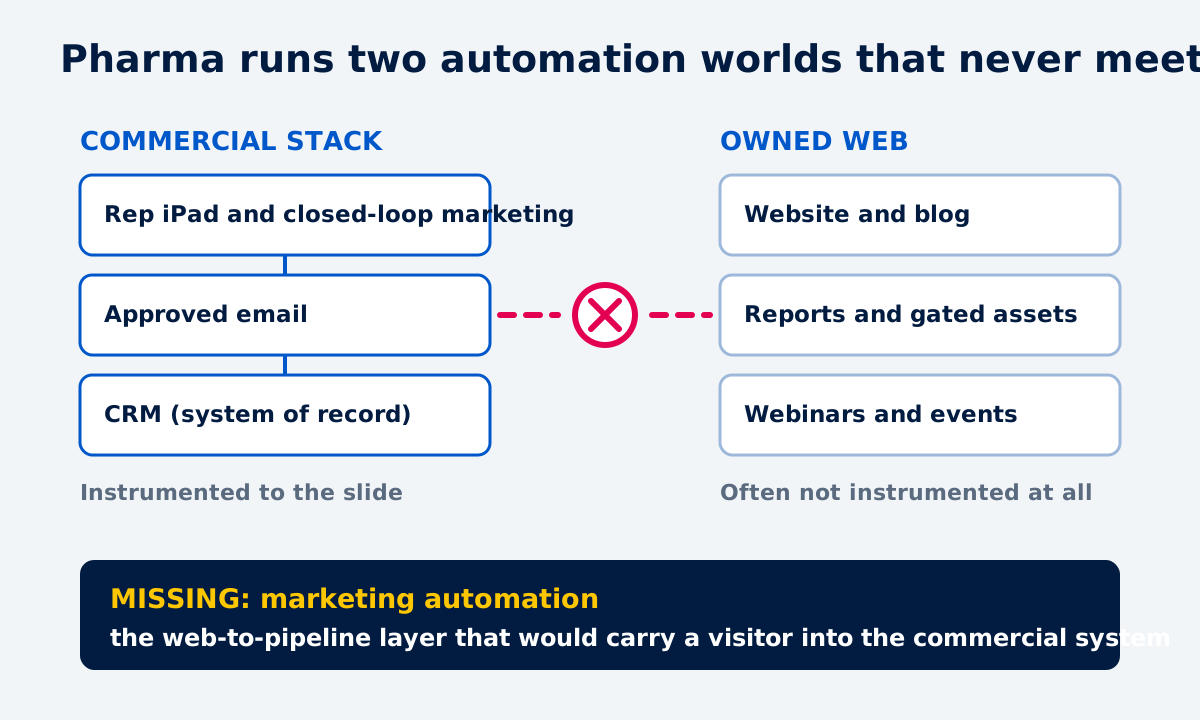
The disconnect is baked into how the commercial loop is built. As one field-reporting guide describes it, the CLM loop is only as fast as its slowest stage, and it runs on a call cycle of four to six weeks. Content engagement data sits in one system and call records sit in another, so answering a simple commercial question means someone manually joining the two. The loop closes around the rep, and the website is not in it.
Content volume keeps climbing on the commercial side while the web-to-pipeline layer stays absent, which is exactly why the content leaks. The practitioner Nick Smith makes the same point about the old model: an email dashboard full of vanity metrics that everyone reported to leadership, disconnected from any action. His new rule is to know who your website visitors actually are and tie that data to a next step. That is the missing layer, described from the field, and it is the same gap that keeps inbound in the life sciences stalling at the form fill.
What does marketing automation actually do for a pharma team?
It gives your content a job. Instead of a report that gets downloaded and forgotten, you get a sequence that follows the download, a score that tells you who is serious, and a handoff that reaches sales with context instead of a bare name.
Nurture keeps content working after the click
Without automation, content drips become content one-shots. Someone reads one piece, and nothing follows. Nurture is the difference between a single touch and a sequence that stays with a buyer through a long, cautious pharma evaluation. The mechanics of that sequence, and of waking a list that has gone cold, sit in our notes on lead nurture and database reactivation, and the channel that carries most of it is covered in life science email marketing.
The payoff is measurable. An industry lead-nurturing benchmark found that nurtured leads produce about 20% more sales opportunities than leads left alone, and cut the cost of each opportunity by roughly a third. That is not a traffic gain; it is more pipeline from the same audience, at a lower cost per deal.
Scoring and a warm handoff to sales
The second job is telling sales who is worth a call. Marketing automation scores each contact on what they actually did, then hands the serious ones over enriched rather than raw. What gets captured and how it is qualified is set out in lead capture and qualification, and the handover itself in our lead handover process.
We saw this directly in our work with a life science manufacturer, Westlab. Engagement and readiness signals from the content hub told sales which leads were genuinely serious, and each lead arrived enriched with context before a rep ever picked up the phone. In three months that connected system produced 241 inbound leads and influenced $120k in quotes, in a market that had run on cold outbound. The content did not just attract attention; it fed a pipeline, because the layer underneath it carried the signal to sales. That is what a real lead pipeline looks like once the plumbing exists.
The general mechanics of building that nurture layer, prerequisites, tooling, and mistakes, we cover in our guide to marketing automation across the life sciences. This page stays on the part that is specific to pharma, which is the regulated build.
What makes marketing automation harder in pharma? 21 CFR Part 11, consent, and MLR
You cannot bolt a generic marketing tool onto a pharma company and walk away. Three things make the build harder, and the usual advice hand-waves all of them.
21 CFR Part 11 and the audit trail
21 CFR Part 11 is the FDA rule that governs electronic records and signatures. It is worth being precise about when it applies, because the common claim that "Part 11 applies to your marketing" is usually wrong and it leads teams to over-build.
Part 11 is scoped to records that a predicate rule requires you to keep, such as manufacturing, laboratory, or clinical records, plus anything submitted to the FDA. A promotional marketing email is not one of those. Compliance guidance is explicit that marketing emails fall outside Part 11 because no predicate rule requires them. So marketing automation, by itself, is not a Part 11 system.
What matters is the discipline the rule describes, not the letter of its scope. Part 11 asks for a secure, time-stamped audit trail that records who did what, when, and why, plus controlled access and a validated system. A pharma buyer recognizes that requirement instantly. As one commenter put it in a discussion on choosing a pharma CRM, "I'd spend less time comparing features and more time asking, what happens when an auditor asks who changed what, when, and why. Funny how that one question eliminates half the shortlist."
That question is where Part 11 becomes binding, at the seams where marketing touches a regulated process:
- Adverse-event capture. If a patient or HCP reports a side effect through an automated channel, that signal has to route to safety, which is a regulated record.
- MLR sign-off. The record that a piece of content was reviewed and approved has to hold up to inspection.
- Promotional claims. What you said, to whom, and when, sits under FDA promotion rules and the Prescription Drug Marketing Act.
This is exactly why pharma's commercial tools are built to Part 11-grade controls and generic marketing tools are not. Veeva's platform, for instance, is architected around Part 11 from the start. A horizontal marketing tool is not, which is a real consideration when you choose one.
Consent is two different rules, not one
The biggest consent mistake in pharma is treating doctors and patients as one audience. They live under different rules, and getting this right removes a lot of imagined friction. Which rules apply to whom, and what a sequence looks like once consent is properly captured, is the subject of pharma email marketing and nurture.
For HCPs, the governing rule in the United States is CAN-SPAM, not HIPAA. A physician's professional contact data is not protected health information, so, as specialists in HCP email compliance explain, you do not need prior opt-in to email a doctor about a therapy. You do need a working unsubscribe honored within 10 business days, a real physical address, and accurate sender details. Phone and SMS add TCPA, and EU physicians add GDPR, which does require a lawful basis such as legitimate interest. Being allowed to email a clinician is not the same as being read, and where clinicians go looking on their own is covered in HCP content marketing for pharma.
For patients, the rule flips. Patient data can be protected health information, and the HIPAA marketing rule requires written authorization before you can market to patients, with narrow carve-outs for treatment and refill reminders. Patient data your brand collects directly, outside a covered-entity relationship, falls under state privacy laws instead.
The practical build, which pharma compliance guides lay out, is layered consent: capture each purpose and channel separately, store it with a timestamp, and stop sending the moment consent is withdrawn. One checkbox does not cover promotion, education, and support.
MLR review is the real speed limit
Here is the constraint that decides whether any of this works: your automated journey cannot send content faster than your medical, legal, and regulatory (MLR) review can approve it.
The numbers are sobering even in a healthy shop. The 2025 promotional-review benchmarks from Vodori put the average promotional job at 14.8 days end to end, up from 13.8 the year before, with about 1.5 circulations per asset. First-pass approval rates run 79% for marketing, 67% for medical, 65% for regulatory, and 56% for legal, so more than half of legal reviews send content back for another round.
The reviewers are stretched thin. As one MLR guide summarizes the survey data, roughly two in three reviewers spend at least 15% of their working week on review, about one in three spend a quarter of it, and only 5% of teams have invested in technology to handle launch surges. The rest simply absorb the load.
What this means for automation is direct. If a nurture sequence needs ten pieces of content and each one waits two to three weeks in review, the sequence takes months to fill. The teams that make automation work in pharma solve this by building a library of pre-approved, modular content the automation can assemble on its own, rather than routing every send through a fresh review. Some are using AI to pre-screen assets before they reach the queue, which practitioners at Qualified Digital walk through. The tool is the easy part; the content supply is the real project, which is why the cheap conversion fixes on pages you already own usually pay off before any new asset clears review.
Which marketing automation tools fit pharma, and where does Veeva sit?
The most common buyer mistake is treating this as a single vendor bake-off. It is not one tool. It is two layers, and the question that trips people up is how the new layer sits next to the Veeva stack they already own.
Two layers, not one tool
Think of the stack as two connected layers with different jobs.
Layer | What it does | Representative tools |
Marketing automation (the missing layer) | Web-to-pipeline nurture, lead scoring, campaign orchestration | HubSpot, Adobe Marketo Engage, Salesforce Account Engagement (Pardot), Oracle Eloqua |
Commercial CRM (what pharma already owns) | Rep and HCP system of record, field activity, approved content | Veeva Vault CRM, Salesforce Life Sciences Cloud, IQVIA OCE |
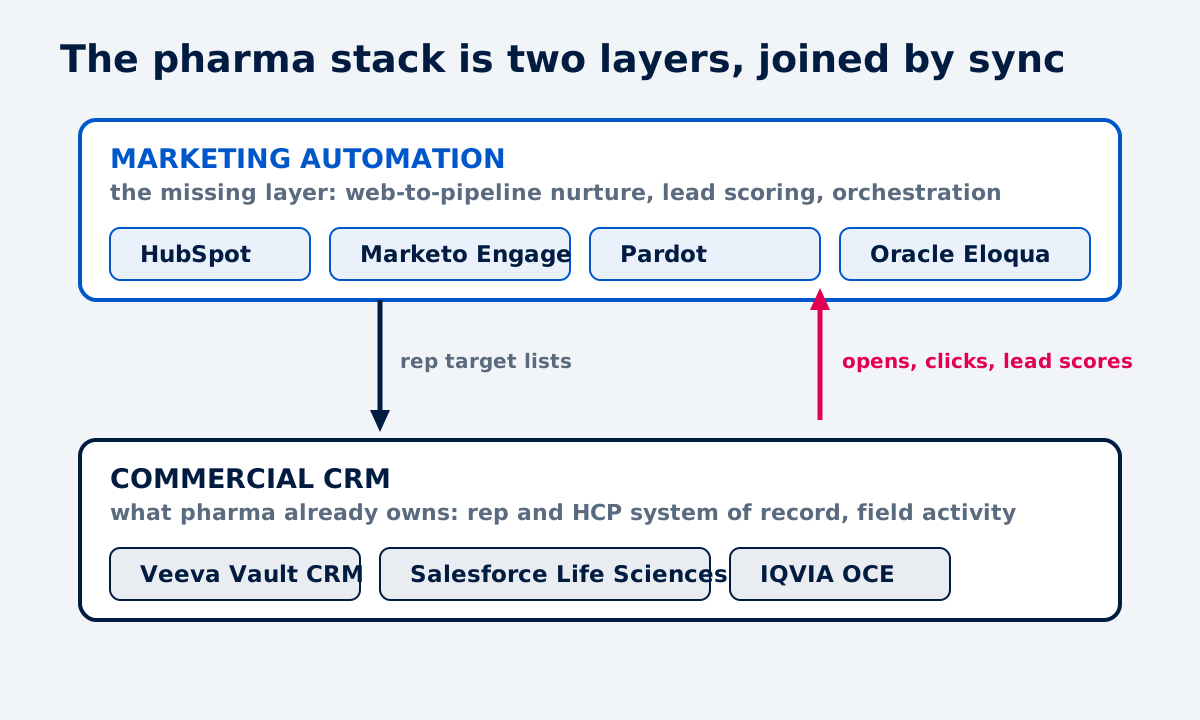
The two connect by sync, and that connection is the entire point. As integration specialists describe the pattern, the CRM pushes rep target lists into the marketing platform, and the marketing platform pushes email opens, clicks, and lead scores back into the CRM as next-best-action signals. A documented example is Veeva CRM feeding Marketo and receiving engagement data in return. The marketing-automation layer does not replace Veeva; it plugs into it and finally gives the web side a wire into the commercial system.
What the platforms cost
Pricing sorts the options by who they fit. Based on a healthcare marketing-automation comparison:
- Adobe Marketo Engage, from about $1,250 per month, dominates large-pharma HCP marketing and is used by companies like Pfizer, Medtronic, and Stryker.
- Salesforce Account Engagement (Pardot), from about $1,250 per month, fits B2B selling into hospital procurement and group purchasing.
- Oracle Eloqua, from about $2,000 per month, suits teams already on the Oracle stack.
- HubSpot Marketing Hub, from about $3,600 per month at the enterprise tier that offers a business associate agreement, is the common pick for digital-health and emerging biotech, which is why it leads pharma adoption in our data.
- Veeva Pulse and IQVIA OCE sit on the commercial side and are custom-quote only.
If you want to see which of these tools high-growth B2B companies actually run rather than shortlist, we measured that too in our study of the demand gen tools B2B companies actually use.
The overbuy trap
The trap is buying the enterprise commercial suite when what you actually need is the marketing layer. For mid-market and emerging biotech, the Rx Almanac guidance is to avoid overbuying and choose the narrowest validated stack that supports your launch.
There is a real tradeoff on the other side too. A horizontal tool like HubSpot has a cheaper sticker, but a buyer's guide for small biotech notes it needs custom validation, audit-trail extensions, and pharma-specific objects for samples, consent, and aggregate spend, so total cost can meet or exceed a pharma-native tool. The buyer in that CRM discussion put the same worry plainly, warning against a platform that locks you into a "$100k+ contract" you cannot grow into. Match the layer to the job. Do not buy a rep-facing commercial suite to solve a website-to-pipeline problem.
Should your pharma company install marketing automation now?
Install it when you have something to automate and something to send. Skip it, for now, when you do not.
You are ready when four things are true.
- You have clean contact data in one place. Automation on a messy or scattered database sends the wrong message to the wrong person, so a single source of contacts comes first.
- You have MLR-cleared content to send. The sequences need a library of pre-approved, modular assets. Without that supply, the platform sits idle waiting on review.
- Someone owns it. Automation is not set-and-forget; it needs a person who runs the sequences, watches the scores, and improves them.
- You have enough lead flow to justify sequences. If almost no one is arriving at your content, fix demand first; automation multiplies flow, it does not create it.
The first real investment usually lands as a company crosses from roughly $1M into the $10M revenue band, which is when clinical and commercial activity generate enough inbound to reward a system. It stays rare well above that, which is the gap, not a reason to wait if the four conditions above are met. The full prerequisites walkthrough lives in our life sciences marketing automation guide, and how we work with life sciences companies more broadly sits alongside it. Once the layer is live, the question becomes what you hold it to, and our view on which metrics to track and which to ignore is the shortest route to that answer.
The honest verdict is this. Pharma has spent a decade building automation that reaches doctors through reps, and almost none that turns its own content into pipeline. The content is already being made. The reports, the disease-state education, the congress material, all of it is produced and then stranded, because the layer that would carry a reader into the commercial system was never installed. Marketing automation is that layer. It is not a feature you are shopping for; it is the infrastructure that finally gives your content a job.
Is your pharma content connected to pipeline, or stranded on the website?
Get a Content RevOps audit, your automation, CRM, and funnel gaps benchmarked against the pharma 2026 data, with every gap priced in numbers your CFO can argue with.
Frequently Asked Questions
About the Author

Founder & CEO, Content RevOps
Stefan Kalpachev is the founder and CEO of Content RevOps, where he helps B2B SaaS companies transform their content into predictable pipeline. With a background in content marketing and revenue operations, Stefan has developed a unique methodology that bridges the gap between content creation and revenue generation.
Connect on LinkedInRelated Articles

A Go-to-Market Strategy for Construction Firms
Oct 10, 2026

Why Construction Brands Almost Never Show Up in AI Answers
Oct 9, 2026
How to Turn Before-and-After Construction Project Photos Into a Marketing Strategy
Oct 8, 2026