Life science marketing automation, a buyer's guide
Your forms capture leads all day. What follows up after the form?
Book a CallMost life science companies already generate leads. The congress badge scans, the whitepaper downloads, the webinar registrations, and the contact-form fills all arrive. Then a person is supposed to follow up, and that person is busy. What sits in that gap is a marketing automation problem before it is a content problem.
Part of Content marketing for life sciences, the complete guide.
This is the gap life science marketing automation exists to close. Most of the sector never built the follow-up layer, so the leads companies pay to capture go cold in inboxes and spreadsheets, and the adoption numbers below show how wide that gap runs.
This guide covers what the software does, what it fixes in a scientific sale, what results to expect, what to have in place before you buy, and which tools fit which kind of life science company. It is written for the growth leaders, marketing operators, and founders who carry marketing in life science companies, usually alongside several other jobs. If the vocabulary is still settling, what life science marketing actually covers sets the wider frame, and this layer sits inside it.
What is marketing automation in life sciences?
Marketing automation is software that follows up your captured leads for you. It sends sequences of relevant content, watches who engages with what, scores that engagement, and routes the ready buyers to sales with their history attached. The plumbing behind that, and the way the pieces connect, is what we mean by automation architecture.
For a life science company, that job description matters because of how scientists buy. In AZoNetwork's survey of scientific purchasers, 43% of purchases closed in under a month, another 27% took two to three months, and roughly three in ten ran four months or longer.
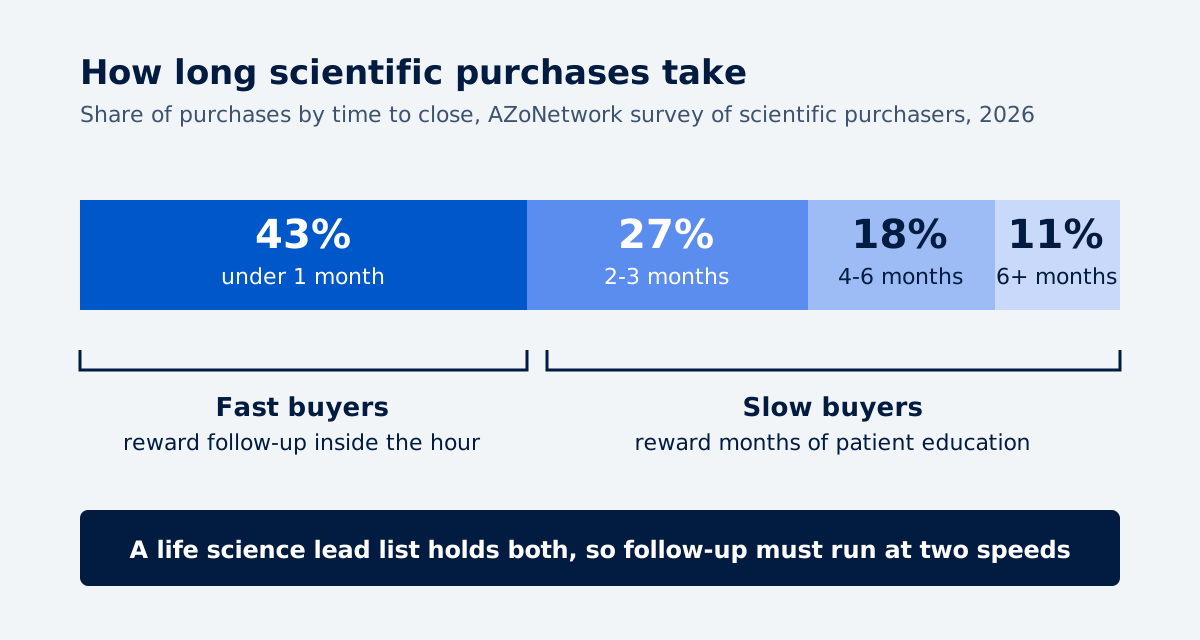
So a life science lead list always contains two kinds of buyers at once. Some are days from a decision and reward fast, relevant follow-up. Others are quarters away, comparing instruments or providers slowly, and reward patient education. No sales team follows up both kinds well by hand, and the same survey shows the group you are nurturing is small: 64% of scientific purchases involve just one to three people.
Marketing automation handles both at machine speed. The fast buyer gets an immediate, specific next step. The slow buyer gets a drip of application notes, comparison guides, and webinar invitations that keeps your company present through a long evaluation, without a rep chasing them lab by lab. That drip is the practical form of life science email marketing once it stops being a monthly newsletter.
Do life science companies actually use marketing automation?
Mostly, no. Our life sciences study found marketing-automation and CRM adoption both run low across the sector, while WordPress dominates as the CMS layer underneath. The plumbing exists; the follow-up machinery mostly does not.
Pharma makes the gap concrete. In our pharma study, fewer than 1 in 10 sites run marketing automation, and fewer than 1 in 12 run a detectable CRM. Even past $500M in revenue, CRM adoption only reaches about 29%. The regulated version of that build, and how it differs from CRM and closed-loop marketing, is covered in marketing automation for pharma.
Now compare that with the companies life science marketers compete against for attention and talent. In our scan of 478 high-growth B2B companies, CRM and marketing automation sit on 60% of stacks, with HubSpot alone on 40%. Across the wider economy, Bloomberry's inspection of 5 million companies' mail-server records found about 14% run any major marketing-email or automation tool.
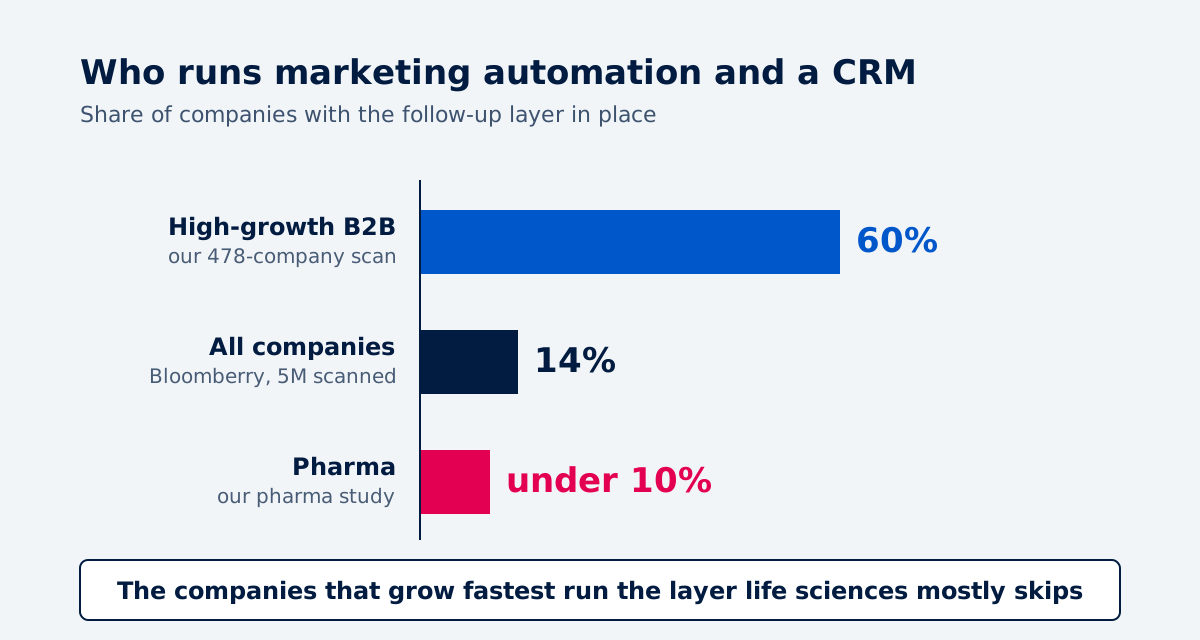
Read those three numbers together and the picture is plain:
- The average company mostly does not run marketing automation.
- The B2B companies that grow fastest mostly do.
- Life sciences sits at the bottom of that range, with pharma below both.
For a buyer, that is good news twice over. The leads you already capture are the cheapest pipeline you will ever buy, and your competitors' leads are almost certainly going cold too. The layer is cheap to be early on and expensive to be last on. The rest of the numbers behind that sit in our life science marketing statistics for 2026.
What problems does marketing automation solve for life science companies?
The generic pitch says personalization at scale. The real answer in life sciences is four specific, recognizable problems, and they show up on the list of life sciences marketing challenges long before anyone shops for software.
Conference and webinar leads that die in a spreadsheet
A booth at a scientific congress produces a list of badge scans. A webinar produces a registrant export. In most life science companies both land in a spreadsheet, wait for a manual follow-up that arrives late or never, and expire. The capture step is only half a system; the other half is what qualifies and routes the lead once it exists.
Speed is the whole game here. An analysis of 130 million sales interactions by VanillaSoft and the University of Ottawa's Telfer School found wins were three times more likely when the first contact landed within 10 to 60 minutes of the lead arriving, and that the odds collapse after 24 hours. Automation is the only realistic way a three-person life science marketing team hits a one-hour window on a Tuesday during a conference.
Long evaluations where your content goes silent
The slow side of the scientific purchase runs months, and our life sciences study found companies educate, then go silent exactly when the buyer approaches a decision. About 1 in 6 content pages dead-ends with no next step at all.
A nurture sequence is how the education keeps arriving after the first visit, and nurture and database reactivation is the part of the system that keeps a quiet list alive. When we built this for Westlab, a lab supplier selling into a cautious, price-sensitive market, the sequences did the trust-building reps used to do one lab at a time, and kept buyers moving through a long cycle without anyone chasing them.
Sales getting a name instead of a buyer
A bare email address tells a rep nothing about whether the person runs a genomics core facility or wrote a student essay. On the Westlab engagement, every lead reached the sales team enriched, with context attached, and with engagement signals that showed which leads were genuinely serious.
That is lead scoring doing its actual job in a life science sale: separating the procurement-stage lab manager from the curious PhD student before a rep spends an afternoon finding out the difference. What happens next, the handover into sales, decides whether that context survives the trip.
Follow-up that depends entirely on one person's diligence
A poster on r/growmybusiness described the baseline state exactly: "we have a small flow of leads from our website and content, but following up is totally manual and inconsistent."
Manual follow-up is a single point of failure. It stops during conference season, during audits, and during vacations, which is to say it stops exactly when leads spike. Automation makes the follow-up a property of the system instead of a property of one person's week.
What results should you expect from marketing automation in life sciences?
Expect the software to multiply a working content and sales motion, and to multiply nothing on its own. Two pieces of evidence set honest expectations, one from research and one from our own work.
The conversion lift in the research
A 2025 study in the Journal of Marketing by Habel, Hartmann, Wiseman, Ahearne, and Vaid ran the first rigorous independent test of automated lead nurturing. Across four studies, nurture automation raised the probability of a lead converting by anywhere from zero to 23 percentage points.
The spread is the useful part. The conversion lift concentrated in newer leads, shorter cycles, and lower-value deals. On big, heavily-researched purchases, the lift shrank, and the system's value shifted to arming salespeople with better context about each lead. We read the same finding the same way when building a demand generation plan from scratch.
Map that onto a life science catalog and it becomes a practical rule. Automation lifts conversion most on your fast-moving products, the consumables, kits, and standard instruments that close inside a month or a quarter. On the long, high-value capital purchases, its job is intelligence: telling sales who is real and what they care about.
Deal acceleration, not lead creation
HockeyStack, an attribution vendor, analyzed 21.5 million emails across 152 B2B SaaS companies and found email sourced only about 1.1% to 1.3% of MQLs. The same dataset showed that when marketing kept sending during an open deal, close rates rose 47% with eight or more emails between deal creation and close, and deals that received five or more emails after creation closed about 13% faster.
Almost nobody does this; 94% of the emails in that dataset went out before any pipeline qualification. So set the expectation accordingly: nurture is a weak lead source and a strong deal accelerator, and the mid-funnel sequences are the ones most worth building. If you need the top of the funnel to grow as well, that is the job of inbound marketing for life sciences, not of the sequence editor.
What a full system produced for a life science company
Westlab shows the ceiling when automation runs as one layer of a complete content system. The company had grown through cold calling, conferences, and lab visits, a high-effort, high-cost motion. We built the educational content, wired the nurture and signal layer, and treated content as go-to-market collateral from day one, which is the way we work with companies across life sciences.
In three months the system generated 241 inbound leads in a market that had run on cold outbound, influenced $120k in quotes, and returned 869% on the content investment.
The order of causation matters. The content created the demand, and the automation made sure none of it leaked. A platform subscription with no content behind it would have produced sequences with nothing to send.
How long results take
Plan in two horizons. The first sequences, scoring rules, and CRM sync are weeks of work on a HubSpot-class platform. Visible pipeline effect follows the length of your sales cycle, so a quarter is the honest checkpoint for judging whether the system works, and enterprise implementations run longer before the first campaign ever sends. How you report on that quarter is its own decision, covered in how life science companies justify and measure marketing spend.
What does a life science company need in place before buying marketing automation?
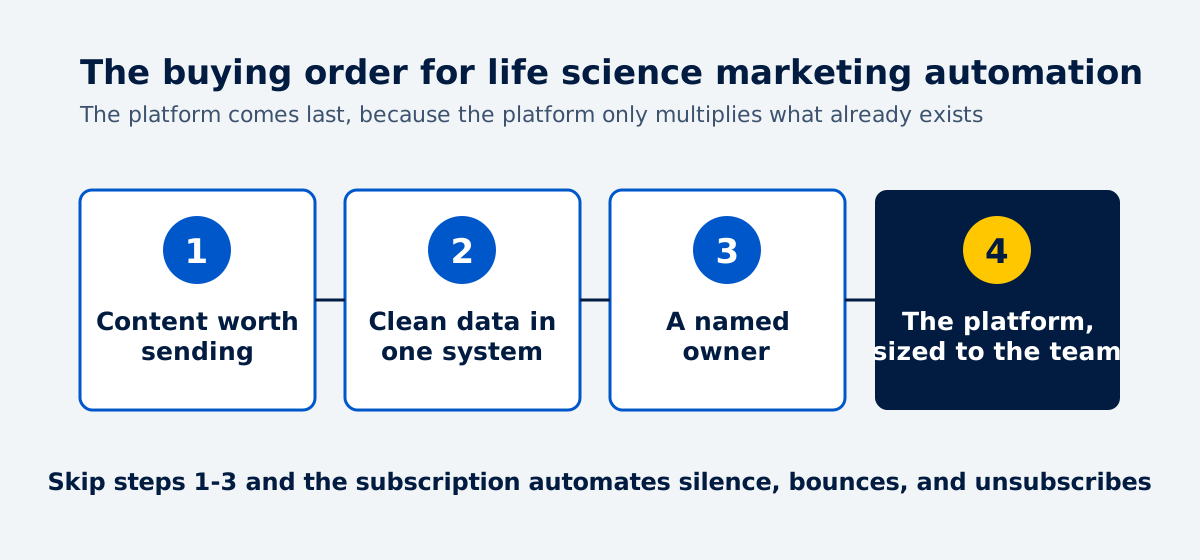
Four things decide whether the platform pays for itself or becomes shelfware. Check them in order.
Content worth sending
A nurture sequence is a promise of useful next steps. If your resources section holds three product pages and a news post, the sequence has nothing to deliver, and automated emails with nothing to say train scientists to unsubscribe. Application notes, comparison guides, protocols, and webinars are the fuel; the platform is only the engine. Building that library is the substance of how to market a life science product.
Clean contact data in one system
Automation multiplies whatever it touches, including bad data. As one commenter on r/growmybusiness put it, "automation works only if the data is clean." Duplicate records, dead emails, and contacts split across a sales spreadsheet and an email tool guarantee automated embarrassment, like nurturing a customer as a cold prospect.
An owner
The sector already hires for this without naming it. In our life sciences study of marketing job postings, automation and workflow language appears in about 21% of roles, while email and CRM skills appear in only about 15%. Companies want the efficiency and understaff the layer that produces it, a pattern we traced in what life science companies hire marketers to do.
The practical rule: someone on the team owns the system, its data hygiene, and its sequences as a named part of their job. A platform nobody owns turns into a subscription nobody uses.
Enough lead flow to justify sequences
At very low volumes, automation can be the wrong tool. Another voice in the same Reddit thread made the honest counter-argument: with a handful of leads a month, "you wouldn't necessarily want to send them an automatic generic email"; a personal note from a scientist-founder beats a sequence.
The crossover comes when follow-up starts slipping because of volume. If leads wait days because humans are busy, you have enough flow to automate.
Which marketing automation tools fit life science companies?
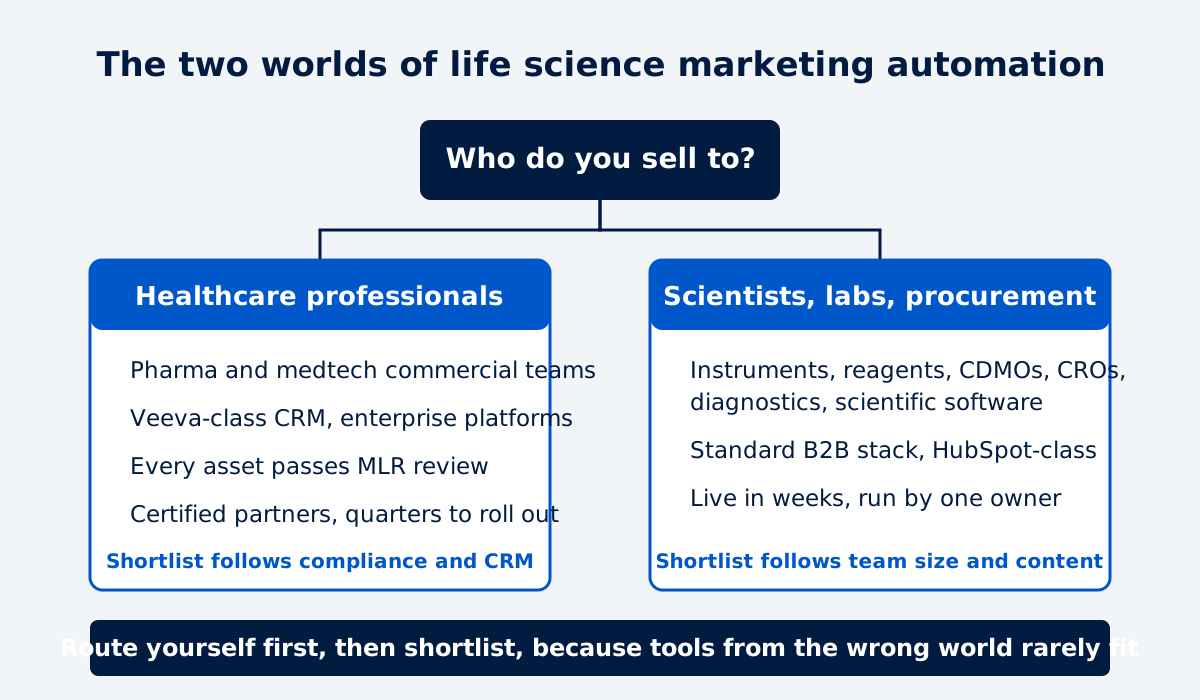
Start by working out which of two worlds you are buying for, because they barely overlap.
The pharma and medtech commercial world
If you market drugs or devices to healthcare professionals, you are buying into a regulated commercial stack where every asset passes medical-legal-regulatory review. That review cycle shapes everything upstream of it, which is why pharma marketing strategy and medical device marketing read so differently from the rest of the sector. The center of gravity here is Veeva, which reports 10 of the top 20 biopharmas committed to its Vault CRM and expects about 14, alongside Salesforce's competing life sciences CRM. Automation in this world means HCP journey orchestration on enterprise platforms, certified implementation partners, and quarters-long rollouts.
If that is your world, this guide's prerequisites still apply, but your shortlist is set by your CRM estate and compliance requirements, not by marketing features.
The B2B life sciences world
Everyone else in life sciences sells to scientists, lab managers, and procurement. That includes instrument makers, reagent and consumables suppliers, CDMOs and CROs, diagnostics companies, biotechs, and scientific software vendors. That is a standard B2B motion with long research phases, and a standard B2B stack serves it.
Within that world, the realistic tool classes look like this:
Tool class | Examples | Fits when |
All-in-one platform with built-in CRM | HubSpot | You want content, email, forms, scoring, and CRM in one system, live in weeks |
Automation attached to an existing CRM | Salesforce plus Marketo or Pardot | Your sales team already lives in Salesforce |
Email-first tools | Mailchimp, Brevo | Newsletter-stage budgets, before real scoring and routing needs |
Enterprise orchestration | Marketo, Salesforce Marketing Cloud | Global, multi-region campaigns with a dedicated marketing operations team |
HubSpot's position at the top of the table reflects usage, not preference. It is the most common platform among the high-growth B2B companies we scanned, and the most common automation platform in our pharma study's small automated cohort.
What the platforms cost
HubSpot publishes its prices: Marketing Hub Professional runs $800 per month billed annually with three seats and 2,000 marketing contacts, plus a mandatory $3,000 onboarding fee, and Enterprise runs $3,600 per month plus $7,000 onboarding. The number that grows over time is contacts; crossing a contact tier raises the bill, so list hygiene is a budget line.
The enterprise platforms, Marketo and Salesforce Marketing Cloud, publish no list prices. Treat the quote process itself as a signal: a platform that requires a sales cycle to price will also require specialists to run.
What mistakes do life science companies make with marketing automation?
Five failures account for most abandoned platforms, and all five are avoidable at buying time.
Buying the enterprise platform for a three-person team
A commenter on r/BiotechMarketing described watching teams "buy the 'enterprise' thing, then spend a quarter just getting basic journeys and reporting stable." Sophistication you cannot staff is a cost, not a capability. Match the platform to the team you have, and migrate later if you genuinely hit a ceiling. The same fork shows up when choosing between multichannel and omnichannel marketing.
Automating before the content exists
The sequence editor works on day one; the sequence needs a library of application notes, guides, and webinars to have anything worth sending. Companies that buy the platform first end up sending the same product pitch three times on a timer, which is worse than silence.
Pointing sequences at a dirty database
Old lists full of dead addresses and duplicates turn a launch into a deliverability problem and an unsubscribe wave. Clean and consolidate first; the sequences can wait a week.
Treating go-live as done
Scoring thresholds, sequence content, and lifecycle stages need revisiting as products, audiences, and seasons change. This is why the owner from the prerequisites list is non-negotiable; a set-and-forget system decays into spam.
Letting inbound signals wait
On a client campaign, we filled in the contact forms of several companies in one market and found only one followed up quickly. We now wire inbound triggers so any qualified signal drops straight into a sequence, because the first hour decides whether the lead converts. If your automation does everything except respond fast, it is missing its highest-value job. On named-account programs the same rule applies, which is why account-based marketing for life sciences lives or dies on response time too.
Should your life science company buy marketing automation now?
If you capture leads and follow up by hand, yes, and sooner than the rest of your roadmap suggests. The sector runs behind on this layer, and the prerequisites above matter more than the platform choice.
Buy in this order: content worth sending, clean data, a named owner, then the platform sized to your team. Route the fast buyers to sales inside the hour, nurture the slow ones for the quarters they need, and judge the system on influenced pipeline after one full sales cycle. Where that sits against your other bets is a question for your life science marketing strategy and the wider digital marketing picture.
This layer is one part of how we think about content generally: as revenue infrastructure with a job, where the automation gives the content you already paid for its distribution and its follow-up. If you want the nurture layer designed and installed rather than bought and shelved, that is exactly the system we build for life science companies.
Find out how many of your captured leads go cold.
Get a Content RevOps audit, your capture and nurture layer benchmarked against the life sciences 2026 data, with every leak priced in pipeline terms you can take to your CFO.
Frequently Asked Questions
About the Author

Founder & CEO, Content RevOps
Stefan Kalpachev is the founder and CEO of Content RevOps, where he helps B2B SaaS companies transform their content into predictable pipeline. With a background in content marketing and revenue operations, Stefan has developed a unique methodology that bridges the gap between content creation and revenue generation.
Connect on LinkedIn