Demand Generation Specialist
Hiring a demand generation specialist — or trying to become one? We help B2B teams build the pipeline engine the role is actually measured on.
Book a CallIf you go looking for what a demand generation specialist is, the internet has a clean answer ready for you. It's a mid-to-senior marketer with at least four years of experience. It earns somewhere around $55K, or maybe $58–86K, or maybe $39–79K, depending on which widget you land on. It sits on a well-marked career ladder from specialist to manager to VP, and the demand for it supposedly "outpaces supply," so you've got leverage.
Part of The Complete Guide to B2B Demand Generation Strategy.
Spend ten minutes in r/marketing and the clean answer falls apart. The threads that rank for this role aren't success stories — they're people asking what skills they'd even need to break in, and practitioners already in the seat asking each other what they're actually supposed to do all day. When the people doing the job can't tidily describe it, that's a signal the tidy definition is wrong.
So we went to the source. We pulled 771 live US job postings for "demand generation specialist" and adjacent titles off LinkedIn on a single day — June 15, 2026 — and read what employers are actually advertising, paying, and asking for right now. The picture that comes back is messier, more honest, and more useful than anything the definitional pages will tell you. The short version: the title has quietly stopped meaning one thing.
The demand generation title is a catch-all, not a role
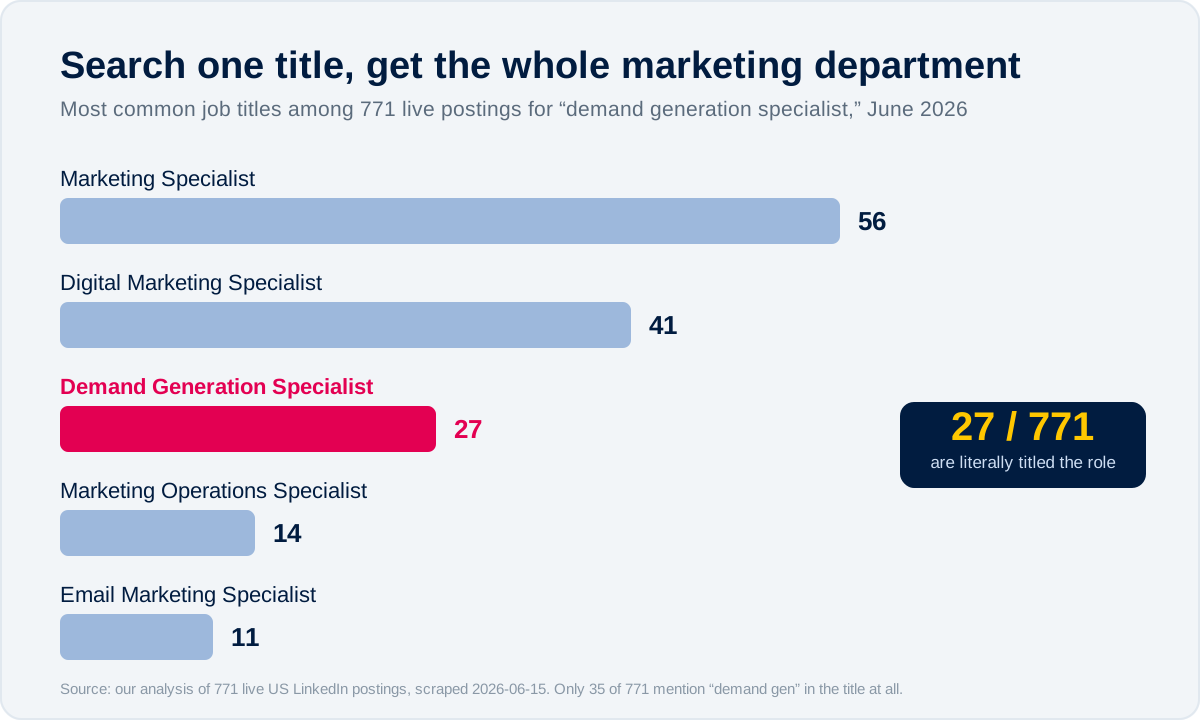
Here's the finding that reframes everything else. Of the 771 postings that surface when you search this role, only 27 are literally titled "Demand Generation Specialist." Just 35 mention "demand gen" in the title at all.
What fills the other ~95%? Marketing Specialist (56 postings), Digital Marketing Specialist (41), Marketing Operations Specialist (14), and a long tail of Email, Field, Performance, Automation, and Social Media Specialist roles. Search "demand generation specialist" and the market hands you back the entire B2B marketing-specialist universe, because employers, recruiters, and the algorithm treat the terms as roughly interchangeable.
The seniority data drives the point home. The SERP's confident "mid-to-senior, four-plus years" definition describes a slice of the market, not the market. Among the postings that label an experience level, 43% are mid-senior, 37% are associate, and 18% are entry-level. The same title that the career guides slot neatly into the middle of a ladder is, in the live market, attached to first jobs and senior individual-contributor roles at the same time.
This is why the Reddit question "what do you do all day?" has no clean answer. The job description behind the title depends almost entirely on the company that wrote it. One "demand generation specialist" posting is a 23-year-old running webinar logistics; another is a seven-year operator owning a pipeline number. Treating them as one role — which every definitional page on the SERP does — is the original sin that makes the rest of the advice unreliable.
What it actually pays — and why every source disagrees
The reason you've seen five different salary numbers for this role is that almost nobody publishing them is looking at current postings. They're looking at aggregated, undated, self-reported databases that disagree with each other by tens of thousands of dollars. Payscale feeds a $55,766 figure. Glassdoor produces a $58–86K band. ZipRecruiter shows $39,400 to $78,900. Same title, wildly different money, no shared timestamp.
From the postings that actually disclosed pay, our snapshot lands a tighter, dated band: a typical advertised range runs from a $70K floor to an $89K ceiling, with a midpoint around $80K. Break it out by level and the spread finally makes sense — entry-level midpoints sit near $60K, associate roles near $75K, and mid-senior roles near $93K. The hourly and contract postings cluster around $30–$43 an hour. The aggregators aren't lying so much as blending all of those levels into one mushy average and then disagreeing about the blend.
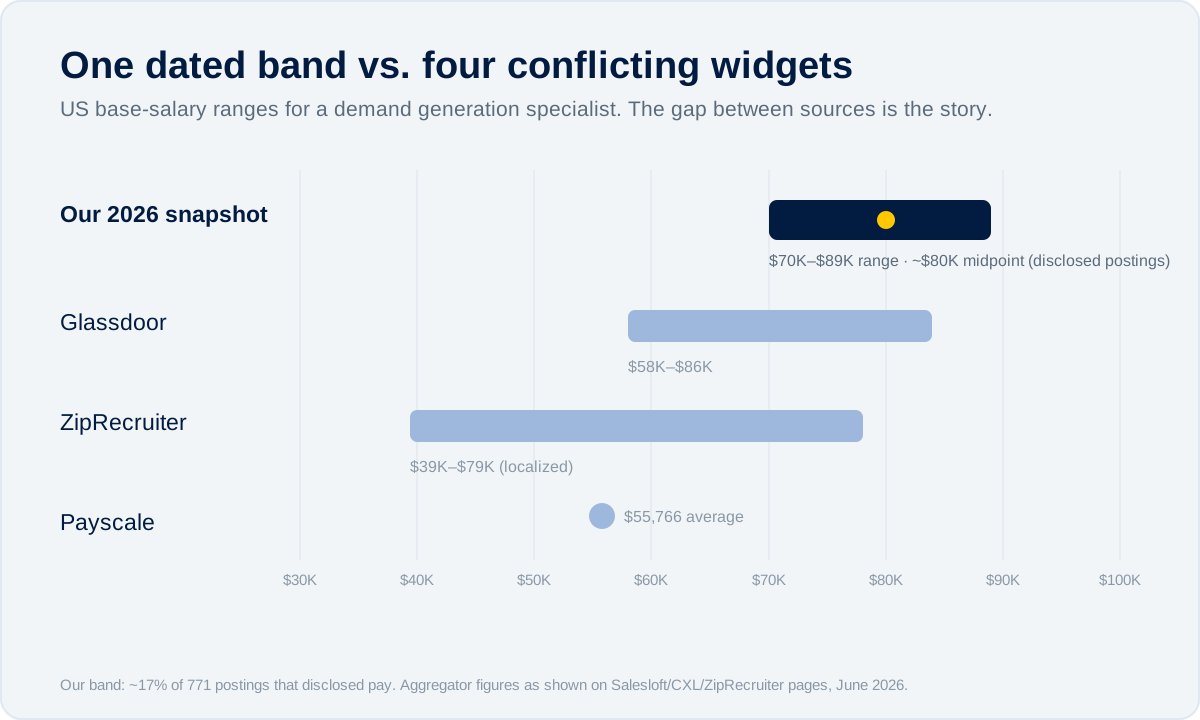
There's a catch worth saying out loud, because it's the most practically useful number in the dataset: only about 17% of these postings disclosed a salary at all. Five out of six employers hiring for this role still make you ask. So when a page quotes you a single confident salary for "demand generation specialist," remember it's an average of self-reported guesses about a title that spans entry-level to senior — not a rate card. The honest answer to "what does it pay" is a band that moves with seniority, location, and whether the company posts pay in the first place.
Remote is real — and brutally contested
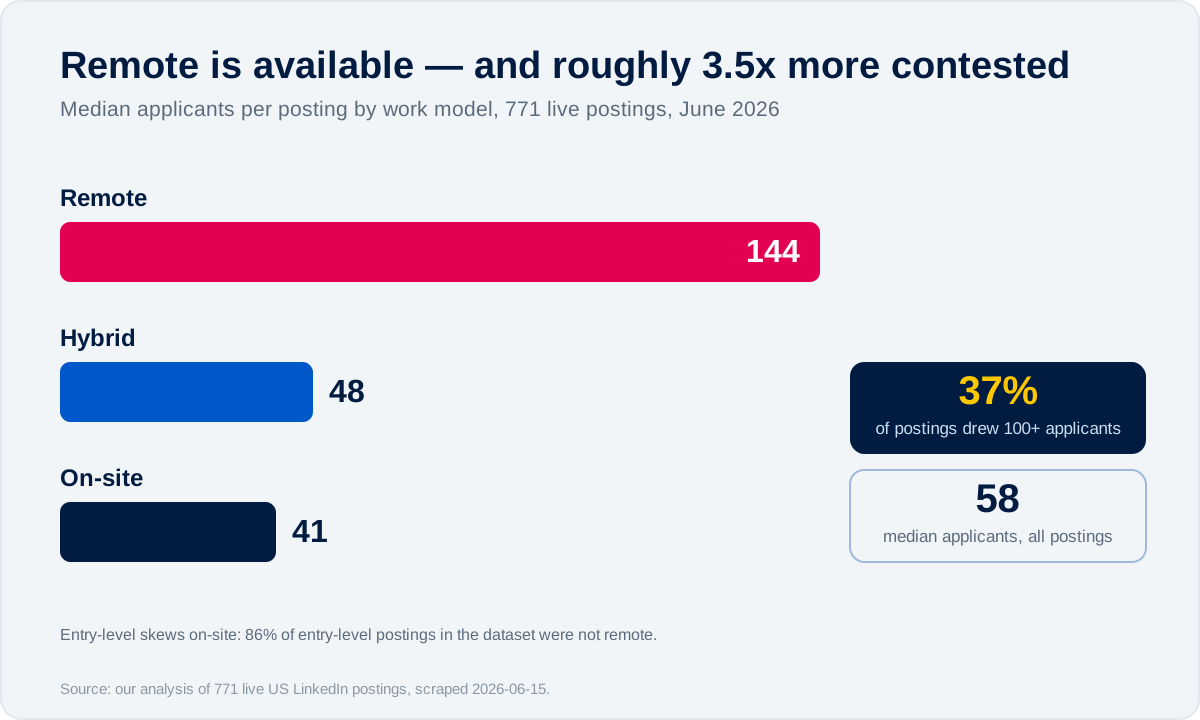
The remote dream is genuinely available here. Across the snapshot, 31% of postings are fully remote, 17% are hybrid, and 24% are on-site (the rest didn't specify). That's a meaningfully remote-friendly role compared with most of marketing.
But "available" and "winnable" are different words. The competition data is sobering. The median posting in our dataset had already drawn 58 applicants, and 37% of postings had attracted more than 100 by the time we looked. Remote roles are where the crush concentrates: a typical remote posting pulled 144 applicants against just 41 for a typical on-site one — roughly three and a half times the field for the same job.
That directly contradicts the most repeated career-advice claim about this role — that demand "outpaces supply" and skilled people hold the leverage. For senior operators with a clear pipeline track record, maybe. For everyone applying to the remote "marketing specialist" rec that 144 other people also found, the leverage is firmly on the employer's side. And if you're early-career, the remote door is barely open at all: 86% of the entry-level postings in our data were on-site.Remote demand gen is something you largely earn your way into, not start in.
Where the demand generation specialist jobs actually are
Strip the role back to where it physically lives and a useful map appears. By industry, the demand side is led by Software Development (~20% of postings), Advertising Services (11%), and Staffing & Recruiting (8%), followed by IT services, financial services, retail, and healthcare. The staffing share is its own quiet tell: a chunk of "demand generation specialist" demand is actually agencies and recruiters hiring on behalf of someone else, which is part of why the titles blur.
Geographically, the role concentrates where B2B and tech concentrate, especially because companies often use demand generation to expand into new markets, which helps explain why hiring clusters in major commercial hubs. California, Texas, and New York lead by volume, with Illinois, Florida, and Massachusetts close behind. At the metro level it's New York City, Chicago, San Francisco, Charlotte, and Boston at the top, with Atlanta, Austin, Denver, and DC filling out the list. And it spans the whole company-size spectrum almost evenly — from sub-50-person startups to 100,000-plus-employee enterprises — which is the structural reason the job description is so inconsistent. A demand gen hire at a ten-person startup and one at Bloomberg share a title and almost nothing else.
AI is already rewriting the job
The most interesting names in the dataset aren't the biggest employers — they're the newest. OpenAI, ChatGPT Jobs, and DataAnnotation all show up hiring for demand generation. The companies building the tools that automate marketing's manual tasks are themselves staffing up the function. That's not a contradiction; it's the shape of the transition.
Two signals sit underneath it. First, search interest in the exact term "demand generation specialist" is down 55% year over year — the label itself is fading even as the work continues under other names. Second, the work is being rebuilt around AI fast: Demand Gen Report's 2026 B2B trends research found that 96% of B2B marketers now use AI in their roles, and nearly half rank it as the single trend they're most focused on. The Google results even surface the anxious version of this question directly in "People Also Ask": will this job be replaced by AI?
The realistic read isn't replacement — it's recomposition. The parts of the specialist job that were always tedious (list-building, first-draft copy, campaign QA, reporting assembly) are exactly what AI is absorbing first. What's left, and what the better postings increasingly ask for, is the judgment around it: defining the logic, owning clean first-party data, setting the guardrails, and helping teams develop programs and systems that scale reliably. They also focus on pipeline influence and generating high quality leads, create targeted content marketing that addresses customer pain points, and work closely with sales, marketing, and marketing operations to align demand generation with revenue targets. The title may be fading, but that work — the orchestration of demand against a revenue number — isn't going anywhere. It's just getting concentrated into fewer, more senior, more accountable seats.
So what do you do with this
If you're hunting for the role: stop searching the exact phrase and stop trusting the single salary number. Search the adjacent titles too — marketing, digital marketing, growth, and operations specialist — because broader searches can help you access more relevant openings where the same work hides. Many postings also ask for a Bachelor's degree plus hands-on experience with campaign management, performance tracking, analytics, and marketing automation tools. Anchor your pay expectations to your level ($60K entry / $75K associate / $93K mid-senior), not to a blended average. Expect a fight for remote roles, and lead every application with outcomes tied to pipeline, revenue, awareness, and business impact by showing campaign results, campaign performance, and pipeline influence with concrete metrics to prove ROI, because that's the one thing that separates a "specialist" from the 143 other people in the queue. Common campaigns here include email marketing, pay-per-click ads, and content marketing, and A/B testing is standard for improving landing pages and ad performance.
If you're hiring for it: the title is doing you no favors. Write the rec around the capability you actually need — research and strategy, web capture, lifecycle, paid, or measurement — and spell out needs like content creation, outreach strategies, lead management, campaign execution, and broader marketing efforts for specific target audiences rather than the catch-all label, or you'll drown in mismatched applicants. Effective demand generation supports the sales team from first touchpoint to conversion, can nurture leads into long-term customers, improve customer retention rates, and support customer success. It also creates high-value business outcomes by helping generate awareness before conversion. Dedicated in-house demand generation teams often show higher ROI, and 37% of organizations rely exclusively on in-house demand generation talent, typically with a demand generation manager coordinating the function internally. If you want a sharper picture of how those capabilities split across a real team and what each one costs in 2026, we broke that down in our guide to demand generation team structure, roles, and costs, and if you're still untangling where demand gen ends and lead gen begins, that distinction is here. This kind of hiring often happens on a growing marketing team. Companies should encourage qualified applicants from all backgrounds, regardless of gender identity, sexual orientation, or national origin.
The clean internet definition of a demand generation specialist isn't wrong because someone was careless. It's wrong because it's trying to describe a single, stable role that the market stopped agreeing on. The data won't give you a tidy one-liner. It'll give you something more useful: an accurate map of a job in motion.
Want demand gen that's measured on pipeline, not activity?
Content RevOps builds the demand-creation-to-capture system these specialists are hired to run — content, brand, and automation working as one, closed-loop to pipeline.
Frequently Asked Questions
About the Author

Founder & CEO, Content RevOps
Stefan Kalpachev is the founder and CEO of Content RevOps, where he helps B2B SaaS companies transform their content into predictable pipeline. With a background in content marketing and revenue operations, Stefan has developed a unique methodology that bridges the gap between content creation and revenue generation.
Connect on LinkedIn