Pharma social media marketing, what works past the compliance wall
Most pharma social runs as a one-way broadcast to followers you already have. Want to see where your content actually leaks pipeline?
Book a CallMost pharma social media marketing underperforms for a reason nobody names. It is not that pharma posts too little. It is that pharma treats the feed as a place to find an audience, when the feed is a place to keep the audience you already have. That distinction is the whole argument for treating social as one component of a content marketing system rather than a channel that should produce pipeline on its own.
Part of Content Marketing for Pharmaceutical Companies.
That single mistake explains the frustration. Doctors say pharma is asleep on social. Brand teams pour effort into LinkedIn and see a flat line. The instinct is to post more. The better move is to understand what social can and cannot do, then wire it to the channels that do the rest.
This guide walks through the real questions a pharma marketer asks about social, in order. What it is for, why it underperforms, which platforms fit which audience, what the compliance rules actually say, how to get work through medical, legal, and regulatory review without losing the plot, what content earns reach, how to use influencers and key opinion leaders, and how social fits with search and the rest of your funnel.
What is pharma social media marketing, and what is it actually for?
Pharma social media marketing is the use of social platforms to educate patients and caregivers, support healthcare professionals, and build trust for a brand, inside strict rules on what you can say and how you must handle safety information.
Here is the part the usual advice skips. Social is a distribution channel, not a discovery channel. It is the same boundary we draw in content marketing versus social media marketing, and in pharma the consequences are sharper.
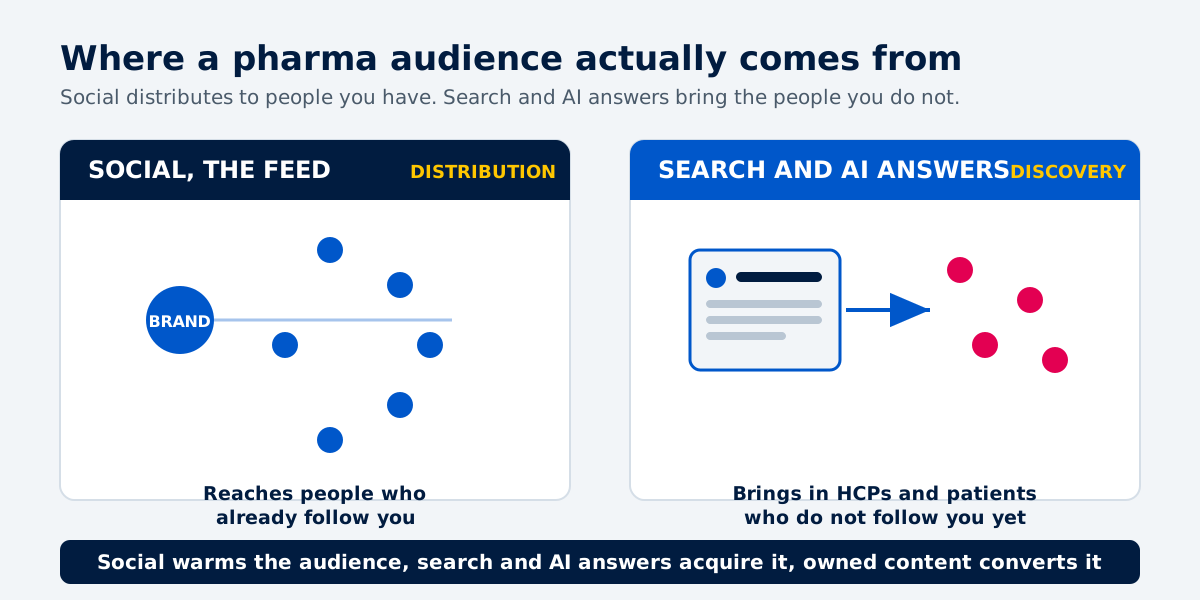
The feed shows your posts mostly to people who already follow you, and that slice keeps shrinking. Organic reach on Facebook sat around 16% of followers in 2012 and fell to between 1% and 2% by 2025, with LinkedIn sliding 34% in a single year. More followers no longer means more reach. The platforms have turned the organic feed into a branding channel, not an acquisition one.
So the job of pharma social is real, but narrow. It warms an audience that already knows you. It reinforces a message. It gives your science a human voice. It is not where a new physician or a newly diagnosed patient finds you for the first time.
Our own read of life sciences marketing says the same thing from the other side. Across the active companies we studied, most hold large followings and still run the channel as a billboard, with the median company sitting near 7,500 LinkedIn followers. The reach is built. The intent to do anything with it is not.
Hold that distinction and the rest of this guide falls into place. Everything that works on pharma social makes distribution better. Everything that acquires new people happens somewhere else.
Why does pharma social media marketing underperform?
Pharma social underperforms because most of it is a broadcast. Corporate posts go out to existing followers on a schedule, nobody replies, and the brand calls it a presence.
The demand is not the problem. In a survey of healthcare providers across 15 specialties, nearly 90% said pharma underutilizes social media, and the old channels are being declined at the same time. More than half of doctors prefer no drop-in visits from sales reps, and close to 40% avoid the usual pharma-sponsored lectures. That shift is why HCP content marketing now happens on the open web rather than in a waiting room.
The billboard pattern, in our own data
When we looked at how life science brands actually run their paid and organic social, the shape was consistent.
- About 72% of LinkedIn ad spend chases brand awareness, the top-of-funnel objective, while only about 2% carries an explicit lead-generation objective.
- Around a third of companies run LinkedIn Ads, and most of that runs as a billboard too, pushing impressions with no next step attached.
That is a channel optimized to be seen, not to move anyone. It fits the "post more" instinct perfectly, and it is exactly why posting more does not help. The sibling pattern across the wider sector is set out in life science social media and LinkedIn marketing.
The internal drag nobody puts in the deck
Ask the people who make pharma social and a second reason surfaces. The bottleneck is rarely the platform.
One pharma marketer put it plainly on Reddit: the real bottleneck is medical, legal, and regulatory review cycles killing campaign momentum, and most brands underperform digitally because of slow approvals, not poor channel choice.
Another, a working pharma copywriter, said the guardrails that slow everything down are often self-imposed rather than mandated by the FDA. Alberto Hernandez, then a senior executive at Sanofi's consumer health business, said the same thing, that the industry has been its own worst enemy.
Broadcast habits plus slow internal process produce a channel that looks busy and does little. Fixing it starts with choosing the right platform for the right person.
Which social media platforms should pharma actually use, and for whom?
The right platform depends entirely on who you are trying to reach. There is no single best network for pharma, and the honest answer maps each audience to the place it already is.
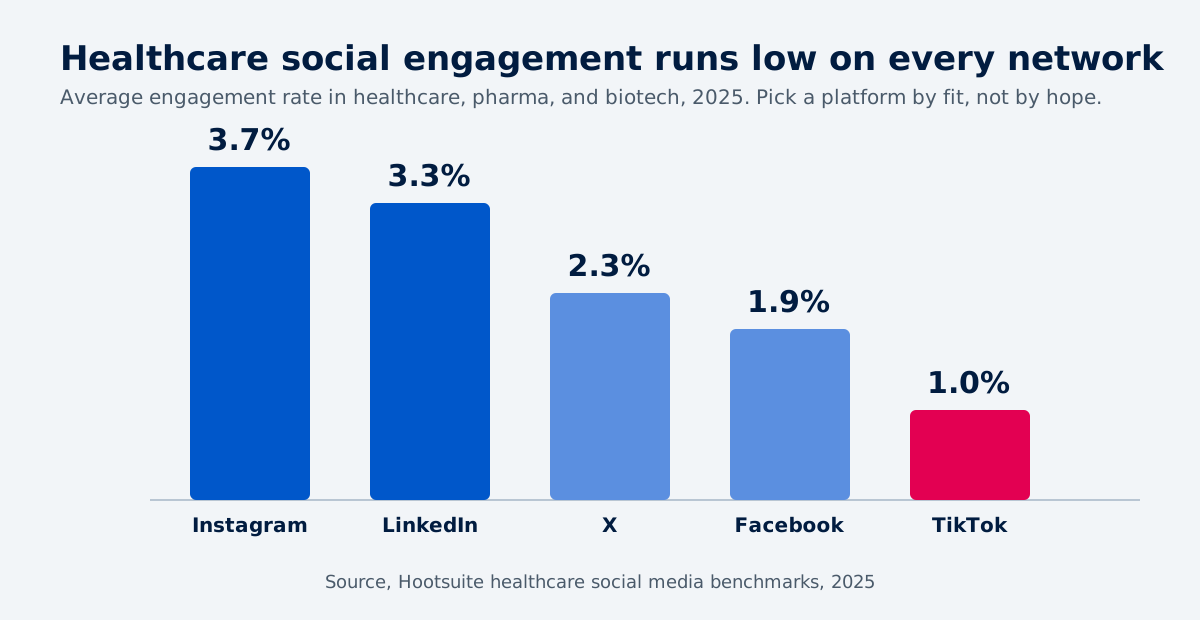
Engagement rates in healthcare, pharma, and biotech run low across the board, so pick by fit, not by hope. As of 2025, average engagement by network was LinkedIn 3.3%, Instagram 3.7%, X 2.3%, Facebook 1.9%, and TikTok 1.0%. Facebook grows followers fastest and engages them least, which tells you again that audience size and reach are not the same thing.
Where each audience actually is
Audience | Where they are | What the feed is good for |
Healthcare professionals | LinkedIn for open professional presence; Doximity and Sermo for the medical majority | Sharing data, congress moments, credentialed voices |
Patients and caregivers | Facebook groups, Instagram, YouTube | Plain-language education, community, patient stories |
Key opinion leaders | LinkedIn and X during congresses | Amplifying research, peer-to-peer credibility |
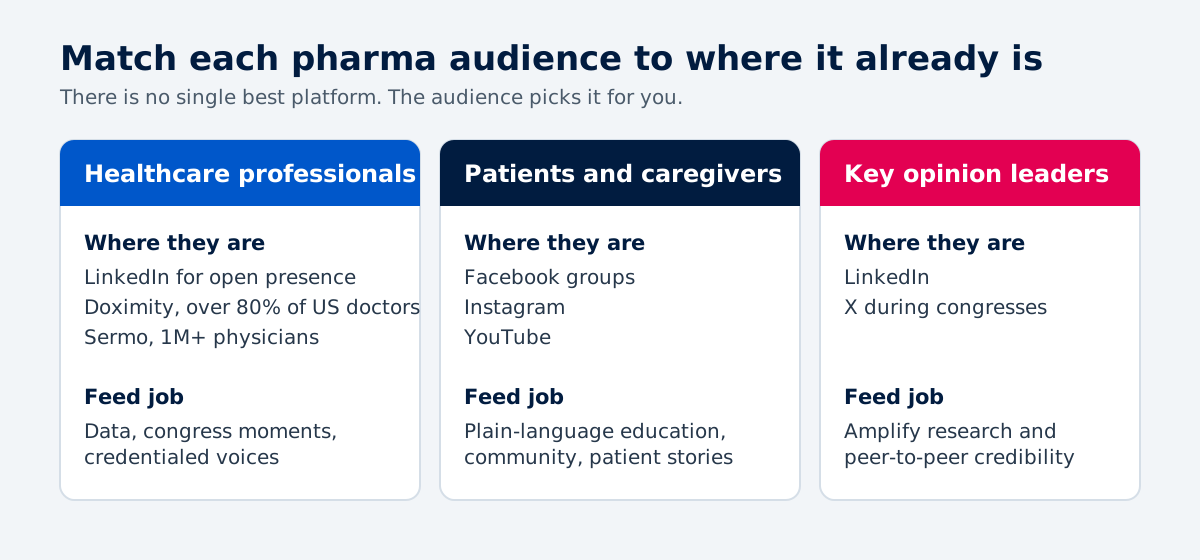
LinkedIn is where professional credibility builds, but it is not where most physicians live. More than 80% of US physicians are registered on Doximity, a network built for clinicians, and Sermo connects more than a million physicians across 150 countries. Marketers on the ground say the same thing, that Doceree, Medscape, and Epocrates beat the generic platforms for reaching doctors with precision. Where each of these sits against email, search, and paid is mapped in digital marketing for pharma.
For patients, the choice follows the condition. A rheumatoid arthritis brand builds a Facebook community. A brand educating younger patients leans on Instagram and YouTube. The platform serves the audience, not the other way around.
What are the compliance rules for pharma social media marketing, really?
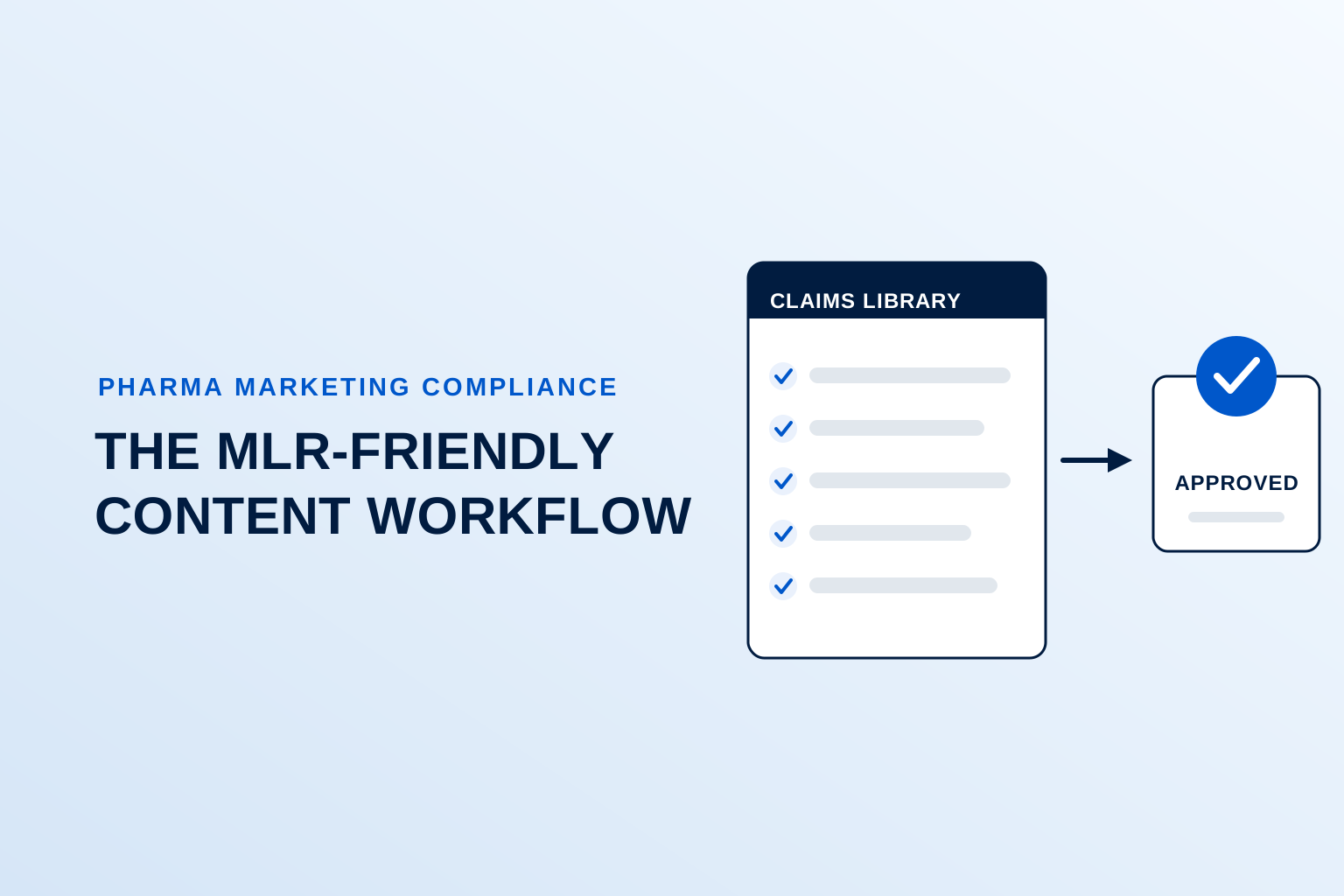
Most guides lump the rules into one scary blob of FDA, HIPAA, and GDPR. That blob is wrong, and it makes the whole thing feel harder than it is. The rules split cleanly by audience and by country, and the workflow that keeps you inside them is covered in full in pharma marketing compliance and FDA-ready content workflows.
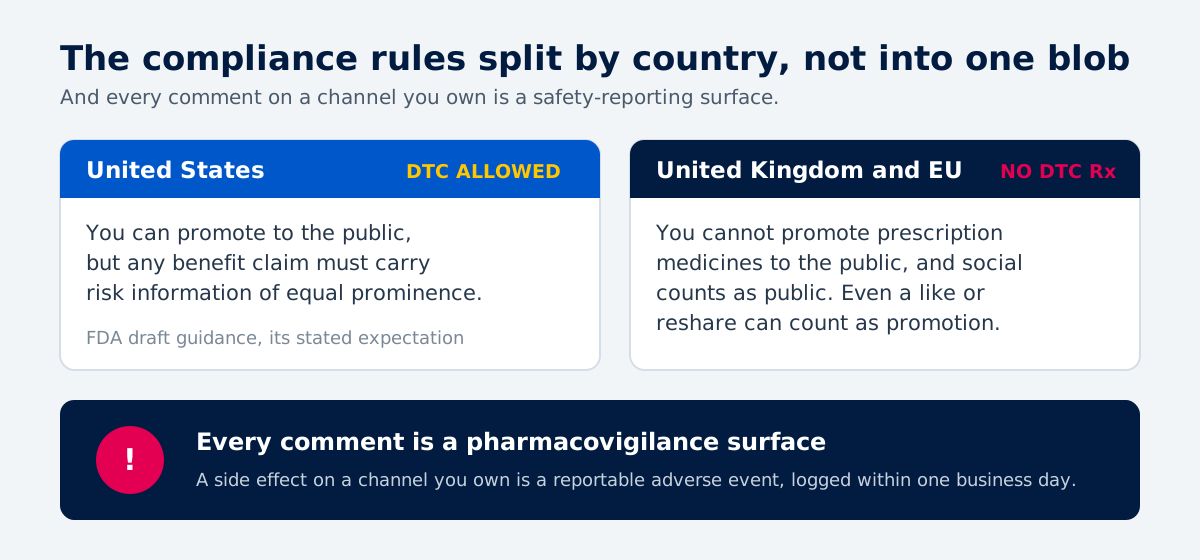
In the United States, you can promote, but risk information travels with benefit
The US allows direct-to-consumer promotion, including on social. The catch is fair balance. FDA's draft guidance on character-limited platforms sets out its expectation that any benefit claim carry risk information of comparable prominence, disclose the most serious risks, name the product, and link to a full risk page.
This is FDA's stated thinking, not a settled rule, but brand teams treat it as the line. And if benefit and risk cannot both fit in the space, FDA's advice is to reconsider whether the platform suits the product at all. That is why so much compliant US pharma social is unbranded disease awareness rather than product promotion.
HIPAA governs patient data, not your HCP marketing
HIPAA protects a patient's identifiable health information. It does not govern marketing to healthcare professionals, and it does not stop you running a compliant social program. What it means in practice is simple. Do not expose protected health information in a post, a reply, a screenshot, or a comment log.
In the UK and EU, you cannot promote prescription medicines to the public
Outside the US the line moves. Under UK law, advertising prescription-only medicines to the public is prohibited, and social platforms count as public. The UK code goes further than many expect. An action as small as a like, a tag, or a reshare that alerts your connections can count as proactive dissemination, and therefore promotion. Most of Europe mirrors this.
Every comment is a pharmacovigilance surface
This is the rule that catches teams off guard. On any channel you own, a comment mentioning a side effect can be a reportable adverse event.
Under European and UK pharmacovigilance guidance, companies must regularly screen the digital media they own or control for suspected adverse reactions, and an unsolicited report from a comment is handled like any spontaneous report, on the same clock. The practical standard is to capture it within one business day and keep the screenshot. Turn on comments and you have taken on a monitoring duty, not just a conversation.
How do you get pharma social campaigns past the compliance wall?
You get past the wall by attacking the real obstacle, which is review speed, not the regulations. The rules are stable and known. What kills momentum is the time it takes to approve anything.
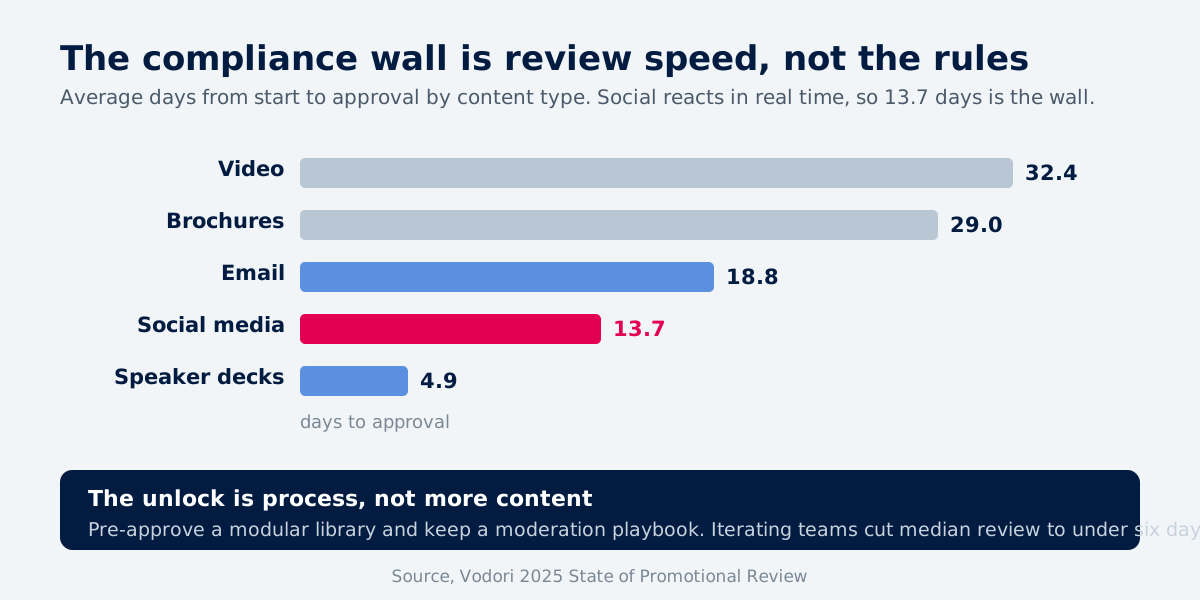
Medical, legal, and regulatory review is slower than most teams admit. Social media content takes about 13.7 days to move from start to approval, against a roughly 14.8-day average across all content types. Thirteen days to approve a post meant to react in real time is the wall people run into.
The good news is that the same benchmark shows the way out. Teams that iterate on their review process, making more than five system improvements a quarter, cut median review time from about ten days to under six. The fix is process, not more content.
Two mechanisms do most of the work.
Build a pre-approved modular content library
Get your building blocks approved once, then assemble. Pre-approved claims, risk blocks, and post templates let a team ship a compliant post in hours instead of weeks. It is the single highest-leverage change, because it turns most posts from a new review into a reassembly. Our own read of pharma content found generic, one-size CTAs sitting at the end of most pieces; the same modular discipline that fixes that fixes review speed, and it is the reason marketing automation for pharma is an infrastructure decision rather than a tooling one.
Run a real comment-moderation and adverse-event playbook
Two-way social is possible, but only if you prepare for the comments before you post. The clearest playbook comes from Frankly Pharma's guidance on community management and adverse-event reporting, and it has five parts.
- Name who is responsible. Decide who monitors comments, including adverse-event monitoring and reporting, and train them before go-live.
- Pre-approve scenario answers. Draft responses to the questions you expect and get them approved, so a reply can post in real time.
- Build a decision tree. Spell out how the community manager handles a mention of a prescription medicine, a treatment class, or a competitor, so they act instead of pausing to ask.
- Document contacts and a crisis plan. Know who to reach and what to do in the first five minutes.
- Cover the gaps. Agencies usually monitor on weekdays only, so contract weekend cover, and remember that paid content draws more comments than organic, so resource it.
Get this in place and the compliance wall stops being a wall. It becomes a workflow.
What kind of content actually works on pharma social media?
The content that works is native, two-way, and made in more than one format. The content that fails is the corporate broadcast post nobody asked for.
Multi-format publishing is the clearest divider we see in life science marketing. The companies that run a podcast or YouTube channel, about half of the active set, take a disproportionate share of voice, and about half repurpose a single asset across formats instead of publishing it once. Meanwhile pharma has almost entirely ceded audio to medical podcasts made outside the industry. Format is where the reach is, which is the through-line of pharma content marketing tactics that compound.
The proof is in the campaigns that broke through by being native rather than promotional.
- ViiV Healthcare's "Navigating HIV" used unscripted video interviews with people living with HIV and drew more than 1.7 million organic views across Instagram, YouTube, and TikTok in three months, with no product promoted.
- Organon's "Missdiagnosed" built a research-led campaign about women's heart attacks, reached more than 28 million women, and lifted social engagement 24%.
- Dulcolax's "Talking Shit" replied to real posts on X with light medical advice and raised positive sentiment 55% while sales rose 6%.
- VTAMA's Snapchat lens, the first augmented-reality lens in a branded pharma campaign, drew 16,000 clicks and 41,000 shares in a single day.
None of those were a static corporate post. Each used a native format and gave people something to do.
Employee advocacy is the one lever that expands reach
If you want the feed to reach beyond your own followers, the strongest organic move is to get real people posting, not the brand page.
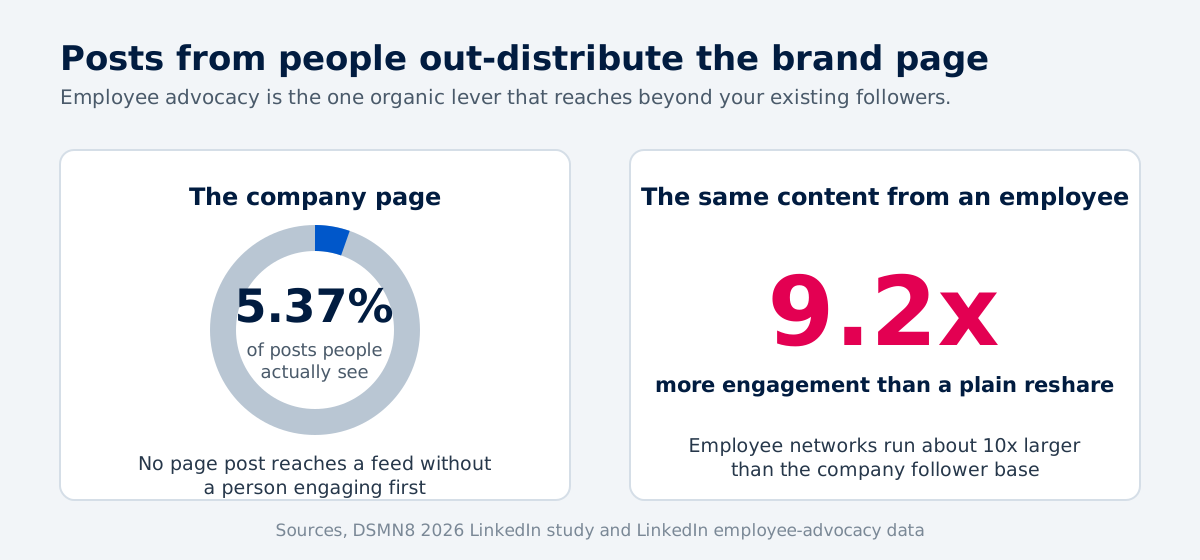
The numbers are hard to argue with. Employee networks are on average ten times larger than a company's follower base, and content shared by an employee earns twice the click-through of the same content from the company. In one study of more than half a million LinkedIn posts, company pages made up just 5.37% of what people actually saw, and not one organic company-page post reached a feed without someone in that user's own network engaging first. Original posts from employees earned more than nine times the engagement of a plain reshare.
For pharma, that means your medical affairs leads, your medical science liaisons, and your executives posting in their own voice will out-distribute the brand page every time. Getting those posts to land is a distribution problem, and our approach to content distribution treats it as one.
One design rule keeps this honest. The lift only shows up when participation is spread out. At most companies a single person drives the reach, so a program that enlists a handful of credible voices beats one that leans on the founder alone.
How should pharma work with influencers and key opinion leaders on social media?
Work with influencers and KOLs by choosing credentialed voices, controlling the content, and disclosing the relationship. In pharma, credibility matters more than raw reach, because the audience starts from distrust.
The distrust is measured. In a survey of consultant-level doctors, 80% said they mistrust pharma's digital content, with cherry-picked data the top concern. The same doctors said they would rather view things online themselves than be pitched. A borrowed influencer with a big following does not fix that. A licensed physician citing real evidence does, which is the standard real thought leadership has to clear.
Our own read of pharma content points to the signals that build that credibility. Only about half of active companies display the credentials of the expert behind their content, and only about 60% cite an external authoritative source. Those are cheap, defensible trust signals, and they carry straight into how you pick a partner.
A few rules keep influencer work compliant and credible.
- Pick licensed HCPs or credible patient advocates, not follower counts.
- Pre-approve every script against off-label and fair-balance rules before it posts.
- Disclose the relationship clearly, and remember the company stays responsible for an influencer's content under the rules.
- Amplify research, not product. Organon's "Missdiagnosed" worked because trusted voices carried a real finding, not a sales message.
The reputational environment is real. One of the most-watched videos for "pharma social media marketing" is an anti-pharma piece about influencers being paid off, with hundreds of thousands of views. Credentialed, cited, disclosed content is how you stand apart from that noise.
How does pharma social media marketing fit with search and the rest of the funnel?
Social does one job in your system, and it is not the whole job. Social distributes and warms. Search and AI answers acquire the people the feed cannot reach. Owned, decision-stage content converts them. Setting those roles is the first move in any workable pharma marketing strategy.
This is where the distribution-versus-discovery point pays off. The physician who does not already follow you, and the patient newly researching a condition, do not meet you in the feed. They meet you in a search result or an AI answer. And that is exactly where pharma is thin, as why pharma disappears from AI search sets out in detail.
Pharma has barely staffed the acquisition side. In our read of the field, search optimization shows up in about 1 in 20 marketing hires, and answer-engine optimization in about 1 in 200. The result shows up in the answers themselves. Commercial pharma earns a share of AI answers at the awareness stage, roughly a third, and almost none at the decision stage, because AI engines cite authority, not corporate blogs, leaning on sources like the Mayo Clinic, NIH, and the CDC. Closing that gap is what showing up in AI search actually takes, and where AI in pharma marketing helps rather than just supplying language.
Then the last step leaks. Among pharma content producers, about a third run no decision-stage content at all, and most end a piece with a generic CTA rather than a next step matched to intent. So even when search brings someone in, there is nowhere for a ready buyer to land. Whether any of it pays back is a question pharma marketing analytics has to answer, and the nurture that follows a capture belongs in pharma email marketing.
Social cannot fix any of that. It was never meant to. What it can do is warm the audience that search and owned content bring in.
We saw this pattern hold in an adjacent life science business. Working with Westlab, a supplier that sells to lab professionals and scientists rather than prescribers, education-led content captured demand instead of just attracting traffic and turned a cold outbound motion into inbound, producing 241 inbound leads and about $120,000 in influenced quotes in three months at a return of 869% on the content investment. Social had a role in that system, but the acquisition came from content built to be found. Read the wider picture in our state of content marketing in pharma.
Give social its real job and it stops being a disappointment. It becomes the part of a working system that keeps your audience warm.
Where to start with pharma social media marketing
If you run pharma social and it feels stuck, work the problem in order rather than posting more.
- Stop broadcasting. Audit your last month of posts and count the two-way ones. If almost none invite a reply or use a native format, that is the first fix.
- Build the modular library and the moderation playbook. Pre-approve claims, risk blocks, and scenario answers, and put a named comment-and-adverse-event process in place before your next campaign.
- Fund native, two-way formats and employee advocacy. Put budget behind short video, real voices, and a small set of credible people posting in their own name.
- Wire social to search and decision-stage content. Let search and AI answers acquire, let owned content convert, and let social do the job it is good at, which is keeping that audience warm.
Do those four things and pharma social stops underperforming, because you have finally asked it to do the job it can actually do. If the gap turns out to be capacity rather than clarity, how to choose a pharma marketing agency covers what to look for.
Is your pharma social a broadcast, or part of a system?
Get a Content RevOps audit, your funnel shape, conversion gaps, and AI-search visibility benchmarked against the pharma 2026 data, with every leak priced in numbers your CFO can argue with.
Frequently Asked Questions
About the Author

Founder & CEO, Content RevOps
Stefan Kalpachev is the founder and CEO of Content RevOps, where he helps B2B SaaS companies transform their content into predictable pipeline. With a background in content marketing and revenue operations, Stefan has developed a unique methodology that bridges the gap between content creation and revenue generation.
Connect on LinkedIn