In-House vs Agency for Construction Marketing
Not sure if you need a hire, an agency, or a system first? Start with a content revenue audit.
Book a CallDeciding between in-house and agency for construction marketing is not really a question of who does the tasks. It is a question of whether you have a system for the work to plug into. In our analysis of construction content marketing in 2026, only about one in three construction firms runs marketing as a working system. Everyone else buys production, a marketer or a retainer or more ads, and gets very little back. So before you compare the two paths, get the real answer straight. An in-house hire is worth it when you have steady work and a clear job to own. An agency is worth it when you need several skills at once and a system for them to run. And for a lot of growing construction companies, the honest answer is a hybrid, or fixing the system first.
Part of Content Marketing for Construction: The Complete 2026 Guide.
In-house vs agency for construction marketing, the quick answer
Neither option wins on principle. The right choice depends on your stage and the work in front of you.
Hire in-house when you already have a plan, enough steady work to justify a salary, one or two channels that need daily attention, and someone senior to set the direction. A single marketer is a production engine, so give them a system to run.
Hire a construction marketing agency when you need several skills at once, you want a team accountable for the result, and you cannot justify hiring for each skill on its own. An agency buys you breadth and speed, and sector knowledge on day one if you pick a construction specialist.
Choose a hybrid when you are growing but have no marketing system yet. You own the strategy with a fractional or part-time lead, and you buy specialist execution around it.
The trap sits underneath all three. If there is no system, no clear buyer, no website that converts, no way to capture and follow up a lead, then neither a hire nor an agency will fix it. They will just spend faster.
Why most construction firms ask the wrong question
Most construction companies frame this as "who should do our marketing." The better question is "do we have a system for anyone to do it in." The money leaks from the missing system, not from the choice of who runs it.
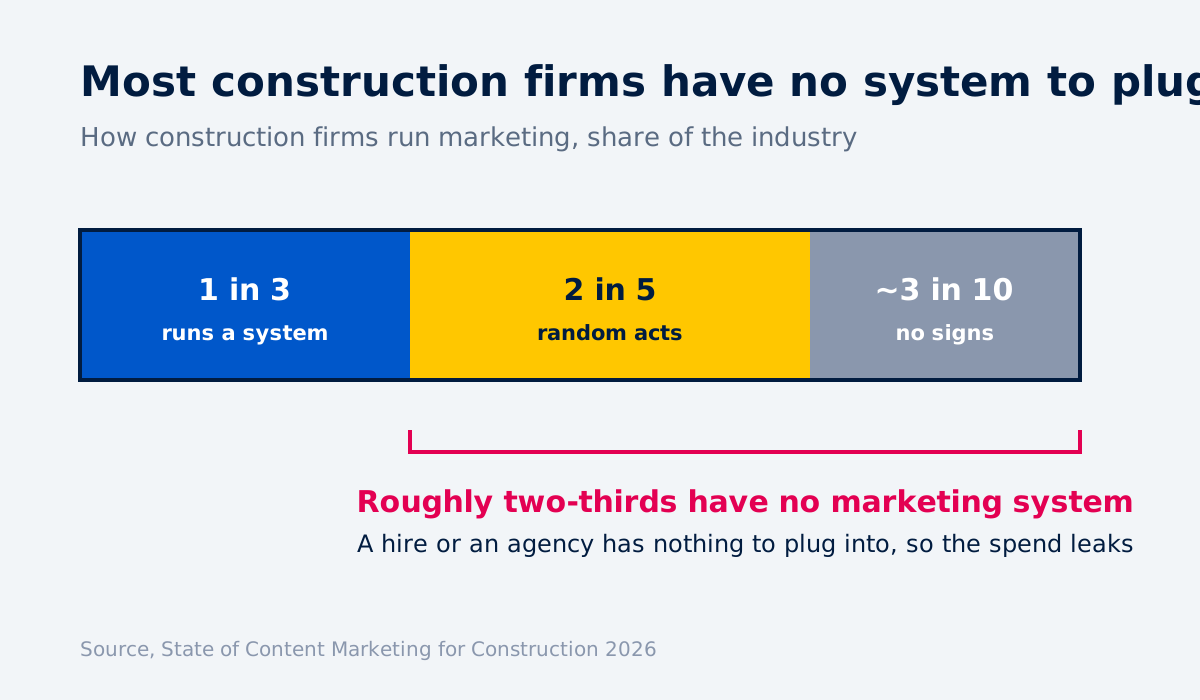
Our construction marketing analysis put numbers on how rare a real system is. Only about one in three construction firms runs content as an operating system. Two in five publish in fits and starts, random acts of marketing rather than a program. Close to three in ten show no meaningful signs at all, a website and a contact form and nothing behind them. So roughly two-thirds of the industry has no system for a marketer or an agency to plug into.
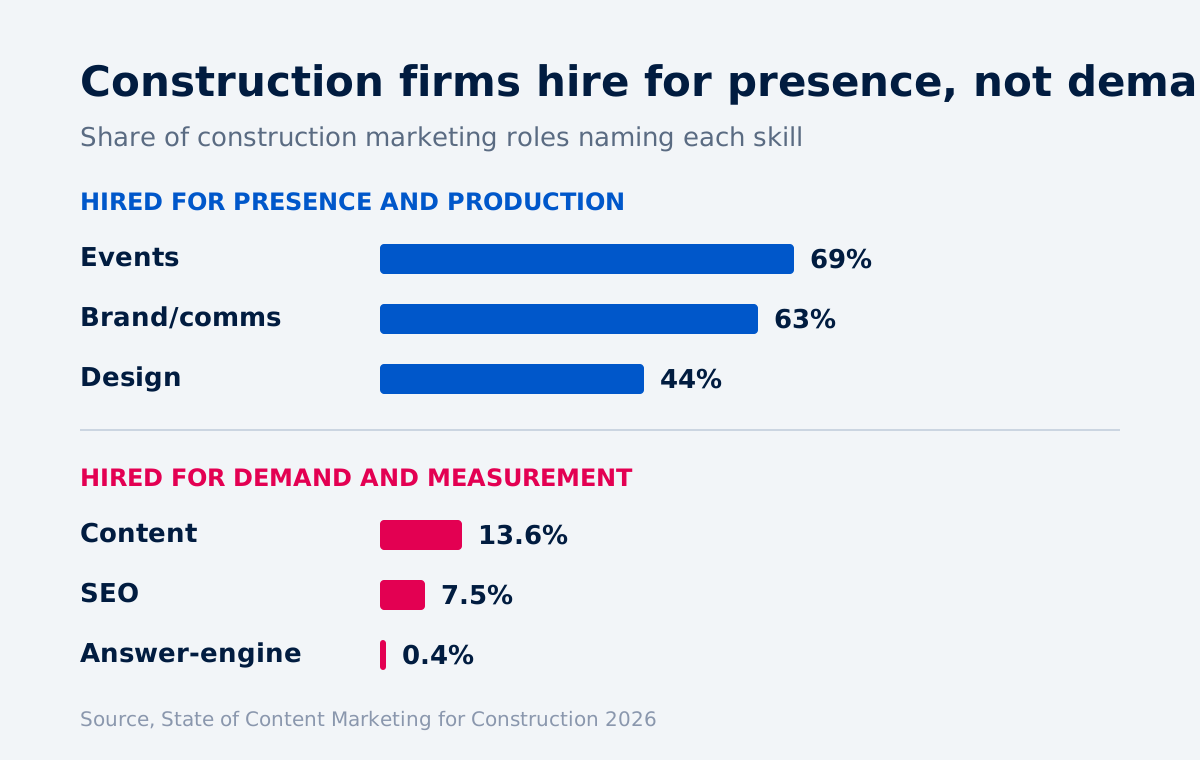
The hiring pattern makes the same point from the other side. Construction firms hire for presence and production far more than for demand. Events and field marketing is the number-one marketing hire, named in 69% of roles. Brand and communications shows up in 63%, design in 44%. The skills that actually build and capture demand barely register. Content is named in 13.6% of roles, search in 7.5%, marketing automation in 7%, and answer-engine optimization in 0.4%. Firms staff to make things and talk about themselves, not to generate and convert demand. The full breakdown sits in our construction marketing hiring trends data, and it is one reason construction brands almost never show up in AI answers.
What that looks like in the field
You can watch it happen. One construction services owner wrote on r/marketing that he had "spent over $7,000 on marketing over the past few months without landing a single job." He had tried online ads, flyers, and word of mouth. His question was whether to hire an agency next, or whether an agency would just "drain your budget even more."
The most useful reply in that thread reframed the whole decision. A marketing agency, one commenter put it, "is not there to prove out your MVP but to grease the wheels on an MVP that has some" traction. In plain terms, an agency amplifies a system that already works. It does not create demand out of nothing. Another owner-facing reply listed the basics first, claim your Google Business Profile and build a website that actually says what you do and where, "before spending a penny on digital advertising."
That is the point of this whole comparison. If your marketing is a pile of tasks with no system behind it, spending more on either path just loses money faster. So the honest way to choose in-house versus agency for construction marketing starts with the real cost and the real coverage of each path.
What an in-house construction marketer really costs
An in-house construction marketer costs far more than the salary line, and covers far less than a full marketing function. That is the honest starting point.
The real cost of the hire
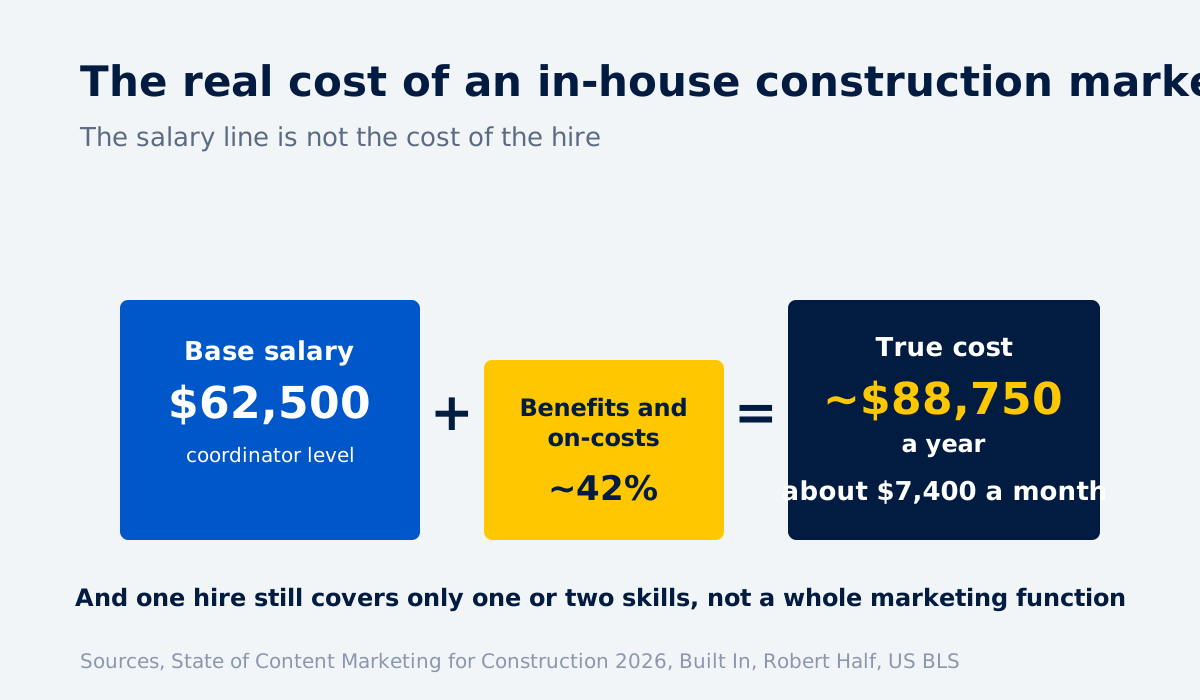
Marketing pay in construction sits at execution level. Blended pay across construction marketing roles runs about $62,500 a year, which lands right at the national rate for a marketing coordinator. Built In puts the average marketing coordinator base at $59,027, and Robert Half puts the mid range at $62,250. So a first marketing hire in construction is usually a coordinator, not a strategist.
The salary is not the cost, though. Benefits and on-costs add a large amount on top. In the government's Employer Costs for Employee Compensation data, wages and salaries make up about 70% of what a private-sector employer pays, and benefits make up the other 30%. That works out to roughly 42% added on top of base pay once you include payroll taxes, insurance, paid leave, and retirement.
Run the math on a $62,500 base and the true cost is closer to $88,750 a year, or about $7,400 a month, before software and tools. Hire a senior marketing manager instead, to get someone who can actually own strategy, and Robert Half puts that base at $90,250 to $127,500, which loads to roughly $128,000 to $181,000 a year. For how a hire sits inside the whole spend, see how much a construction company should spend on marketing.
What one hire actually covers
One person is strong in one or two skills and average in the rest. That is not a knock on the hire; it is arithmetic. The default construction marketing brief asks for a generalist communicator, with communication skills named in 88% of roles and analytics in under half. Half the roles are junior coordinators, and senior marketing seats appear in only 5%. So the typical in-house function runs as output, not as a strategy.
Marketing a construction firm well takes strategy, a website that converts, local search, paid ads, content, video, email, and reporting. No single coordinator does all of that well, which is why a full function is usually a team of several roles. An in-house hire works when the role is genuinely one or two of those jobs, and when someone senior sets the plan and fills the gaps.
When in-house genuinely wins
- You already have a clear plan and know what needs doing each week.
- You have enough steady work to justify a full-time salary.
- The role is mostly one or two skills, like content and social, that one person can own.
- You have someone senior, in-house or on call, to set strategy and cover the rest.
What a construction marketing agency really costs
A construction marketing agency costs less than a full in-house team and covers more skills than one hire, but the retainer is only half the bill, and you still own the brief. Here is the honest version.
You are probably already paying agency money
Most construction firms already spend at agency scale, just on rented demand instead of an owned system. In our analysis, about 73% pay for Google Ads, at a typical spend of $11,000 to $63,000 a month, with an average cost per click around $6.24. That is money going out every month to rent attention that stops the moment the spend stops. Set the agency retainer against that number, not against zero. The channel-by-channel picture is in our guide to digital marketing for construction companies.
What a construction marketing agency retainer runs
Published US pricing for construction and contractor agencies is fairly consistent. Construction Perks says most construction-focused agencies charge $1,500 to $10,000 a month depending on scope. Contractor Marketing Pros puts a full-service program at $2,000 to $8,000 a month, scaling with revenue. Ritner Digital publishes construction tiers from $2,500 to $5,000 a month for a local program up to $12,000 to $30,000 a month for a market-leadership program in a major metro.
The catch that trips up most owners is that the retainer sits separate from ad spend. As Minyona lays it out, "a contractor paying a $5,000 retainer with $5,000 in ad spend is investing $10,000 a month, whether they get 50 leads or zero." Most agencies also want a three to six month commitment and warn of a 60 to 90 day ramp, so you may spend $15,000 to $30,000 before you can fairly judge whether it works. We break down the same hidden layers in our total cost of ownership for a demand generation agency.
What an agency covers, and the real catch
An agency buys you a team of skills for one monthly fee, cover when someone is away, and sector knowledge on day one if you choose a construction specialist. That breadth is the real advantage over a single hire.
The catch is not the price. It is that an agency runs what you point it at. You still own the brief. If you hand an agency a vague goal, you will pay for a strategy phase or drift for months. The honest agencies say so. The reason a system matters here is simple, an agency plugged into a clear plan compounds, and an agency plugged into nothing bills. That is also the test for when to hire an agency at all.
When an agency genuinely wins
- You need several marketing skills at once and cannot justify hiring for each.
- You want results faster than a hire, an induction, and a ramp allow.
- You want one team accountable for the outcome, measured on booked work.
- You want construction sector knowledge from day one rather than teaching it.
In-house vs agency construction marketing, side by side
Here is the comparison on the dimensions a construction owner actually weighs. The costs are shown on the same monthly basis so they compare like for like.
Dimension | In-house hire | Construction marketing agency | Hybrid, fractional lead plus execution |
Typical monthly cost | About $7,400 loaded for one coordinator, roughly $88,750 a year all-in, plus tools | $2,000 to $10,000+ retainer, with ad spend on top | $3,500 to $6,500 plus $2,000 to $5,000 in media |
Skills covered | One or two done well, usually production | A team across strategy, search, ads, content, and web | Strategy owned, specialist execution bought as needed |
Speed to results | Slow, you hire, onboard, and ramp one person | Faster, a team starts at once, but a 60 to 90 day ramp | Fast on strategy, staged on execution |
Construction knowledge | Deep on your business, often shallow on channels | Sector knowledge day one, if you pick a construction specialist | Both, if the lead knows construction |
Who owns strategy | You, or the hire only if they are senior | You still own the brief | The fractional lead owns it |
Accountability | You and the hire | The agency, if you measure it on booked work | Shared, with one lead to hold |
Flexibility to change | Low, changing means rehiring | Medium, you can end the retainer on notice | High, you scale execution up or down |
Best for | Steady work, one clear channel, a senior guide | Several skills at once, and a system to plug into | Growing firms with no system yet |
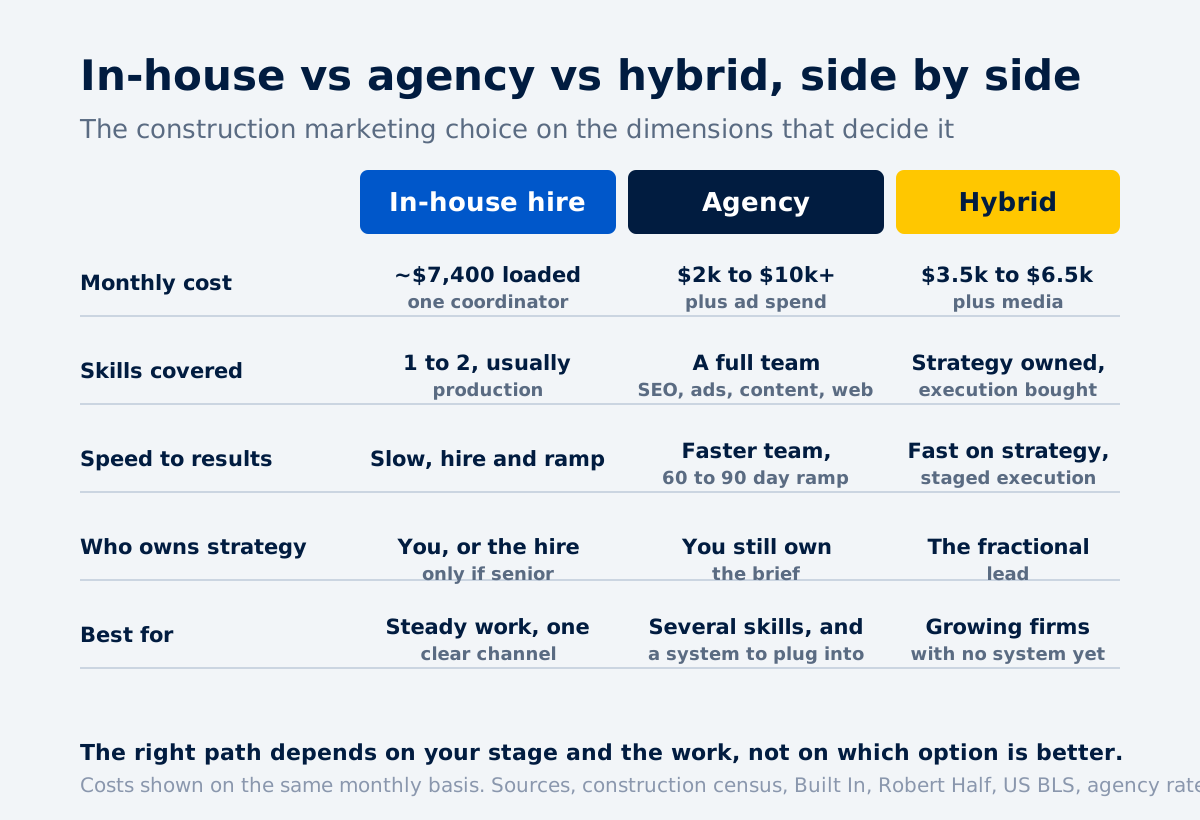
A table settles the shape of the decision, not the exact figures for your firm. The same trade-offs show up outside construction too, as our honest comparison of in-house vs outsourced demand generation lays out.
The hybrid path most growing construction firms actually need
For a lot of growing construction firms, the real answer is neither a lone hire nor a full agency. It is a hybrid, where you own the strategy and buy the execution.
The shape is simple. A fractional or part-time marketing lead owns the plan, the priorities, and the reporting. Specialist execution, in-house juniors, freelancers, or an agency, does the work underneath. You get senior direction without a senior salary, and a team of hands without four separate agency relationships to manage. It is close to what a content marketing consultant does, applied to the whole function.
This is a defined product in construction now. ABMG prices an outsourced marketing lead for contractors at $3,500 to $6,500 a month plus $2,000 to $5,000 in media, and frames the job as one strategic leader who allocates the budget and runs the execution team, "replacing the need to manage three or four separate agencies." For a construction firm spending in the 4.8% to 10.8% of revenue range that ABMG cites as typical, that lead is the cheapest part of the budget and the part that decides whether the rest works.
The hybrid also matches where most firms sit. The $10 to $50 million revenue band is usually where a construction company builds its first real marketing function, which is exactly the moment to set a system rather than just add spend. Owning the strategy is the piece that keeps a hire or an agency honest, because only about a third of construction firms turn their content into a clear next step for the buyer, and the rest publish into a polite dead end.
Buyers describe the same logic in their own words. On a founder thread about agency versus in-house, the practical advice landed on getting the agency to "provide the overall strategy" while an in-house person "does the implementation," to stretch the budget and keep control. That is the hybrid, from the buyer's side.
How to choose between in-house and agency for construction marketing
Work through six questions in order. Your answers point to in-house, an agency, a hybrid, or fixing the system first.
Do you have a system, or just tasks to get done?
If you have a clear buyer, a website that converts, a way to capture leads, and a follow-up process, you have a system, and a hire or an agency can run it. If you do not, fix that first. Neither path pays back without it. A go-to-market strategy for a construction firm is the place to start.
Is it one channel, or the whole estate?
One channel that needs daily attention, like social or content, suits an in-house owner. The whole estate at once, strategy through search through ads through web, suits an agency or a hybrid.
Do you have enough steady work to justify a salary?
A full-time hire needs steady demand to sit on top of. If your pipeline is lumpy, a retainer or a fractional lead flexes with you where a salary cannot.
Who will own the strategy?
Someone has to own the plan and hold it together. If that is you or a senior in-house lead, a coordinator or an agency can execute. If nobody owns it, a fractional lead or an outsourced marketing leader is the missing piece, not another set of hands.
How fast do you need results?
A hire means recruiting, onboarding, and ramping one person. An agency starts a team at once, though it still needs 60 to 90 days to show real results. Match the path to your timeline honestly.
How will you measure success?
Decide before you spend. Measure booked jobs and cost per lead, not clicks and impressions. Most construction firms can measure traffic but never measure pipeline, which is how a marketer or an agency stays busy for a year without moving the number that matters. The benchmarks to hold either path against are in our construction marketing statistics for 2026.
How to vet a construction marketing agency
If your answers point to an agency, vet on outcomes, not activity. A construction marketing agency should be judged on booked work, sector fit, ownership, and reporting. Our guide on how to choose a demand generation agency covers the general filters, and our list of the best demand generation agencies for construction companies is a shortlist to start from.
Vet on booked work, not clicks
Ask what the engagement will do to booked jobs and cost per lead, and how the agency will report it. As one agency owner said of that $7,000-and-no-jobs story, real spend should have produced leads, and zero leads means wasted money. An agency that reports impressions and traffic is reporting its own activity, not your result.
Check the construction track record
Ask for construction or contractor clients and testimonials, and for proof they understand your seasonality, your job values, and your sales cycle. Construction is a high-ticket, long-cycle sale, so the marketing has to capture a buyer earlier in the decision and nurture them, which a generalist agency often does not know how to measure. Our construction industry page shows what that sector fit looks like in practice.
Confirm who owns strategy, and how you exit
Get clear on who owns the plan, the agency or you, and make sure the reporting wires into your CRM so the pipeline is visible. Two-thirds of construction firms own a CRM but never wire content into it, so the gap is usually integration, not tooling. Confirm the contract length and the exit terms before you sign.
Make sure the system responds fast
A good system does not just generate leads, it answers them quickly. In a classic Harvard Business Review audit of 2,241 companies, the average firm took 42 hours to respond to an inbound lead, and 23% never responded at all. Ask any agency how the leads it generates get answered, and how fast, because a lead that sits is a lead that is lost. A defined lead handover process is what closes that gap.
Wondering whether your construction marketing needs a hire, an agency, or a system?
Our content audit maps your site against the buying decision, finds the work that should convert and does not, and shows you what to fix before you spend on either path.
Frequently Asked Questions
About the Author

Founder & CEO, Content RevOps
Stefan Kalpachev is the founder and CEO of Content RevOps, where he helps B2B SaaS companies transform their content into predictable pipeline. With a background in content marketing and revenue operations, Stefan has developed a unique methodology that bridges the gap between content creation and revenue generation.
Connect on LinkedIn