Demand Capture vs Demand Creation in Construction
Not sure whether your construction marketing is creating demand or just renting it? A content revenue audit shows you which.
Book a CallDemand capture wins the buyers already looking for you. Demand creation builds the awareness and preference that make them look in the first place. Most construction firms run almost entirely on capture, and often on rented capture, bought leads and paid search that stop the moment the spend does. The creation half sits nearly empty. That imbalance is what caps growth, because the pool of buyers actively shopping at any moment is small and a handful of firms take most of it. This guide draws the line between the two, shows how to tell which one your firm over-invests in, and lays out how to build the demand-creation engine that is missing, the same engine we build as a demand generation partner for construction firms.
Part of Content Marketing for Construction: The Complete 2026 Guide.
What is the difference between demand capture and demand creation in construction?
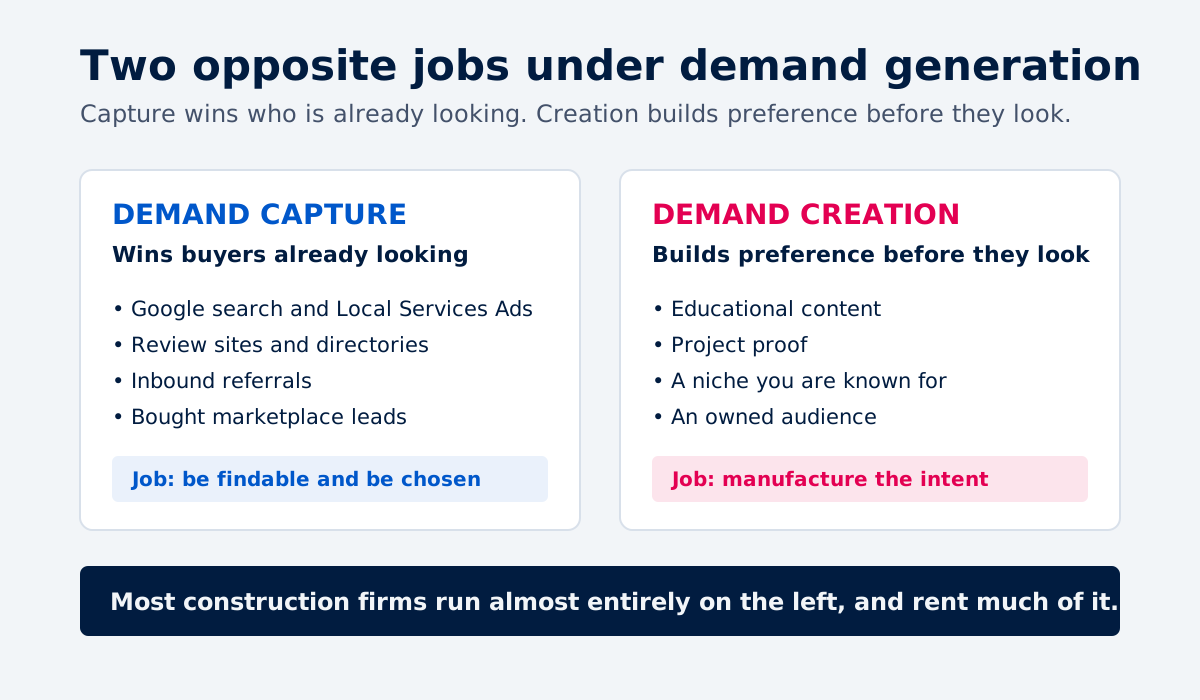
Both live under demand generation. They do opposite jobs.
Demand capture wins the buyers who already know they have a project and are looking for someone to do it. In construction that means Google search and Local Services Ads, review sites and directories, referrals coming in, and leads bought from marketplaces. The intent already exists. Your job is to be findable and to be chosen.
Demand creation builds awareness and preference before the buyer starts shopping. It means educational content, project proof, a niche you are known for, and an audience that hears from you regularly, through channels like email that keeps past and future clients warm. You are not converting intent. You are manufacturing it, so that when the project arrives you are the firm they already trust.
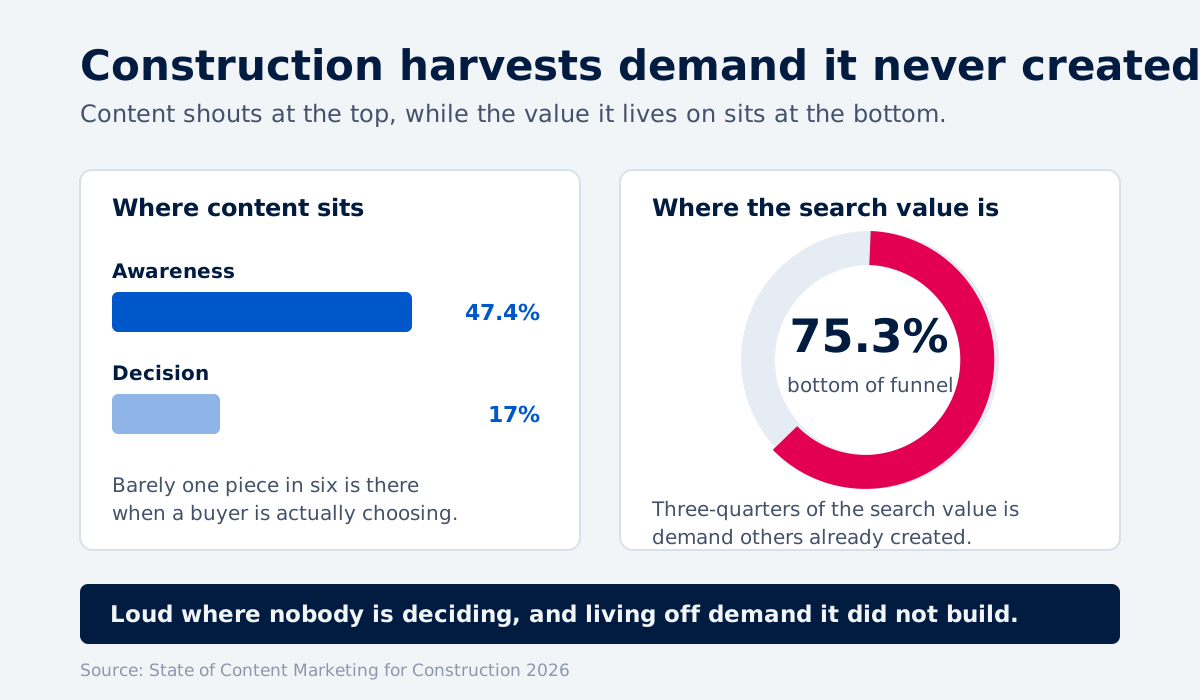
The reason the distinction matters is where the value sits today. In our analysis of construction content and search performance, three-quarters of the organic search value in the category, 75.3%, is bottom-of-funnel. That is demand the industry captures but never created. And 91.5% of construction search is non-branded, so most of the demand is for the category, not for any one firm by name. It is winnable by whoever shows up for it, which is exactly what creating demand does.
Chris Walker, founder of the demand-generation agency Refine Labs and now CEO of the growth advisory Passetto, put the dependency plainly in his walkthrough of the two: something had to create the demand before anyone could capture it. The buyer had to learn they had a problem, learn a solution existed, and decide to act. Capture only harvests the last step. Creation owns the first three.
For the general-market version of this split, we cover demand generation versus demand capture here. This piece is the construction application.
Why does "demand generation for construction" usually mean buying leads?
Search "demand generation for construction" and you will not find much about creating demand. You will find HomeAdvisor, Angi, Porch, BidClerk, the Blue Book, pay-per-lead services, and lists of "21 ways to get more leads." The industry has redefined demand generation to mean lead acquisition, and most of it is not even your demand. It is rented.
That matters because captured demand comes in two kinds, and they are not equal.
Earned capture versus rented capture
Earned capture is intent you built the right to win. Someone searches, finds your ranked page or your Google Business Profile, or a past client refers you, and the call comes to you alone.
Rented capture is intent you pay a platform to forward. A marketplace sells the same lead to several contractors at once, so by the time you call, the homeowner has three other quotes and the conversation starts on price.
The census shows how heavily construction leans on the rented end. Around 73% of firms pay for traffic through Google Ads, spending roughly $11,000 to $63,000 a month to rent demand that the right content would earn for free. The construction lead-generation benchmarks compiled by PipelineOn put a number on the difference in quality: shared marketplace leads from Angi and HomeAdvisor close at 6% to 10%, while organic search leads close at 18% to 24%. Priced per booked job, Angi's blended acquisition cost runs about $2,500, against roughly $290 to $310 for a job won through SEO.
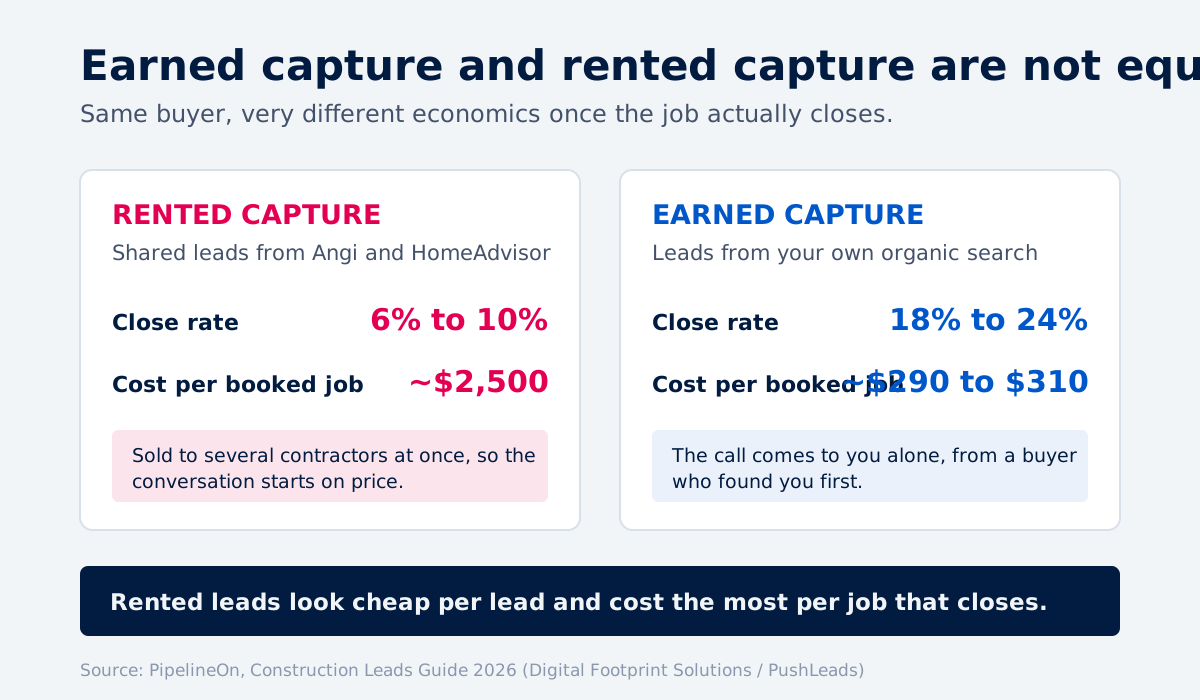
Rented leads look cheap on the invoice and cost the most per job that actually closes.
This is the trap a real firm described on r/LeadGeneration. A one-person marketing team at a 30-year design-build firm had moved the business onto a CRM and was running Meta and Google ads plus Local Services Ads, getting "very little results on the Google side of things." The instinct was to add another stream of leads, Reddit ads, then Roku ads. The Google results were thin for a simple reason. There was not enough in-market search demand in their category to capture. No amount of extra capture channels fixes a shortage of existing demand. Only creating demand does.
There is also a self-inflicted version of the trap. As one marketer put it on r/marketing, firms with commoditized offers do fine on capture alone, because the buyer does little research and just picks. A construction firm that presents itself as interchangeable, competing only on price, sorts itself into that bucket and into a permanent bidding war.
How can you tell if your construction firm runs on demand capture alone?
Look at where your content sits, where your budget goes, and who you hire. The pattern across the industry is consistent, and it is easy to match against your own firm.
Your content is loud at the top and silent where deals are won
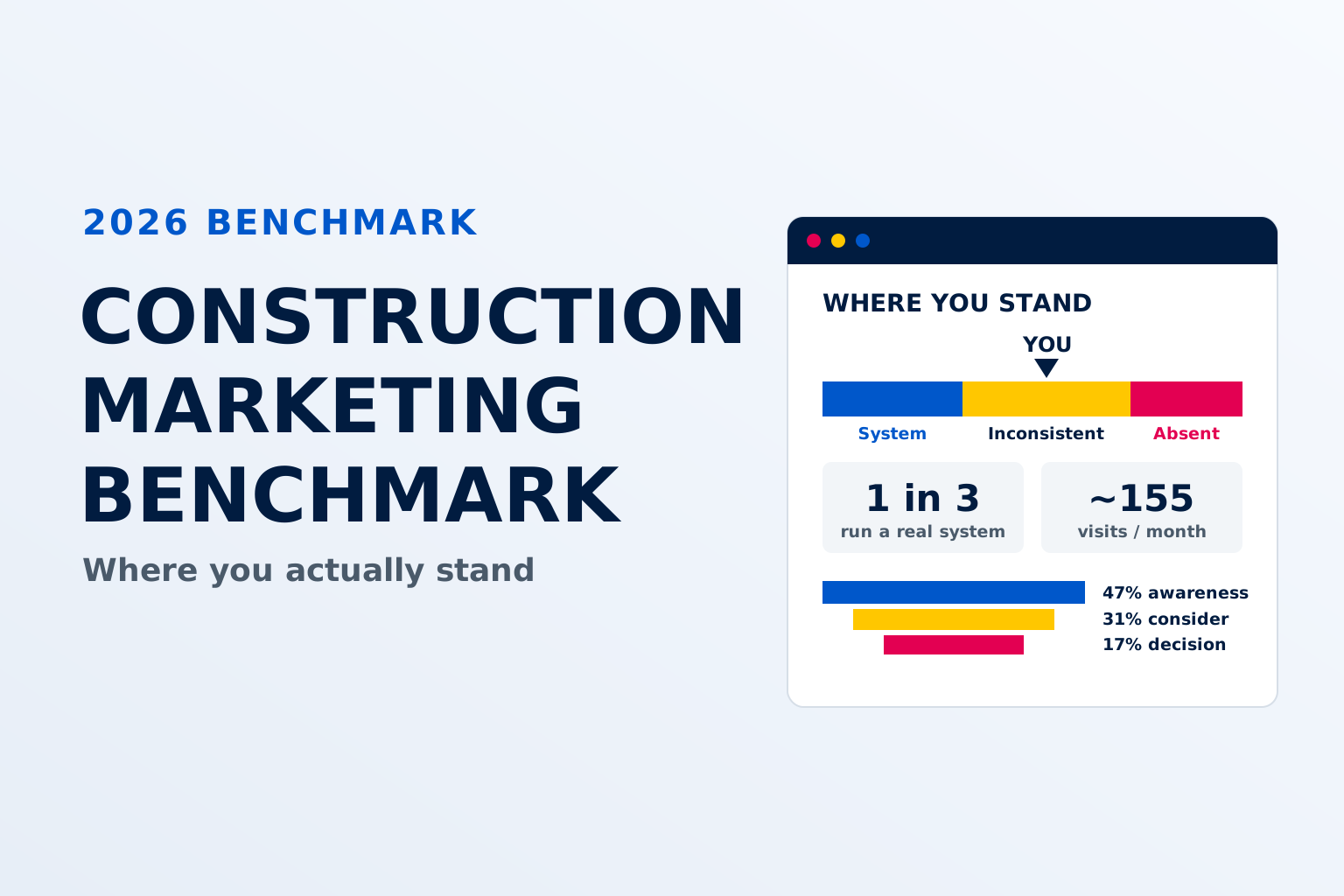
Construction content skews to awareness. Nearly half of it, 47.4%, sits at the top of the funnel, manufacturing attention rather than pipeline. Only 17% supports the decision, so barely one piece in six is there when a buyer is actually choosing. The educational middle that would create preference is thin too, with top-of-funnel intent content making up just 16.5% of what ranks. Lots of "look at our work," little that moves someone from curious to convinced, which is why we keep pushing firms toward marketing ideas that go beyond project photos.
Your money rents demand instead of earning it
The paid-search lean above is the spending tell. Most firms pay monthly to appear for searches they could own outright. Rented traffic disappears the day the card stops, and the median firm gets little organic to fall back on.
Your hires make things instead of creating demand
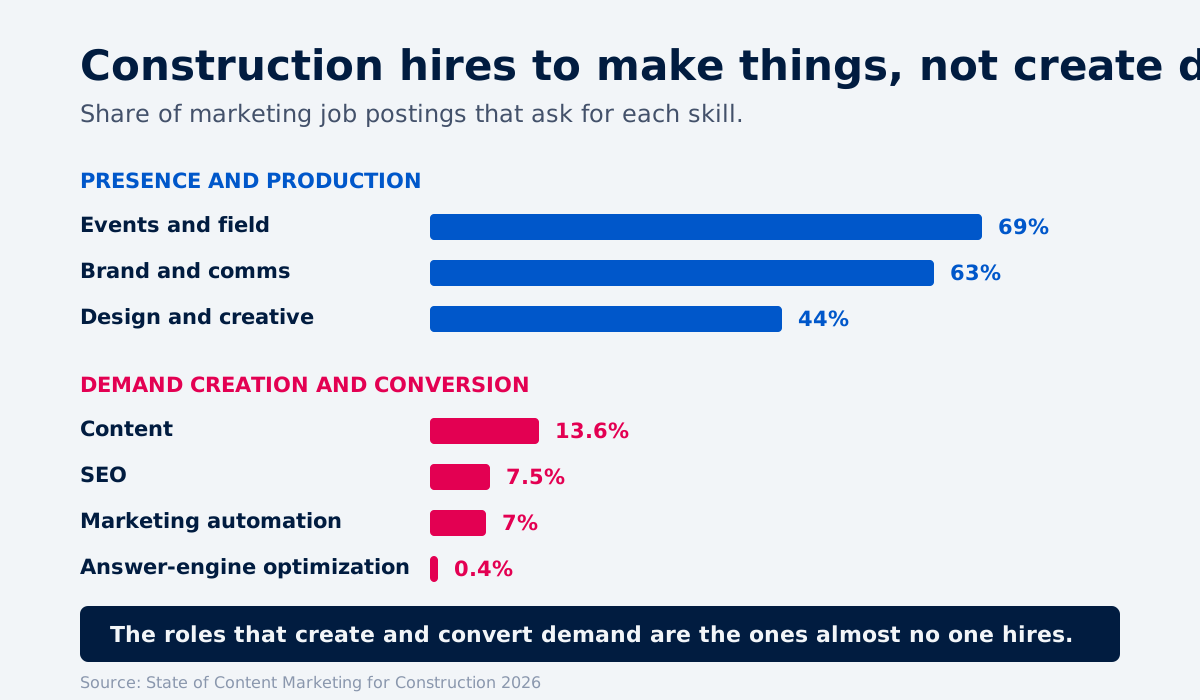
Construction staffs for production and presence, not acquisition. Marketing roles ask for events 69% of the time and brand or communications 63% of the time, roles built to talk about the company. They ask for content in only 13.6% of postings, SEO in 7.5%, and marketing automation in 7%. The muscles that create and convert durable demand are the ones almost no one is hiring.
If those three describe your firm, you are running on capture. You are harvesting whatever demand walks in and building very little of your own.
Why does demand capture alone cap construction growth?
Capture alone hits a ceiling because the pool of buyers actively shopping is small, and a few firms already take most of it. In the category, the top 10% of domains pull in more than 80% of the search value. The median firm gets around 155 organic visits a month, which would not fill a webinar room, and roughly a quarter of firms get effectively no organic traffic at all. When everyone fishes the same small pond, clicks get more expensive and the return keeps shrinking.
Chris Walker described this as riding on the coat-tails of existing demand. If you only capture, you are not the category leader, because someone else is out there creating the demand you are fighting to catch. You hit diminishing returns, and you end up in deals against several other firms where you are not the one they already wanted. His summary, aimed at software but true for a contractor, is that losers compete for demand and winners create it. A deck builder in Omaha said the same thing more bluntly on Contracting Empire's write-up of its own growth: you do not wait for demand, you create it, because in a low-search-volume market you cannot just show up where people already are.
Can you really create demand for a construction firm?
Some marketers argue you cannot create demand at all, that you can only build awareness and then capture the people who were going to buy anyway. It is a fair objection, and the honest answer is a distinction.
You rarely create the need for a building. Nobody talks a homeowner into a new roof they do not need, and no campaign invents a hospital expansion.
You absolutely create preference, and preference is the whole game in construction. The purchase is high-trust and slow, and buyers decide on specificity long before they request a bid. Yet only a third of firms, 33.4%, make it obvious who they serve, and only 30.5% publish pages built around a specific industry or project type. Almost nobody is building preference, which means it is sitting there for whoever does. You are not creating the need for the building. You are creating the reason they call you about it.
What does a demand-creation engine look like for a construction firm?
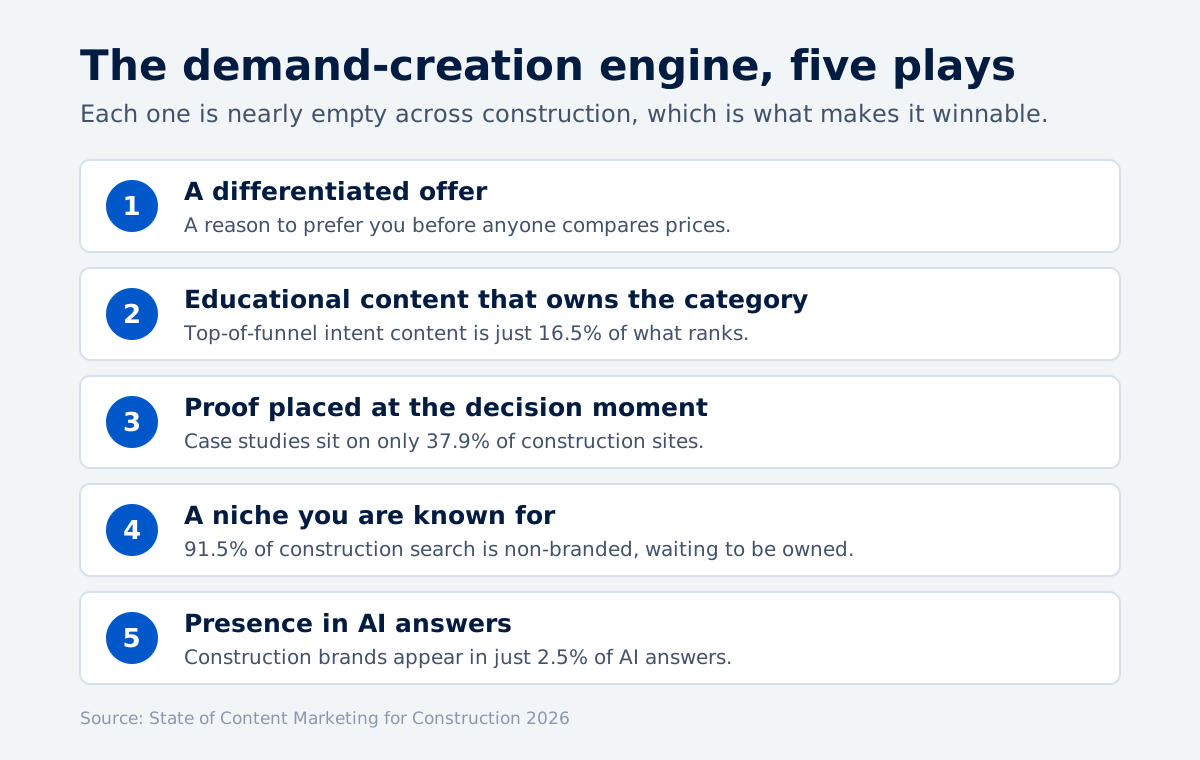
A demand-creation engine is a small set of assets that build trust and preference before the bid. Five plays cover most of it. Each one is nearly empty across the industry, which is what makes them winnable.
A differentiated offer that creates preference
Give buyers a reason to prefer you before they compare prices. The design-build firm on r/LeadGeneration had one without realizing it, crediting design fees toward construction costs, a genuine reason to choose them that no lead marketplace can supply. An offer like that is a demand-creation mechanism, not another lead source, because it changes the decision instead of just entering the auction. Shaping that offer is the first decision in any go-to-market strategy for a construction firm.
Educational content that owns the category
Answer the questions buyers actually ask, in public, before they shop. Dalinghaus Construction, a foundation-repair firm, had been spending heavily on paid search and cycling through agencies that kept selling website redesigns and forgettable blog posts. They switched to openly answering customer questions, honestly, including the uncomfortable ones about price and problems. Organic traffic and inbound rose, the sales team used the same content to pre-answer objections, and the firm ran a 16-week backlog even after hiring extra crews. That is the top-of-funnel opening from the data turned into pipeline, and it is the core of content marketing for construction done as a system.
Proof placed at the decision moment
Construction is bought on trust, and proof is your strongest trust signal, yet case studies appear on only 37.9% of firms' sites and usually sit parked away from where the choice gets made. Move the proof to the decision, and turn the before-and-after project photos you already have into evidence a buyer can weigh. Fera Form, a Calgary concrete company that builds parking structures, had no online presence and won work the old way, bidding and hoping. They started documenting real jobsite work on video. Within five months, builders recognized them in bid meetings and they landed a $1.7 million parking-structure job, without ads. The video created preference before the pitch, which is where construction video marketing actually pays.
A niche you are known for
Win the category, then convert it into demand for your name. Most construction search is non-branded, so the firm that owns the specific category term, "tilt-up warehouse contractor in Phoenix," not "construction company," earns the demand and then teaches the market to ask for it by name. Specificity is rare enough in the data that owning a niche is one of the cheapest advantages available, and it is one of the clearest traits of what good looks like in construction content.
Presence in AI answers
Buyers now research in AI tools before they ever call, and construction is nearly invisible there. Brands show up in roughly 2.5% of AI answers about the category, and firms hire for answer-engine optimization in just 0.4% of roles. Being the firm that shows up when a buyer asks ChatGPT or Perplexity for a shortlist is demand creation on the newest surface. We cover why construction brands almost never show up in AI answers and, more broadly, why your brand is missing from those answers separately. Perkins Roofing in Miami is the same idea one platform earlier. The owner grew the firm from about $500,000 to roughly $10 million a year running marketing almost entirely on a YouTube channel that teaches instead of sells, and his YouTube-sourced leads close at 80% to 90%, against the one-in-three to one-in-five he sees from cold phone leads. Buyers arrive already trusting him.
How do you stop leaking the demand you already capture?
Creating demand is only half the fix. The other half is keeping the demand you already have from draining out, because most of it does. Across the census, only a third of firms, 33.3%, have any real lead capture on the site, and it is usually a newsletter signup rather than a reason to convert. Live chat sits at 13%, and while 68% own a CRM, few wire their content into it. The construction benchmarks are blunter still: PipelineOn notes that 98% of website visitors leave without calling or filling out a form, so the leak is bigger than the lead source. It is the same pattern behind construction websites that get traffic but no leads.
Then there is speed. The classic Harvard Business Review study of online sales leads found firms took a median of 42 hours to make first contact, and nearly a quarter never responded at all. Home-services data has not moved much; the 2026 benchmarks still show most buyers hiring the first company that responds. Captured demand goes cold fast, and a slow lead handover hands it to a competitor.
Chris Walker's fix in his capture walkthrough is to help the buyer buy. When someone searches how much a job costs, do not send them an ebook, give them the path to book. And prove the system works at low spend before pouring money into it, because scaling a leaky funnel just amplifies the leak. The way we think about this is simple: fix the conversion path and the follow-up first, so every dollar of created or captured demand has somewhere to land. Our guides to the metrics worth tracking and what a lead pipeline actually is go deeper on the plumbing.
How should a construction firm balance demand creation and demand capture?
Keep the capture that earns its place, rein in the capture you rent, and build the creation half that is missing. That is the decision, and the data says it pays.
Maturity tracks growth in construction. Only about one firm in three runs content as a system rather than as occasional activity, and roughly two-thirds are absent or superficial. Among high-growth firms, 39.1% are mature, the clearest sign that treating demand creation as infrastructure, not a side task, is what separates the firms pulling ahead.
Sequence it by where you are, on one budget.
Under $10 million in revenue, a realistic yearly marketing budget is around $8,000. Spend it activating what you already have, the content, the proof, the site, rather than renting more leads.
$10 to $50 million, budgets reach roughly $35,000 a year. That is the moment to set up the system, not just add spend to capture.
Put those next to what rented capture already costs. A firm spending toward the top of the $11,000-to-$63,000-a-month paid-search range is spending well into six figures a year renting demand. An owned-demand system that starts near $8,000 a year and compounds is not the expensive option. It is the cheaper one, and it is the one you keep. Our breakdown of how much a construction company should spend on marketing and the step-by-step construction marketing strategy that generates pipeline show how to sequence that spend.
That is the shift we help construction firms make, and it is the core of how we think about content as revenue infrastructure for the industry. Capture harvests demand that already exists. Creation gives your content the job of making it. Run only the first and you stay dependent on a small pool and a monthly ad bill. Build the second and you own demand that keeps working after the spend stops, and that a competitor cannot outbid you for.
Want to see how much your construction firm spends renting demand it could own?
Our content revenue audit maps demand capture against demand creation, finds where your growth is capped, and puts a number on the gap.
Frequently Asked Questions
About the Author

Founder & CEO, Content RevOps
Stefan Kalpachev is the founder and CEO of Content RevOps, where he helps B2B SaaS companies transform their content into predictable pipeline. With a background in content marketing and revenue operations, Stefan has developed a unique methodology that bridges the gap between content creation and revenue generation.
Connect on LinkedIn